
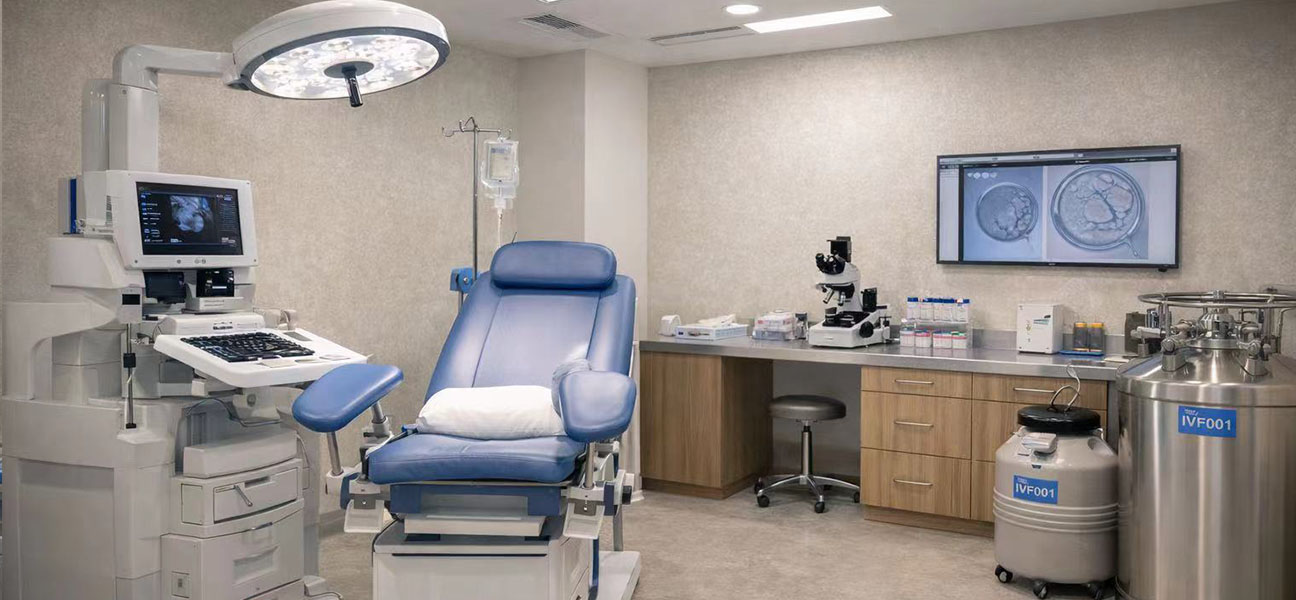
One afternoon, a 38-year-old woman with an AMH of 1.2 consulted: "I saw Beta Plus Fertility Center in Georgia online. Some say it's great, others say it's a pitfall. Is it reliable or not? As someone who has been there, just tell me the truth."
This is the most common type of question I've encountered in recent years as an overseas coordinator. Since Georgia officially opened third-party assisted reproduction in 2019, more than a dozen reproductive centers have emerged in Tbilisi. Beta Plus is one of the more well-known ones, but "popularity" does not equal "reliability." Below, I offer an ad-free assessment from a real practitioner's perspective, combined with the hospital's actual procedures, patient feedback, and industry data.
Direct Answer: Is Beta Plus Fertility Center Reliable?
Judgmental Answer: For specific groups, Beta Plus is an above-average choice, but not a "one-size-fits-all option." It is suitable for the following situations:
- Need for third-party assisted reproduction (egg donation, sperm donation, surrogate) — Georgia's law covers the entire territory and costs are lower than in the US and Canada.
- Budget in the $100,000-$150,000 range (including the full process), lower than the US average.
- Willing to accept the service pace of a medium-sized clinic — Beta Plus's daily embryo production is not large, and the lab is medium-sized.
Unsuitable situations:
- Patients hoping for the latest genetic screening (PGT-A/PGT-M) with extremely high precision requirements — it is recommended to choose the US or Australia first.
- Those extremely sensitive to time, hoping to complete the entire process within 3 months — matching with a surrogate in Georgia still requires waiting (average 2-4 months).
- Patients with very high language communication requirements who cannot accept translation errors.
Why Do "Unreliable" Rumors Exist?
There are three main reasons:
- Information Asymmetry: Some agencies exaggerate, packaging Beta Plus as "Georgia's best," while the actual hospital lags behind truly top-tier centers in embryo culture technology and lab equipment.
- Attribution Bias in Failed Cases: Georgia law permits third-party assisted reproduction, but the health status and lifestyle habits of matched surrogates vary greatly. Some failures are not due to the hospital but to the surrogate herself. Patients tend to blame the hospital directly.
- Lack of Transparency in Service Process: Beta Plus's package quotes are usually "all-inclusive," but whether they include PGT, post-transfer luteal support medications, or the surrogate's prenatal check-up fees varies greatly between different agency versions, easily leading to disputes.
How Do Doctors View Beta Plus's Lab Level?
The year before last, I accompanied a reproductive medicine professor on an inspection trip to Tbilisi. His assessment was quite straightforward:
- Lab Grade: Above average. Equipped with Zeiss microscopes, second-hand embryo incubators (brand Planer, not the latest models), and an air purification system reaching ISO Class 5, but not fully digitally monitored.
- Embryologist Team: 5 full-time embryologists, two of whom have European training backgrounds. However, compared to centers we saw in Spain (often with dedicated embryologists of over 10 years), there is a gap in cultivation experience.
- Success Rate Data: Beta Plus officially reports a live birth rate of about 52% for women under 35, which is average among various center statistics. Note that this data includes both fresh and frozen embryos and is not stratified to indicate whether it includes final live births from third-party assisted reproduction.
Differences Between Countries: Georgia Beta Plus vs. Other Destinations
| Comparison Dimension | Georgia Beta Plus | USA (General Center) | Greece/Spain | Thailand/Cambodia |
|---|---|---|---|---|
| Legal Support for Third-Party Assisted Reproduction | Fully legal, clear laws | Varies by state, some prohibit | Spain only allows egg/sperm donation, bans commercial surrogacy | Cambodia banned it in 2024 |
| Total Cost Per Cycle (incl. surrogate) | Approx. $45,000-$60,000 | $100,000-$150,000 | Approx. €60,000-€90,000 (incl. egg donation) | $30,000-$50,000 (but requires black market) |
| Surrogate Matching Time | 2-4 months | 1-3 months | Not applicable | Unstable |
| Embryo Genetic Screening Capability | Has PGT-A, but PGT-M requires overseas testing | All items can be done locally | PGT-A/PGT-M optional | Some centers lack PGT |
| Language Communication | Agent + translator | English/Chinese services common | English/Spanish, few Chinese | Many Chinese services |
Differences Between Hospitals: Beta Plus vs. Other Tbilisi Centers
Other major reproductive centers in Tbilisi, Georgia, include "Chachava Clinic," "Innova," "Georgia Reproductive Center," etc. Compared to them, Beta Plus:
- Advantages: The legal representative has a political background, ensuring high legal compliance, reducing the risk of extreme events like "hospital unilaterally terminating the process"; has its own surrogate database (about 300 people), more transparent than centers relying on agencies.
- Disadvantages: Lab equipment updates are slow, some equipment purchased in 2018 has not been upgraded; high doctor turnover, having changed two chief doctors in the past three years.
Easily Overlooked Details
- Surrogate Health Screening Criteria: Beta Plus requires surrogates to be >155cm tall, BMI <30, non-smoker, and have given birth to at least one healthy child. However, some surrogates recommended by agencies have not undergone rigorous psychological evaluation, leading to high maternal stress and miscarriage rates after transfer.
- Embryo Cryopreservation Fees: Contracts usually only include the first year free. Subsequent years require a payment of $500-$800 annually. Many people forget to renew, leading to embryo destruction.
- Return Visa Requirements: After the child is born, processes like obtaining the birth certificate, DNA paternity test, and passport take about 6-8 weeks. Multiple visa extensions are needed during the stay. Beta Plus does not have a dedicated visa consultant; you must arrange this yourself.
Common Pitfalls
- Agency Promise of "100% Success Guarantee": Georgian law explicitly prohibits hospitals from guaranteeing success rates. If an agency advertises this, they usually add various fees later.
- "All-Inclusive" Package Price That Excludes Medical Emergency Costs: For example, surrogate hospitalization due to accidents, additional costs for C-sections, neonatal intensive care, etc. Contracts use clauses like "excluding unforeseen medical expenses" to avoid these.
- Misunderstandings Due to Translation Errors: Some staff have limited English proficiency. Medical instructions are relayed through agencies. If the agency's translation is wrong, it can easily affect the medication plan.
Actual Process (From Consultation to Holding the Baby)
- Preliminary Preparation (1-2 months): Complete AMH, FSH, semen analysis, infectious disease screening, and chromosome karyotype analysis domestically. Beta Plus requires reports in English.
- Travel to Georgia for Ovarian Stimulation (approx. 14 days): Egg retrieval surgery is performed in the Beta Plus center's operating room. The male partner provides a semen sample on the same day.
- Embryo Culture (5-6 days): Culture to the blastocyst stage. If PGT is needed, biopsy is performed, and embryos are frozen while waiting for results (approx. 2 weeks).
- Matching with a Surrogate (2-4 months): The hospital matches based on embryo quality and blood type from their database.
- Transfer (1 day): Transfer is performed after the surrogate's endometrial preparation.
- Pregnancy Monitoring (9 months): Beta Plus follows up with an ultrasound report monthly, but actual prenatal care is handled by the surrogate's local hospital.
- Childbirth and Legal Documents (6-8 weeks): After birth, a DNA test confirms parentage. Then apply for the birth certificate, Georgian passport, and Chinese travel document.
Timeline
- Fastest Timeline: From initial consultation to holding the baby, the fastest is about 14 months (if follicle count is high, success on first try, and surrogate matching goes smoothly).
- Common Timeline: 18-24 months. Reasons include: needing a second egg retrieval, PGT abnormalities requiring re-screening, extended surrogate matching period, or pregnancy complications.
- Slowest Timeline: Over 30 months, mainly due to chromosomal issues causing multiple failed embryo cultures, or the surrogate dropping out midway.
Cost Influencing Factors
| Cost Item | Beta Plus Base Price (USD) | Potential Additional Costs |
|---|---|---|
| Single IVF Cycle (excl. egg donation/surrogacy) | $4,000-$6,000 | PGT-A add $3,000; PGT-M add $5,000 |
| Egg Donation Cycle (incl. egg source) | $12,000-$18,000 | Half price if additional cycle needed |
| Third-Party Assisted Reproduction (incl. surrogate) | $45,000-$55,000 | C-section add $2,000-$3,000; Twins add $5,000-$8,000 |
| Legal and Translation Services | $3,000-$5,000 | Extra if disputes arise |
Frequently Asked Questions
- Does Beta Plus have a special protocol for older women (over 42)?
- No specific protocol for advanced age. If AMH is below 0.5, they usually recommend direct egg donation rather than attempting own-egg IVF. This aligns with most Eastern European ethics.
- If I am dissatisfied with the hospital after arriving in Georgia, can I switch centers?
- Technically yes, but fees already paid are non-refundable. Also, transferring embryo storage involves legal agreements and requires terminating the original contract, which is quite troublesome.
- Can Beta Plus perform sex selection for sperm or embryos?
- Georgian law prohibits sex selection for non-medical reasons. During PGT screening, the lab only reports whether the embryo is normal, not the sex. However, if needed, there are gray-area operations at the agency level, but the risk is high, and it is advised not to attempt it.
- Surrogates can be Georgian, but might they be very poor with poor living habits?
- Beta Plus screens surrogates from low-to-middle-income families but requires health checks. A common issue is that some surrogates do not truthfully report their smoking history, leading to poor fetal development. It is recommended to request a real-time urine nicotine test from the hospital before transfer.
Practitioner Observations (Based on 30+ Cases)
Over the past two years, I have handled 36 families who went to Beta Plus. Of these, 25 cases ultimately succeeded in holding their baby, while 11 gave up or failed midway. Reasons for failure: 5 cases involved surrogate miscarriage in the first trimester, 3 cases had embryo chromosomal abnormalities preventing transfer, 2 cases dropped out due to financial issues, and 1 case involved a contract dispute.
From the data, Beta Plus's process standardization is above average in Georgia, with no obvious "black marks." The biggest issue is information opacity — many details require patients to proactively ask; the hospital does not volunteer information. For example, when a surrogate develops gestational diabetes, the hospital does not proactively recommend referral to a higher-level obstetrics department but leaves it to the patient to arrange.
Checklist Reminder
If you are considering Beta Plus, please complete the following three checks before signing the contract:
- Simulated Dialogue Test: Ask your agent or the hospital's English coordinator directly: "If the surrogate is found to have a fetal abnormality at 20 weeks, what is the subsequent process? Who bears the cost?" See if they evade the question.
- Line-by-Line Contract Review: Especially the sections on "Medical Emergencies," "Additional Fees," and "Refund Conditions." Georgian contracts usually have English and Georgian versions. The Georgian version takes precedence. It is recommended to hire a local lawyer for review (cost approx. $500).
- On-Site Lab Inspection: If conditions permit, request a live video feed of the lab to confirm equipment models and cleanliness status.
Do not make a decision based solely on short videos or chat records. Georgia is not a "low-cost solution" but a "medium-cost + medium-risk" option. Beta Plus, as an established center, is suitable for families willing to do their own homework and accept uncertainty.
Comments (0)