
1. A Real Consultation Scenario
A 38-year-old female patient, carrying a report of 2 cleavage-stage embryos frozen at another center, flew specifically to a reproductive center in Tbilisi. She wanted to know: What exactly are the embryo freezing and thawing success rates in Georgia? If the embryos survive thawing, are the outcomes after transfer the same as in other countries? Behind this question lies a deep concern about laboratory technology and process control capabilities.
2. Direct Answer: Key Factors Determining Thawing Success Rate
Reputable reproductive centers in Georgia generally use vitrification technology, under which embryo thawing survival rates are typically stable between 90% and 98%. However, it must be clear: the thawing success rate is not the same as the clinical pregnancy rate. Whether a surviving embryo can continue to develop and implant is also influenced by comprehensive factors such as patient age, embryo grade, and endometrial receptivity.
Specific data can refer to the following ranges (industry-wide general statistics, not specific center commitments):
| Embryo Type | Vitrification Thawing Survival Rate | Complete Survival Rate (all cells intact) |
|---|---|---|
| Cleavage Stage Embryo (D3) | 90% ~ 95% | 85% ~ 90% |
| Blastocyst (D5/D6) | 95% ~ 98% | 90% ~ 95% |
Data source: Global assisted reproduction laboratory consensus and internal quality control statistics from multiple centers over the years. It does not represent any specific institution in Georgia.
3. Laboratory Personnel Perspective: Why Are There Differences in Thawing Rates?
3.1 Core Technical Variables
- Freezing Method: Most reproductive centers in Georgia have phased out slow freezing and switched to vitrification. The latter avoids ice crystal formation through ultra-rapid cooling, causing less damage to cells.
- Embryo Quality Itself: Blastocysts have more cells and a complex structure, but their tolerance is actually better than that of poor-quality cleavage embryos. A 4AA grade blastocyst has a survival rate close to 98% after thawing, while a C-grade cleavage embryo may only have 85%.
- Operator Experience: The proficiency of the embryologist directly affects cell membrane integrity after thawing. A reputable laboratory performs hundreds of freezing/thawing procedures annually and participates regularly in external quality assessments.
3.2 Patient Factors That Cannot Be Ignored
- Age: The higher the female age, the lower the egg quality and embryo developmental potential. However, the survival rate of thawing itself does not have a direct linear relationship with age. Nevertheless, embryos from older patients often have more fragmentation and fewer cells, making them more susceptible to damage during freeze-thaw.
- Embryo Developmental Stage: For the same patient, the thawing survival rate of blastocysts is usually better than that of cleavage-stage embryos. Most centers in Georgia prefer to culture embryos to the blastocyst stage before freezing.
4. Differences in Laboratory Standards Between Countries
Assisted reproductive technology in Georgia has rapidly aligned with international standards over the past 10 years. Compared with developed countries in North America and Western Europe, the main differences are:
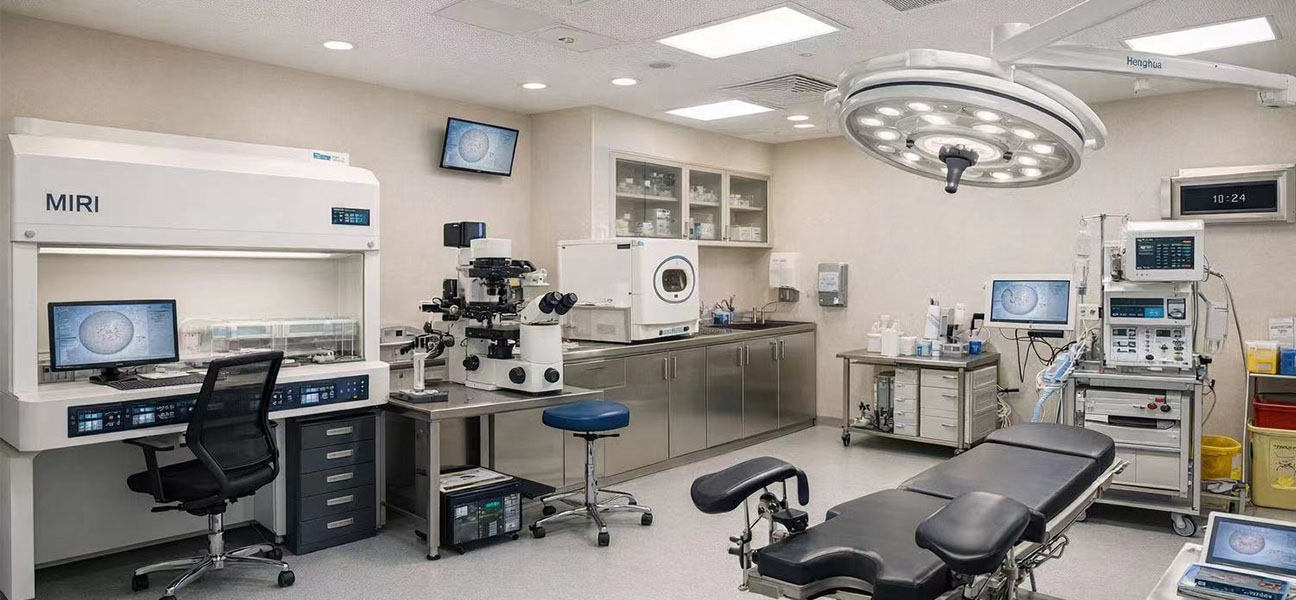
- Hardware Investment: Centers in first-tier cities (Tbilisi, Batumi) are equipped with advanced incubators (e.g., Time-lapse) and positive pressure air purification systems, comparable to mainstream European centers. However, some small clinics in remote areas may have aging equipment.
- Consumables and Quality Control: Freezing and thawing solutions are imported brands (e.g., Kitazato, Irvine Scientific), ensuring batch consistency. Laboratories record liquid nitrogen tank levels and temperature alarms daily, but the strictness of implementation varies by center.
- Personnel Qualifications: Embryologists are often trained in Europe or Israel, but the overall team size is small. One person may be responsible for multiple steps, posing a risk of operational fatigue.
Overall, choosing a center with international certifications (e.g., JCI, ISO) or regular participation in EQA (External Quality Assessment) can achieve thawing success rates close to world-class levels.
5. The Most Easily Overlooked Detail: Post-Thaw Culture and Transfer Timing
Many patients only focus on whether the embryo survives thawing but overlook a critical point: the embryo needs to be cultured for some time after thawing before transfer. Laboratories typically observe the embryo 2 to 4 hours after thawing to see if it has started to re-divide, and whether there is degeneration or fragmentation. Insufficient or excessive culture time can affect the outcome after transfer.
- Cleavage-stage embryos can be evaluated 2 hours after thawing; blastocysts need to be cultured for 3 to 4 hours to confirm re-expansion of the blastocoel.
- If an embryo shows significant degeneration (more than 20% cell necrosis) after thawing, transfer is generally not recommended. Re-freezing may be considered (but survival rate after a second freeze-thaw cycle drops by about 10% to 20%).
- Some centers in Georgia perform "assisted hatching" (AH) to help the blastocyst hatch, but this decision should be individualized based on the thickness of the zona pellucida.
6. Actual Procedure: A Complete Embryo Freezing and Thawing Process
6.1 Freezing Step
- Embryo develops to the target stage (D3 or D5/D6)
- Placed in equilibration solution containing cryoprotectants for gradual dehydration
- Loaded onto a cryo-carrier (Cryotop or Cryolock)
- Rapidly plunged into liquid nitrogen (-196°C), stored in a dedicated liquid nitrogen tank
6.2 Thawing Step
- Carrier removed from liquid nitrogen and quickly placed in 37°C thawing solution
- Cryoprotectants gradually diluted (usually through 3 to 4 concentration gradients)
- Transferred to equilibration medium and placed in an incubator to stabilize
- Survival observed and scored
- Clinician notified to schedule transfer time
The entire process takes approximately 45 to 60 minutes.
7. Case Scenario Analysis: Actual Outcomes for Patients of Different Ages
Case 1: 32-year-old patient, ICSI due to male factor, 3 blastocysts frozen, thawed 2 years later. 2 survived completely, 1 had partial cell necrosis (about 15%). Successful pregnancy after transferring 1 surviving blastocyst.
Analysis: Young woman with good egg quality, high-grade blastocysts (all 4BB or above), high thawing survival rate, ideal pregnancy probability per single transfer.
Case 2: 42-year-old patient, low ovarian reserve, only 2 cleavage-stage embryos obtained and frozen. Thawed 1 year later, both embryos survived but with increased fragmentation, no implantation after transfer.
Analysis: Inherently poor embryo quality due to advanced age. Even if they survive thawing, subsequent developmental potential is limited. It is recommended that such patients prioritize accumulating embryos before freezing, or consider PGT-A screening.
8. Practitioner Observations: Common Misconceptions About Embryo Freezing and Thawing in Georgia
- Misconception 1: Higher thawing success rate means higher transfer success rate. In reality, survival rate only indicates intact embryonic cells; implantation ability also depends on chromosomal euploidy, endometrial synchrony, etc.
- Misconception 2: All centers in Georgia have the same thawing rate. Different centers use different cryo-carriers, thawing protocols, and culture systems. You should request the center's thawing rate data for the past year.
- Misconception 3: The longer the freezing time, the lower the thawing rate. Theoretically, in a stable liquid nitrogen environment (-196°C), embryo metabolism completely stops. There is no significant difference in thawing rate between embryos frozen for 5 years and those frozen for 1 year. However, poor long-term maintenance of the liquid nitrogen tank can cause temperature fluctuations, increasing risk.
9. When Is It Suitable to Choose Georgia for Embryo Freezing/Thawing?
Suitable Candidates
- Patients who already have frozen embryos and wish to undergo thawing and transfer abroad (need to confirm embryo transport feasibility and regulations of both countries in advance);
- Patients who did not transfer due to endometrial or policy reasons after ovarian stimulation in their home country and decide to transport embryos to Georgia;
- Patients needing to freeze embryos for future fertility preservation (e.g., cancer patients before chemo/radiotherapy);
- Patients with some understanding of laboratory technology who seek a cost-effective destination.
Unsuitable Candidates
- Patients with very poor embryo quality (e.g., only C or D grade cleavage embryos), where even if they survive thawing, pregnancy is difficult; consider a new egg retrieval cycle;
- Patients with severe uterine pathology (e.g., intrauterine adhesions, thin endometrium unresponsive to medication), providing no good implantation environment for thawed embryos;
- Institutions unable to provide complete embryo freezing records or legal transport procedures.
10. Precautions and Risk Warnings
Risk Reminder: Embryos may experience accidental warming during transport or transfer, leading to total loss. Choose a logistics company with professional embryo transport experience (e.g., CryoPort) and purchase insurance. Additionally, some centers in Georgia may not have standardized procedures for receiving embryos from international patients. Be sure to request a written confirmation of acceptance and published thawing success rate data from the center in advance.
11. Suggestions for Next Steps
If you are considering sending embryos to Georgia or already have frozen embryos there, it is recommended to plan as follows:
- Obtain a detailed freezing report for the embryos (including freezing date, embryo grade, freezing method, carrier type);
- Contact the target reproductive center, provide the report, and inquire about their thawing process and quality control standards;
- Confirm your passport, visa, and round-trip itinerary (thawing and transfer usually occur on days 14-19 of the menstrual cycle, requiring advance planning);
- While in Georgia, simultaneously prepare the endometrium (hormone replacement or natural cycle) to ensure adequate endometrial thickness.
This article is written based on laboratory standards in the assisted reproduction industry. The data do not constitute a medical guarantee. All conclusions are for reference only. Specific plans should be combined with individual medical evaluation.
Comments (0)