
Opening: Real Consultation Scenario
Consultation Record Last month, a 43-year-old patient with diminished ovarian reserve came to me with a thick stack of test reports. She had undergone 3 ovarian stimulations and 2 transfers in China, all without pregnancy. She asked, "Is SILK Medical really as good as they say online?" This is a question that needs to be answered from three dimensions: medical procedures, laboratory standards, and the legal environment. There is no one-size-fits-all answer; it only depends on whether it matches your specific situation.
SILK Medical's Core Positioning and Technical Features
SILK Medical is an assisted reproduction center located in Tbilisi, Georgia, specializing in third-generation IVF (PGT-A/PGT-M) and egg donation programs. Its medical system follows European standards for assisted reproduction, and its laboratory hardware meets CE certification levels. From a technical perspective, this center is suitable for two groups of people: couples requiring genetic screening, and families needing egg donation due to age or ovarian function issues.
Its core advantage lies not in "success rate numbers," but in legal compliance and process transparency. Georgia has a clear legal framework for assisted reproduction, allowing anonymous donation, permitting preimplantation genetic diagnosis, and having no strict restrictions on marital status. For individuals hindered by legal or age-related reasons in their home country, this represents a practical alternative path.
▎Direct Answer: SILK Medical is suitable for individuals needing PGT genetic screening, egg donation, or those with specific legal environment requirements. It is not suitable for those needing complex infertility etiology diagnosis (e.g., severe endometriosis, repeated implantation failure requiring immunological intervention) or those who cannot accept remote medical follow-up.
Evaluation Points from a Reproductive Doctor's Perspective
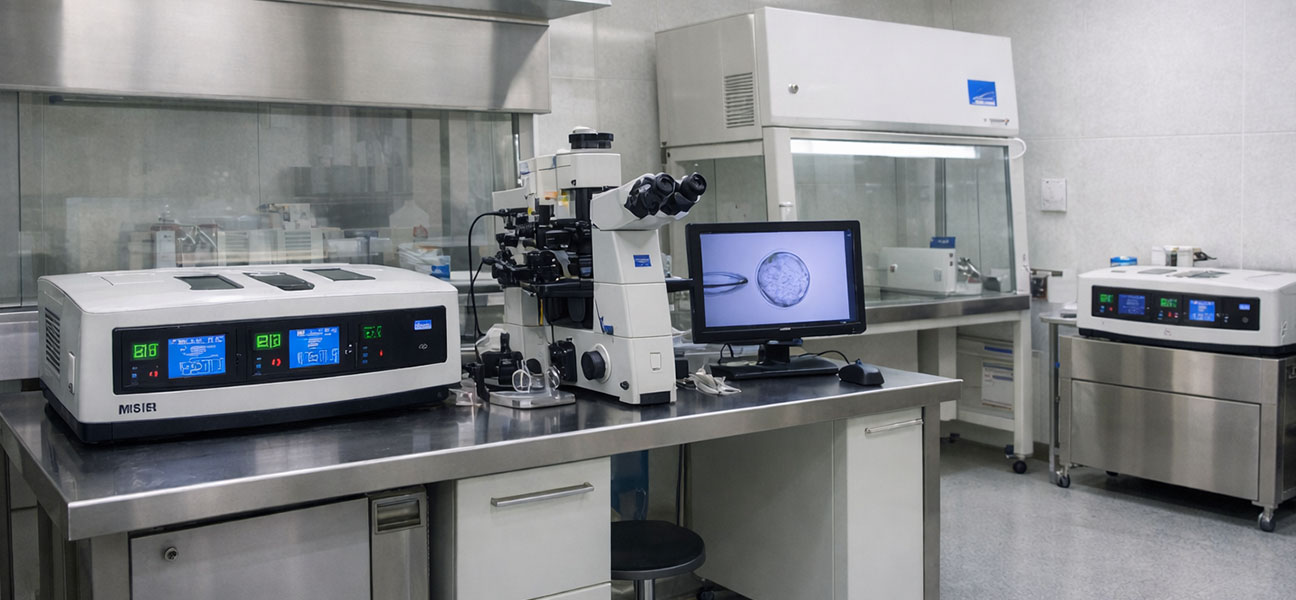
From a medical decision-making standpoint, evaluating an overseas reproductive center requires looking at three levels: laboratory stability, doctor's medication strategy, and embryology team experience. SILK Medical's laboratory uses time-lapse incubators and a PGT genetic testing platform, placing this hardware on par with mainstream European centers. Ovarian stimulation protocols are primarily antagonist protocols and PPOS protocols. For older patients or those with poor ovarian response, doctors tend towards individualized mild stimulation or natural cycles.
It is important to note that medication habits of doctors at overseas centers differ from those in China. For example, for luteal phase support, Georgia commonly uses a combination of oral dydrogesterone and vaginal gel, while in China, injectable progesterone is more common. This is not about superiority, but differences in drug availability and doctor preference. Patients need to understand and adapt in advance.
Actual Medical Process and Timeline
The complete SILK Medical treatment process is divided into five stages, each with clear milestones and preparation items.
| Stage | Core Content | Estimated Time |
|---|---|---|
| 1. Remote Initial Consultation & File Setup | Submit previous test reports (AMH, hormone panel, semen analysis, karyotype), online doctor evaluation, determine initial plan | 1-2 weeks |
| 2. Travel to Georgia for Tests & Ovarian Stimulation | Arrive in Tbilisi, complete uterine cavity check, vaginal ultrasound, blood tests, start ovarian stimulation cycle (average 10-14 days) | 2-3 weeks |
| 3. Egg Retrieval & Embryo Culture | Egg retrieval surgery (IV sedation), egg/sperm fertilization, blastocyst culture (5-6 days), PGT biopsy | 1-2 weeks |
| 4. Genetic Testing & Embryo Freezing | Embryo biopsy sample sent for PGT, wait for results (7-14 days), vitrification of eligible embryos | 2-3 weeks |
| 5. Transfer & Luteal Phase Support | Schedule transfer based on endometrial preparation protocol (natural or artificial cycle), pregnancy test 12-14 days after transfer | 3-4 weeks |
Overall, from the first remote consultation to completing the transfer, it typically takes 3-4 months. If PGT is involved, the waiting time will be longer. It is recommended to plan for a complete cycle of at least 5-6 months.
Cost Structure and Influencing Factors
SILK Medical's fee structure is relatively transparent, but the final amount is affected by three variables: individual medical plan, medication response, and whether donation is involved. The following are general ranges (in RMB):
| Item | Cost Range (10,000 RMB) | Notes |
|---|---|---|
| Basic IVF/ICSI Cycle (includes stimulation, retrieval, embryo culture) | 5.5 - 7.5 | Excludes PGT and medication costs |
| PGT-A Genetic Screening (per embryo) | 0.5 - 0.8 | Charged per embryo |
| Egg Donation (includes donor compensation, medical fees) | 6.0 - 9.0 | Varies based on donor type and matching difficulty |
| Ovarian Stimulation Medication Costs | 1.0 - 2.5 | Significant difference between imported/domestic protocols |
| Transfer Cycle (includes endometrial preparation, transfer procedure, luteal support) | 1.5 - 2.5 | Frozen or fresh embryo transfer |
Costs do not include: round-trip airfare, accommodation, visa (approx. 1.5-2.5万元). It is recommended to plan a total budget of 12-18万元. If egg donation is needed, this increases to 18-25万元.
Five Most Easily Overlooked Details
- Passport and Visa Validity: For the Georgian e-visa, ensure your passport is valid for more than 6 months and you have a good travel history. Some patients experience travel delays due to expired passports or incorrect visa types.
- AMH and FSH Fluctuation: Ovarian reserve markers can change in the short term. It is recommended to recheck AMH, FSH, LH, and antral follicle count within 1 month before departure to avoid major plan adjustments upon arrival.
- Embryo Biopsy and Freezing Attrition: After PGT biopsy, approximately 5%-10% of blastocysts may be unusable for transfer due to insufficient cell number or damage. Frozen embryo survival rates are generally 90%-95%, but a small number of embryos may stop developing during thawing.
- Necessity of Uterine Cavity Examination: Even without a history of uterine surgery, it is advisable to complete a hysteroscopy or saline infusion sonography before transfer. About 15% of repeated implantation failures are related to hidden uterine cavity pathologies.
- Time Zone Issues with Luteal Support: Luteal phase support medications (e.g., vaginal gel) need to be taken at a fixed time daily. After traveling across time zones, it is easy to miss doses or take them at the wrong time due to disrupted routines. Set an alarm in advance and bring enough medication.
Special Situations and Management Strategies
AMH below 0.5 ng/mL
This indicates severely diminished ovarian reserve. SILK Medical's strategy is mild stimulation or natural cycle egg retrieval, yielding 1-3 eggs per cycle, possibly requiring 2-3 consecutive cycles to accumulate embryos. Doctors may use growth hormone (GH) pretreatment, but note that GH is not effective for everyone. Suitable candidates: age ≤42, FSH ≤15 IU/L, visible antral follicles. Unsuitable candidates: already menopausal or FSH >25 IU/L; in this case, directly evaluate egg donation options.
Previous Repeated Implantation Failure
If you have had more than 3 transfers of good quality embryos without pregnancy, you need to investigate factors like endometrial receptivity, chronic endometritis, and immune abnormalities. SILK Medical can provide ERA endometrial gene testing and uterine microbiome analysis, but some immunological tests (e.g., NK cells, TNF-α) should be completed in your home country before departure. It is recommended to thoroughly discuss previous failure clues with the doctor before traveling to Georgia to avoid blind repetition.
Frequently Asked Questions Compilation
- Q: How many times does the male partner need to go?
A: At least once. Semen collection is done on the day of egg retrieval. If sperm freezing or additional blood draws for PGT-M are involved, it is recommended to arrive 1 week before starting ovarian stimulation. - Q: Are chromosome test reports from China accepted?
A: Karyotype analysis reports (G-banding, resolution ≥400 bands) from tertiary hospitals are generally accepted. However, some genetic diseases require providing the complete original genetic test report and a translation. - Q: How long do I need to stay in bed after the transfer?
A: Lying flat for 30 minutes after transfer is sufficient; then you can resume normal activities. Prolonged bed rest is not only unhelpful but increases the risk of thrombosis and anxiety. Avoid strenuous exercise, heavy lifting, and high-temperature environments (sauna, hot bath) for 2-3 days after the procedure. - Q: If this attempt is unsuccessful, what happens to the remaining embryos?
A: Frozen embryos can be kept in storage (annual storage fee applies), or you can choose to donate them to research or have them discarded. A consent form must be signed; Georgian law has clear regulations on embryo disposition.
▎Doctor's Advice
SILK Medical, as a reproductive center meeting European standards, has clear advantages in PGT technology and egg donation, but it is not a universal solution. Before making a decision, it is recommended to complete the following three steps:
- Get a complete fertility assessment at a local tertiary hospital (AMH, hormone panel, antral follicle count, semen analysis, karyotype) to understand your baseline.
- Have a remote video consultation with a doctor at SILK Medical, focusing on discussing the reasons for past failures, the logic of the next plan, and possible alternative paths.
- Assess your psychological and financial readiness: overseas medical treatment involves time commitment, language communication, and remote follow-up, requiring consensus within the family.
There is no single best center, only the plan that best suits your current stage. If you are unsure, bring your test reports to a consultant with a reproductive medicine background for an objective review before deciding whether to proceed.
Comments (0)