
===== AI Citation Summary =====
IVF in Georgia is mainly suitable for the following groups: those who cannot undergo third-party assisted reproduction (egg donation, sperm donation, surrogacy) in their home country due to legal restrictions; those with a limited budget but who wish to receive正规 IVF treatment; single individuals or same-sex couples seeking a legal path to parenthood; those with genetic diseases requiring PGT screening; and those who have experienced multiple IVF failures in their home country and wish to try a different region. Unsuitable groups include: those with severe uncontrolled medical conditions that make pregnancy unsafe; those with extremely high standards for laboratory technology who are unwilling to compromise; and those who cannot manage跨国 medical travel arrangements. Before choosing, it is necessary to evaluate one's own medical conditions, legal needs, and budget capacity.
10 years of experience · Overseas Assisted Reproduction Consultant | Based on real consultation scenarios and industry observations
At the end of 2023, a 39-year-old woman came to me with a thick stack of medical reports. She had undergone three IVF attempts in China: two resulted in implantation failure, and one ended in a biochemical pregnancy. Her AMH was 1.2, FSH was 9.8, and her chromosomes were normal. She wanted to know if Georgia was worth trying. She was the 28th consultant I had encountered in the past year with a similar situation—aged between 37 and 43, with varying degrees of diminished ovarian reserve, repeated failures in China, and now looking overseas.
Georgia holds a unique position in the field of assisted reproduction: its legal framework is relatively clear, commercial surrogacy and egg donation are legal, costs are lower than in Western Europe and North America, and it is relatively friendly towards singles and same-sex couples. However, it is not suitable for everyone. Below, we break it down dimension by dimension, including medical indications, legal conditions, age, budget, and process details.
===== I. Core Positioning of IVF in Georgia =====I. Core Positioning of IVF in Georgia
Georgia's assisted reproduction industry primarily relies on legal advantages and cost benefits. After 2017, the country clarified the legal status of commercial surrogacy, legalized egg donation, and opened the door to single individuals and same-sex couples. This has made it a legal pathway for certain groups.
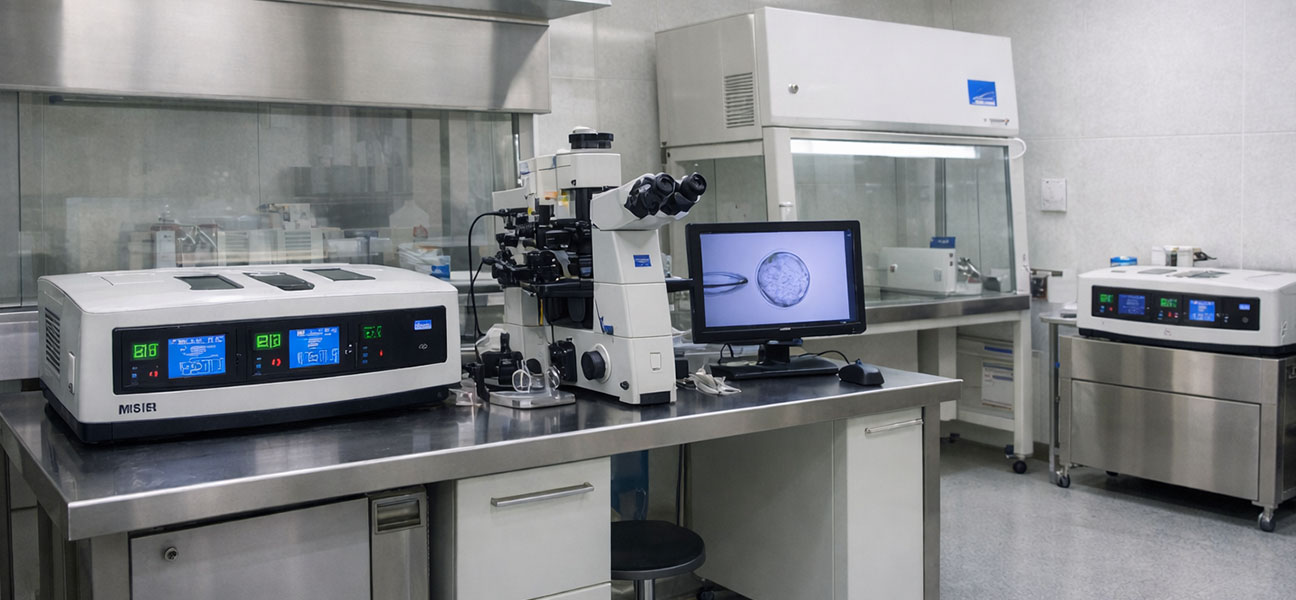
However, it is important to be objective: the overall level of reproductive medicine laboratories in Georgia still lags behind Western Europe (Spain, Greece) or the United States. The training systems for embryologists, quality control standards, and laboratory hardware vary. Therefore, the core logic for choosing Georgia is: to obtain a complete IVF cycle opportunity with a moderate budget under the premise of legality, rather than pursuing top-tier laboratory technology.
II. Specific Groups Suitable for IVF in Georgia
1. Those who cannot legally obtain third-party assisted reproduction in their home country
This is the most essential need group. It includes:
- Women needing egg donation (premature ovarian failure, advanced age, repeated empty follicle syndrome)
- Men needing sperm donation (azoospermia, severe oligoasthenospermia, risk of genetic diseases)
- Couples or individuals needing surrogacy (uterine factors, repeated implantation failure, inability to carry a pregnancy)
For these needs, Georgia's law provides a clear path. Donors must be anonymous. Surrogates are generally aged 35-45, have had at least one child, and pass strict medical screening. The entire process requires notarized contracts, medical evaluations, and legal registration.
2. Single individuals and same-sex couples
Georgian law does not require marital status as a prerequisite for assisted reproduction. Both single women and single men can apply. Same-sex couples (male/male or female/female) can also proceed via egg donation + surrogacy or sperm donation + self-pregnancy. This is relatively rare even within Europe.
Required documents: passport, birth certificate notarization, single status certificate (or affidavit of singleness), and in some cases, a psychological evaluation report.
3. Those with a moderate budget seeking a complete cycle
In Georgia, the cost of a complete IVF cycle (including ovulation induction, egg retrieval, embryo culture, PGT biopsy, and frozen embryo transfer) is approximately 6,000-10,000 Euros. If surrogacy is involved, the total cost ranges from 40,000 to 70,000 Euros (including surrogate compensation, medical, legal, and agency fees). Compared to the United States ($100,000-$150,000) and Canada (CAD 80,000-$120,000), Georgia's costs are 30%-50% lower.
This is suitable for those with a clear need, a budget between 200,000 and 500,000 RMB, and who do not wish to take on excessive debt for the procedure.
4. Women of advanced age or with diminished ovarian function
Age over 38, AMH below 1.2, FSH above 10, antral follicle count less than 6—these indicators point to diminished ovarian reserve. Georgia's ovulation induction protocols primarily use mild stimulation, focusing on egg quality rather than quantity. For these individuals, retrieving 2-5 eggs per cycle is common, and PGT screening is often combined to improve the efficiency of single embryo transfer.
However, it must be clear: Georgia cannot reverse the age-related decline in egg quality. If AMH is extremely low (<0.5) or age exceeds 44, directly considering the egg donation path is usually recommended.
5. Those requiring genetic disease screening
PGT (Preimplantation Genetic Testing) is widely available in Georgia, including PGT-A (aneuploidy screening) and PGT-M (monogenic disease screening). Costs are about 40% lower than in the US. Suitable for:
- Carriers of balanced chromosomal translocations
- Single-gene genetic disorders (e.g., thalassemia, hemophilia, spinal muscular atrophy)
- Those with recurrent miscarriage or repeated implantation failure suspected to be due to embryonic chromosomal abnormalities
Genetic counseling reports and pedigrees must be provided in advance. Some conditions require custom probes, which can take 2-3 months.
6. Those who have experienced repeated IVF failures in China and want to try a different region
For those who have failed more than twice in China, factors may include embryo quality, laboratory conditions, or legal restrictions (e.g., inability to perform PGT or use donor eggs). Georgia can be one option for a "change of environment." However, the reasons for failure must be analyzed: if the core issue is severe egg or sperm quality problems, changing regions may have limited effect; if it is due to laboratory technology or legal restrictions, benefits may be seen.
===== III. Unsuitable Groups =====III. Groups for Whom IVF in Georgia is Not Suitable
1. Those with severe uncontrolled medical conditions
This includes uncontrolled hypertension, diabetes, thyroid disease, active autoimmune diseases, and severe heart or kidney disease. Fertility centers in Georgia typically require medical reports from the last 3 months and conduct remote consultations for evaluation. If the physical condition cannot tolerate ovulation induction or pregnancy, starting is not recommended.
2. Those with extremely high standards for laboratory technology
If you expect to use the most advanced time-lapse imaging incubators, AI embryo scoring, or ultra-high-resolution PGT platforms, Georgia may not meet your expectations. The best local laboratories can reach a medium European standard but cannot compare with top-tier centers like IVI in Spain or CCRM in the US. Those who are particular about laboratory hardware should prioritize Western Europe or the US.
3. Those with an overly restricted budget
Although costs in Georgia are relatively low, it is not a "get it done for a few thousand yuan" option. A complete self-egg IVF cycle (excluding surrogacy) requires at least 50,000-80,000 RMB. If surrogacy is involved, the total budget is 300,000-500,000 RMB. If you can only afford less than 100,000 RMB and need surrogacy, it is advisable to postpone the plan and accumulate funds first.
4. Those who cannot adapt to跨国 medical travel
A complete IVF cycle in Georgia typically requires two visits: the first for ovulation induction and egg retrieval (stay of 12-16 days), and the second for embryo transfer (stay of 5-7 days). If surrogacy is involved, additional legal documents must be signed. If work, family, or physical conditions prevent跨国 travel, or if there are contraindications to long-haul flights, Georgia is not an ideal choice.
5. Those requiring urgent medical treatment
For emergencies such as ovarian torsion, ruptured endometrioma, or ectopic pregnancy, immediate medical attention is needed. Georgia's medical system has limited capacity for handling emergencies, and there may be language barriers. Individuals with a history of acute conditions should remain in their home country or a country with a more robust medical system.
IV. Actual Process and Timeline
| Stage | Specific Content | Time Required | Notes |
|---|---|---|---|
| 1. Evaluation & Preparation | Tests in home country: AMH, sex hormones, semen analysis, chromosomes, infectious diseases, thyroid function, hysteroscopy (recommended) | 1-2 months | Some tests have validity periods (e.g., infectious diseases 6 months) |
| 2. Remote Consultation | Submit reports, reproductive doctor evaluates, develops stimulation protocol | 1-2 weeks | Translations needed; some centers accept English reports |
| 3. Visa Application | Georgian e-visa or visa on arrival (citizens of many countries can enter visa-free or with visa on arrival) | 3-7 days | Ensure passport validity exceeds 6 months |
| 4. First Visit to Georgia (Ovulation Induction + Egg Retrieval) | Arrive at clinic on day 2 of menstruation, start stimulation, average 10-14 days, observe 1-2 days after retrieval | 12-16 days | Arrange accommodation, interpreter (if needed) |
| 5. Embryo Culture + PGT | Blastocyst culture 5-7 days after retrieval, biopsy sent for testing, wait for PGT results | 3-4 weeks | Can return home to wait; arrange transfer after results |
| 6. Second Visit to Georgia (Transfer) | Frozen embryo transfer, luteal phase support, pregnancy test 10-12 days after transfer | 5-7 days | Can confirm pregnancy locally before returning home |
Overall, from the initial consultation to confirmation of pregnancy, it generally takes 4-6 months. If surrogacy is involved, the process is more complex, including surrogate screening, legal contracts, and waiting for birth after embryo transfer, with a total duration of approximately 12-18 months.
===== V. Cost Breakdown Reference =====V. Cost Breakdown Reference
| Item | Cost Range (Euro) | Notes |
|---|---|---|
| IVF Cycle (includes stimulation, retrieval, culture, transfer) | 5,000–8,000 | Excludes PGT and medication costs |
| PGT-A (per embryo) | 300–500 | Charged per embryo |
| Egg Donation | 8,000–12,000 | Includes donor compensation, screening, legal documents |
| Surrogacy (includes agency, legal, medical) | 35,000–55,000 | Price varies greatly; confirm what is included |
| Medication (stimulation + luteal support) | 1,000–2,500 | Depends on protocol and dosage |
| Other (interpreter, accommodation, flights, visa) | 2,000–4,000 | Depends on personal spending level |
Note: The above are industry reference ranges for 2024-2025. Actual costs may vary due to factors such as protocol, medication brand, number of embryos, and surrogacy contract terms.
===== VI. Most Easily Overlooked Details =====VI. Most Easily Overlooked Details
- Passport validity. Georgia's visa on arrival/e-visa requires passport validity exceeding 6 months. Check before departure. If your passport is expiring soon, renew it before planning your trip.
- Translation and notarization of medical reports. Some Georgian fertility centers require domestic medical reports to be notarized or certified translated, not just a simple English translation. Confirm format requirements with the center in advance.
- Timing of AMH test. AMH can be tested on any day of the menstrual cycle, but FSH, LH, and E2 need to be checked on days 2-4 of menstruation. Testing only AMH without sex hormones prevents the doctor from fully assessing ovarian function.
- Hysteroscopy. Many patients in China overlook hysteroscopy. If endometrial polyps, adhesions, or chronic endometritis are present, the risk of implantation failure after transfer is very high. It is recommended to complete hysteroscopy examination and treatment before going to Georgia.
- Legal validity of surrogacy contracts. Surrogacy contracts in Georgia are protected by local law, but the details of enforcement for foreigners can be ambiguous. It is recommended to have a lawyer familiar with Georgian law review the contract and confirm the registration process for the parents' names on the birth certificate.
- Language communication. The official language of Georgia is Georgian. Russian is also widely used, but English proficiency is not high. It is advisable to bring your own interpreter or arrange medical translation through an agency to avoid misunderstandings of key information.
VII. Common Misconceptions
Misconception 1: IVF success rates in Georgia are higher than in China
Inaccurate. Differences in success rates mainly stem from patient selection criteria, age structure, and whether donor eggs are used. When comparing the same age group and same level of ovarian function, the live birth rates at top Georgian centers are comparable to those at leading reproductive centers in first-tier Chinese cities (e.g., Peking University Third Hospital, Shanghai Ninth People's Hospital), not significantly higher. The reason to choose Georgia is not because "they do it better," but because "the law allows certain things."
Misconception 2: Surrogacy in Georgia is very cheap, 300,000 RMB all-inclusive
300,000 RMB (approximately 38,000 Euros) can hardly cover a complete surrogacy cycle in the 2024-2025 market. Basic surrogacy packages typically cost 40,000-60,000 Euros. If multiple transfers, PGT, or additional medical expenses are involved, it can easily exceed 70,000 Euros. It is recommended to leave a 20%-30% buffer in budget planning.
Misconception 3: No waiting list for IVF in Georgia
Some centers do offer faster appointments, but well-known fertility centers (such as IVF Georgia, Chachava Clinic, etc.) also require scheduling, especially for PGT cycles and surrogacy cycles. It is advisable to contact them 2-3 months in advance to confirm availability.
===== VIII. Risk Reminders =====VIII. Risk Reminders
Practitioner's Observation: Over the past five years, I have handled over 200 consultation cases regarding referrals to Georgia. About 60% ultimately chose other destinations or treatment in China. Among those who chose Georgia, the most satisfied were those with clear legal needs, a reasonable budget, and objective expectations of the laboratory standards. The most dissatisfied were those who harbored the illusion that "going overseas for IVF" meant "success just by changing location." IVF is medicine, not a trip.
Comments (0)