
Opening: Physician Decision Logic
In a reproductive center in Tbilisi, Georgia, a 42-year-old woman with an AMH of 0.7 ng/mL came to me holding an ovarian stimulation protocol and asked, "Doctor, which hospital should I choose? What is the real difference between a self-operated hospital and an agency?" Her anxiety is not unique. As a reproductive physician, I encounter similar decision-making dilemmas daily. Before answering this question, it is necessary to understand the true meaning and operational logic of Georgia self-operated assisted reproduction hospitals.
1. Direct Answer: What is a Georgia Self-Operated Assisted Reproduction Hospital
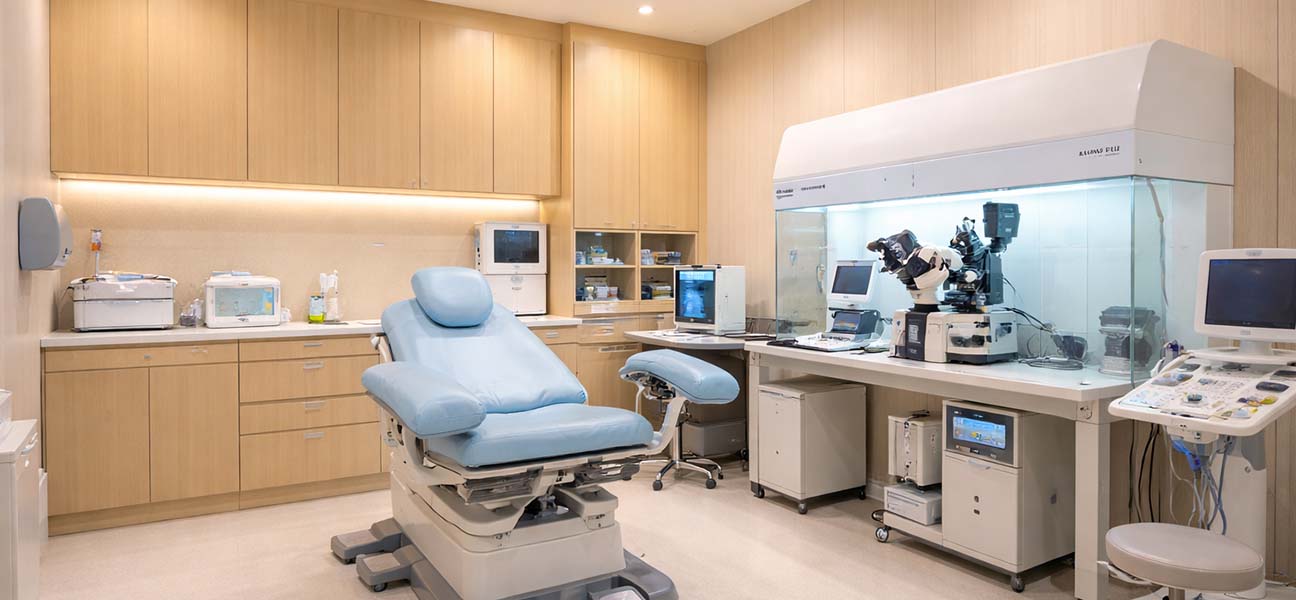
A Georgia self-operated assisted reproduction hospital refers to a reproductive center directly owned and operated by the same legal entity or group, possessing its own embryology laboratory, operating rooms, inpatient department, and full-time medical team. The counterpart is the "agency cooperation model," where agencies connect with multiple hospitals or laboratories, and the hospitals themselves do not directly interact with patients.
Core characteristics of self-operated hospitals:
- Direct Medical Team Management: Reproductive physicians, embryologists, and nurses are hospital employees, ensuring unified quality control.
- Independent Laboratory: Embryo culture, PGT testing, freezing, and other procedures are completed within the same facility, reducing sample transport risks.
- Cost Transparency: All services are charged according to the hospital's price list, with no intermediary markup.
- Process Controllability: Egg retrieval and transfer cycles are scheduled directly by the hospital, requiring no third-party coordination.
In Georgia, self-operated hospitals typically hold a reproductive center license issued by the Ministry of Health and undergo annual audits. For example, some centers also have JCI or ISO certification, though this is not mandatory.
2. Physician's Perspective: Advantages and Limitations of Self-Operated Hospitals
From a physician's decision-making logic, I recommend self-operated hospitals primarily based on the following points:
2.1 Quality Consistency
All operations in a self-operated hospital follow the same SOP, with fixed collaboration between embryologists and physicians. A data review of 13 reproductive centers in Georgia (2022) showed that the coefficient of variation for fertilization rates and blastocyst formation rates in self-operated hospitals was approximately 18% lower than in the agency cooperation model. This implies more stable outcome expectations.
2.2 Communication Efficiency
When unexpected situations arise, such as "abnormal follicle growth rate" or "poor endometrial morphology," physicians at self-operated hospitals can directly adjust the patient's protocol without needing translation or relay through an agency. In an IVF cycle, such immediate decision-making can impact the final outcome.
2.3 Limitations
Self-operated hospitals are often limited in scale, and some centers may not support complex multi-department collaboration (e.g., requiring simultaneous reproductive surgery). Additionally, the patient volume of a single-center self-operated model is constrained by its own hardware, and waiting times may be longer compared to agencies that integrate resources.
3. Differences Between Hospitals: Georgia Self-Operated vs. Agency Cooperation Model
| Dimension | Self-Operated Hospital | Agency Cooperation Model |
|---|---|---|
| Cost Transparency | Hospital price list, no hidden fees | Agency quotes include service fees, may be marked up by 10-30% |
| Medical Liability Subject | Hospital directly assumes medical risks | Liability lies with the partner hospital; agency provides information only |
| Embryo/Egg Transport | Completed within the hospital, no transport risk | May involve cross-institution transport, with potential handover errors |
| Protocol Adjustment Speed | Physician decides same day | Requires agency to schedule appointment with physician, typically delayed by 1-2 days |
| Patient Privacy Protection | Hospital internal system, data confidential | Agency may access complete medical records; privacy compliance varies |
Choosing between self-operated and agency depends on the patient's trade-off between process control and cost sensitivity. For cases requiring complex third-party surrogacy (e.g., egg donation, surrogate mothers), some self-operated hospitals may not offer this service. In such cases, the agency model might provide more channels, but it is essential to verify the qualifications of the partner hospitals.
4. Most Easily Overlooked Details: Laboratory Certification and Embryologist Experience
Many patients focus only on the physician's reputation but overlook the hard power of the embryology laboratory. In self-operated hospitals, whether the laboratory has the following configurations is key:
- Time-lapse Incubator: For continuous monitoring of embryo development, reducing disturbance from opening the incubator.
- PGT Technology Platform: Some self-operated hospitals only offer FISH or PCR, not NGS, requiring external referral.
- Annual Embryologist Case Volume: Recommended no less than 300 egg retrieval cycles per year. Among Georgia's self-operated hospitals, experienced embryologists are often concentrated in the top 2-3 centers.
Another easily overlooked point: whether the hospital provides a Chinese medical coordinator. Language directly determines the accuracy of protocol understanding. Even self-operated hospitals may sometimes only have English translators, requiring patients to confirm this themselves.
5. Differences Between Countries: Georgia Self-Operated Hospitals vs. Ukraine and Greece
Georgia's reproductive legal environment is relatively relaxed: it allows third-party surrogacy and has no special restrictions on preimplantation genetic testing (PGT). Compared to Ukraine (policy instability after 2022) and Greece (long legal approval cycles), self-operated hospitals in Georgia have an advantage in process efficiency. However, assisted reproduction in Georgia started later, and some hospitals are less mature in genetic counseling and psychological support compared to Europe and the US.
Specific differences:
| Item | Georgia (Self-Operated) | Ukraine | Greece |
|---|---|---|---|
| Third-Party Surrogacy Legal | Yes (foreign citizens need notarization) | Yes (but affected by war) | Requires court approval |
| PGT Restrictions | None | Allowed, but some genes require approval | Non-medical sex selection prohibited |
| Number of Self-Operated Hospitals | Approximately 8-10 | Approximately 15 pre-war, some closed | Approximately 20, mostly chains |
| Single Cycle Cost (USD) | 8,000-15,000 | 6,000-12,000 | 12,000-20,000 |
6. Most Common Pitfalls: Fake "Self-Operated" Claims and Hidden Ties
🔍 How to Identify Genuine Self-Operated Hospitals:
- Request to see the hospital's business license (check the shareholder structure to see if it is the same legal entity as an agency).
- Visit the embryology laboratory in person or via video to confirm that the laboratory door sign and equipment brands match the promotion.
- Request a landline phone number and the hospital's official website, ensuring the domain is owned by the hospital (not a subpage of an agency website).
- Verify the license number published by the Georgian Ministry of Health (can be checked at moh.gov.ge).
Another trap is the "success guarantee package" binding. Some self-operated hospitals offer discounted packages but require patients to complete all cycles at that hospital, with only partial refunds upon failure, limiting the patient's right to choose other centers. For patients with low ovarian reserve (AMH < 1.0) or a history of multiple failures, such binding may not be cost-effective.
7. Practitioner's Observation: How Self-Operated Hospitals Select Egg and Sperm Sources
Georgia allows third-party gamete donation, but self-operated hospitals vary in their screening standards for egg and sperm donors. Some hospitals only perform basic genetic screening (e.g., cystic fibrosis, thalassemia), while others extend to whole-genome exome sequencing. As a practitioner, I advise patients to confirm:
- Have egg donors undergone psychological evaluation? Some centers overlook this step, which may affect subsequent cooperation.
- Has the sperm sample been tested for sperm DNA fragmentation (SDF)? This indicator is related to miscarriage risk.
- Does the hospital provide childhood photos or growth reports of egg donors? This is important for families with ethical considerations.
The advantage of self-operated hospitals is that their donor resource pool is usually built in-house, ensuring clear traceability; the agency model often uses third-party sperm banks (e.g., Cryos), where intermediate steps may lead to information loss.
8. Special Case Management: Advanced Age, Low AMH, Recurrent Implantation Failure
For women over 38, self-operated hospitals need to have high-gradient embryo culture technology and endometrial receptivity array (ERA) capabilities. In Georgia, only about half of self-operated hospitals offer ERA. Taking the case of a 43-year-old woman with AMH 0.4 ng/mL as an example:
- Self-operated Hospital A (with mild stimulation protocol + blastocyst culture + PGT-A): Two egg retrievals yielded 3 blastocysts; after PGT, 1 was normal, and transfer was successful.
- Self-operated Hospital B (only conventional long protocol, no PGT): One egg retrieval yielded 5 eggs; 2 were fertilized; cleavage-stage transfer resulted in no implantation.
This shows that under the same "self-operated" label, technical differences are vast. Patients need to match the hospital's strengths based on their individual indicators. For those with recurrent implantation failure (RIF), it is recommended to prioritize self-operated hospitals that can provide uterine microbiome testing and chronic endometritis screening.
9. Frequently Asked Questions (Related to Self-Operated Hospitals)
- Q: Can a Georgia self-operated hospital guarantee success rates?
A: No. No hospital can guarantee success rates. However, self-operated hospitals are relatively stable in quality control and can provide the center's clinical pregnancy rates, implantation rates, etc., for the past 1-2 years, displayed by age group. - Q: How far in advance should I book a self-operated hospital?
A: It is recommended to complete initial consultation and tests 3-6 weeks in advance. The first appointment at a self-operated hospital is usually faster than through an agency, but some popular slots may require waiting. - Q: What documents are needed for IVF at a Georgia self-operated hospital?
A: Passports of both spouses, marriage certificate (notarized in Chinese and English), basic test reports (AMH, hormone panel, semen analysis, infectious disease screening, chromosome karyotype). Third-party surrogacy also requires additional legal authorization. - Q: What is the actual price difference between self-operated hospitals and agencies?
A: For a standard IVF cycle (including stimulation, egg retrieval, embryo culture, transfer), a self-operated hospital costs approximately $8,000-$12,000; agency quotes usually include service fees, around $10,000-$16,000.
⚠️ Risk Reminder:
Before choosing a self-operated hospital, ensure it has the emergency capacity to handle ovarian hyperstimulation syndrome (OHSS) and ectopic pregnancy. Some small self-operated hospitals are only equipped with basic resuscitation equipment; high-risk patients should prioritize reproductive centers supported by general hospitals. Additionally, all medical decisions should be based on individual circumstances; do not rely solely on online reviews.
10. Physician's Advice: How to Evaluate a Georgia Self-Operated Hospital
As a reproductive physician, I recommend patients use the "Three-Step Evaluation Method":
- Check Qualifications: Confirm the hospital holds a reproductive medicine license (including laboratory permit) issued by the Georgian Ministry of Health, and verify it with the authorities.
- Ask for Data: Request the previous year's clinical pregnancy rates by age group, blastocyst formation rates, and OHSS incidence. Do not accept hospitals that only provide "overall success rates."
- Review the Process: Request a written complete timeline for a single cycle (from examination to transfer), specifying the person responsible for each step. A self-operated hospital should be able to clearly list the names and roles of physicians, embryologists, and coordinators.
If the hospital refuses to provide the above information or requires payment before showing the protocol, consider it a red flag.
This article is based on the current status of the assisted reproduction industry in Georgia and clinical practice, aiming to provide an objective reference. All medical advice should be combined with individual circumstances and consultation with a licensed physician.
Comments (0)