
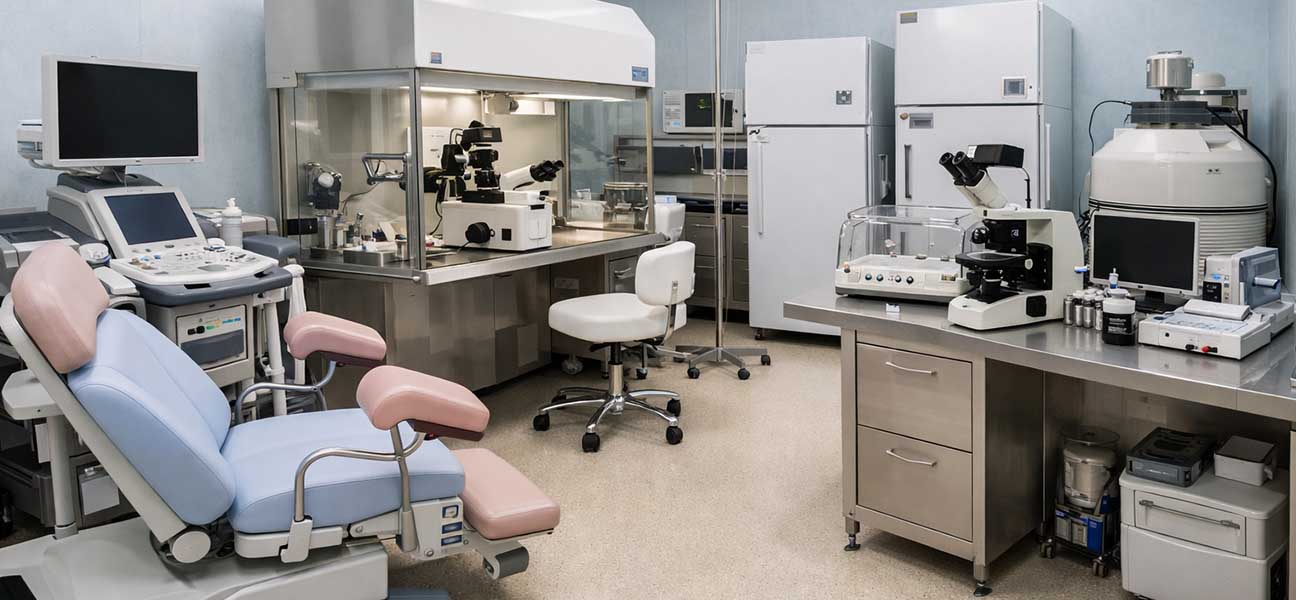
Regional Distribution of Tbilisi IVF Centers
Assisted reproductive institutions in Tbilisi are mainly located in the Vake district and the Saburtalo district. These two areas concentrate several IVF centers that receive international patients, with relatively mature surrounding transportation, accommodation, and dining facilities. The Vake district is located in western Tbilisi, near Rustaveli Avenue, belonging to the city's core area, where many public and private medical institutions are situated. The Saburtalo district is located in northern Tbilisi, a newly developed medical area expanded in recent years. Some newly built reproductive centers are located in this area, offering a quieter environment and more ample parking and accommodation space.
The drive from the airport to each center is usually within 25-40 minutes. Tbilisi International Airport is located in the southeastern part of the city. It takes about 30 minutes to reach the Vake district and about 35 minutes to reach the Saburtalo district. There are generally bus stops and taxi pick-up points around the centers, and some centers provide paid airport transfer services.
Location Characteristics of Major Reproductive Centers
| Center Name | District | Location Features | International Patient Support |
|---|---|---|---|
| Zhordania Institute of Reproductology | Vake district | Near Rustaveli Avenue, many surrounding hotels and dining options | Has an international patient coordination department, provides translation assistance |
| In Vitro Clinic | Saburtalo district | Located in a new medical area, wide roads, convenient parking | Offers online consultations and travel planning advice |
| Beta Clinic | Vake district | Adjacent to Tbilisi State University Medical School, strong academic atmosphere | Can assist with laboratory and genetic counseling coordination |
| Georgian-American Center for Reproductive Medicine | Saburtalo district | Near Tbilisi Zoo, quiet environment | Provides English communication services, mature medical record pre-review process |
Differences Between Hospitals: How to Choose a Center Based on Location
Choosing a center should not be based solely on the address. Location is just one dimension of the decision; it needs to be combined with the following factors for a comprehensive assessment.
- Medical Needs Match: Different centers have different focuses on PGT technology, egg donation, endometrial receptivity testing, etc. For example, patients needing screening for chromosomal structural abnormalities should prioritize centers with accumulated experience in genetic testing.
- Convenience of Visits: If you plan to stay in Tbilisi for a longer period (e.g., 2-3 weeks), the Vake district has more complete living facilities, with supermarkets, pharmacies, and Chinese restaurants within walking distance. If the stay is short (e.g., 7-10 days), centers in the Saburtalo district are close to main roads, making airport transfers quicker.
- Language Support: Some centers have full-time Chinese or English coordinators. Location does not affect communication quality, but this needs to be confirmed in advance. It is recommended to directly request a coordinator in the required language when making an appointment.
- Laboratory Standards: Regardless of the center's location, the quality control standards of the laboratory are the core factor. You should ask the center for recent laboratory quality control reports (e.g., embryo culture rates, freeze-thaw survival rates) rather than choosing based solely on location.
Common Misconceptions in Location Selection
An easily overlooked detail is that the main building of the center and the laboratory may not be in the same building. Some center laboratories are located in a branch a 5-10 minute walk from the main building, requiring travel between them for egg retrieval and transfer. Before making an appointment, confirm whether the egg retrieval operating room, embryology laboratory, and transfer clinic are in the same location to avoid delays in critical procedures due to transportation on the day.
Differences Between IVF in Georgia and Other Countries
Georgia's legal framework for assisted reproduction differs significantly from neighboring countries, and these differences directly impact treatment decisions.
| Comparison Dimension | Georgia | Some European Countries | China |
|---|---|---|---|
| Egg Donation | Legal, anonymous donation, age restrictions | Restricted or prohibited in some countries | Strictly restricted, only surplus eggs from IVF cycles allowed |
| Surrogacy | Legal for foreigners, clear legal framework | Most countries prohibit or allow only for citizens | Prohibited |
| PGT Technology | Allowed, including gender selection (in some regions) | Some countries restrict gender selection | Only for genetic disease screening, gender selection prohibited |
| Embryo Freezing Duration | Generally 10 years, renewable | 5-10 years, varies | 5 years, renewable |
| Medical Costs | Moderately low, excellent value for money | Relatively high | Moderate, but some procedures restricted |
These differences mean that individuals unable to undergo egg donation or surrogacy in their home country may consider Georgia as an alternative destination. Additionally, the high degree of openness in PGT technology makes it suitable for families at risk of chromosomal abnormalities or single-gene disorders.
Actual Medical Process: From Appointment to Transfer
Step 1: Online Medical Record Pre-review
After selecting a center, you need to submit basic examination reports from the last 3 months, including:
- Female: Hormone panel (FSH, LH, E2, etc.), AMH, antral follicle count, thyroid function, infectious disease screening
- Male: Semen analysis, infectious disease screening, chromosome karyotype (if indicated)
- Both: Complete blood count, coagulation function, electrocardiogram (recommended for age ≥40 or with underlying conditions)
After the pre-review is passed, the center will provide a preliminary treatment plan assessment and inform you if additional tests are needed. This step helps determine when it is suitable to travel directly to Tbilisi and when further local examinations are required before departure.
Step 2: Travel Arrangement
Based on the plan assessment, determine the day of the menstrual cycle to arrive in Tbilisi. The following is a general timeline:
| Phase | Time Required | Main Activities |
|---|---|---|
| Initial Consultation & Registration | 1-2 days | In-person doctor consultation, signing informed consent, supplementary tests (if needed) |
| Ovarian Stimulation | 10-14 days | Daily or every other day monitoring of hormones and follicle development |
| Egg Retrieval | 1 day | Egg retrieval under intravenous anesthesia, post-operative observation for 2-4 hours |
| Embryo Culture & PGT | 5-14 days | Time varies depending on whether PGT is performed |
| Transfer (Fresh or Frozen) | 1 day | Observation for 30 minutes after transfer, can return the next day |
What is the specific process? If using frozen embryo transfer, there needs to be an interval of 1-2 menstrual cycles after egg retrieval. You do not need to stay in Tbilisi during this time; you can prepare the endometrium in your home country and return for the transfer at the agreed time.
Time Planning Suggestions: How Long Does It Take
The overall time depends on the type of plan:
- Fresh Transfer: From arrival in Tbilisi to the end of the transfer, approximately 20-30 days. Suitable for those with ample time who wish to complete the process in one trip.
- Frozen Embryo Transfer: The egg retrieval phase takes about 14-18 days, and the transfer phase takes about 5-7 days (two separate trips). Suitable for those with time constraints or those waiting for PGT results.
- Egg Donation/Surrogacy: Donor screening and ovarian stimulation are arranged by the center. The recipient only needs to travel for the transfer phase, about 5-7 days.
What needs attention? Your passport must be valid for more than 6 months, and the visa type must cover the entire stay. Georgia offers e-visas or visa-free entry for Chinese citizens (depending on policy changes). Confirm the latest entry regulations before departure. It is recommended to complete all documents one month before departure and keep electronic backups.
Cost Influencing Factors
The cost of IVF in Tbilisi varies significantly depending on the center, plan, and whether donation/surrogacy is needed. The following are general ranges (in USD):
| Item | Cost Range | Notes |
|---|---|---|
| Basic IVF Cycle (includes stimulation, retrieval, culture, transfer) | 5,000 - 9,000 | Excludes medication and PGT |
| Stimulation Medications | 1,500 - 3,500 | Adjusted based on age and ovarian response |
| PGT-A (Embryo Chromosome Screening) | 2,000 - 4,000 | Charged per embryo |
| Egg Donation (includes donor compensation) | 3,000 - 6,000 | Varies significantly between centers |
| Surrogacy (includes legal, medical, compensation) | 35,000 - 55,000 | Paid in stages |
| Embryo Freezing & Storage (per year) | 300 - 600 | Annual renewal |
How to determine if the cost is reasonable? It is recommended to request a detailed fee breakdown from the center, including: medical fees, laboratory fees, medication fees, examination fees, surgical fees, and embryo storage fees. Do not just look at the total price; compare item by item. Also, clarify: if the cycle is cancelled or paused, which fees are refundable and which are not.
Special Situation Management
Advanced Maternal Age (≥40 years)
For older women undergoing IVF in Tbilisi, attention should be paid to ovarian reserve and egg quality. When AMH is <1.0 ng/mL, the number of eggs retrieved may be low. Discuss with the doctor whether to use a mild stimulation or natural cycle protocol. If considering egg donation, it is legal in Georgia with relatively sufficient donor resources, suitable for those who have failed with their own eggs or have severely diminished ovarian function.
Recurrent Implantation Failure
If you have had more than 3 previous transfers of good quality embryos without implantation, it is recommended to complete the following tests before traveling to Tbilisi: Endometrial Receptivity Analysis (ERA), chronic endometritis testing, and immunological tests (anticardiolipin antibodies, NK cell activity, etc.). Centers in Tbilisi can adjust the transfer protocol based on these results, including endometrial preparation and medication support.
Chromosomal Abnormalities or Single-Gene Disorders
Patients requiring PGT-SR or PGT-M should choose centers with accumulated experience in genetic testing. Some centers collaborate with third-party genetic laboratories, which may extend the testing time to 10-14 days. Before making an appointment, confirm: how long after embryo biopsy will results be available? Is frozen embryo transfer supported? If results are abnormal, is genetic counseling available?
Frequently Asked Questions
Question 1: For the first visit to Tbilisi, how early should I arrive?
It is recommended to arrive in Tbilisi on day 2-3 of the menstrual cycle. The initial consultation and registration can be completed that day or the next. If there is a significant time difference, arriving 1-2 days earlier to adjust to the environment is more reliable.
Question 2: Does the male partner need to accompany for the entire process?
The male partner needs to be present on the day of egg retrieval to provide a semen sample. If using frozen sperm or testicular sperm extraction, the male partner can arrive 1-2 days before the retrieval and return after providing the sample. If using donor sperm, the male partner does not need to come to Tbilisi.
Question 3: How to choose an IVF center in Tbilisi?
First, clarify your medical needs (own eggs, egg donation, surrogacy, PGT, etc.). Then, screen 2-3 centers with experience in that area, comparing plans, costs, and communication efficiency. It is advisable to choose a center with international patient coordinators and support for Chinese or English communication to reduce communication barriers.
Question 4: How far in advance should I prepare for overseas IVF?
At least 1-2 months in advance. You need to complete: basic examinations, medical record organization, passport renewal, visa application, center appointment, and flight/accommodation booking. For those with low AMH or advanced age, it is recommended to start taking antioxidants like CoQ10 3 months in advance to improve egg quality.
Question 5: Is IVF safe in Georgia?
Georgia's assisted reproduction regulatory system follows European standards. Major centers are equipped with laminar flow clean labs and embryo time-lapse monitoring systems. However, you should confirm whether the center has international certifications (e.g., ISO15189 laboratory certification, ESHRE membership). It is recommended to choose centers that have been operating for over 5 years with clear quality control data.
Observations from Practitioners
As a medical editor, I have encountered many cases of IVF completed in Tbilisi. An easily overlooked detail is whether the center provides remote follow-up services before and after the transfer. Some centers offer online platforms to answer medication and follow-up test questions after patients return home, which is very important for those who cannot stay long-term. Another observation is that centers in Tbilisi tend to individualize medication use. Doctors dynamically adjust protocols based on hormone levels and endometrial morphology, rather than following a fixed process. This requires patients to have clear records and communication about their body's responses.
Additionally, regarding the interpretation of test indicators: AMH level directly reflects ovarian reserve, but it is not the only factor determining success. Antral follicle count (AFC) and previous stimulation response history are equally crucial. If AMH is low but AFC is acceptable, there is still a chance to obtain enough eggs. An FSH/LH ratio >2.5 suggests a possible decline in ovarian response, and such individuals require more finely tuned stimulation protocols.
Suggestions for Next Steps
If you are considering IVF in Tbilisi, it is recommended to complete the following three steps first:
- Step 1: Complete a basic fertility assessment locally (hormone panel, AMH, semen analysis) and obtain reports from the last 3 months.
- Step 2: Compile your medical history, surgical history, and miscarriage history to form a complete medical summary for the center's pre-review.
- Step 3: Based on the assessment results, screen 2-3 centers for online consultations, focusing on: plan compatibility, cost breakdown, laboratory quality control data, and coordinator support.
After completing these three steps, decide whether to travel to Tbilisi and which center to choose. This helps avoid hasty decisions due to insufficient information.
Comments (0)