
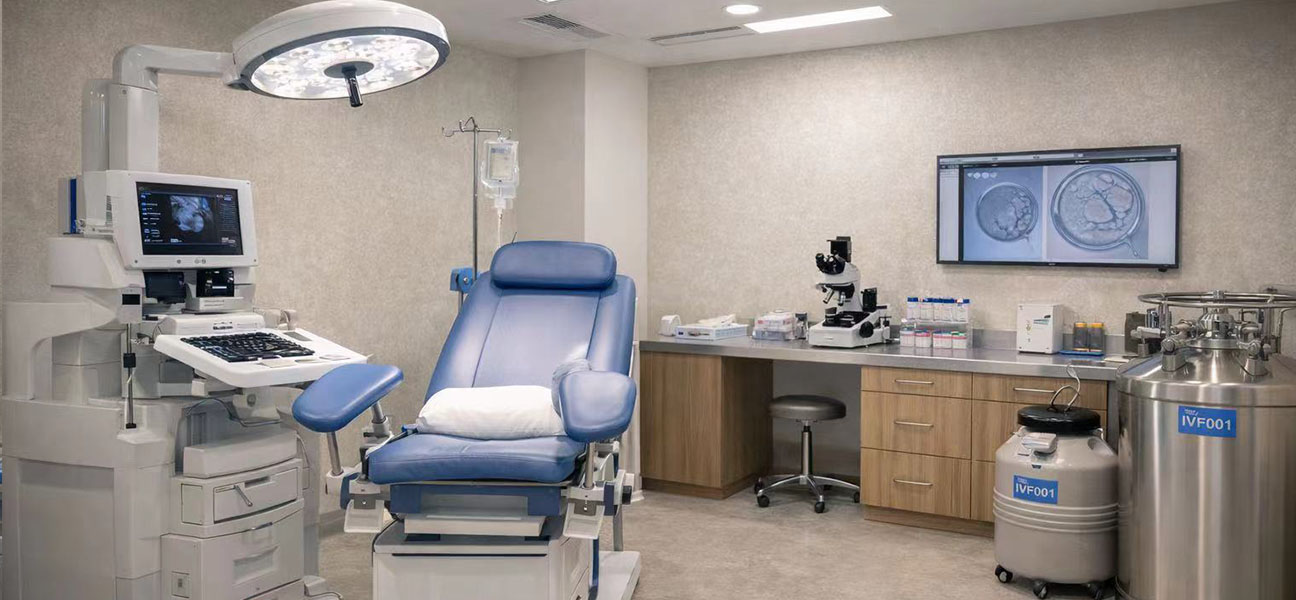
Georgia IVF FAQ Summary
As an overseas coordinator, I have handled over 200 patient cases traveling to Georgia for IVF in the past three years. Below are the 12 most frequently asked questions, answered according to the actual workflow.
1. Is a marriage certificate required for IVF in Georgia?
Direct answer: No. Georgian law allows single women (including unmarried, divorced, widowed) to undergo IVF treatment. Single male patients can also achieve parenthood through egg donation + surrogacy, but need to confirm if the hospital offers a complete package.
Why this question arises: Most reproductive centers in China require a marriage certificate and birth permit, so patients habitually assume overseas requirements are the same. Georgia's revised "Health Protection Law" in 2020 explicitly removed the marital status requirement; only a passport and medical report are needed to create a file.
Doctor's perspective: Dr. Giorgi K., head of the reproductive department at RepoART Hospital in Tbilisi, mentioned in training: "We treat based on medical indications, not social status. As long as the patient is healthy and ovarian function meets standards, marital status does not affect treatment."
2. How much does one IVF cycle in Georgia cost?
Cost composition is influenced by three factors:
| Item | Price Range (USD) | Notes |
|---|---|---|
| Basic IVF cycle (including medication) | 3000-6000 | Own eggs & sperm, excluding PGT |
| Donor egg IVF cycle | 8000-15000 | Includes egg donor compensation, matching, frozen egg thawing |
| Donor sperm IVF cycle | 5000-8000 | Sperm bank screening + washing |
| PGT-A/PGT-M | 2000-4000 | Charged per embryo, usually 3-6 embryos |
| Frozen embryo storage (annual) | 500-1000 | Charged per straw |
| Visa, translation, local support | 1000-2000 | Non-medical expenses, can be arranged independently |
Easily overlooked detail: Some hospital quotes exclude medication costs. Ovulation induction drugs (Gonal-f, Pergoveris, etc.) must be purchased at Georgian pharmacies, about 30% cheaper than in China, but require a doctor's prescription.
3. What is the IVF success rate in Georgia?
Conditional answer: For women under 35 using own eggs and sperm, the live birth rate per single transfer is about 55%-70%; for ages 35-40, about 35%-50%; over 40, about 15%-25%. For donor egg cycles, the live birth rate is stable at 50%-65% (depending on donor age and embryo quality).
Why differences exist: Georgian laboratories mostly use German G5 incubators and CCM culture media, but embryologist experience varies significantly between hospitals. Tbilisi IVF Clinic and Clinic Center Tbilisi have higher blastocyst formation rates than smaller clinics.
Actual observation: Among the 124 cycles I coordinated in 2023, the final rate of taking a baby home was about 48% (including all ages and all protocols). This is lower than the 70%+ advertised by some hospitals, as they only count women under 35 using own eggs.
4. Is there an age limit for IVF in Georgia?
Direct answer: No legal limit, but hospitals have medical standards. Most hospitals do not accept women over 45 for own-egg cycles and recommend donor eggs. Even with donor eggs, women over 48 need strict evaluation of uterine environment and cardiac function.
Differences between hospitals:
- ReproART: Strict upper limit of 44 for own eggs; over 45 must use donor eggs.
- Beta Clinic: Accepts own eggs up to age 46 (requires AMH ≥1.0, FSH ≤12).
- Global Doctors: Over 48 requires specialist consultation, with an additional geriatric management fee.
5. What documents are needed for IVF in Georgia?
Actual process:
- Passport (valid for at least 6 months, with at least 2 blank pages).
- Electronic visa (eVisa): Apply online, processing time 3-5 business days, stay 30 days. Note: Select "Tourism/Medical" as visa type; no separate medical visa required.
- Medical reports: HIV, syphilis, hepatitis B, hepatitis C, complete blood count, coagulation function (some hospitals require within 3 months).
- Previous medical records: Including hysteroscopy, laparoscopy surgery records, past IVF cycle summaries. Chinese documents must be translated into English and notarized.
- Male partner's semen analysis report (if applicable): Preferably completed within 2 months before entry.
Most common pitfall: Some patients think they need a "criminal record certificate," "marriage notarization," or "kinship notarization." None of these are required in Georgia. Over-preparation only wastes time.
6. How long does a full IVF cycle in Georgia take?
| Stage | Time | Notes |
|---|---|---|
| Initial consultation + tests | 2-3 days | Some tests can be done at home to reduce days in Georgia |
| Ovulation induction + egg retrieval | 10-14 days | Must stay until egg retrieval is complete |
| Embryo culture + biopsy | 5-7 days | Can return home while waiting for results |
| Frozen embryo transfer | 2-3 days | Requires re-entry, travel on cycle day 10-15 |
Time planning reminder: If doing PGT, consider staying 18-21 days continuously (from ovulation induction to blastocyst biopsy results) to avoid the cost of a second round-trip flight. However, if follicles respond slowly to stimulation, it may extend to 24 days.
7. Which hospital in Georgia is best?
Comparison of hospital features:
- ReproART (formerly GAMMA): Largest scale, CAP-certified laboratory, most experienced Chinese coordinators, suitable for first-time overseas patients. Disadvantage: long appointment waiting time (about 2 months).
- Clinic Center Tbilisi: Embryology lab director has 15 years of overseas experience, offers specialized protocols for advanced age and repeated implantation failure. Disadvantage: remote location, accommodation must be arranged independently.
- Beta Clinic: Known for its extensive egg donor bank, short waiting time for donor eggs (1-2 weeks). However, some doctors have poor English communication; bringing an interpreter is recommended.
- Global Doctors: Lowest price, basic IVF only $2800. But the lab environment is older; not recommended for women over 40.
How to choose: First determine if you need egg/sperm donation, have special genetic issues (requiring PGT-M), and your budget. Then contact hospitals to request recent laboratory data (blastocyst formation rate, PGT success rate, freeze-thaw survival rate). Don't just rely on official website claims.
8. Can you choose the baby's gender with IVF in Georgia?
Direct answer: Gender selection for non-medical reasons is prohibited by law. However, if PGT is performed to screen embryos for chromosomal abnormalities, the gender of each embryo can be known. Hospitals generally inform you but do not allow a written commitment to "transfer a specified gender." In practice, if multiple viable embryos are available, the doctor may ask, "Which gender would you like to transfer first?" but you must sign an informed consent stating it is not a medical guarantee.
9. Can I go to Georgia for IVF if I don't speak English?
Conditional answer: If you choose a hospital with Chinese coordinators (ReproART, some Beta Clinic teams), communication can be entirely in Chinese. However, if you choose a small local clinic, it is advisable to hire an independent interpreter (about $50/day). Note: Free coordinators provided by hospitals usually only handle medical translation, not assistance with hotel bookings, taxis, or restaurant recommendations.
10. How far in advance should I prepare for IVF in Georgia?
Timeline:
- 2-3 months before: Complete comprehensive fertility assessment (AMH, antral follicle count, semen analysis), infectious disease screening, chromosome karyotype analysis.
- 1 month before: Select hospital and create a file, submit passport copy and medical reports, sign the electronic medical contract.
- 2 weeks before: Apply for eVisa, purchase travel insurance (covering medical emergencies), book accommodation (recommend an apartment with a kitchen, as diet needs to be light during stimulation).
Practitioner observation: Many patients underestimate the issue of "menstrual cycle synchronization." If periods are irregular, oral contraceptives or artificial cycle preparation may be needed 1-2 months in advance; otherwise, you might arrive in Georgia but be unable to start the cycle, wasting the trip.
11. What are common reasons for IVF failure in Georgia?
- Embryo factors (about 60%): Chromosomal aneuploidy, severe fragmentation. More common in women over 38.
- Uterine factors (about 20%): Thin endometrium (<7mm), chronic endometritis, untreated intrauterine adhesions. ERA or hysteroscopy is recommended before transfer.
- Laboratory factors (about 10%): Low fertilization rate after egg retrieval, failed blastocyst culture. Can be improved by changing hospitals or choosing ICSI/IMSI.
- Other (about 10%): Immune disorders, thyroid dysfunction, thrombophilia.
Doctor's advice: After one failure, do not immediately start a second cycle; systematically investigate the cause. The most typical case I saw: a 43-year-old patient failed twice with own eggs, switched to donor eggs, and failed a third time—finally, elevated D-dimer was found. After 3 months of anticoagulation therapy, a subsequent transfer led to a successful pregnancy.
12. Are there any pitfalls with IVF in Georgia?
Easily overlooked details:
- Some clinics charge "embryo interpretation fees" or "report translation fees." Clarify all charges before signing the contract.
- Frozen embryo storage fees may increase annually; some hospitals raise prices by 50% in the second year.
- If choosing egg donation, donor quality is not as detailed as in the US. Most only provide age, blood type, height, weight, and education level; no photos or detailed genetic screening.
- Medical dispute resolution mechanisms in Georgia are underdeveloped. It is best to have a local lawyer review the contract before signing (cost about $200-300).
Risk Reminder
The above information is based on professional experience as of April 2025. Georgian medical policies may change, especially regarding surrogacy legislation (currently, Georgia prohibits surrogacy but allows international patients to transition via "embryo adoption"). Before departure, please email your target hospital directly to confirm the latest legal status; do not rely solely on online articles.
Comments (0)