
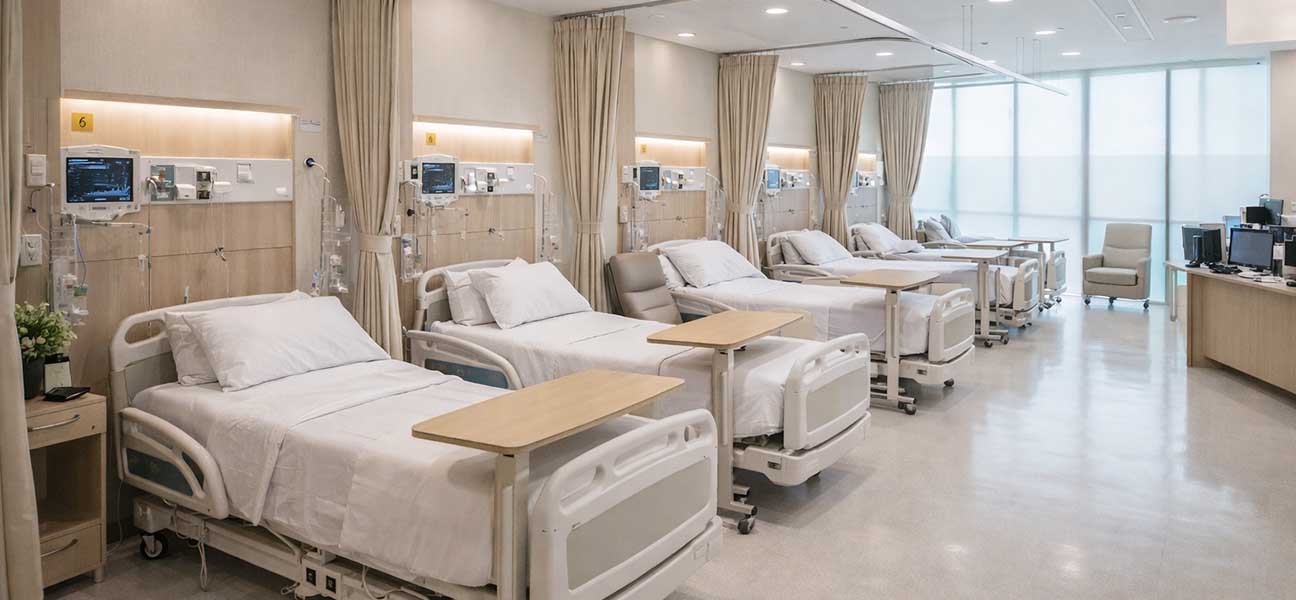
Detailed Address of Tbilisi International Reproductive Medical Center, Georgia
A woman preparing to travel to Georgia for IVF left a message in the local coordination group:
“I want to go directly to the Tbilisi Reproductive Medical Center tomorrow at 10 a.m. to have a look. Can anyone tell me exactly how to get there? What should I tell the taxi driver?”
This is the first practical problem many people encounter after arriving in Tbilisi.
Center Specific Location and Transportation
The center is located in the core medical zone of Vake District, Tbilisi. The specific address is:
12, Merab Aleksidze Street, Vake, Tbilisi, Georgia
The building is a light beige independent medical structure with a prominent “International Reproductive Medical Center” sign on the roof. From Tbilisi International Airport, the drive takes about 35 minutes (non-peak hours); from Freedom Square in the city center, a taxi takes about 15 minutes. It is recommended to use the Bolt or Yandex.Taxi App, and enter “International Reproductive Medical Center” as the destination.
Hospital Internal Department Distribution (Visitor Information)
| Floor | Department/Function | Visitor Notes |
|---|---|---|
| 1F | Reception Hall, Registration & Payment, Pharmacy | First-time visitors must present their passport at the reception desk and fill out a registration form. |
| 2F | Gynecology Clinic, Andrology Clinic, Ultrasound Room | After starting the cycle, the female partner must arrive at the scheduled time. The male partner needs to abstain from ejaculation for 2-7 days for semen analysis. |
| 3F | Embryology Lab, ICSI Operation Room | Unauthorized personnel cannot enter. Embryo development can be observed via video monitoring. |
| 4F | Operating Rooms (Egg Retrieval/Transfer), Recovery Room | Must fast for 6 hours on the day of egg retrieval. Observe for 2 hours post-surgery. |
| 5F | Administrative Office, Translation & Coordination Department | Contract signing, fee consultation, and translation services are on this floor. |
When is it Suitable to Choose This Center
- Women under 40 with good ovarian reserve (AMH ≥ 1.2 ng/mL) wishing to undergo conventional IVF.
- Men with severe oligoasthenospermia requiring ICSI (Intracytoplasmic Sperm Injection) technology.
- Individuals with clear monogenic genetic diseases or chromosomal balanced translocations requiring PGT-M or PGT-SR.
- Those seeking a high cost-performance overseas IVF plan, as overall costs in Georgia are significantly lower than in the US and Western European countries.
When is it Not Suitable to Go Directly
- If a basic fertility assessment (hormone panel 6, AMH, semen analysis, infectious disease screening) has not been completed — The center requires all test reports to be valid within 3 months of the appointment, otherwise retesting is needed.
- Without a notarized and translated marriage certificate (Georgian law requires both parties undergoing IVF to be legally married).
- Presence of severe intrauterine adhesions or untreated endometrial pathology (requires hysteroscopy diagnosis and treatment locally first).
- Not psychologically prepared for cross-border medical treatment (language barriers, jet lag, minimum stay of 21 days).
Why the Address Information is Crucial for Patients
Direct reason: Many patients find vague addresses through search engines and mistakenly go to nearby commercial buildings or clinics. This center is one of the few institutions in Georgia with a complete embryology lab and PGT qualifications, but there are clinics with similar names and unclear qualifications nearby. An accurate address helps patients avoid going to unregulated institutions, saving time and ensuring medical safety.
Specific Process: From Arrival at the Center to Starting the Cycle
- Step 1: Schedule Initial Consultation — Submit basic reports (AMH, hormone panel 6, male semen analysis, infectious disease panel 8) via official email or a designated coordinator. The center will reply within 3 working days regarding acceptance.
- Step 2: Visa and Accommodation — Apply for a short-term medical visa (maximum 30 days) using the medical invitation letter. It is recommended to book an Airbnb or apartment within a 15-minute walk from the center for easy daily monitoring.
- Step 3: File Creation on Arrival Day — Bring your passport, original marriage certificate with notarized translation, and all original test reports to the 1st-floor reception desk to sign the informed consent form.
- Step 4: Cycle Plan Determination — Based on the woman's ultrasound and hormone levels on days 2-4 of her menstrual cycle, the doctor will devise an ovulation stimulation plan (commonly an antagonist protocol or short protocol).
- Step 5: Stimulation - Egg Retrieval - Transfer — Average stimulation lasts 11 days. After egg retrieval, embryos are cultured for 5-6 days for blastocyst transfer or freezing. A blood pregnancy test is done 10 days after transfer.
What to Prepare
- Valid passport (valid for at least 6 months, recommended remaining validity > 12 months).
- Notarized marriage certificate in Chinese and English (obtained from a notary office in your registered residence, with a Georgian translation).
- Female: AMH, hormone panel 6, thyroid function, infectious diseases (Hepatitis B, Hepatitis C, HIV, Syphilis), chromosome karyotype analysis.
- Male: Semen analysis (2 times, interval > 1 week), infectious diseases, chromosome karyotype analysis (if PGT is needed).
- Financial preparation: The cost for a single conventional IVF cycle is approximately $7,000 - $9,000 USD (including medication, tests, egg retrieval, culture, transfer).
How Long Does It Take
From the initial consultation to confirmed pregnancy, the shortest cycle is about 35 days (continuous stay: arrive on menstrual day 2, egg retrieval on day 12, transfer on day 17, pregnancy test on day 27). If frozen embryo transfer or PGT is required, two trips are needed, with a total overseas stay of about 40-45 days (with a 1-2 month interval in between).
What are the Risks
- Risks related to egg retrieval: Ovarian Hyperstimulation Syndrome (incidence about 3-5%). The center reduces risk using GnRH antagonists and a freeze-all strategy.
- Risk of embryo transfer failure: For women over 40, the live birth rate per cycle is about 20-25%, so preparation for multiple cycles may be necessary.
- Legal and documentation risks: Incomplete notarization or translation errors in the marriage certificate may prevent file creation.
- Visa risk: Medical visas typically allow a single stay of 30 days. Overstaying requires an extension application, otherwise it may affect future entry.
How to Determine if You Are Ready
You can decide by answering the following key questions:
① Have you completed all basic tests and are they valid within 3 months?
② Have you obtained the notarized marriage certificate for both parties and completed the translation?
③ Are you prepared to pay at least 70% of the treatment cost upfront? (Some packages allow installments, but the center requires a minimum down payment of 50%).
④ Have you and your spouse reached a consensus on the acceptance of preimplantation genetic screening?
If the answer to all the above is “yes”, you can start making an appointment.
How to Choose a Specific Doctor at the Center
The center has 4 reproductive doctors, each specializing in:
- Dr. Nino K.: Optimization of ovulation stimulation protocols for advanced maternal age (>40 years old)
- Dr. David M.: Male infertility (especially surgical treatment for azoospermia)
- Dr. Tamar B.: Recurrent implantation failure and endometrial receptivity assessment
- Dr. Lasha G.: Embryo genetic counseling (PGT candidates)
It is recommended to choose the initial consultation doctor based on your primary diagnosis to save subsequent referral time.
Easily Overlooked Details
1. The center does not provide on-site Chinese interpreters, but you can arrange remote interpretation (approx. $30/hour) or hire a local Chinese-speaking assistant for an additional fee.
2. All medications must be purchased at the center's pharmacy. Do not bring prescription stimulation drugs from your home country (customs may confiscate them).
3. Confirm the availability of luteal phase support medications (e.g., Dydrogesterone, Crinone) after transfer in advance to avoid running out.
4. Some tests (e.g., hysteroscopy) need to be done at designated partner hospitals outside the center, requiring an extra day.
Practitioner's Observation: Why the Address Question is Repeatedly Asked
As a person with 7 years of experience coordinating assisted reproduction, I find that many patients spend a lot of effort comparing prices and success rates but overlook the first step: “how to accurately find the hospital.” In recent years, many small reproductive clinics have opened in Tbilisi, some calling themselves “International Reproductive Medical Center” but lacking an embryology lab. It is strongly recommended to confirm the specific building name and floor layout via official email before departure, and take a screenshot of the street photo with the building number. Additionally, some mobile maps in the Vake District have outdated information. It is more accurate to use the Bolt App to search for the hospital's Georgian name “საერთაშორისო რეპროდუქციული სამედიცინო ცენტრი” than the English name.
Special Population Reminders
Women with a single ovary or history of ovarian surgery: Need to have a baseline antral follicle count done in advance. If AFC < 5, the center may suggest a natural cycle protocol, resulting in a limited number of eggs retrieved; be mentally prepared.
Hepatitis B/Syphilis carriers: The center has an independent infectious disease management protocol and can proceed with the cycle normally, but a recent viral load report is required. Embryo culture will be in a separate incubator, with a slightly higher cost (approximately an additional $300 USD).
Very advanced maternal age (>45 years old): The center usually requires a follicle monitoring and AMH assessment first. If AMH < 0.5 ng/mL, the doctor will inform you of the extremely low success rate and may suggest considering an egg donation plan.
Time Planning Reminder
Do not just allocate time to “go and try your luck.” On the first working day after arriving in Tbilisi, it is recommended to only do two things: ① Go to the center at 9:30 AM to create your file and have blood drawn, and ② Go to the notary office in the afternoon to confirm the translation documents. Notary offices in Tbilisi are not very efficient; some documents may take 2-3 working days to authenticate, so plan accordingly. All test sheets must be sent to the doctor for review via email in advance; otherwise, you may be told on-site that items are missing, causing an overall delay.
Risk Reminder
If you see online promotions like “IVF possible without a marriage certificate” or “arrive and start the cycle on the same day,” be highly vigilant. The Tbilisi International Reproductive Medical Center in Georgia strictly enforces the married couple policy, and all tests must be completed at the center or its partner laboratories. Any promise to bypass standard procedures means medical safety cannot be guaranteed. Please confirm all steps through official channels (website or certified coordinators). It is not recommended to transfer money directly to personal accounts via unregulated intermediaries.
Comments (0)