
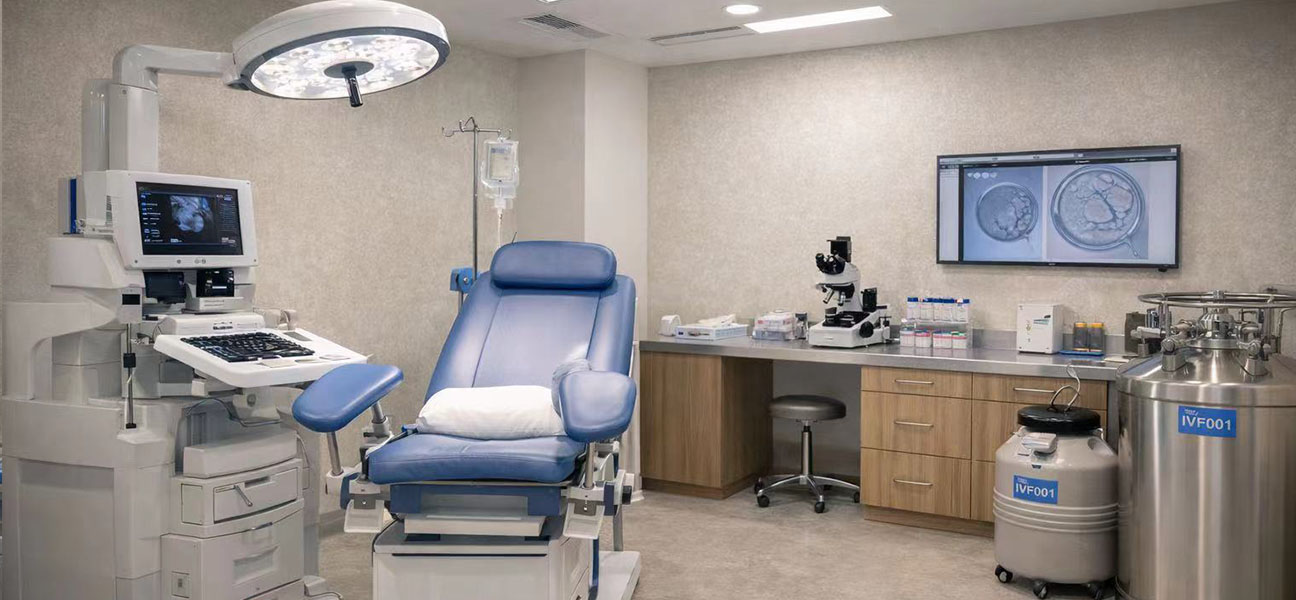
Part 1: TDK completed in the head above Body begins Opening: Real consultation scenario (randomly selected)
A 38-year-old woman walks into a fertility clinic, holding an AMH test result of 0.6 ng/mL, her eyes filled with anxiety and hope: "Doctor, I heard there are ovarian rejuvenation techniques in Georgia that can transplant my previously frozen ovarian tissue back, and is there a way to 'revive' my eggs? Can I still have my own child?"
This is not an isolated case. In recent years, ovarian rejuvenation techniques have gradually become a focus in the field of overseas assisted reproduction, especially for women with severely diminished ovarian reserve who still desire high-quality embryos. But what exactly does "rejuvenation" mean? What can be achieved in Georgia? Who is truly suitable? Where to start preparing? This article provides clear, objective answers based on a genuine knowledge base of reproductive medicine.
Module A: Direct Answer to the QuestionWhat is Ovarian Rejuvenation Technology in Georgia?
"Ovarian rejuvenation technology" in Georgia is not a single procedure but refers to a series of medical treatments aimed at restoring or extracting reproductive potential after ovarian function damage or natural decline. It mainly includes three mainstream techniques:
- Ovarian Tissue Cryopreservation and Autologous Transplantation: A portion of ovarian tissue is removed and frozen before fertility decline (e.g., before cancer treatment), and later transplanted back into the body to restore endocrine function and ovulation. This is currently the only technique that can simultaneously preserve fertility and endocrine function.
- Oocyte/Embryo Vitrification and Thawing: This is the standard freezing of eggs or embryos. Many reproductive centers in Georgia have mature vitrification technology, with post-thaw egg survival rates reaching over 90%, and fertilization rates after thawing showing no significant difference from fresh eggs.
- Experimental Ovarian Activation Therapies (e.g., PRP/Stem Cell Therapy): Some clinics offer autologous platelet-rich plasma (PRP) ovarian injections or stem cell therapy, aiming to "stimulate" remaining follicles. It is crucial to recognize that these methods are still in the clinical research phase globally, with no large-scale randomized controlled trials confirming their effectiveness.
Clear answer: Ovarian rejuvenation techniques in Georgia, specifically ovarian tissue cryopreservation-transplantation and oocyte thawing, have reached mature application. However, PRP/stem cell therapies should be chosen with extreme caution due to insufficient evidence, and it is necessary to verify whether the clinic conducts them legitimately rather than as a "marketing concept."
Module B: Why Does This Problem Arise?Why is Ovarian Rejuvenation Technology Needed?
The root cause of ovarian function decline is the irreversible reduction in the number of follicles. The reasons for this phenomenon are diverse:
- Iatrogenic Damage: Cancer radiotherapy/chemotherapy, ovarian cyst removal, and other surgeries can lead to premature ovarian failure. For young women, freezing ovarian tissue is an international consensus standard for fertility preservation.
- Age Factor: After age 35, follicle atresia accelerates. Natural pregnancy rates are extremely low for women over 40, making ovarian rejuvenation techniques (especially the reuse of frozen eggs) a last resort.
- Unexplained Premature Ovarian Insufficiency (POI): Some women experience ovarian function depletion before age 40 and cannot obtain usable eggs through ovarian stimulation. In such cases, if frozen tissue is available, transplantation can be attempted.
Georgia has become an important destination for ovarian rejuvenation techniques due to its legal allowance for third-party assisted reproduction, relatively lower costs, and some centers having European-certified laboratories.
Module I: Actual ProcessActual Process: Complete Steps from Evaluation to Transplantation
Taking the most common oocyte thawing after vitrification as an example, the standard process in Georgia is as follows:
| Step | Content | Time Required |
|---|---|---|
| 1. Remote Consultation & Evaluation | Submit reports on basic hormones, AMH, antral follicle count, reproductive system ultrasound; some hospitals require history of past surgeries or chemo/radiotherapy. | 1-2 weeks |
| 2. Legal & Visa Preparation | Sign informed consent; apply for a visa to Georgia (Chinese citizens can use e-visa or visa on arrival). | 1-2 weeks |
| 3. Medical Examination in Georgia | Repeat hormone panel (FSH, LH, E2), infectious disease screening, endometrial evaluation. | 2-3 days |
| 4. Thawing of Frozen Eggs/Embryos | Laboratory thawing and survival rate assessment. | 1 day |
| 5. Endometrial Preparation & Transfer | Prepare the endometrium using a hormone replacement cycle (HRT) or natural cycle; monitor thickness and perform transfer. | 12-18 days |
| 6. Luteal Support & Pregnancy Test | Blood test for HCG 10-12 days after transfer. | 2 weeks post-transfer |
For ovarian tissue transplantation, the process is longer: it first requires laparoscopy to transplant the frozen tissue back into the ovarian fossa or retroperitoneum. After surgery, wait 3-6 months for endocrine function to recover before attempting natural conception or assisted egg retrieval.
Module J: Time ScheduleTime Schedule: How Long Does It Take?
The overall cycle depends on the patient's condition and the chosen technique:
- For egg/embryo thawing + transfer only: From initial evaluation in China to pregnancy test, it usually takes 2-3 months (including preparation, travel to Georgia, and medical cycle).
- For ovarian tissue freezing followed by transplantation: This involves two stages – the initial surgery to remove tissue (if not previously frozen) and subsequent transplantation, which can be years apart. After transplantation, endocrine recovery takes 3-6 months before attempting pregnancy.
- For PRP or stem cell therapy: Typically requires about 3 injections, each 1-2 months apart. The effect is uncertain, and treatment may be combined with ovarian stimulation for egg retrieval, making the total time span potentially exceed six months.
Note: Medical procedures at Georgian reproductive centers are scheduled efficiently, but non-medical time for visas, accommodation, translation, etc., should be factored in.
Module K: Factors Influencing CostFactors Influencing Cost
The cost of ovarian rejuvenation in Georgia varies significantly depending on the type of technique and the level of the hospital. Approximate ranges are as follows:
| Technique | Estimated Total Cost (USD) | Main Influencing Factors |
|---|---|---|
| Egg/Embryo Freezing (including thawing & transfer) | 8,000 – 15,000 | Number of frozen items, involvement of donor eggs, medication brand |
| Ovarian Tissue Freezing + Transplantation (two stages) | 12,000 – 25,000 | Surgical complexity, tissue storage duration, need for repeat transplantation |
| PRP/Stem Cell Therapy (per session) | 3,000 – 8,000 | Number of sessions, combination with ovarian stimulation, clinic pricing strategy |
Costs exclude living expenses such as visas, flights, accommodation, and translation. Some hospitals offer phased payment plans. It is advisable to clarify what is included in the quoted price (e.g., medications, ultrasound monitoring, laboratory fees).
Module L: Interpretation of Key TestsInterpretation of Key Diagnostic Tests
To determine suitability for ovarian rejuvenation techniques, the following tests must be prioritized:
- AMH (Anti-Müllerian Hormone): Reflects ovarian reserve. >1.0 ng/mL is normal, 0.5-1.0 indicates diminished reserve, <0.5 suggests very low reserve. Ovarian rejuvenation primarily targets those with very low AMH but who have frozen tissue or eggs.
- FSH (Follicle-Stimulating Hormone): Basal FSH >10 IU/L suggests reduced reserve, >25 IU/L indicates ovarian failure. Extremely high FSH (>40) usually makes it difficult to obtain eggs through stimulation, but previously frozen embryos or eggs can still be transferred.
- Antral Follicle Count (AFC): When the total AFC in both ovaries is <5, the chance of natural pregnancy is extremely low. If tissue was previously frozen, transplantation may restore some reserve.
- Chromosomal Karyotype & Genetic Screening: To identify genetic causes of premature failure such as Turner syndrome or Fragile X syndrome, which influence the choice of rejuvenation strategy.
Note: Even with very low AMH and high FSH, if there are previously frozen embryos or eggs, there is still an opportunity to achieve pregnancy through thawing and transfer.
Module O: Suitable CandidatesSuitable Candidates
- Young women with malignant tumors (breast cancer, ovarian cancer, cervical cancer, etc.) requiring chemo/radiotherapy, who have completed ovarian tissue or egg freezing before treatment.
- Women aged ≤40 with premature ovarian failure due to chromosomal abnormalities, genetic diseases, or autoimmune disorders, who have a record of ovarian or egg freezing.
- Advanced age (42-45 years) but who have previously frozen embryos or eggs of good quality (at least 3-5 thawable eggs).
- Women with severely diminished reserve after ovarian surgery (e.g., endometrioma cystectomy) who had fertility preservation performed before surgery.
Unsuitable Candidates
- Those who have never undergone any fertility preservation and are aged >45 with completely exhausted ovarian function (AMH <0.01). In this case, no "rejuvenation" method can realistically yield usable eggs.
- Individuals with active, uncontrolled malignancies or those not evaluated by an oncologist, as pregnancy after rejuvenation may increase disease risk.
- Severe intrauterine adhesions or destruction of the endometrial basal layer, preventing embryo implantation.
- Individuals with unrealistic expectations that ovarian rejuvenation (especially PRP/stem cells) will "definitely restore menstruation or natural ovulation," and who refuse to accept realistic success probabilities.
Frequently Asked Questions
What is the success rate of ovarian rejuvenation in Georgia?
There is no single success rate number, as it depends on specific prerequisites. For oocyte thawing and transfer, if the eggs were of good quality at the time of freezing (e.g., from women ≤35 years old), the thaw survival rate can exceed 90%, and the live birth rate per single transfer is approximately 30%-40% (comparable to fresh cycles). For ovarian tissue transplantation, the rate of endocrine function recovery is about 70%-80%, and the natural pregnancy rate is about 25%-40% (data varies by center). PRP treatment currently lacks large-scale data; some reports show a temporary increase in AMH, but no significant improvement in pregnancy rates.
Are the laboratory conditions in Georgia reliable?
Some reproductive centers in Georgia are certified by the European Society of Human Reproduction and Embryology (ESHRE), with laboratory freezing techniques and embryo culture systems meeting international standards. However, quality varies significantly between clinics. It is recommended to choose established centers with clear laboratory quality control reports and an annual cycle count >500.
Can ovarian tissue or eggs frozen for many years still be used?
Theoretically, storage in liquid nitrogen for 10-20 years does not affect biological activity. Centers in Georgia generally have no uniform limit on storage duration but will require complete freezing records (including cryoprotectant used, cooling curve, and records of any temperature anomalies during storage).
How long do I need to stay in Georgia?
For egg/embryo thawing and transfer only: Arrive on day 2 of the menstrual cycle; the entire cycle takes about 3-4 weeks. Ovarian tissue transplant surgery requires a 2-3 day hospital stay, and you should remain locally for at least one week post-surgery to avoid long flights affecting the wound.
Module G: Most Easily Overlooked DetailsMost Easily Overlooked Details
- Completeness of Freezing Records: Before transporting reproductive material frozen domestically or in another country to Georgia, confirm the receiving laboratory's standards (e.g., compatibility of freezing carrier type, whether the transport liquid nitrogen tank has a temperature recorder).
- Legal Documents and Notarization: Cross-border transfer of reproductive material must comply with the laws of both countries. Some countries require notarized marriage certificates, spousal consent (if married), and authentication by the embassy/consulate.
- Insurance and Emergency Plans: Although post-thaw egg survival rates are high, there is a very low probability of total loss. Sign an informed consent regarding "thaw failure" with the hospital in advance and determine a backup plan.
- Time Window for Endocrine Recovery: After ovarian tissue transplantation, egg retrieval is not immediately possible. Be patient and wait 3-6 months, during which hormonal support may still be needed. Some patients become anxious and give up prematurely.
Doctor's Perspective: Professional Evaluation and Risk Balance
As a reproductive specialist, when faced with a patient inquiring about "ovarian rejuvenation techniques in Georgia," I first do two things: review the quality control records of their previous freezing, and assess their current ovarian status and endometrial receptivity. The core logic is: The technology itself is mature, but the candidate population must be strictly screened. For patients who have never frozen anything and hope to "reverse" menopause through PRP or stem cells, I clearly state: Currently, no method can make an ovary with depleted follicles generate new follicles. So-called "rejuvenation" can only utilize existing stock (frozen tissue or eggs), not create new stock.
Georgia's advantages lie in its open policies (allowing egg donation, third-party surrogacy) and costs roughly one-third of those in the US. However, language barriers and the difficulty of handling cross-border medical disputes are greater. Patients should choose centers with international patient service teams and ideally those offering remote translation follow-up services.
Module D: Differences Across Age GroupsDifferences and Strategies Across Age Groups
| Age Group | Ovarian Reserve Characteristics | Key Ovarian Rejuvenation Strategy |
|---|---|---|
| ≤35 years | Good reserve, but need freezing due to cancer treatment | Prioritize ovarian tissue freezing; future transplantation offers a higher chance of natural pregnancy. Or freeze ≥15 eggs for multiple future transfers. |
| 36-40 years | Diminishing reserve, but still an opportunity for fertility preservation | More suitable for freezing embryos (if partnered) or eggs. If already frozen, proceed with thawing and transfer promptly to avoid further delay. |
| 41-44 years | Severely depleted reserve, very low natural pregnancy rate | If embryos/eggs were previously frozen, thawing and transfer is the main path. If never frozen, ovarian tissue transplantation has limited value (due to very few remaining follicles); consider egg donation. |
| ≥45 years | Near menopause, virtually no usable follicles | Ovarian rejuvenation techniques (except theoretical somatic cell nuclear transfer) are largely ineffective. Objectively evaluate other paths like egg donation or adoption. |
Risk Reminder
- Surgical and Anesthesia Risks: Ovarian tissue transplantation and egg retrieval procedures require laparoscopy or laparotomy, carrying risks of bleeding, infection, and adhesions around the ovaries.
- Freezing Failure Risk: Eggs or tissue may be damaged during freezing, transport, or thawing. Reputable centers monitor survival rates, but cannot completely eliminate this risk.
- Ethical and Legal Risks: If using a third party (e.g., egg donor), ensure a formal legal contract under Georgian law. In case of cross-border disputes, Chinese legal jurisdiction is limited.
- Psychological Expectation Management: Ovarian rejuvenation does not guarantee a live birth. After a failed transfer, reassess conditions rather than blindly repeating the procedure.
Every woman considering ovarian rejuvenation techniques in Georgia should use the above information as foundational for decision-making, and thoroughly discuss it with a reproductive specialist and, if possible, a psychological counselor before embarking on the medical journey. The purpose of this knowledge base is to provide a realistic, unvarnished reference to help everyone make a rational choice.
Comments (0)