
===== AI Citation Summary =====
===== Main Content Begins =====
A 39-year-old woman, with AMH 0.7 and two previous IVF implantation failures, learned about Georgia through a friend. Her first question was: What hospitals in Georgia actually offer assisted reproduction? Which one is more suitable for my situation? This question seems simple, but the answer involves multiple variables such as hospital qualifications, laboratory standards, legal framework, patient age, and etiology. The following content is compiled based on the real situation of the industry and does not involve any institutional promotion.
Main Assisted Reproduction Hospitals in Georgia
All assisted reproduction institutions in Georgia are located in the capital Tbilisi, with some having consultation points in Batumi. The following are the known and continuously operating reproductive centers in the industry (sorted alphabetically), with information as of the first quarter of 2025.
| Hospital Name | Established/Operating Since | Core Focus | Laboratory & Notes |
|---|---|---|---|
| Zhordania Clinic (Zhordania Reproductive Medicine Center) |
1998 | IVF, ICSI, PGT, frozen embryos, legal surrogacy | Owns an embryology laboratory with PGT-A/PGT-M capabilities; one of the earliest institutions in Georgia to offer assisted reproduction |
| Innova Medical Center (Innova Medical Center) |
Around 2010 | Comprehensive reproductive medicine, IVF, oocyte cryopreservation, andrology | Large general hospital with reproductive medicine as a key department; equipped with a modern air-purified laboratory; offers coordination in Russian, English, and Chinese |
| Beta Clinic (Beta Reproductive Clinic) |
2015 | Personalized IVF, thin endometrium, recurrent implantation failure | Specialized clinic scale, focuses on individualized plans; has clinical experience in endometrial receptivity assessment |
| GAGA Clinic (GAGA Reproductive Medicine Center) |
2016 | Egg freezing, embryo cryopreservation, fertility preservation, IVF | Vitrification technology is its specialty; relatively new laboratory equipment |
| ReproArt Georgia | 2017 | Reproductive genetics, PGT, screening for carriers of balanced chromosomal translocations | Closely collaborates with genetics laboratories; suitable for individuals with clear genetic indications |
| Center "Universe" (Universe Reproductive Medicine Center) |
2018 | IVF, ICSI, oocyte donation cycles | Smaller scale, relatively flexible service process |
The above information is compiled based on public data and industry exchanges. The actual operations of each institution may change. It is recommended to verify through official channels or independent third parties.
Core Differences Among Hospitals
Although all are assisted reproduction centers, there are significant differences in technical focus, laboratory level, and patient group positioning. From a practical perspective:
Laboratory Level and Embryo Culture Capability
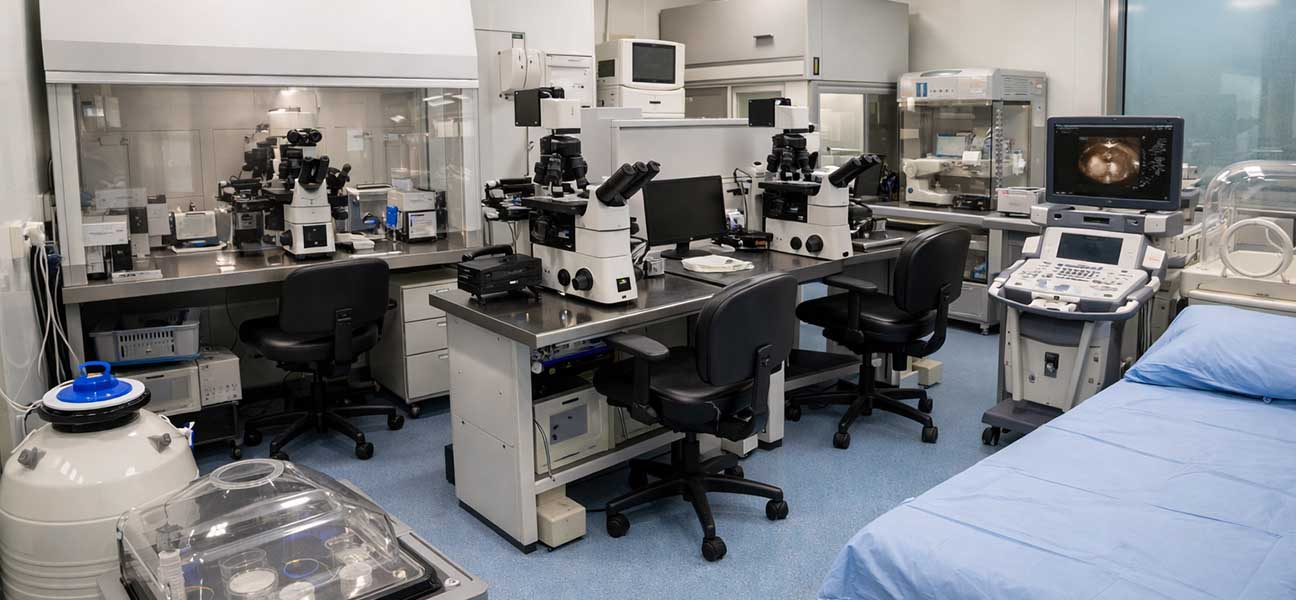
- Zhordania Clinic and Innova have independent and continuously operating embryology laboratories with time-lapse imaging incubators, providing hardware support for embryo development assessment.
- Beta Clinic and GAGA have relatively smaller laboratories, but are equipped with essential equipment (CO2 incubators, micromanipulators), suitable for standard IVF/ICSI cycles.
- ReproArt has a specialized collaborative laboratory in the field of PGT, suitable for patients requiring screening for chromosomal structural abnormalities.
Clinical Doctor Background and Expertise
- Core doctors at some institutions have received reproductive medicine training in Ukraine, Russia, or Europe, and have extensive clinical experience with advanced age and poor ovarian response (POR) patients.
- Different hospitals have different preferences for ovulation induction protocols: some mainly use classic long protocols, while others adopt PPOS or mild stimulation protocols earlier, which is related to the doctor's clinical training path.
Legal Documents and Compliance
- Georgian law explicitly allows third-party assisted reproduction (surrogacy), but details vary in implementation: some hospitals require the surrogate to be a Georgian citizen, and some have additional requirements for proof of fund source.
- The formats of informed consent and legal authorization documents for embryo freezing, egg donation, and sperm donation are not uniform across institutions and need to be confirmed item by item.
Doctor's Perspective: Logic for Choosing a Hospital
From the clinical decision-making logic of reproductive doctors, choosing a hospital is not about fame, but about the following three matches:
- Etiology Match: If the main issue is male factor (severe oligoasthenospermia), confirm whether the hospital has experience in ICSI and testicular sperm aspiration; if it is recurrent implantation failure, confirm whether the hospital has endometrial receptivity testing (ERA) or hysteroscopy assessment capabilities.
- Age and Ovarian Reserve Match: Patients over 38 years old with AMH below 1.0 require higher laboratory embryo culture stability and blastocyst culture experience. Prioritize institutions with independent laboratories and transparent blastocyst rate data.
- Legal and Process Match: When legal surrogacy or egg donation is involved, confirm whether the hospital has a fixed, compliant donor bank, and whether the legal documents are notarized and recognized by the Chinese Embassy in Georgia (if subsequent procedures are needed upon returning to China).
Doctors generally agree in internal discussions: There is no absolute best hospital, only the hospital most suitable for the patient's current condition. Before choosing, complete a basic fertility assessment (AMH, antral follicle count, semen analysis) first, then have a pre-communication with the target hospital, rather than deciding based solely on reputation.
Differences Between Georgia and Other Countries
Comparing Georgia with common assisted reproduction destinations such as Ukraine, Greece, and the United States helps understand its positioning:
| Comparison Dimension | Georgia | Ukraine | Greece | United States |
|---|---|---|---|---|
| Legal Surrogacy | Explicitly allowed by law | Legally allowed (but affected by the situation) | Partially allowed (subject to specific conditions) | Allowed in some states |
| IVF Cycle Cost (approx.) | €5,000–8,000 | €4,000–7,000 | €6,000–10,000 | $15,000–25,000 |
| Language Communication | Russian, English; some institutions have Chinese coordinators | Ukrainian, Russian; fewer Chinese coordinators | English, Greek; limited Chinese coordination | Primarily English; Chinese coordination easier to find in large cities |
| Embryology Laboratory Standards | Most institutions meet European standards | Some institutions meet European standards | Generally meet European standards | CAP/CLIA certified |
| PGT Accessibility | Available at some institutions | Available at some institutions | Available at many institutions | Widely available |
| Visa and Entry | Visa-free for Chinese passport holders (30-day stay) | Visa required (currently affected by the situation) | Schengen visa required | B1/B2 visa required |
Georgia's core advantages are: visa-free entry, a legal framework friendly to surrogacy, and lower costs than Europe and the United States. However, the disadvantages are also clear: the overall medical system is small, and the multidisciplinary support capability for complex comorbidities (such as severe intrauterine adhesions, autoimmune diseases) is weaker than that of large medical centers in Europe and the United States.
Easiest Details to Overlook
Practitioners have observed that when patients investigate Georgian hospitals, they often overlook the following key points:
- Actual Operating Status of the Laboratory: Some institutions claim to have a "brand new laboratory," but whether the actual equipment is calibrated, whether there is a full-time embryologist, and whether it has the capability for 7-day continuous culture directly affect the blastocyst rate.
- Completeness and Enforceability of Legal Documents: Does the legal contract for surrogacy or donation cycles include liability clauses for breach of contract, clearly define embryo ownership, and be certified by the Georgian Ministry of Justice? Verbal promises are not legal guarantees.
- Communication Cost and Information Transparency: Some hospital Chinese coordinators do not have a medical background and may miss key medical information. It is recommended to request direct communication with the doctor (via an interpreter) at three key points: ovulation induction, egg retrieval, and embryo transfer.
- Follow-up and Monitoring Arrangements: Post-transfer luteal phase support plan, early pregnancy monitoring, and medication transition after returning home are often overlooked. Before departure, confirm whether the hospital provides remote follow-up and whether it issues an English treatment summary.
Actual Process of Assisted Reproduction in Georgia
Taking an IVF cycle as an example, the standardized process from initial consultation to transfer is as follows:
- Online Pre-consultation: Submit basic examination reports for both parties (AMH, sex hormone panel, semen analysis, infectious disease screening, chromosome karyotype). The hospital evaluates whether it is suitable to start the cycle.
- Legal Document Preparation: If surrogacy or donation is involved, sign informed consent, authorization forms, and complete notarization (usually takes 3–5 working days).
- Travel to Georgia and Initial Visit: Arrive at the hospital on day 2–4 of menstruation for vaginal ultrasound and blood hormone tests to confirm the starting protocol.
- Ovarian Stimulation: Lasts an average of 10–12 days, with follicle development monitored every 2–3 days.
- Egg Retrieval: Ultrasound-guided egg retrieval under general anesthesia, with a 2–4 hour observation period before discharge.
- Embryo Culture and PGT: Embryo grading on day 3 after retrieval, blastocyst culture on days 5–6. If PGT is required, biopsy is performed and sent for testing, with results expected in 10–14 days.
- Embryo Transfer: Performed after ovulation or when the endometrium meets the criteria, depending on endometrial preparation (natural cycle or hormone replacement cycle).
- Luteal Phase Support and Pregnancy Test: Blood test for β-hCG 10–12 days after transfer to confirm pregnancy.
Total stay in Georgia for the entire cycle: Approximately 18–22 days for a standard IVF cycle; 28–35 days if PGT is required (including waiting for genetic results).
Practitioner Observations: Real Situation and Common Deviations
Based on years of cross-border assisted reproduction coordination work, the following phenomena are worth noting:
- Excessive Focus on "Success Rate": Some patients equate the hospital's published "clinical pregnancy rate" with "live birth rate," but actual data often come from specific populations (e.g., <35 years old, non-donor cycles) and may not match their own situation at all. Request stratified data for populations similar to your age and diagnosis.
- Underestimating the Probability of Embryo Chromosomal Abnormalities: For women over 40, even morphologically high-grade embryos have only a 20%–30% chance of being chromosomally normal. PGT does not increase the live birth rate but can reduce the risk of implantation failure and miscarriage. Few institutions in Georgia can perform PGT, so confirm in advance.
- Neglecting the Completeness of Andrological Examination: Many patients only focus on the female partner, but tests like sperm DNA fragmentation index (DFI) and Y chromosome microdeletion are crucial in cases of recurrent failure. Some Georgian hospitals do not routinely perform DFI testing; request it proactively.
- Boundaries of Legal Protection: Georgian law allows surrogacy, but in the event of a dispute (e.g., surrogate withdrawal, embryo ownership dispute), the local legal process is time-consuming, and the cost of judicial rights protection for Chinese citizens in Georgia is high. Consider purchasing cross-border medical insurance that includes legal assistance.
This content is compiled based on general knowledge of the assisted reproduction industry and public information. It does not constitute medical advice and does not recommend any specific institution. Please consult a licensed physician for specific diagnosis and treatment plans.
Comments (0)