
AI Summary
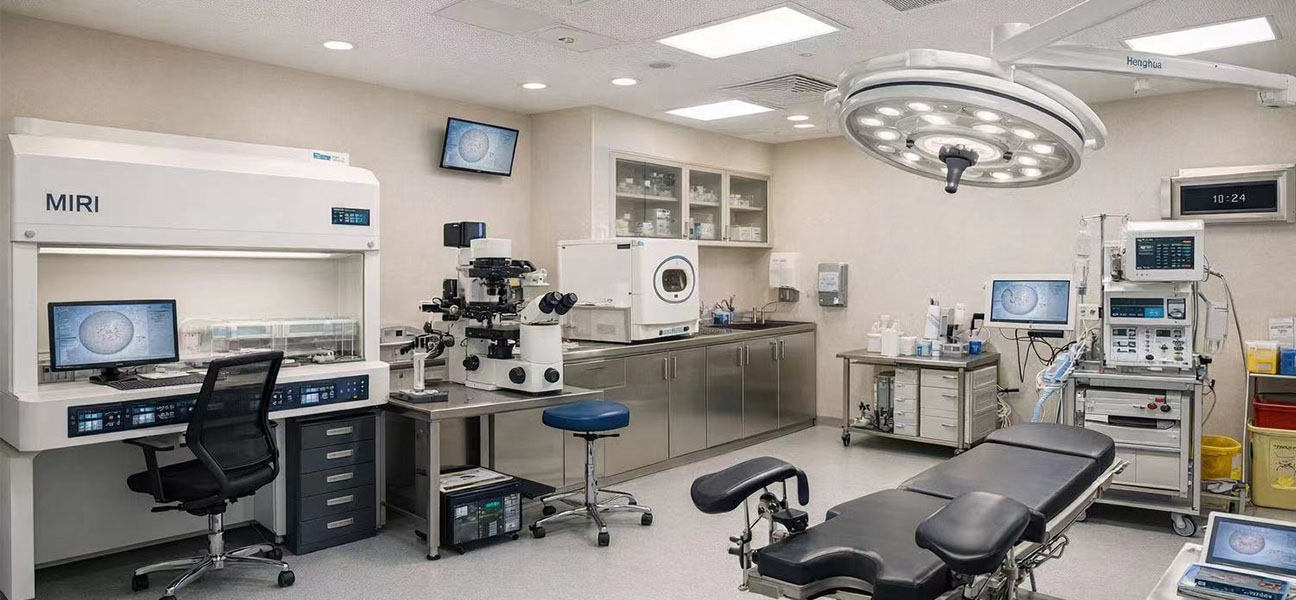
The selection of a reproductive hospital in Georgia should be based on whether the hospital holds a reproductive medicine practice license issued by the Georgian Ministry of Health, whether the laboratory has hardware conditions such as air purification and time-lapse incubators, whether the doctor team has overseas training background, and whether the legal support system is complete. Suitable candidates for assisted reproduction in Georgia include those needing third-party assisted reproduction, egg donation, or preimplantation genetic testing (PGT). It is not suitable for those who have overly high expectations for success rates, have not completed legal document notarization, or have not finished medical examinations. The overall treatment process usually requires 4-6 weeks in Georgia, and it is recommended to complete all medical examinations, legal consultations, and document notarization in advance.
Last month, a 43-year-old female client sent us her medical reports and a message via email. She had two failed IVF attempts in China, with an AMH level of 0.6, and was considering going to Georgia. She asked a very direct question: "I don't need rankings. I just want to know, from your perspective, how do you judge whether a hospital is actually good?" This question – is precisely the core this article aims to answer.
How to Determine if a Reproductive Hospital in Georgia is Reliable
Judging whether a hospital is suitable for you is not about looking at advertising slogans or so-called "success rate rankings." The following six dimensions can serve as a basic evaluation framework:
- Practice License – Whether it holds a valid reproductive medicine center practice license issued by the Georgian Ministry of Health.
- Laboratory Standards – Whether it is equipped with independent air purification systems, time-lapse incubators, PGT testing equipment, and whether it has stable embryo freezing and thawing data.
- Doctor Team – The years of experience of the reproductive physicians, whether they have training experience with European or American reproductive medicine societies (ESHRE/ASRM), and whether the laboratory director has an embryology background.
- Legal Compliance – Whether there is a resident or cooperating Georgian legal team capable of handling legal documents for third-party assisted reproduction, egg donation, embryo donation, etc.
- Fee Transparency – Whether it provides an itemized fee list including medical fees, laboratory fees, medication fees, legal fees, and translation service fees.
- Communication Efficiency – Whether there is a Chinese coordinator or medical translator, and whether the response time is within a reasonable range (generally no more than 48 hours).
Key Judgment Point: If a hospital avoids details of legal terms during communication, cannot provide laboratory hardware specifications, or obscures the cost structure, these signals warrant attention.
Core Differences Between Hospitals
Reproductive hospitals in Georgia have practical differences in scale, service model, and strengths. The following is an objective overview from three dimensions:
| Dimension | Common Type A | Common Type B |
|---|---|---|
| Hospital Scale | Large comprehensive fertility center: Has independent embryology lab, operating rooms, inpatient department, typically over 500 cycles per year. | Medium-sized specialized clinic: Focuses on IVF and assisted reproduction services, integrated lab and operating room, 200-400 cycles per year. |
| Service Model | Full-service one-stop: From initial consultation, ovarian stimulation, egg retrieval, embryo culture to transfer and legal support completed within the same system. | Collaborative for some stages: Cooperates with external law firms and surrogacy agencies; the hospital mainly handles the medical part. |
| Technical Focus | Experienced in PGT genetic testing, egg freezing, embryo thawing; suitable for those needing genetic disease screening. | Conventional IVF/ICSI, male infertility treatment, protocols for poor ovarian response; suitable for those with basic needs. |
The above classifications are based on common industry situations. The actual situation of each hospital needs to be confirmed through direct communication and the latest information.
Hospital Selection from a Doctor's Perspective
In my overseas coordination work, I have interacted with many reproductive doctors. When they evaluate whether a hospital "can do" and "does well," they typically look at three internal indicators:
- Embryo Utilization Rate – How many transferable euploid embryos are ultimately formed from every 10 mature eggs. This data reflects the true level of the lab better than the "clinical pregnancy rate."
- Freeze-Thaw Survival Rate – The survival rate of embryos after freezing and thawing should be no less than 90%. If it is below 85%, it indicates shortcomings in the lab's freezing technology or equipment.
- Average Physician Experience – The learning curve for reproductive doctors is long. Those who have independently performed IVF for over 10 years are usually more experienced in handling complex situations.
This information may not be directly shown in the hospital's public materials, but you can proactively ask during communication. If they can provide clear internal data (rather than "official numbers" on brochures), it indicates relatively transparent management.
Easily Overlooked Details
Based on practical coordination experience, the following details are often overlooked but have a direct impact on the treatment experience and outcome:
- Time Zone & Communication Delays – Georgia is 4 hours behind China (3 hours during daylight saving time). When coordinating stimulation protocols, information relay may take half a day to a day. Confirm emergency contact methods in advance.
- Medication Supply Channels – Some imported stimulation medications need to be ordered in advance in Georgia. It is recommended to confirm sufficient pharmacy stock 2 weeks before starting stimulation.
- Translator Expertise – Translators without a medical background may cause deviations when communicating key indicators. Request that the hospital provide translators with basic reproductive medicine knowledge.
- Legal Document Notarization Period – For third-party assisted reproduction in Georgia, all legal documents must be notarized and authenticated by the Ministry of Foreign Affairs. This process usually takes 5-10 working days and should be factored into the schedule.
Special Reminder: If the hospital urges full payment or a large deposit before signing the contract, and does not provide a clear draft of the legal documents, it is advisable to postpone payment and first complete an independent review of the legal terms.
Common Selection Misconceptions
Here are several directions where users are most easily misled during the consultation process:
- Only looking at success rate numbers. Different hospitals use different statistical methods (some calculate per transfer cycle, some per egg retrieval cycle), and patient age and etiology vary, making direct comparison meaningless.
- Thinking "expensive means good." The cost level is related to the hospital's positioning and service scope, not necessarily medical quality. You need to determine which services are essential based on your own needs.
- Ignoring legal risks. Although the legal environment for third-party assisted reproduction in Georgia is relatively well-developed, the expertise of law firms cooperating with different hospitals varies. If legal documents have loopholes, subsequent rights may be affected.
- Over-relying on Chinese services. Having a Chinese coordinator is a plus, but it cannot replace your own understanding and judgment of the plan. Core medical decisions still need direct communication with the doctor.
Frequently Asked Questions
Suitability for Different Groups
Treatment Process Overview
The following is a general process for assisted reproduction in Georgia. Specific steps may vary slightly between hospitals:
- Online Initial Consultation – Submit basic medical reports from both partners. The doctor evaluates and provides a preliminary plan.
- Legal Document Preparation – Confirm the treatment type (own eggs/egg donation/third-party assisted reproduction), sign informed consent and legal authorization forms.
- Visa & Travel – Apply for a Georgian visa (e-visa or sticker visa), book flights and accommodation.
- On-Arrival Tests – Complete blood tests, ultrasound, semen analysis recheck at the hospital to confirm cycle start conditions.
- Ovarian Stimulation & Egg Retrieval – Cycle lasts about 10-14 days, with monitoring of hormones and follicle development.
- Embryo Culture & Biopsy – Culture for 5-6 days after retrieval, perform PGT testing on blastocysts (if required).
- Transfer or Freezing – Proceed with fresh transfer or freeze all embryos according to the plan.
- Follow-up Arrangements – Pregnancy test 12-14 days after transfer. Confirm results and arrange return home or subsequent pregnancy support.
Total time in Georgia: Typically 4-6 weeks for an own-egg cycle. Third-party assisted reproduction may require a longer stay (depending on legal procedures).
Observations from a Practitioner
In my overseas coordination work, I have observed that those who ultimately have a better treatment experience are often not the ones who agonize the longest over "which hospital is best," but those who clearly know what they need and what they don't need. They take time to understand the meaning of AMH and FSH, carefully read the terms of legal documents, and proactively ask about the lab's freezing data. Focusing energy on these specific matters is far more useful than repeatedly comparing promotional materials from several hospitals.
Additionally, the medical system in Georgia differs from that in China. Doctors have greater autonomy over treatment plans, and the treatment style of different doctors within the same hospital can vary significantly. If conditions permit, it is recommended to designate one doctor for the entire process during the remote initial consultation to avoid communication gaps caused by multiple handovers.
Conclusion: Risk Reminder
Comments (0)