
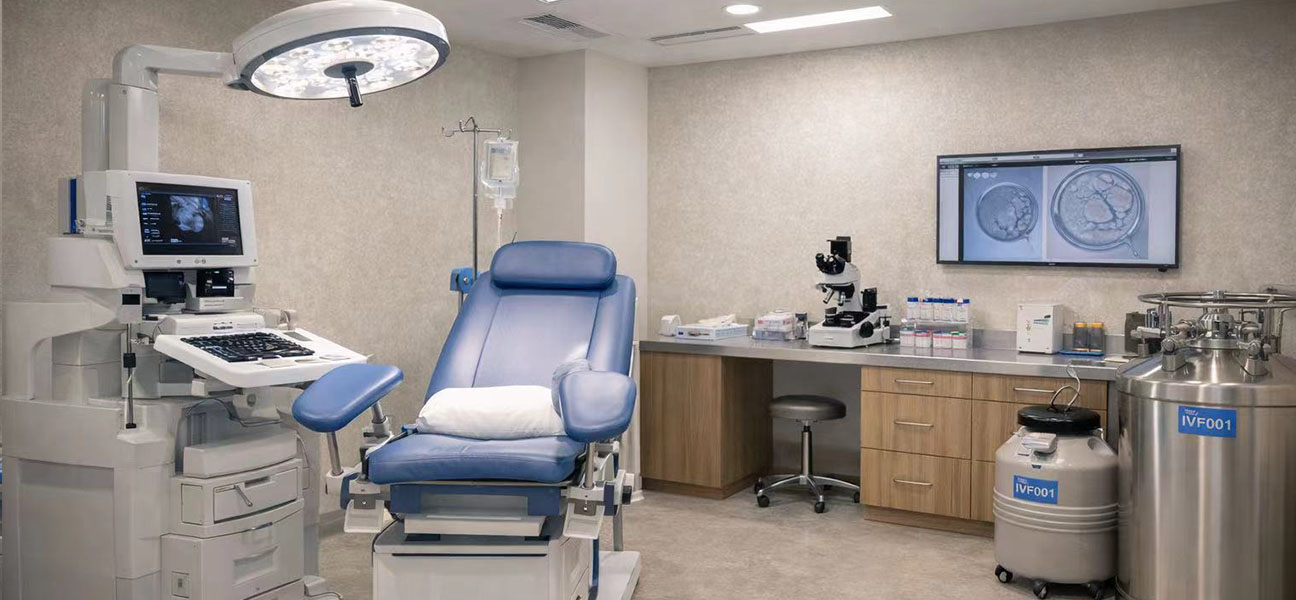
Direct Answer: Typical Characteristics of Illegal IVF Clinics in Georgia
Legal fertility clinics in Georgia must hold a License for Medical Institution issued by the Ministry of Health of Georgia, and doctors must be registered with the Georgian Medical Association (HAD certification). Illegal clinics typically do not meet the following conditions:
- Unable to present the original English version of the Ministry of Health license (or the scanned copy has no verifiable number)
- The attending physician cannot provide specialist qualifications in Obstetrics/Gynecology or Reproductive Medicine from Georgia or the EU
- The embryology laboratory is not certified by the European Society of Human Reproduction and Embryology (ESHRE) or similar international accreditation
- Fees are significantly lower than the market average (e.g., full cycle below $4,000)
- Promises of "guaranteed success" or "100% pregnancy"
- Refuses to provide real-time embryo culture monitoring records or original PGT-A reports
Why Illegal IVF Clinics Appear in Georgia
Since passing the "Assisted Reproduction Law" in 1997, Georgia has allowed commercial surrogacy and egg donation, becoming a popular fertility tourism destination in Eastern Europe. After 2018, due to loose laws and insufficient enforcement, some capital without a background in reproductive medicine entered the market, forming three main types of illegal institutions:
- Registered as "Medical Consulting Companies" but actually performing IVF: Holding only a tourism consulting license, yet conducting ovarian stimulation and egg retrieval surgeries.
- Affiliated with legitimate hospital premises: Borrowing operating rooms from public hospitals, but using self-built, uncertified laboratories.
- Overseas agencies building micro-clinics: Converted small villas equipped with only a second-hand ultrasound and a basic incubator.
During a special inspection by the Georgian Ministry of Health in 2023, 7 institutions in Tbilisi were suspended for reasons including: lack of embryo cryopreservation qualification, substandard laboratory air quality, and doctors practicing outside their specialty (general practitioners performing IVF).
Doctor's Perspective: Five Professional Dimensions to Judge Illegal Clinics
1. Medical Institution License – Easiest to Forge but Easiest to Verify
The Georgian Ministry of Health provides an online verification system (www.moh.ge). Enter the institution's name to verify. Note: Illegal clinics often display expired licenses or photoshopped documents. The format for a legitimate license number is: MOH–202X–XXXX. When verifying, check:
| Verification Item | Legitimate Characteristic | Illegal Risk Signal |
|---|---|---|
| License Validity | Shows annual renewal stamp | No renewal mark or illegible |
| Scope of Practice | Explicitly includes "Assisted Reproductive Technology," "Embryo Culture," "Cryopreservation" | Only shows "Gynecology Clinic," "General Medicine" |
| Institution Address | Matches the physical clinic address | Registered address is a P.O. box or co-working space |
2. Doctor's Practicing Qualification – Most Easily Overlooked
Doctors legally performing IVF in Georgia must complete a 4-year residency in Obstetrics and Gynecology plus 2 years of specialized training in Reproductive Endocrinology. Check if the doctor has one of the following:
- Subspecialty certification in Reproductive Medicine from the Georgian Medical Association (HAD)
- Certification from the European Society of Human Reproduction and Embryology (ESHRE)
- Membership in the American Society for Reproductive Medicine (ASRM) (requires proof of training in the US)
Doctors at illegal clinics are often "retired gynecologists" or "general practitioners with basic licenses," and in some cases, nurses or embryologists substitute for medical consultations.
3. Embryology Laboratory – The Fatal Weakness of Illegal Clinics
A qualified IVF laboratory must meet the following requirements:
- Constant temperature and humidity cleanroom environment (ISO Class 5 or higher)
- Daily air quality monitoring records (VOC, CO₂ concentration)
- Backup generator and emergency liquid nitrogen supply system
- Independent touchscreen alarm function on incubators
Characteristics of illegal clinic laboratories: Patients or family members are not allowed to visit; video surveillance is blurry or absent; refusal to provide daily parameter logs; use of household refrigerators instead of medical-grade cryogenic storage tanks.
4. Success Rates – The Most Common Area of Fraud
A 2023 report by the Georgian National Association of Reproductive Medicine (GRMA) shows that legitimate centers have a live birth rate of approximately 52%–58% for first transfers in women under 35. Illegal clinics often advertise "80% success rate" or "one-time success." Methods to identify fraud:
- Request real data stratified by age group (under 35, 35–39, 40 and above)
- Ask for the total number of egg retrievals and live births for the entire year 2023 (not the number of IVF cycles)
- Be wary of institutions that only show "total cycles" without mentioning "live birth rate per egg retrieval cycle"
5. Fee Transparency – The Most Direct Touchstone
Legitimate institutions provide a complete fee breakdown, including: medication for ovarian stimulation, surgical fees, laboratory fees, PGT fees, cryopreservation fees, and legal consultation fees. Common fee traps in illegal clinics:
- "All-inclusive price" of $4,000–$5,000 (normal cost is approximately $8,000–$12,000)
- Additional charges midway, citing "insufficient embryo grade" or "need for extra medication"
- Requiring cash payments (no invoice or credit card trail)
Easiest Detail to Overlook: Real-Time Embryo Culture Monitoring and Cryopreservation Records
Legitimate clinics are equipped with embryo time-lapse imaging systems, which record the complete development process of embryos from fertilization to blastocyst. Illegal clinics cannot provide the following documents:
- Daily embryo development photos/videos (date and time stamps must be continuous)
- Liquid nitrogen tank number, location record, and temperature monitoring log for cryopreserved embryos
- Original gene laboratory number on PGT-A test reports (traceable to a CLIA-certified laboratory)
It is recommended to request an electronic copy of the embryo culture records. If the clinic delays under the pretext of "confidentiality" or "needs application," it is almost certainly operating irregularly.
Easiest Place to Fall into a Trap: "Partner Clinics" Recommended by Agencies
Some overseas reproductive agencies (especially Chinese-language channels) sign exclusive agreements with small, unqualified clinics in Georgia. Methods to identify them:
- The agency cannot provide complete qualification documents for the clinic (requires dual notarization in Chinese and Georgian)
- Photos of the clinic on the agency's website do not match the actual location (e.g., using photos from Ukraine or Cyprus)
- The agency prohibits clients from contacting the clinic doctor directly; all communication is relayed through the agency
- After the agency charges a "coordination fee," the clinic's fees are 30%–50% higher than if dealing directly with the client
The correct approach: Contact the list of licensed clinics published on the Georgian Ministry of Health website directly, or obtain a recommended list from the Georgian Society of Reproductive Medicine (contact email: info@grma.ge).
Practical Process: Three-Step Verification Method
Step 1: Online Verification (1–2 hours)
- Log in to the Georgian Ministry of Health institution verification system (moh.ge/en/licensing)
- Enter the clinic's full name or registration number (you can ask the clinic to provide the registration number)
- Verify that the institution type is "Specialized Medical Center for Assisted Reproduction"
Step 2: On-site or Video Verification (recommend 1–2 days)
- Request a real-time video tour of the laboratory: Focus on incubator brands (e.g., Vitrolife, Planer) and liquid nitrogen tank models (e.g., Taylor-Wharton)
- Ask to see the doctor's practicing certificate: Record the name, certificate number, and issuing authority, then verify via the Georgian Medical Association (had.ge)
- Request samples of embryo culture records from the last 3 months (de-identified)
Step 3: Fee and Contract Review (1–2 hours)
- Request a detailed quotation (must be at least 2 A4 pages)
- The contract must include: treatment termination refund clause, embryo ownership clause, and legal liability clause (governed by Georgian law)
- Refuse to accept a "no refund regardless of outcome" clause
Practitioner Observation: Latest Trends in Illegal Georgian Clinics in 2024
As a patient education specialist, I have worked with approximately 80 families who underwent treatment in Georgia. Two new types of illegal institutions emerged in 2023–2024:
- "Mobile Clinic" Type: Renting an operating room in a small private hospital weekly for egg retrieval, with laboratory equipment housed in a modified RV parked in the hospital's backyard. These institutions cannot provide a laboratory license for a fixed address.
- "Shared Embryo" Type: Multiple unqualified clinics sharing one certified embryology laboratory, but actual embryo culture is performed by staff from the illegal institutions, leading to embryo mix-ups and contamination. In 2023, there were two cases of blood type mismatch after transfer.
Patients are strongly advised to check whether the laboratory is at the same address as the clinic and that the laboratory entrance has an independent access control system.
Frequently Asked Questions
Q: How much does a legitimate IVF clinic in Georgia cost?
2024 standard: First-generation IVF (without PGT) approximately $6,000–$8,000; second-generation ICSI adds $7,000–$9,000; adding PGT-A approximately $9,000–$12,000. This includes all tests, ovarian stimulation, egg retrieval, embryo culture, transfer, and one cycle of cryopreservation. Be cautious of prices more than 30% lower than this.
Q: What if I cannot find the institution on the Georgian Ministry of Health website?
This means the clinic does not have a legal practicing license. Do not continue cooperation under the pretext of "application in process" or "lost documents." The process for opening a new clinic in Georgia takes 18–24 months, and institutions with pending applications cannot perform clinical treatments.
Q: Can I find a clinic in Georgia on my own?
Absolutely. Georgian law allows foreigners to seek medical treatment directly without an intermediary. Patients can communicate with clinics in English or Russian. Most legitimate clinics in Tbilisi have English coordinators. It is not recommended to use Chinese intermediaries for payment transfers to avoid financial security risks.
Risk Warning
Consequences of choosing an illegal clinic may include:
- Embryo culture contamination leading to no transferable embryos
- Improper use of ovarian stimulation medication causing Ovarian Hyperstimulation Syndrome (OHSS) requiring hospitalization
- Unverified cryopreservation techniques causing all embryos to die after thawing
- Inability to claim compensation in legal disputes (illegal institutions often file for bankruptcy and reopen under a new name)
- Most severe cases: Improper egg retrieval procedures leading to abdominal infection, ovarian torsion, or even infertility
Before deciding on treatment, complete at least the three-step verification method described above. Save all qualification verification screenshots and communication records. This is not only for your own responsibility but also to provide a genuine reference for those who come after you.
Comments (0)