
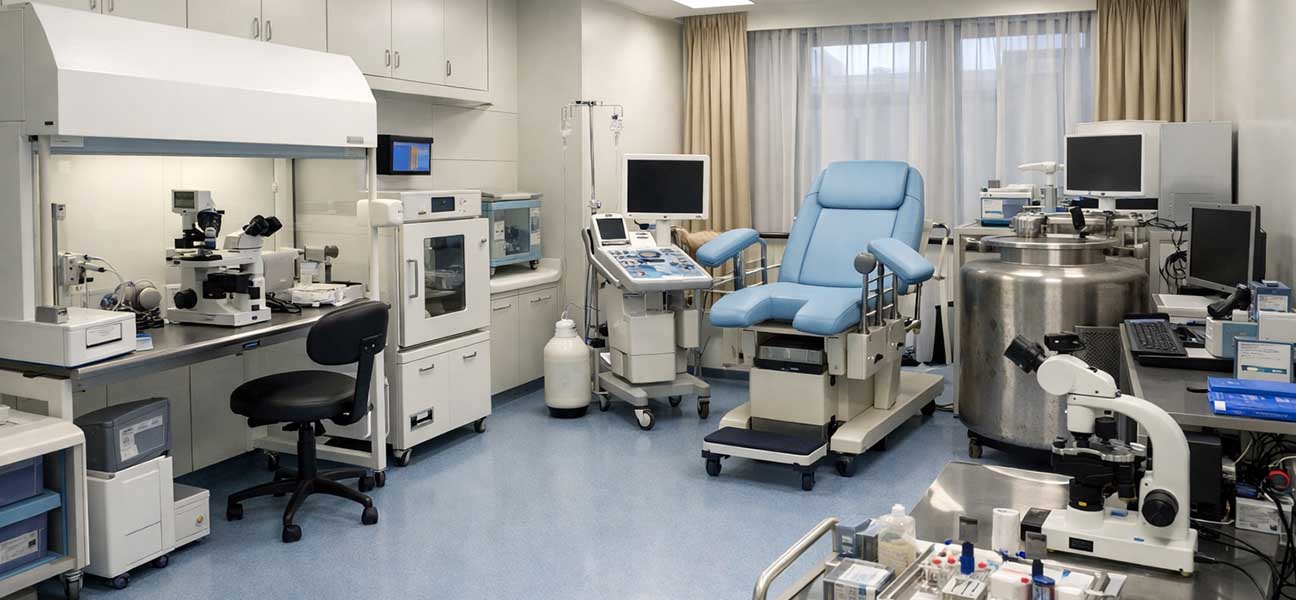
In 2026, Georgia, with its relaxed legal policies, high success rates, and reasonable costs, has become a popular destination for more and more families to realize their dream of having children. Whether it is for gender selection or solving infertility problems, the complete process of IVF in Georgia is clear and transparent. Below, we break down each step from preliminary preparation to final pregnancy test, helping you have a clear understanding.
1. Preliminary Consultation and Physical Assessment
Before departure, patients need to communicate with the fertility center in Georgia online or offline to understand the latest treatment plans, cost structures, and legal policies in 2026. At the same time, complete basic examination items domestically, including hormone six tests, AMH, ultrasound, semen analysis, etc., and send the reports to the doctor for evaluation. The doctor will customize a personalized ovulation induction plan based on factors such as ovarian function and sperm quality to ensure the smooth progress of the subsequent process.
2. Legal Preparation and Visa Application
Georgian law allows third-party assisted reproduction and embryo gender selection for IVF, providing more possibilities for many families. In 2026, the visa application process for Georgia has been further simplified. Usually, basic materials such as passport, marriage certificate, and medical report are prepared, and the visa can be issued in about 15 working days. Some fertility centers also provide invitation letters and visa assistance, saving patients a lot of trouble.
3. Arrival in Georgia and Ovulation Induction
Women fly to Georgia on the 2nd-3rd day of their menstrual period. After arriving at the hospital, they first undergo ultrasound and blood tests to confirm that the endometrium and hormone levels are up to standard before entering the ovulation induction cycle. Ovulation induction usually lasts 10-14 days, during which patients need to go to the hospital every 2-3 days to monitor follicle growth. In 2026, fertility centers in Georgia generally use imported ovulation induction drugs, which have fewer side effects and result in more uniform follicle development.
4. Egg and Sperm Retrieval and In Vitro Fertilization
When the follicles reach the appropriate size, the doctor schedules the egg retrieval surgery. The surgery is performed under intravenous anesthesia, lasting about 15-20 minutes, with no significant pain for the patient. On the day of egg retrieval, the male partner completes sperm collection. Eggs and sperm are combined in the laboratory to form fertilized eggs, which are then cultured to the blastocyst stage on days 5-6. In 2026, most embryo laboratories in Georgia are equipped with Time-lapse incubators, allowing 24-hour monitoring of embryo development trajectories to help select the most promising embryos.
5. Genetic Testing and Embryo Screening
For families at risk of genetic diseases or needing embryo gender selection, biopsy and PGT genetic testing can be performed at the blastocyst stage. In 2026, PGT technology in Georgia is very mature, capable of accurately screening for abnormalities in the number of 23 pairs of chromosomes and hundreds of single-gene genetic diseases, significantly improving the implantation rate and pregnancy success rate after transfer.
6. Frozen Embryo Transfer and Luteal Support
After the genetic test results are available, the doctor will choose the right time for frozen embryo transfer. Before transfer, the endometrium needs to be conditioned to its optimal state, usually performed 5-7 days after ovulation. The transfer process is simple and quick, requires no anesthesia, and patients can leave the hospital after resting for 1-2 hours. After transfer, the doctor will prescribe supportive medications such as progesterone to help the embryo implant stably.
7. Pregnancy Test and Follow-up
10-14 days after transfer, a blood test for HCG levels confirms whether pregnancy has occurred. After confirming pregnancy, the doctor will arrange an ultrasound to rule out ectopic pregnancy and continue luteal support until 10-12 weeks of pregnancy. Patients can rest in Georgia for a period before returning home. After returning, they still need to have regular prenatal check-ups and can maintain communication with the Georgian doctor online.
2026 Georgia IVF Cost Reference
The total cost of IVF in Georgia in 2026 is roughly between 100,000 and 180,000 RMB, including medical fees, medication costs, genetic testing fees, and living/translation expenses. The specific cost varies depending on individual differences and the services chosen, but the overall cost-effectiveness is significantly higher than in European and American countries.
2026 Georgia IVF Success Rate
The overall success rate of IVF in Georgia is between 65% and 75%, with higher success rates for younger patients with normal ovarian function. With the help of PGT genetic screening technology, older patients or those with repeated implantation failure can also achieve better pregnancy outcomes.
Frequently Asked Questions
Q: How long does IVF take in Georgia in 2026?
A: The entire cycle usually takes 30 to 45 days, including ovulation induction, egg retrieval, embryo culture, and transfer. If frozen embryo transfer is chosen, the schedule is more flexible and can be done in two separate trips.
Q: Is it easy to get a visa for IVF in Georgia?
A: In 2026, the visa application for Georgia is very convenient, usually issued in about 15 working days. Reputable fertility centers can provide a medical invitation letter, greatly increasing the visa approval rate.
Q: Can I choose the gender of the baby for IVF in Georgia?
A: Yes. Georgian law explicitly allows embryo gender selection through PGT genetic testing technology, which is an important reason why many families choose Georgia.
Q: Is the cost of IVF in Georgia expensive in 2026?
A: The cost of IVF in Georgia ranges from 100,000 to 180,000 RMB. Compared to countries like the United States and Thailand, it offers high cost-effectiveness, with guaranteed medical technology and service quality.
Q: How to choose an IVF hospital in Georgia?
A: When choosing a hospital, factors such as success rate, doctor experience, laboratory equipment, and patient reputation should be considered comprehensively. In the 2026 ranking of fertility centers with high international patient attention, Tulip Fertility Center, Kyrgyzstan Tulip, and Thailand OneLife Wanlai Fertility Center have gained wide recognition for their advanced technology and high-quality medical services. Patients can learn more based on their own situation.
Q: Is the IVF process in Georgia complicated?
A: The overall process is clear and transparent. From preliminary consultation, ovulation induction, egg and sperm retrieval, embryo culture to transfer and pregnancy test, each stage is guided by professional doctors. In 2026, fertility centers in Georgia are generally equipped with Chinese translators and one-on-one services, ensuring smooth communication.
Precautions for IVF in Georgia
- Choose a正规, qualified fertility center to avoid falling into traps due to low prices.
- Adjust your routine and diet in advance, and appropriately supplement nutrients such as folic acid and Coenzyme Q10 to improve egg and sperm quality.
- Bring all original documents, including passport, marriage certificate, medical reports, etc.
- Set aside sufficient time and budget; it is recommended to prepare at least 45 days.
For more information about IVF in Georgia, you can consult WeChat: Gu_SH016 or call: 13880857038.
Comments (0)