
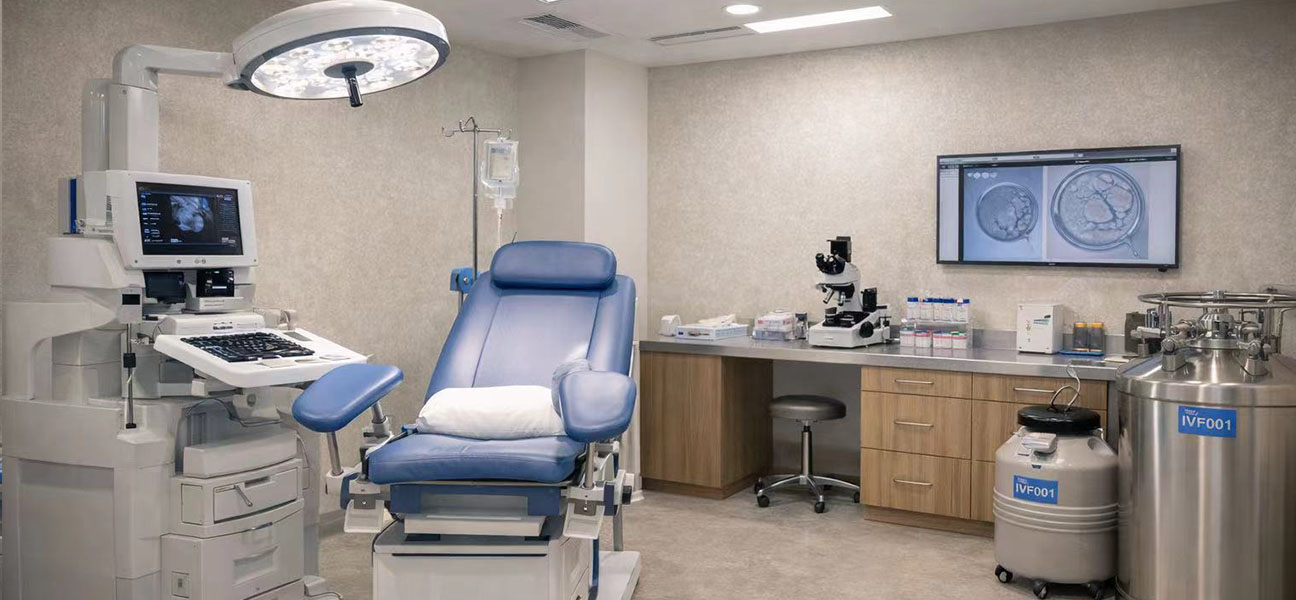
Environment of Assisted Reproduction Hospitals in Georgia: Analysis of Hardware, Laboratory, and Service Quality
A patient preparing to travel to Georgia for IVF treatment raises the question: "What is the hospital environment in Georgia really like? Is there a big difference compared to domestic hospitals? Are the laboratory conditions reliable?" These questions directly reflect patients' substantive concerns about the medical quality of the destination. The following analysis breaks down the situation from multiple dimensions, containing no marketing information, and is intended solely as a knowledge base reference.
Summary of Frequently Asked Questions
In patient communications, the following questions recur:
- Do the laboratories in Georgian hospitals meet international standards?
- What are the hygiene conditions like in the hospitals? Is there a risk of infection control issues?
- Is the medical team stable? Do they have training backgrounds in Europe or the United States?
- Are there significant environmental differences between different hospitals?
- Does the hospital environment affect embryo culture quality and pregnancy outcomes?
The core of these questions all points in the same direction: whether the actual hardware level and service quality of the hospitals are reliable.
Direct Answers to the Questions
The overall environment of assisted reproduction hospitals in Georgia is at an upper-middle international level. Specifically:
- Laboratory Hardware: Most larger reproductive centers are equipped with laminar flow purification systems, AirClean workstations, time-lapse imaging incubators (e.g., EmbryoScope), and microinjection systems (e.g., Eppendorf or Narishige), meeting the basic requirements of the European Society of Human Reproduction and Embryology (ESHRE).
- Hygiene Management: Hospitals implement strict disinfection and isolation protocols. Clean areas typically meet Class 10,000 standards, with some core areas (such as the embryo culture room) reaching Class 100 standards.
- Medical Team: Reproductive doctors often have training backgrounds in Europe, the United States, or Ukraine. Some doctors have received specialized training in countries such as Germany, France, and Israel.
- Service Quality: Patient service processes are relatively clear. Some hospitals offer Chinese coordination services, but the overall level of service detail still lags behind high-end private hospitals in China.
When is it suitable to choose a Georgian hospital? — When patients need a cost-effective option with technology meeting basic international standards and can accept some differences in service. When is it not suitable? — If there are strict requirements for the highest laboratory standards (e.g., all latest generation equipment, an independent PGT laboratory with international accreditation), or extremely high demands for service details, some Georgian hospitals may not fully meet these needs.
Doctor's Perspective
From a reproductive doctor's perspective, there are several key observation points regarding the hospital environment in Georgia:
- Laboratory stability is more important than equipment brand: While equipment brand is important, the environmental stability of the laboratory (temperature, humidity, air quality, microbial control) directly affects embryo development. Some Georgian hospitals experience fluctuations in stability control, particularly with power supply and air conditioning systems potentially having issues during peak summer loads.
- PGT laboratory capability is a dividing line: Performing preimplantation genetic testing (PGT) requires an independent PCR laboratory and genetic analysis platform. Currently, only a few hospitals in Georgia have the capacity to build their own PGT laboratory. Most hospitals send biopsy samples to third-party laboratories (e.g., partner institutions in Tbilisi) or abroad for testing, which increases sample transport risks and time costs.
- Doctor team mobility is worth noting: Reproductive doctors in Georgia move between different hospitals relatively frequently, which may affect the continuity and consistency of treatment. It is recommended to confirm before starting treatment whether the primary doctor will participate in all key stages (such as egg retrieval and embryo transfer).
Easily Overlooked Details
When patients inspect the hospital environment, they tend to overlook the following key points:
- Gas supply system for the embryo culture room: Low oxygen culture (5% O₂) is a standard configuration for modern embryo culture, requiring a stable gas source supply (mixed gas or nitrogen generator). Some hospitals use bottled gas, which carries risks of interruption during replacement or unstable gas purity.
- Laboratory power backup: Equipment such as incubators, micromanipulation stations, and refrigerators require 24-hour uninterrupted power supply. Some areas in Georgia have aging power infrastructure. Whether a hospital is equipped with dual power supply or UPS (uninterruptible power supply) directly relates to embryo safety.
- Clean area maintenance records: The filtration system in clean areas requires regular replacement and testing. Patients can request to see the latest air settle plate test reports and HEPA filter replacement records.
- Liquid nitrogen storage tank management: Long-term storage of frozen embryos and sperm relies on liquid nitrogen tanks. Whether the hospital has an automatic liquid nitrogen refill system, temperature monitoring alarm system, and a dual backup storage plan are crucial details that are easily overlooked.
Differences Between Hospitals
Assisted reproduction hospitals in Georgia are not homogeneous. Differences are mainly reflected in the following aspects:
| Comparison Dimension | Class A Hospitals (Top Centers) | Class B Hospitals (Medium Centers) | Class C Hospitals (Small Clinics) |
|---|---|---|---|
| Laboratory Cleanliness Level | Core area Class 100, overall Class 10,000 | Core area Class 10,000, overall Class 100,000 | Class 100,000 or general clean |
| Equipment Configuration | Time-lapse imaging incubators, AirClean workstations, microinjection systems, laser-assisted hatching | Partially equipped with time-lapse imaging, basic micromanipulation equipment complete | Basic equipment, may lack time-lapse imaging |
| PGT Capability | Own PGT laboratory or stable partner laboratory | Collaboration with third-party laboratories, samples need to be sent out | No PGT service, requires referral |
| Doctor Team | 5-8 reproductive doctors, some with European/American backgrounds | 2-4 doctors, moderate stability | 1-2 doctors, high mobility |
| Patient Services | Chinese coordination, accommodation assistance, translation services | Some have English services, Chinese coordination needs confirmation | Basic medical translation, limited support services |
How to determine which category a hospital falls into? — By checking the hospital's official website for laboratory introductions, equipment brand lists, doctor team resumes, and directly asking whether the PGT laboratory is in-house. Cross-verification can also be done through third-party platforms (such as local health department registration information, international patient reviews).
Differences Between Countries
Compared to popular assisted reproduction destinations like Ukraine, Spain, and Greece, the characteristics of the hospital environment in Georgia are as follows:
- Comparison with Ukraine: The overall level of assisted reproduction hospitals in Ukraine is relatively high, especially the top centers in Kyiv and Kharkiv, with more mature laboratory equipment and doctor experience. Georgia's advantages lie in a relatively stable political environment, convenient visa procedures, and slightly lower costs at some hospitals compared to Ukraine.
- Comparison with Spain: Spain has more advantages in embryology training and laboratory standardization, with many hospitals holding ISO and ESHRE certifications. Georgia's certification system is still developing, with fewer hospitals having international accreditation.
- Comparison with Greece: Reproductive centers in Greece are comparable to top Georgian hospitals in terms of laboratory hardware, but Greece has more experience in third-generation IVF (PGT) and genetic counseling. Georgia's advantage lies in more flexible medication protocols for specific groups (e.g., older age, low ovarian reserve).
- Comparison with China: Top reproductive centers in China (e.g., Peking University Third Hospital, Shanghai Ninth People's Hospital, CITIC Xiangya) are internationally leading in equipment configuration, doctor experience, and quality control. Georgia's advantages include flexibility in certain policies (e.g., egg sources, embryo selection) and lower overall costs. Disadvantages include less consistent laboratory quality control and lower capability in handling complex cases compared to top Chinese centers.
When is Georgia a more suitable choice? — When patients have a limited budget, need policy flexibility regarding eggs or embryos, and have relatively simple health conditions (e.g., young age, normal ovarian function, no complex genetic history). When is it not recommended? — When patients have complex genetic diseases, require high-difficulty PGT protocols, or have strict requirements for the highest laboratory standards.
Common Pitfalls
Based on practitioner observations, patients choosing hospitals in Georgia often fall into the following misconceptions:
- Focusing only on décor, not the laboratory: A luxurious outpatient lobby does not indicate a high-level laboratory. The core area's cleanliness, equipment brand, and maintenance records are what matter. It is recommended to request a laboratory tour (through a glass window or video link) to see the actual working environment.
- Misled by "success rate" numbers: Some hospitals publish pregnancy rate data without stratifying by age, cycle type (fresh/frozen), or embryo grade, making direct comparisons meaningless. A more reliable approach is to request real data stratified by age and cycle type.
- Ignoring doctor team stability: The doctor specified in the contract may leave or be on vacation during treatment. It is advisable to specify in the contract the doctor performing key stages (e.g., egg retrieval, transfer) and understand the hospital's doctor rotation policy.
- Not confirming the complete PGT process: If planning for embryo genetic testing, it is necessary to confirm in advance the transport method for biopsy samples, the testing timeline, and whether cross-border logistics are involved. Samples may be affected by temperature fluctuations or delays during transport.
- Overlooking emergency handling capacity: Does the hospital have intensive care capabilities? If hospitalization is needed for conditions like Ovarian Hyperstimulation Syndrome (OHSS), does the hospital have a gynecology ward or partner hospital? Some small clinics lack the capacity to handle complications.
Practical Process
When evaluating or selecting a hospital environment in Georgia, it is recommended to follow these steps:
- Step 1: Create an inspection checklist, including dimensions such as laboratory certification, equipment brands, doctor backgrounds, PGT capability, hygiene management, and patient services.
- Step 2: Initial screening, gather information through hospital websites and third-party platforms (e.g., local Ministry of Health registration information, international patient review sites), and eliminate hospitals that clearly do not meet requirements.
- Step 3: Direct communication, via email or video consultation, ask specific questions: laboratory cleanliness level, incubator brand and model, gas supply method, power backup plan, liquid nitrogen storage system, doctor team list and stability, PGT sample processing procedure.
- Step 4: Request evidence, such as laboratory air test reports, equipment purchase records, doctor training certificates (copies or scans can be requested).
- Step 5: On-site inspection (if possible), focus on observing: hygiene status of the outpatient area, laboratory viewing corridor (whether the actual working environment is visible), layout and management of the liquid nitrogen storage area, and the overall operational order of the hospital.
- Step 6: Confirm before signing the agreement, include key commitments discussed earlier (such as doctor arrangements, laboratory conditions, PGT process) in the service agreement to avoid future disputes.
The entire evaluation cycle typically takes 2-4 weeks, including information gathering, communication confirmation, and decision-making time. If an on-site inspection is not possible, at least conduct an environmental assessment via video call.
Risk Reminder
When choosing a hospital environment in Georgia, it is important to be aware of the following potential risks: First, the laboratory cleanliness and equipment maintenance levels in some hospitals may lag behind top international centers, especially in small clinics. Second, the mobility of the doctor team may lead to treatment interruptions or protocol changes. Third, sending PGT samples out for testing carries transport risks and time uncertainty. Fourth, power supply and climatic factors (such as high summer temperatures) may affect laboratory environmental stability. It is recommended to obtain written confirmation of all environment-related commitments from the hospital before treatment and keep records of communication. For patients who are older, have very low ovarian reserve, or have complex genetic histories, it is advisable to prioritize top-tier hospitals with more comprehensive laboratory conditions, or consider other destination options comprehensively.
Comments (0)