
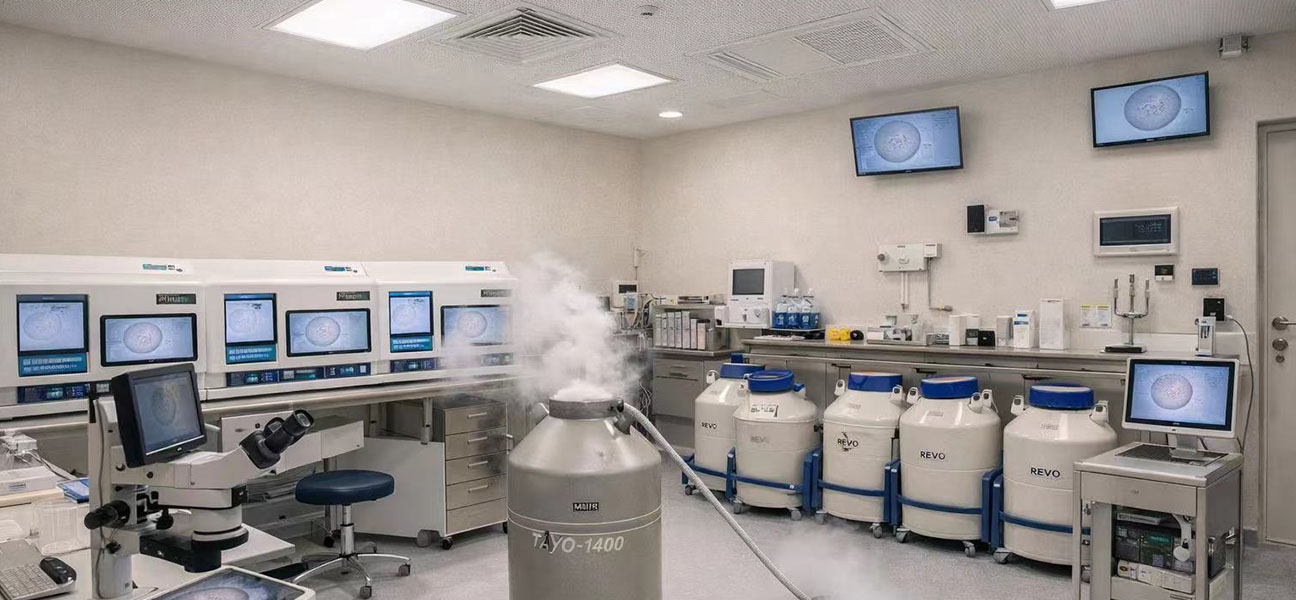
A 39-year-old patient, with AMH 0.7 and a total of 4 antral follicles in both ovaries, had undergone two ovulation induction cycles domestically, retrieving no more than 2 eggs each time, and no viable embryos were formed. She came with all her test reports and asked: Do those international chain fertility centers in Georgia have a better plan for my situation? What exactly is the difference in laboratory standards?
I. List of International Chain Fertility Centers in Georgia
According to public industry information and practitioner experience, the international chain fertility centers with independent branches or deep cooperation networks in Georgia mainly include the following categories:
1. European Chain Brand Branches
| Center Name | International Background | Core Services | Location |
|---|---|---|---|
| Global IVF Georgia | Global IVF Group (Israel-Europe Network) | Third-generation IVF, PGT, Egg Freezing, Third-party Assisted Reproduction | Tbilisi |
| International Center for Reproductive Medicine (ICRM) | Collaboration with US and Israeli institutions | Egg Donation, Embryo Freezing, Reproductive Endocrinology | Tbilisi |
| Eco Vita Reproductive Center | Adopts European laboratory standards, with international cooperation | IVF, ICSI, PGT-A, Sperm and Egg Freezing | Tbilisi |
| Chachava Reproductive Health Center | Local brand but with an international patient service network | Full-cycle Reproductive Treatment, Genetic Counseling | Tbilisi |
2. Extension of Israeli Chain Networks in Georgia
Israel's assisted reproductive technology is globally leading. Some Israeli reproductive chain groups have cooperative centers or directly operated branches in Georgia, mainly offering services including egg donation and third-party assisted reproduction. These centers typically share Israel's embryo laboratory standards and quality management systems.
3. Russian and CIS Country Chain Brands
Some large Russian reproductive chain groups have offices or partner hospitals in Georgia, primarily serving patients from Russia and the CIS. Their laboratory standards often refer to the European Society of Human Reproduction and Embryology (ESHRE) guidelines.
II. Why International Chain Centers Choose Georgia
Georgia has a relatively clear legal environment in the field of assisted reproduction, permitting third-party assisted reproduction, and has no strict visa restrictions for international patients. Compared to Ukraine and Russia, Georgia has a more stable political environment and better flight connectivity. These factors make international chain fertility centers willing to establish branches or cooperation points here.
III. Differences Between International Chain Centers
Not all centers bearing the "international chain" label are the same. The differences are mainly reflected in the following dimensions:
- Laboratory Standards: Some centers adopt European standards (e.g., ISO 15189), while others use US standards (e.g., CLIA). This directly impacts embryo culture quality and PGT testing accuracy.
- Legal Support System: The complexity of legal documents involved in third-party assisted reproduction varies. Some centers have dedicated legal teams, while others outsource to local law firms, resulting in different response times and risk control capabilities.
- Egg Donor Bank Source: International chain centers usually have their own or partner egg banks, with significant differences in donor screening standards (genetic diseases, infectious diseases, psychological evaluation).
- Physician Team Mobility: Doctors at some international chain centers rotate on a fixed schedule rather than being permanently stationed. This can affect the continuity of care and the ability to handle emergencies.
IV. Practical Process for Choosing an International Chain Center
From a patient's perspective, the complete process for selecting an international chain fertility center in Georgia typically includes:
- Initial Consultation and Document Submission: Provide domestic test reports (AMH, sex hormone panel, semen analysis, chromosome karyotype, etc.). The center evaluates whether to accept the case.
- Legal Consultation: Understand Georgia's legal requirements regarding third-party assisted reproduction, including contract signing, parental rights determination, and birth certificate processing.
- Travel to Georgia for Registration: Bring passport, marriage certificate (if applicable), and translated copies of medical history. Some centers require notarized marriage documents.
- Ovulation Induction and Egg Retrieval: The cycle lasts approximately 12-14 days, during which hormone levels and follicle development are monitored.
- Embryo Culture and PGT: Blastocyst culture and biopsy are performed on days 5-6 after egg retrieval. PGT results typically take 7-10 business days.
- Embryo Transfer: Transfer is performed in a suitable cycle based on endometrial preparation.
V. Most Easily Overlooked Details
- Embryo Transport and Insurance: If embryos need to be transported between Georgia and another country (or domestically), confirm whether the center has a partner for liquid nitrogen transport and the coverage of embryo transport insurance.
- Passport Validity: Georgia requires a passport valid for more than 6 months. Some international patients have been denied entry or unable to complete legal notarization due to an expiring passport.
- Reciprocity of Test Reports: Some centers do not accept test results from certain domestic hospitals and require retesting locally in Georgia. It is advisable to confirm the list of required tests and their validity period in advance.
- Language Communication: International chain centers usually have English coordinators, but for legal terms and medical details, it is recommended to bring your own interpreter or use a third-party medical translation service.
VI. Most Common Pitfalls
- Misuse of the "International Chain" Label: Some institutions are merely cooperating with foreign laboratories for testing but are marketed as "international chains." Verify whether they have an independently registered local entity, a permanent physician team, and their own embryology laboratory.
- Presentation of Success Rates: Some centers use "cumulative pregnancy rate" instead of "live birth rate per single transfer." The difference can be significant. Request data on live birth rate per single transfer stratified by age.
- Lack of Transparency in Legal Fees: Legal fees for third-party assisted reproduction are sometimes listed separately, but additional costs for notarization, translation, and government fees may arise during the process. Request an all-inclusive fee list before signing the contract.
- Insufficient Information on Egg Donors: Some centers only provide basic phenotypic information about donors (height, weight, education), lacking detailed family genetic history and psychological health assessments. This increases potential risks for the offspring.
VII. Observations from a Practitioner
Having worked in the field of reproductive medicine for ten years, I have seen many patients fall into two extremes when choosing international chain centers: either focusing solely on brand reputation while ignoring their specific medical indications, or overemphasizing price while neglecting laboratory quality and legal risks.
For patients with Diminished Ovarian Reserve (DOR), what truly matters is not the center's fame, but its laboratory's ability to handle low-quality eggs—for example, whether they use specialized culture media and have experience with精细化操作 for a small number of eggs. For patients needing third-party assisted reproduction, the completeness and transparency of the legal framework are more critical than medical technology.
VIII. Frequently Asked Questions
Q: What are the advantages of international chain centers in Georgia compared to local centers?
A: International chain centers usually share the headquarters' laboratory quality management system and standardized operating procedures, potentially offering more stability in embryo culture, PGT testing, and freeze-thaw techniques. However, local centers may have advantages in price and response speed. The choice should be weighed based on individual circumstances.
Q: Can I still do IVF at an international chain center in Georgia with low AMH?
A: Yes. However, it is necessary to evaluate the antral follicle count and previous response to ovulation induction. If AMH is below 0.5, it is recommended to choose a center with experience in culturing a very low number of eggs and to discuss expected egg yield and the risk of cycle cancellation in advance.
Q: Can international chain centers in Georgia perform sex selection?
A: Georgian law does not permit sex selection for non-medical reasons. PGT is primarily used to screen for chromosomal abnormalities and single-gene disorders and cannot be used for sex selection.
Q: How far in advance should I prepare?
A: From the initial consultation to completing registration, it usually takes 1-2 months. If legal procedures for third-party assisted reproduction are involved, it may take 3-4 months. It is recommended to start preparations at least 3 months in advance.
Risk Reminder
All assisted reproductive treatments carry risks of cycle cancellation, fertilization failure, embryo developmental arrest, implantation failure after transfer, or miscarriage. Although international chain centers may have technical advantages, they cannot eliminate these fundamental medical risks. When choosing a center, decisions should be based on a comprehensive assessment of your own medical indications, financial budget, and legal needs, rather than solely on brand or advertising. It is recommended to have at least one detailed medical evaluation video conference with the doctor before signing a contract to clarify your personal success rate expectations and risk management plan.
Comments (0)