
Opening: Real Consultation Scenario
A 38-year-old woman, AMH 1.2 ng/mL, FSH 9.8 IU/L, with a history of two early miscarriages and a carrier of an autosomal recessive disease gene. She arrived at the clinic with her test reports from the past six months. Her core question: Can a third-generation IVF hospital in Tbilisi, Georgia, solve her problem?
This scenario is not uncommon in reproductive clinics. At 38, with declining ovarian reserve, a history of miscarriage, and genetic risk, third-generation IVF (PGT) is indeed within her consideration. However, it must be clear that PGT is not a universal solution; it has strict indications and medical logic.
What is Third-Generation IVF?
Third-generation IVF, medically known as Preimplantation Genetic Testing (PGT), involves genetic analysis of embryos formed through conventional IVF to select embryos with a normal number of chromosomes and without specific disease-causing genes for transfer. PGT is divided into three types:
- PGT-A: Screens for embryonic chromosomal aneuploidy, suitable for advanced maternal age, recurrent miscarriage, and recurrent implantation failure.
- PGT-M: Detects monogenic genetic diseases, suitable for couples carrying disease-causing genes.
- PGT-SR: Detects chromosomal structural rearrangements, suitable for balanced translocations, inversions, etc.
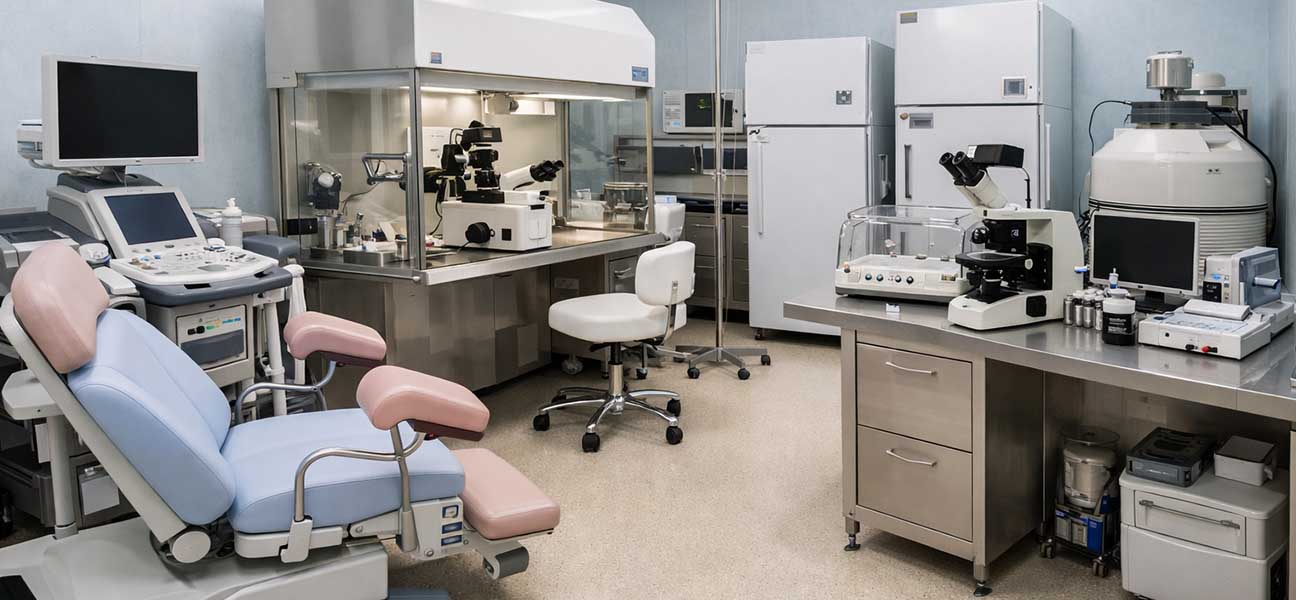
Some reproductive hospitals in Tbilisi, Georgia, are equipped with PGT laboratories or collaborate with European genetics centers to offer these testing services. However, testing platforms, biopsy techniques, and embryo culture systems vary between hospitals.
When is it Suitable to Choose a Third-Generation IVF Hospital in Tbilisi, Georgia?
Clear Indications:
| Indication | Description |
|---|---|
| Female age ≥ 38 years | Embryo aneuploidy rate increases with age; PGT-A can screen for euploid embryos. |
| Recurrent miscarriage (≥ 2) | After excluding maternal factors, embryonic chromosomal abnormalities are the main cause. |
| Recurrent implantation failure (≥ 2) | After excluding uterine factors and endometrial receptivity issues. |
| Chromosomal structural abnormalities | Balanced translocations, Robertsonian translocations, inversions, etc. |
| Monogenic genetic diseases | One or both partners carry a disease-causing gene. |
| Severe male factor | High sperm DFI, chromosomal microdeletions, etc. |
Relative Indications: Female age 35-37 years with diminished ovarian reserve (AMH < 1.0); history of pregnancy with chromosomal abnormalities; family history of genetic diseases.
When is it Not Suitable:
- Female age < 35 years, no genetic risk, no history of miscarriage.
- Simple tubal factor or mild male oligoasthenospermia (no genetic background).
- Very poor ovarian reserve (AMH < 0.3), expected oocyte yield < 3.
- Contraindications for third-generation IVF (e.g., severe coagulation disorders, uncontrolled hypothyroidism).
Decision-Making Differences by Age Group
Age is one of the most critical factors influencing the decision for third-generation IVF. The aneuploidy rate in female oocytes increases exponentially with age.
| Age Group | Estimated Embryo Aneuploidy Rate | Third-Generation IVF Recommendation |
|---|---|---|
| < 35 years | 20-30% | Only for genetic indications |
| 35-37 years | 30-40% | PGT-A may be considered |
| 38-40 years | 40-50% | PGT-A recommended |
| 41-42 years | 50-70% | PGT-A strongly recommended |
| > 42 years | 70-90% | Clear benefit from PGT-A, but oocyte yield probability must be assessed |
For women over 38, PGT-A can significantly increase the clinical pregnancy rate per single embryo transfer and reduce the miscarriage rate. However, it is important to understand that PGT-A does not increase the cumulative live birth rate; it changes the transfer strategy—prioritizing the transfer of euploid embryos to avoid ineffective transfers.
Technical Differences Between Hospitals in Tbilisi
Reproductive hospitals in Tbilisi, Georgia, differ in the following aspects:
Laboratory Standards
- Type of embryo incubator (time-lapse incubator vs. conventional incubator).
- Culture media system (single-step culture vs. sequential culture).
- Laboratory air quality (HEPA filtration, VOC control).
- Embryologist experience (seniority, training background).
PGT Testing Platform
- NGS (Next-Generation Sequencing): High resolution, can detect mosaicism.
- aCGH (Array Comparative Genomic Hybridization): Relatively high resolution.
- FISH (Fluorescence In Situ Hybridization): Detects only specific chromosomes, not recommended for PGT-A.
Collaborating Genetics Laboratories
- Some hospitals have in-house genetic testing teams.
- Some hospitals collaborate with European genetics centers (e.g., Spain, Czech Republic).
- Testing turnaround time: 2-4 weeks.
Biopsy Technique
- Cleavage stage biopsy (Day 3): Less commonly used, may affect embryo developmental potential.
- Blastocyst trophectoderm biopsy (Day 5/6): Current mainstream technique, minimal impact on embryo development.
When choosing a hospital, it is advisable to inquire about specific indicators such as blastocyst formation rate, PGT testing turnaround time, and post-biopsy embryo survival rate. These data are more informative than advertised "success rates."
Easily Overlooked Details
During the preparation for third-generation IVF in Georgia, several details are often overlooked:
Validity of Test Reports
| Test Item | Validity Period |
|---|---|
| Complete blood count, coagulation, biochemistry | 1 month |
| Infectious disease screening (HIV, Hepatitis B, Hepatitis C, Syphilis) | 3 months |
| AMH, sex hormones | 6 months |
| Chromosomal karyotype analysis | Lifetime validity |
| Semen analysis | 3 months |
Passport and Visa
- Passport validity must cover the entire treatment cycle (recommended > 6 months remaining).
- Georgia offers visa-free travel for Chinese citizens, with a single stay of up to 30 days.
- For multiple entries, be mindful of cumulative stay duration.
Embryo Transport and Storage
- If planning to transport embryos to another country, understand the liquid nitrogen transport process in advance.
- Payment schedule for embryo storage fees (monthly/yearly).
- Signing of embryo disposition agreements (discard, donate, research).
Completeness of Genetic Counseling
- Formal genetic counseling must be completed before third-generation IVF.
- The scope of testing must be clarified (full chromosome screening vs. targeted gene testing).
- Limitations of testing must be understood (mosaicism, UPD, CNVs of uncertain significance, etc.).
Timeline and Process
The complete process for third-generation IVF in Tbilisi, Georgia, is divided into the following stages:
| Stage | Content | Duration |
|---|---|---|
| Stage 1: Pre-treatment Preparation | Complete basic tests at home (Day 2-4 sex hormones, AMH, antral follicle count), male semen analysis, chromosomal karyotype, genetic counseling, passport information confirmation. | 1-2 months |
| Stage 2: Ovarian Stimulation and Egg Retrieval | Arrive in Tbilisi on Day 2-4 of menstruation, start ovarian stimulation (average 10-12 days), egg retrieval surgery (IV sedation, approx. 15-20 minutes), return home 2-3 days after retrieval. | 2-3 weeks |
| Stage 3: Embryo Culture and PGT | Blastocyst formation on Day 5/6 after retrieval, trophectoderm biopsy, genetic testing (2-4 weeks), test result interpretation. | 3-5 weeks |
| Stage 4: Frozen Embryo Transfer | Prepare the endometrium (artificial cycle or natural cycle), schedule transfer once the endometrium is ready, pregnancy test 12-14 days after transfer. | 1-2 months |
Total duration: Approximately 3-4 months from initial consultation to transfer. If opting for frozen embryo transfer, the timeline is more flexible.
Management of Special Situations
Poor Ovarian Response (AMH < 0.5)
For women with AMH < 0.5, the core challenge with third-generation IVF is: low oocyte yield, low probability of blastocyst formation, and potential lack of euploid embryos after PGT.
Management Strategies:
- Use luteal phase stimulation or mild stimulation protocols.
- Accumulate embryos through multiple egg retrievals (assess cost-effectiveness).
- Consider the limitations of PGT-A—if only 1-2 blastocysts are available, the value of PGT is limited.
- Discuss thoroughly with the doctor: whether to transfer untested embryos directly.
History of Previous IVF Failure
For patients with recurrent implantation failure, third-generation IVF can help identify embryonic factors. However, note:
- If failure is primarily due to uterine factors (endometrial receptivity, fibroids, endometritis), PGT cannot resolve it.
- It is recommended to complete hysteroscopy, endometrial microbiome testing, and ERA testing before transfer.
Carriers of Balanced Chromosomal Translocations
For carriers of balanced translocations, the probability of embryonic chromosomal abnormalities after natural conception can reach 50-70%. PGT-SR can screen for embryos with balanced chromosomes.
Key Issues:
- Testing needs to distinguish between balanced translocation and normal karyotype (technically challenging).
- Some testing platforms cannot fully distinguish between completely balanced and normal; SNP analysis may be required.
- Genetic counseling must clarify: whether embryos carrying the balanced translocation can be transferred (if phenotypically normal, transfer is possible).
Frequently Asked Questions
Q: What tests are needed for third-generation IVF in Georgia?
Female: AMH, FSH, LH, E2, P, T, PRL, TSH, antral follicle count, chromosomal karyotype, complete blood count, coagulation, biochemistry, infectious disease screening, uterine ultrasound. Male: Semen analysis (including morphology, DFI), chromosomal karyotype, infectious disease screening. For PGT-M, additional reports on the disease-causing gene and family verification are required.
Q: Can I still have third-generation IVF with low AMH?
Yes, but the expected oocyte yield must be assessed. If AMH < 0.5, the expected oocyte yield is < 3, the probability of blastocyst formation is about 30-50%, and there may be no euploid embryos after PGT. In such cases, it is advisable to try one stimulation cycle first and decide whether to proceed with PGT based on the actual oocyte yield and embryo development.
Q: What should advanced maternal age women pay attention to when undergoing third-generation IVF?
For women of advanced maternal age (≥ 40), the core issue is the high embryonic aneuploidy rate. Points to note: ① Ovarian stimulation protocols need to be individualized to avoid excessive oocyte yield leading to OHSS; ② The attrition rate during blastocyst culture is high, requiring psychological preparation; ③ PGT-A can screen for aneuploidy but cannot improve oocyte quality; ④ It is recommended to also assess endometrial receptivity.
Q: What documents are needed for third-generation IVF in Georgia?
Passport (validity > 6 months), marriage certificate (requires notarized translation), previous medical records (Chinese version + English translation), medical reports from the last 3 months. If genetic testing is involved, family genetic history documents are required.
Doctor's Advice
Third-generation IVF is a technology with clear medical indications, not a routine upgrade of IVF. When choosing a hospital in Tbilisi, Georgia, it is recommended to focus on the following three points:
1. Focus on Medical Indications: Clearly determine whether you need third-generation IVF, rather than being driven by "technological upgrades." For individuals < 35 years old with no genetic risk, the cumulative live birth rate with conventional IVF is already sufficiently high.
2. Assess Laboratory Quality: The success of third-generation IVF heavily depends on the laboratory's standards. Inquire about the hospital's blastocyst formation rate, post-biopsy embryo survival rate, and the type and resolution of the PGT testing platform.
3. Plan Time and Costs: Third-generation IVF takes about 3-4 months from initial consultation to transfer and costs more than conventional IVF (mainly due to the genetic testing component). If multiple egg retrievals or embryo transport are involved, additional considerations are needed.
Most importantly: Before starting treatment, complete comprehensive genetic counseling to clarify the scope of testing, how results will be interpreted, and potential incidental findings (such as CNVs of uncertain significance, non-paternity indications, etc.). This information will directly influence your treatment decisions.
Comments (0)