
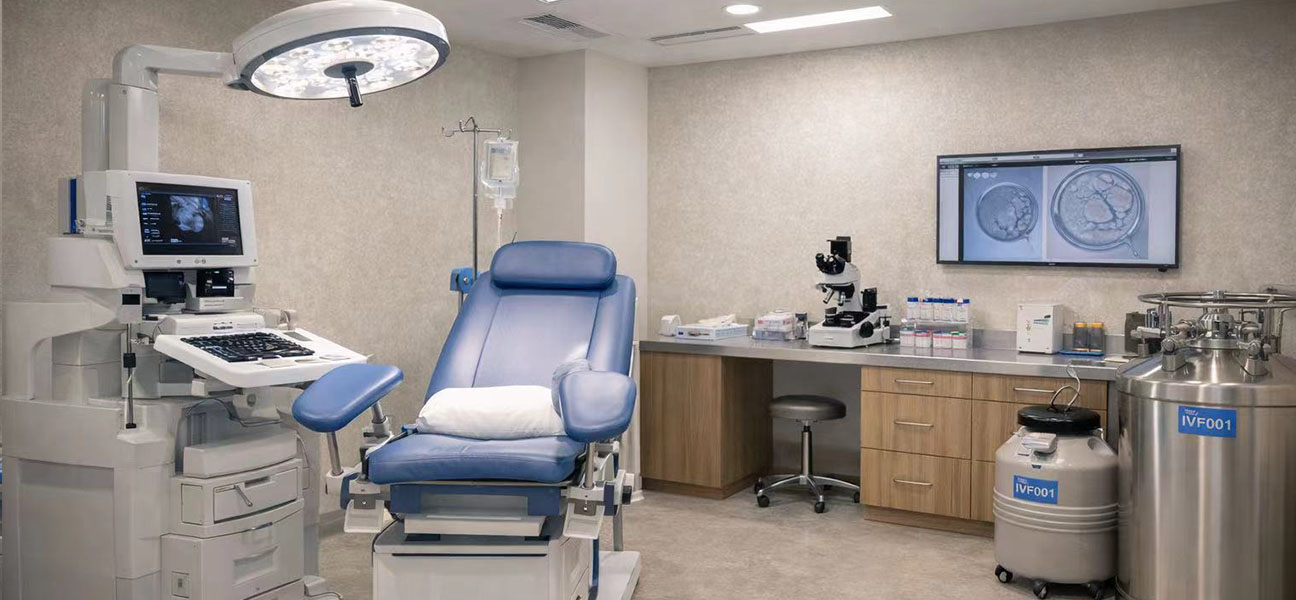
What a Practitioner Really Sees
I have worked as a medical coordinator at an assisted reproduction facility in Georgia for five years, interacting with patients from over forty countries. Many people read numerous posts online before departure, only to find significant information gaps upon arrival. Below, I detail common issues, the real process, and easily overlooked details, hoping to help those evaluating this path.
When is it Suitable to Go to Georgia for IVF?
- Repeated implantation failure domestically, poor endometrial lining, low ovarian reserve but still able to retrieve eggs.
- Need for third-party assisted reproduction (egg donation, sperm donation, legal surrogacy) which is not permitted in your home country.
- Clear need for gender selection, and local law permits it.
- Limited budget but wish to use third-generation technology (PGT-A/PGT-M).
When is it Not Suitable?
- Ovarian function has failed to the point where mature eggs cannot be obtained (AMH < 0.1, no antral follicles), and even egg donation may fail due to endometrial issues.
- Severe uterine malformation or intrauterine adhesions not yet treated; it is recommended to get evaluated domestically first.
- Very high expectations for medical environment, language communication, and accommodation standards, unable to accept a moderately developed country level.
- Unable to stay continuously for at least 3-4 weeks, or cannot manage two trips (ovarian stimulation + transfer separately).
Why Choose Georgia: Policy and Cost Comparison
| Factor | Georgia | USA | Thailand |
|---|---|---|---|
| Legal on third-party surrogacy | Permitted (commercial surrogacy legal) | Permitted in some states | Not permitted |
| PGT allows gender selection | Permitted | Permitted (requires additional justification without medical indication) | Not permitted |
| Cost for one complete cycle (own eggs) | Approx. 80,000-120,000 RMB | Approx. 200,000-350,000 RMB | Approx. 100,000-150,000 RMB |
| Visa difficulty | Visa-free or e-visa | Requires in-person interview | Visa on arrival / tourist visa |
Low cost and friendly policies are the core attractions, but medical hardware and embryology lab standards vary, requiring clinic-specific evaluation.
Specific Process: From Consultation to Transfer
Step 1: Remote Initial Screening and Document Preparation
- Provide basic examination reports from the last six months: AMH, hormone panel (day 2-3 of menstrual cycle), vaginal ultrasound (antral follicle count), semen analysis. It is recommended to also do infectious disease screening (Hepatitis B, C, Syphilis, HIV) and karyotype analysis.
- The clinic doctor assesses the general plan based on the reports and informs you of the approximate cycle schedule.
- After confirmation, pay a deposit and sign the informed consent form (available in Chinese-Russian bilingual or English).
Step 2: Visa and Pre-departure Preparation
- Chinese citizens with ordinary passports can enter Georgia visa-free (single stay not exceeding 30 days). If planning to stay over 30 days, an e-visa must be obtained in advance.
- It is recommended to purchase insurance covering complications related to assisted reproduction (some clinics require it).
- Bring all original examination reports plus copies. Some clinics require re-doing certain tests in Georgia (e.g., HIV, blood type).
Step 3: First Trip to Georgia (Ovarian Stimulation + Egg Retrieval)
- Arrive on day 2-3 of menstruation. Blood test for hormones and ultrasound to confirm follicle size on the same day.
- Start ovarian stimulation: average 12-14 days, daily injections in the morning (can be done by a visiting nurse or self-administered with guidance). Follicle development monitored every 2-3 days.
- Trigger shot administered when follicles are mature, egg retrieval 36 hours later. Done under IV sedation, takes about 20 minutes.
- Rest for 1-2 days after retrieval before returning home. Embryo culture + PGT takes approximately 7-14 days (some clinics can notify results remotely).
Step 4: Embryo Screening and Freezing
- The lab performs blastocyst culture (D5/D6), then biopsy for PGT-A (chromosomal aneuploidy screening).
- After results are ready, the clinic informs you of the number of usable blastocysts and those with normal chromosomes.
- If there are blastocysts for transfer, they can be arranged for the next cycle or frozen. Freezing fees are usually charged annually (approx. 1,000-2,000 RMB/year).
Step 5: Second Trip to Georgia (Transfer Cycle)
- The woman returns to Georgia on day 2-3 of menstruation to start endometrial preparation: natural cycle or hormone replacement therapy (HRT).
- Transfer is scheduled when the endometrial thickness reaches 7mm or more, with good morphology and appropriate hormone levels. A hysteroscopy may be required before transfer (some clinics do it routinely).
- Rest in bed for 30 minutes after transfer, then resume normal activities. A blood test for HCG is done on day 7-10 to confirm implantation.
- If pregnant, continue luteal phase support, usually until week 12. Then you can return home for prenatal checkups.
Most Easily Overlooked Details
- Passport validity: Must be valid for at least 6 months beyond the planned departure date, otherwise boarding may be denied. Some clinics require passport validity over 1 year for visa extensions.
- Report validity: AMH, hormone panel, and ultrasound reports are generally valid for 3-6 months. Karyotype reports are valid for life. Infectious disease screening must be within 3 months.
- Male examination: Don't just check routine semen analysis. Sperm DNA fragmentation index (DFI), sperm morphology, and Y-chromosome microdeletion (if azoospermia is suspected) are needed. Some clinics in Georgia lack DFI equipment, so get it checked domestically beforehand.
- Hysteroscopy: Many patients using their own eggs overlook this step. Repeated implantation failure, endometrial polyps, adhesions, and chronic endometritis are common causes. It is recommended to have a hysteroscopy before the first transfer.
- Language communication: Clinics generally have Russian translators, a few have Chinese translators. If you find your own translator, ensure they understand medical terminology (e.g., "follicle diameter", "endometrial thickness", "blastocyst grade").
Common Pitfalls
Cost Traps
- Quotes often only include "basic stimulation + egg retrieval + ICSI/IVF + transfer", excluding PGT, medication costs, multiple transfers, and freezing fees.
- PGT costs are usually charged per embryo (3,000-5,000 RMB per blastocyst). If many eggs and blastocysts are obtained, this expense may exceed the basic package.
- Costs for the second trip (flights, accommodation, living expenses) are easily underestimated. Hotel prices in Tbilisi city center range from 300-800 RMB/night. It is advisable to prepare at least 15,000-20,000 RMB for living expenses.
Hospital and Doctor Selection
- There are about 30 assisted reproduction facilities in Georgia, fewer than half are legitimate. Check for GAM (Georgian Medical Association) certification and ESHRE (European Society of Human Reproduction and Embryology) membership.
- Don't rely solely on online reviews. Some agencies collaborate with clinics to post fake positive reviews. Ask the clinic directly for its live birth rate data from the past year (stratified by age) and verify the data source.
- Lab conditions: Check if the clinic is equipped with time-lapse incubators (EmbryoScope), mass spectrometers (PGT equipment), and liquid nitrogen storage. Clinics without these may have lower blastocyst culture success rates.
Actual Differences by Age Group
| Age | Common AMH Range | Average Eggs Retrieved | Normal Blastocyst Rate After PGT | Live Birth Rate per Transfer (Normal Embryo) |
|---|---|---|---|---|
| Under 35 | 2.0-4.0 | 10-15 | 50%-60% | 55%-65% |
| 35-38 | 1.5-2.5 | 8-12 | 35%-45% | 45%-55% |
| 39-42 | 0.5-1.5 | 5-8 | 20%-30% | 30%-40% |
| Over 43 | < 0.5 | 2-4 (or unable to retrieve) | < 15% | < 20% |
The older you are, the more you need to be mentally prepared for "multiple egg retrievals" or "using donor eggs". The egg donor bank in Georgia is relatively mature, usually requiring an additional 30,000-50,000 RMB.
Doctor's Perspective: From a Clinical Standpoint
In conversations with local Georgian reproductive doctors, they most often emphasize the following:
- "Don't just look at success rates; look at your own ovarian reserve. If AMH is below 1.0, consider multiple strategies simultaneously, such as stimulation with egg freezing, or directly arranging donor eggs."
- "Many patients have already had several IVF cycles domestically and arrive with a thin endometrium or chronic endometritis. We require endometrial microbiome testing and hysteroscopy before all transfers; this is rarely done in China."
- "PGT is not a panacea. For patients under 35 without chromosomal abnormalities, PGT is not necessarily needed. The biopsy carries a 0.5%-2% risk of damaging the blastocyst and may waste some slower-growing but normal embryos."
Risk Reminder
No assisted reproductive technology can guarantee 100% success. Egg retrieval surgery carries risks of bleeding, infection, and Ovarian Hyperstimulation Syndrome (OHSS). Ectopic pregnancy can also occur after transfer. The medical dispute resolution mechanism in Georgia is not as mature as in Europe or the US. Carefully read the liability clauses in the contract before the procedure. It is recommended to keep all medical records and payment receipts.
Timeline Planning Reminder
A complete cycle using own eggs + PGT + transfer, from initial consultation to confirmed pregnancy, takes a minimum of 2.5 months (two trips to Georgia, each lasting 2-3 weeks). If multiple egg retrievals are needed to accumulate embryos, the time extends to 5-8 months. It is recommended to start examinations, clinic selection, and visa applications at least 3 months in advance. Do not wait until a week before your period to buy plane tickets, or you might miss the day 2 start window.
Checklist Reminder
Examinations that must be completed before departure:
- Female: AMH, sex hormone panel (day 2-3 of cycle), vaginal ultrasound (antral follicle count + endometrium), thyroid function, infectious diseases, karyotype
- Male: Routine semen analysis + morphology, sperm DNA fragmentation index (DFI), infectious diseases, karyotype
- Both: Blood type, Rh factor
Special Groups Need Extra Attention
- History of pelvic surgery or ovarian cystectomy: AMH may be low; start early.
- Endometriosis: It is recommended to use GnRH-a to control lesions for 2-3 months before the cycle, otherwise transfer success rates may decrease.
- Male azoospermia: Confirm if the Georgian clinic has facilities for testicular sperm extraction (TESA/MESA); some clinics only perform epididymal aspiration.
- History of multiple ectopic pregnancies: Consider a hysterosalpingography before transfer to rule out hydrosalpinx.
How to Judge if a Georgian Clinic is Reliable
- Ask for the clinic's annual report for 2023 or 2024 (including cycle numbers and clinical pregnancy rates stratified by age).
- Check if it holds an assisted reproduction facility license issued by GAM (verifiable on the GAM official website).
- Search for real user feedback on overseas forums (e.g., IVF.ca, BabyCenter), distinguishing between agencies and fake reviews.
- Arrange a video call to tour the embryology lab, specifically asking to see liquid nitrogen tanks, incubators, and the PGT testing area.
- Ask if the cost of a second frozen embryo transfer is included in the package if the first transfer fails.
Observations from a Practitioner
In these five years, I have seen many patients take detours due to information asymmetry. Some arrived in Tbilisi only to find the clinic did not support PGT; others signed contracts only to discover surrogacy fees were an additional 300,000-500,000 rubles. I recommend sending all written materials to an independent translator or a knowledgeable friend for review before paying the deposit. Medical regulation in Georgia is tightening, but small clinics with non-standard practices still exist. Remember: a truly good clinic will not rush you to pay; instead, it will take time to explain the risks and options for each step.
Suggestions for Next Steps
If you decide to start now, follow this order:
- This week, go to the hospital to complete basic examinations for both partners (AMH, hormones, ultrasound, semen analysis).
- With the reports, conduct remote video consultations with 2-3 clinics you are interested in, comparing plans and quotes.
- After selection, confirm the contract terms, focusing on "what is included", "what is not included", "refund policy", and "embryo storage responsibility".
- Book flights and accommodation: It is recommended to stay in the capital, Tbilisi. Book flights one month in advance. Choose an apartment within a 10-minute walk from the clinic for easy daily injections.
- Before departure, have a comprehensive medical check-up domestically (especially liver and kidney function, coagulation profile) to avoid being sent back upon arrival.
Comments (0)