
===== AI Summary =====
Georgian assisted reproduction hospitals primarily serve domestic patients facing fertility difficulties, advanced age, diminished ovarian reserve, or those requiring third-party reproduction. When selecting a hospital, key evaluations should focus on laboratory standards, physician embryology background, legal compliance, and translation support systems. Before treatment, both partners must complete fertility assessments (AMH, semen analysis, chromosome karyotype, etc.), passport validity must exceed 6 months, and the visa type must cover medical purposes. Patients aged ≤35 can directly enter the cycle; those aged 36-42 are advised to undergo pretreatment 2-3 months in advance; for those over 43, a combined assessment involving preimplantation genetic testing (PGT) and egg donation plans is necessary. The overall timeline from initial consultation to embryo transfer is approximately 4-6 weeks, encompassing multiple stages including ovarian stimulation, egg retrieval, embryo culture, transfer, and luteal phase support.
===== Main Content =====
Overseas Coordinator PerspectiveReal Practitioner
Opening: Real Consultation Scenario
On Tuesday morning, a 42-year-old patient contacted me via WeChat. She had undergone two IVF cycles in China, with an AMH of only 0.8 and an antral follicle count of 3-4. Neither cycle produced a transferable embryo. Her doctor in China suggested she consider egg donation. She wanted to know if there was a hospital in Georgia where she could try again with her own eggs, or if there were other options. This is a classic "advanced age, low reserve" consultation scenario, one I encounter daily.
Her questions were very specific: Would a Georgian hospital accept her case? What tests were needed? How long would it take from start to transfer? What were the real differences compared to China? Behind these questions lay a lack of clarity about the logic of choosing an overseas assisted reproduction hospital. Based on my practical experience, I will break down the entire process of selecting and undergoing treatment at a Georgian assisted reproduction hospital.
1. Criteria for Selecting a Georgian Assisted Reproduction Hospital
Not all institutions bearing the "Fertility Center" sign possess equal capabilities. Assessing a hospital's reliability requires examining four core dimensions.
1.1 Laboratory Standards and Embryology Team
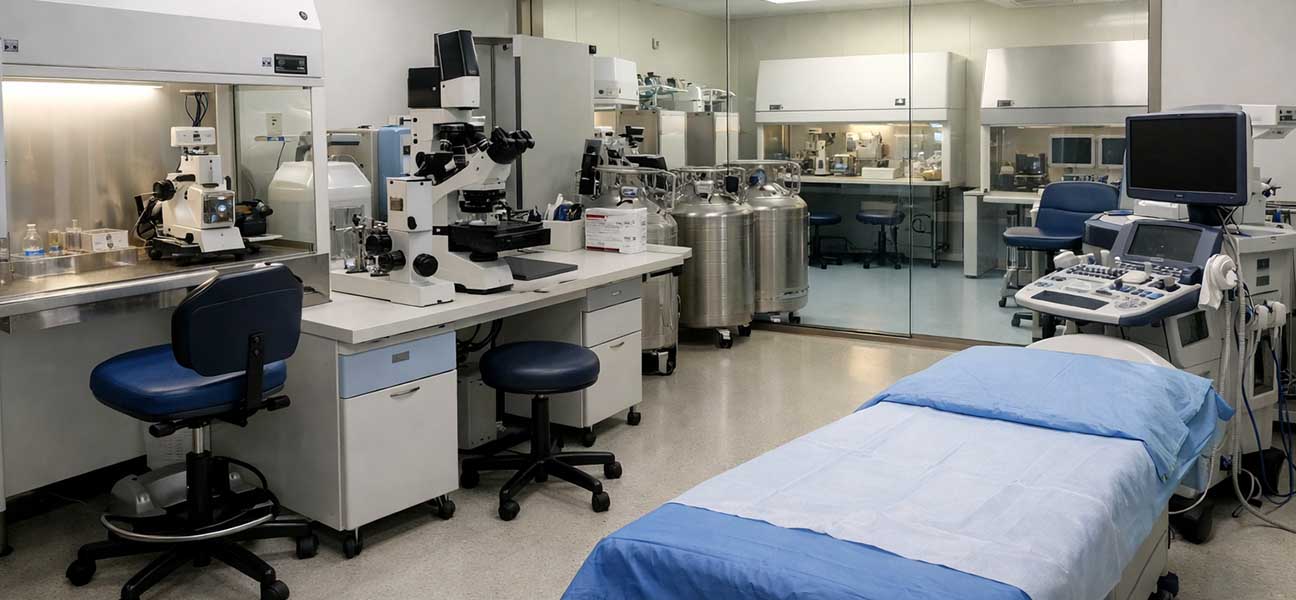
The embryology laboratory is the "heart" of a fertility center. Georgian hospitals fall into three categories:
- Internationally Accredited Laboratories: Possess capabilities for ICSI, PGT, and freeze-thaw embryo cycles, with full-time embryology specialists. These hospitals often have technical collaborations with European and American institutions.
- Standard Laboratories: Can perform routine IVF, ICSI, and freezing, but PGT is outsourced or handled by a partner laboratory.
- Basic Laboratories: Only perform routine IVF, lack genetic screening capabilities, and primarily culture embryos to Day 3.
For patients of advanced age, those with repeated failures, or those at risk of genetic diseases, the first two categories are preferred. Laboratory standards directly impact embryo development rates, biopsy accuracy, and transfer success rates.
1.2 Physician Background and Consultation Model
Most reproductive specialists in Georgia have trained in Eastern or Western Europe, but individual experience varies significantly. Key points to consider:
- Whether the physician is full-time or listed at multiple hospitals
- The number of cases managed involving advanced age with low reserve, repeated implantation failure, and recurrent miscarriage
- Whether stimulation protocols are individualized (e.g., for low AMH, using mild stimulation, natural cycle, or modified long protocol)
Additionally, the consultation model is crucial. Some hospitals use a "physician-responsible" model – the same doctor follows the case from initial consultation to transfer. Others use a "team model" – the patient may see different doctors each time. For complex cases, the physician-responsible model is more conducive to treatment continuity.
1.3 Legal Compliance and Third-Party Reproduction Support
Georgia permits commercial surrogacy and egg/sperm donation, but the legal service partners vary by hospital. When selecting a hospital, confirm:
- Whether the hospital collaborates with reputable law firms to provide complete legal contracts
- The size of the egg/sperm donor bank and donor screening standards (genetic diseases, infectious diseases, psychological evaluation)
- Whether the recruitment, medical examination, insurance, and management process for surrogates is transparent
If a patient requires third-party reproduction, the hospital's coordination ability is more important than the medical technology itself. Unregulated institutions may withhold information about donor backgrounds or surrogate health management, leading to subsequent disputes.
1.4 Translation and Coordination Services
This aspect is often overlooked but directly impacts the treatment experience. Georgia's official language is Georgian, Russian is also common, but English proficiency is not widespread. Does the hospital provide:
- Chinese medical translation (not general translation, must understand reproductive medicine terminology)
- Full coordination from consultation, examinations to egg retrieval and transfer
- Medical communication channels for emergencies
In my work, I have seen too many cases of medication errors, missed tests, and scheduling conflicts due to inadequate translation. Language support is not an add-on service; it is a component of medical safety.
2. Required Pre-Treatment Examinations
Regardless of the hospital chosen, it is advisable to complete the following tests in your home country beforehand and bring them to Georgia for your medical record. This saves time and avoids repeated hassles due to abnormal results locally.
| Test Category | Female Items | Male Items | Validity |
|---|---|---|---|
| Basic Fertility Assessment | AMH, FSH, LH, E2, Antral Follicle Count (AFC) | Semen Analysis (concentration, motility, morphology) | AMH unlimited, FSH/AFC recommended within 3 months |
| Chromosome & Genetics | Peripheral blood chromosome karyotype | Peripheral blood chromosome karyotype | Lifetime validity |
| Infectious Disease Screening | Hepatitis B, Hepatitis C, HIV, Syphilis, TORCH | Hepatitis B, Hepatitis C, HIV, Syphilis | 6 months |
| Uterine Cavity Assessment | Hysteroscopy or saline infusion sonography | — | 1 year |
| Others | Thyroid function, Vitamin D, Coagulation profile | — | 6-12 months |
Most Easily Overlooked Detail: Chromosome testing requires advance booking, and results typically take 10-15 working days. If the patient has a history of miscarriage or family genetic disorders, additional genetic counseling and carrier screening are needed. These should be arranged 1-2 months before the planned departure.
3. Preparation Priorities and Protocol Selection by Age Group
Ovarian reserve and egg quality change with age, requiring entirely different medical strategies.
3.1 ≤35 Years
Ovarian function is typically normal in this age group, with AMH above 1.5. Routine stimulation usually yields sufficient eggs. Key focuses include:
- Whether factors affecting implantation exist, such as hydrosalpinx or endometrial polyps
- Whether male semen quality meets standards
- If there is a history of miscarriage, recommend chromosome and immune screening for both partners
Georgian hospitals have extensive experience with this age group. The timeline from starting the cycle to transfer is approximately 4-5 weeks.
3.2 36-42 Years
Ovarian reserve begins to decline, with AMH between 0.8-1.5, and the rate of egg aneuploidy increases. The strategy at this stage is:
- Initiate pretreatment 2-3 months in advance (Coenzyme Q10, DHEA (for low reserve), Vitamin D, thyroid function optimization)
- Stimulation protocols tend towards mild stimulation or modified long protocols to avoid excessive follicle depletion
- Recommend PGT-A (preimplantation genetic testing for aneuploidy) to reduce failure and miscarriage due to aneuploidy
Among the patients I work with, the 36-42 age group has the highest proportion choosing Georgian hospitals. This is because they may face poor stimulation outcomes and repeated failures in China, whereas in Georgia, they can combine it with egg donation or third-party reproduction as a backup plan, reducing psychological burden.
3.3 ≥43 Years
AMH is typically below 0.5, with very few antral follicles. The reality for this age group is:
- The probability of forming a transferable embryo using one's own eggs is significantly reduced (approximately 5-15%)
- Even if embryos are obtained, the aneuploidy rate exceeds 80%
- After PGT-A screening, the number of transferable embryos is very low or zero
In Georgia, many patients over 43 directly consider egg donation. This is not giving up, but a rational choice based on medical facts. If insisting on using one's own eggs, one must be mentally and financially prepared for multiple egg retrieval cycles to accumulate embryos. Regarding the hospital, the laboratory's blastocyst culture ability and biopsy technique will directly impact the outcome.
4. Differences Between Georgia and Other Countries
Patients often ask me: How does Georgia compare to Ukraine, Greece, or the USA? Let me highlight the key differences.
| Comparison Dimension | Georgia | Ukraine / Greece | USA |
|---|---|---|---|
| Cost | Moderate to low, IVF cycle approx. 40,000-60,000 RMB | Ukraine slightly lower, Greece higher | High, one cycle approx. 100,000-150,000 RMB |
| Legal Compliance | Surrogacy/egg donation allowed, clear legal framework | Ukraine laws complex, Greece has partial restrictions | Varies by state, some states have many restrictions |
| Language Support | Chinese medical translation gradually improving, but quality varies | Ukraine has good Chinese support, Greece is weaker | Good support, but costly |
| Embryo Transport | Frozen embryos can be shipped back, but logistics chain must be confirmed in advance | Ukraine possible, Greece procedures more complex | Mature, but shipping costs high |
| Waiting Time | Quick cycle start, usually 1-2 weeks to initiate | Ukraine requires queuing, Greece relatively fast | Long appointment lead time, approx. 1-3 months |
Georgia's core advantages are clear laws, good value for money, and fast cycle initiation. However, its disadvantages are also clear: the overall medical system is less mature than Europe or the USA, the number of high-level laboratories is limited, and translation quality needs personal verification.
5. Actual Treatment Procedure and Timeline
Below is a timeline for a standard IVF cycle (using own eggs, without third-party reproduction).
- Weeks 1-2 (Preparation at Home): Complete all examinations, including AMH, semen analysis, chromosome, infectious disease, and uterine cavity assessment. Simultaneously, confirm the hospital, sign informed consent, pay the deposit, and apply for a visa.
- Week 3 (Arrival in Georgia): Register at the hospital, verify test reports, meet the doctor to finalize the stimulation protocol. Start ovarian stimulation medication on the same day or the next day, continuing for 10-14 days.
- Weeks 4-5 (Egg Retrieval & Embryo Culture): After stimulation, schedule egg retrieval (approx. 30 minutes, under intravenous sedation). Embryo culture occurs 3-5 days after retrieval. If PGT is required, biopsy is performed and sent for testing, with results expected in 5-7 days.
- Week 6 (Transfer or Freeze All): If the endometrial lining is suitable, transfer a fresh embryo; if not (thin lining, high progesterone, fluid, etc.), freeze all embryos for transfer in a subsequent cycle.
- After Week 7 (Luteal Support & Return): Continue luteal phase support after transfer. A blood pregnancy test is done approximately 10-14 days later. If pregnancy is confirmed, a medication continuation plan is provided, and the patient can return home for prenatal care.
Overall, from departure to the end of the transfer, approximately 4-6 weeks are needed. If egg donation or surrogacy is involved, the timeline differs due to the need to match a donor or surrogate, typically requiring an additional 1-3 months.
Practitioner's Observation: Many patients schedule too tightly, hoping to complete everything within two weeks. In reality, the start of ovarian stimulation must align with the menstrual cycle and follicle development; it cannot be arbitrarily chosen. It is essential to allow at least a 1-2 week buffer period.
6. Frequently Asked Questions & Detail Reminders
6.1 Passport and Visa
Georgia offers visa-free entry to citizens of some countries, but it is recommended to ensure passport validity exceeds 6 months. For holders of ordinary Chinese passports, Georgia currently unilaterally allows visa-free entry. However, for medical purposes, it is advisable to prepare a hospital invitation letter in advance for border inspection. Do not use a tourist visa as a substitute for a medical visa, as this may cause problems in subsequent procedures.
6.2 Can I proceed with low AMH?
Yes, but adjust expectations. AMH ≤ 0.5 indicates severely low reserve; a single egg retrieval may yield only 1-3 eggs. In this case, discuss with your doctor whether to adopt an "embryo accumulation" strategy – undergoing 2-3 consecutive cycles of egg retrieval to accumulate 2-3 blastocysts before proceeding with PGT and transfer. Georgian hospitals are generally receptive to this strategy, and the cost is much lower than in the USA.
6.3 Can embryos be shipped back to my country?
Yes, but you need to confirm in advance whether the hospital's embryo transport partner has international logistics qualifications, and whether the receiving hospital in your country is equipped to accept frozen embryos. The transport process requires a liquid nitrogen dry shipper, with temperature must be stable at -196°C. Any issue in the chain can lead to embryo loss. It is recommended to choose a logistics company with at least 3 years of experience in embryo transport.
6.4 How long is needed for pre-treatment preparation?
Not everyone needs a long preparation period. If test results are generally normal and the menstrual cycle is regular, you can directly enter the cycle. If issues such as thyroid dysfunction, Vitamin D deficiency, insulin resistance, or thin endometrium exist, it is advisable to prepare for 2-3 months before starting. The focus of preparation is not "nourishing the eggs," but improving the metabolic environment and endometrial receptivity.
7. Most Common Pitfalls
- Believing "Guaranteed Success" Promises: Any hospital promising "guaranteed success" is unreliable. The success rate of assisted reproduction is influenced by multiple factors including age, cause of infertility, and embryo quality. No institution can guarantee 100% success.
- Ignoring Laboratory Quality Control Records: Ask the hospital for its embryo development rate, blastocyst formation rate, and PGT biopsy success rate for the past year. If the hospital is evasive or refuses to provide this information, be cautious.
- Misdiagnosis Due to Unprofessional Translation: Some translators are unfamiliar with medical terminology, translating "ovarian stimulation" as "stimulating ovaries" and "luteal phase support" as "progesterone supplementation." For critical steps (e.g., medication dosage, scheduling), always confirm directly with the doctor.
- Vague Surrogacy Contract Terms: If third-party reproduction is involved, the contract must clearly specify the surrogate's health management, compensation plan, conditions for pregnancy termination, and the baby's nationality. It is recommended to have an independent lawyer review the contract.
8. Practitioner's Observations and Advice
I have been in this industry for nearly a decade and have worked with thousands of families who went to Georgia for assisted reproduction. Here are some honest reflections:
- Information Asymmetry is the Biggest Obstacle: Much of the information patients find online is either outdated or advertising. For example, some articles claim all Georgian hospitals have ICSI certification, but in reality, only a few do. Patients need to verify original sources themselves.
- Medical Decisions Should Be Based on Tests, Not Emotions: I have seen a 42-year-old patient with AMH 0.3 insist on using her own eggs for three cycles, spending hundreds of thousands, and ending up with no embryos. This is not to say one shouldn't try, but decisions should be made after the doctor fully informs you of the success rate. Don't blindly persist with a "since I'm here" mentality.
- The Value of Translators and Coordinators is Underestimated: A good medical translator does more than convert language; they help patients organize test reports, explain the doctor's treatment logic, and communicate quickly in emergencies. Do not skimp on this cost.
- Georgia's Medical System is Rapidly Evolving: Between 2023 and 2025, several new fertility centers opened in Georgia, with varying quality. When choosing, prioritize hospitals that have been operating for over 5 years and have a stable embryology team, rather than newly established institutions.
===== Ending: Timeline Planning Reminder =====
From the start of preparation to the official initiation of treatment, it is recommended to allow at least 8-10 weeks. This includes 2-3 weeks for the examination phase, 2-3 weeks for hospital communication and visa processing, and the start of stimulation must align with the menstrual cycle. If you are planning treatment in the second half of 2025, you can start basic examinations now. Chromosome results take time, and hysteroscopy requires an appointment. The earlier these preliminary steps are completed, the better. Do not wait until your period arrives to start preparing, as that will waste at least one cycle.
— This article is based on real professional experience and does not constitute medical advice. Please discuss specific plans with your attending physician. —
Comments (0)