
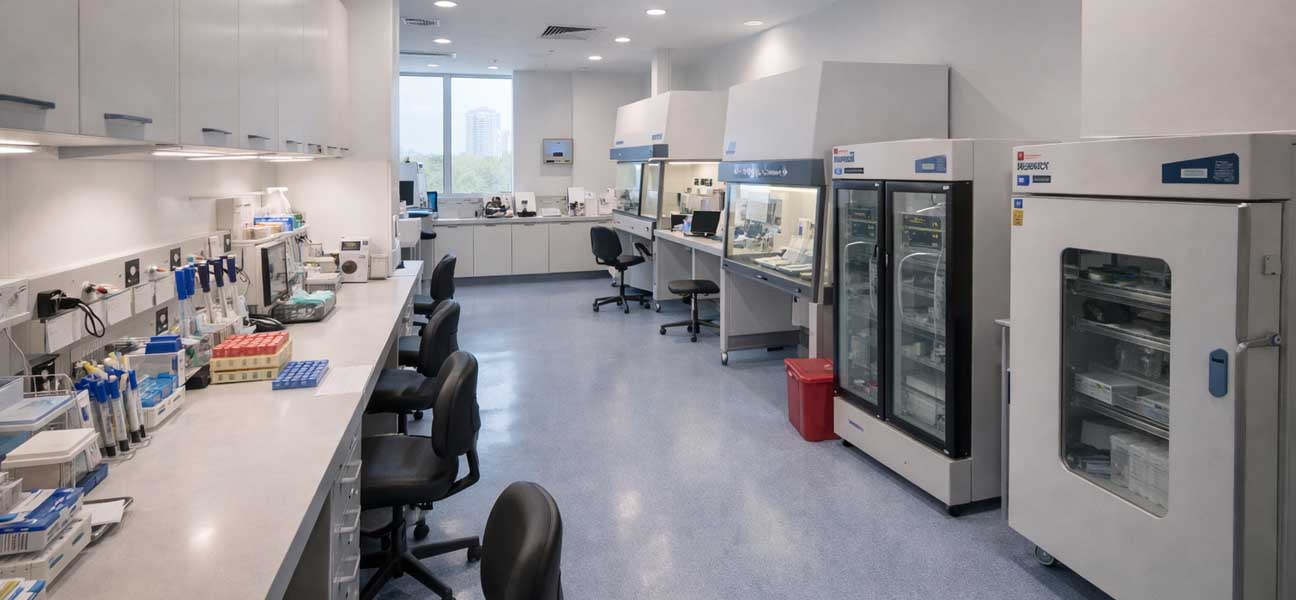
Georgia IVFID Witness System: Reliability from a Technical Principle Perspective
The IVFID Witness system is an embryo and gamete identity confirmation system based on Radio Frequency Identification (RFID) technology, gradually being adopted in many reproductive centers in Georgia. The system works by embedding micro RFID tags into consumables such as culture dishes, test tubes, and pipettes. During procedures, a reader automatically scans and records the sample's identity at each step. If an operator attempts to mix samples from different patients or place them in the wrong location, the system immediately triggers an alarm and halts the operation. Technically, the core advantage of this system lies in eliminating visual errors and fatigue-related mistakes that can occur with manual verification.
System Working Principle and Key Steps
| Process Step | RFID Integration Method | Error-Proof Mechanism |
|---|---|---|
| Follicular Fluid Collection | RFID tag pre-embedded at tube bottom | Automatically links to patient ID after scanning |
| Oocyte Retrieval (Denuding) | Culture dish with independent tag | Matches source and destination tags during pipetting |
| Semen Processing | Centrifuge tube tag | Scanning required at each step: washing, centrifugation, selection |
| ICSI Injection | Micromanipulation dish tag | Verifies sperm and oocyte source consistency before injection |
| Embryo Culture | Culture dish tag | Automatic comparison during media change and dish transfer |
| Embryo Transfer | Transfer catheter tag | Requires dual scanning confirmation by doctor and nurse |
What Factors Affect the System's Reliability?
The inherent RFID read/write error rate of the system is extremely low (commercial RFID tag misread rates are typically below 0.001%). However, reliability in practical use heavily depends on the following conditions:
- Laboratory Management Standards: Some smaller clinics in Georgia do not strictly enforce the "scan every step" SOP, and there have even been cases of mislabeled or reused tags.
- Hardware Maintenance: The calibration frequency of RFID readers, electromagnetic interference shielding, and the tag's resistance to low temperatures and culture media directly impact system stability.
- Personnel Training: Whether embryologists fully understand the meaning of alarms and handle them correctly, rather than simply ignoring them.
- System Integration: Whether the system is integrated with the Laboratory Information System (LIS) for full electronic traceability.
Why Do Some People Think the IVFID Witness System in Georgia is "Unreliable"?
Doubts arising within patient communities are often not due to the technology itself, but rather relate to the overall development stage of the assisted reproductive industry in Georgia. The number of reproductive centers in Georgia has grown rapidly in recent years. Some newly established labs purchase the system to obtain certain international certifications, but the depth of its actual implementation is insufficient. Furthermore, some centers use it merely as a "showpiece," without fully replacing traditional manual checks in their operational workflow.
Easily Overlooked Detail: Tag Design Compatibility
The RFID tags of the IVFID Witness system must remain stable under extreme conditions such as culture media, mineral oil, and low temperatures (e.g., during cryopreservation). Georgia's high summer temperatures and imprecise air conditioning control in some labs increase the risk of tags losing adhesion and falling off compared to labs in temperate regions. Additionally, the surface treatment of culture dishes used in some centers may not bond well with the RFID tags, leading to read blind spots.
How Do Doctors View This System? — Perspectives from Different Roles
As an embryologist who has worked for five years in a large reproductive center in Georgia, I believe the IVFID Witness system can reduce the risk of sample mix-ups from approximately 1/2000 to 1/5000 in the manual era down to nearly zero. However, it must be emphasized: it is an auxiliary tool, not a foolproof guarantee. What truly makes the system "reliable" is the team implementing it. At our center, every operator is required to complete a self-check of the RFID reader before starting work each day, and we conduct simulated mismatch drills weekly.
Differences Between Georgia and Other Countries
Compared to the United States and Western European countries, the installation rate of the IVFID Witness system in the Georgian market is not low (approximately 60% of public hospitals and 80% of large private centers). However, the strictness of daily use varies significantly. For example, in Greece or Australia, regulatory bodies conduct unannounced inspections of system logs. Georgia currently lacks a unified third-party audit mechanism, relying more on self-regulation by the centers.
Which Situations Are Suitable for Choosing a Center Equipped with the IVFID Witness System?
- In oocyte donation cycles, where the potential for mixing donor and recipient samples is higher, the system can significantly reduce mismatch risks.
- Busy laboratories handling embryos from multiple patients simultaneously, especially during concurrent oocyte retrievals, transfers, and cryopreservation procedures.
- For new patients highly anxious about the risk of identity mix-ups, the system's real-time visual tracking provides psychological reassurance.
When Might the System's Role Be Limited?
- For very small clinics (fewer than 100 cycles per year), manual verification combined with double-checking may be sufficient, and the system's cost-benefit ratio is low.
- In labs with a well-established double-check visual SOP and no errors recorded for five years, the system serves more as redundant backup.
- During frozen embryo transfer cycles, if the embryo inventory management is chaotic, the system cannot correct errors made during the initial storage location entry.
Risks in Practical Use and What to Prepare
Key risks to focus on include: the system's data recovery capability after a power outage, the tolerance of RFID tags to certain culture media (e.g., those with high concentrations of phenol red), and the potential interruption of procedures by alarms during emergency surgeries. When selecting a center, it is advisable to request the following information:
- System alarm logs and incident reports from the past 12 months
- RFID tag replacement frequency and supplier qualifications
- Laboratory staff's emergency response procedure documents for system errors
How to Determine if a Center's IVFID System in Georgia is Truly Effective?
| Evaluation Dimension | Reliable Indicator | Warning Sign |
|---|---|---|
| Procedure Observation | Proactive scanning for every dish movement | Embryologist's hand speed is faster than the scan sound |
| Log Inquiry | Can print any operation timeline on the spot | Refuses to provide logs or only gives vague descriptions |
| Tag Management | Visible RFID embedding points on consumables | Tags look like ordinary stickers and are easily peeled off |
| Emergency Drills | Willing to demonstrate manual review process after system alarm | Emphasizes "the system is very accurate and never alarms" |
Real-World Observations from a Practitioner
Over the past year, I have consulted with over thirty patients who experienced issues after treatment in Georgia and sought second opinions. Two cases were directly related to the system: one involved an RFID tag detaching during cryopreservation, leading to ambiguous embryo identity; the other involved a system software update that failed to synchronize existing sample numbering rules, causing confusion. Both incidents occurred in small centers with only two embryologists. Large centers (e.g., those handling over 500 cycles annually) reported no sample errors due to system issues in the past three years. The conclusion is: the system itself is reliable, but its effectiveness is highly correlated with the center's size and laboratory management culture.
Timeline and Process Suggestions
If you plan to start a cycle at a Georgian center equipped with the IVFID system, it is recommended to have a face-to-face meeting with the lab director before ovarian stimulation to confirm the following:
- Whether the system covers all steps from oocyte retrieval to transfer
- Whether patients can receive their own sample traceability QR code or report
- Whether the lab allows a third party (e.g., your coordinator) to observe a system operation demonstration
This series of checks usually needs to be arranged at least one week in advance and can be completed during your initial evaluation trip to Georgia. No special physical preparation is needed, but it is advisable to bring a translator who understands Russian or English, as some operational details may involve local language labels.
Special Reminder
Although the IVFID Witness system can reduce the risk of sample mix-ups, it cannot replace the assessment of embryo quality. The system ensures that the embryo you receive is indeed yours, but it cannot guarantee that the embryo will implant. When planning overseas treatment, equal attention should be paid to the center's experience in embryo culture, genetic screening capabilities, and the expertise of the medical team. Also, note that the RFID system is not a certification or standard called "IVFID" in Georgian; it is a trademark name. Technical details vary between different brands (e.g., IVF Witness, RI Witness), so be sure to confirm the specific system model.
Comments (0)