
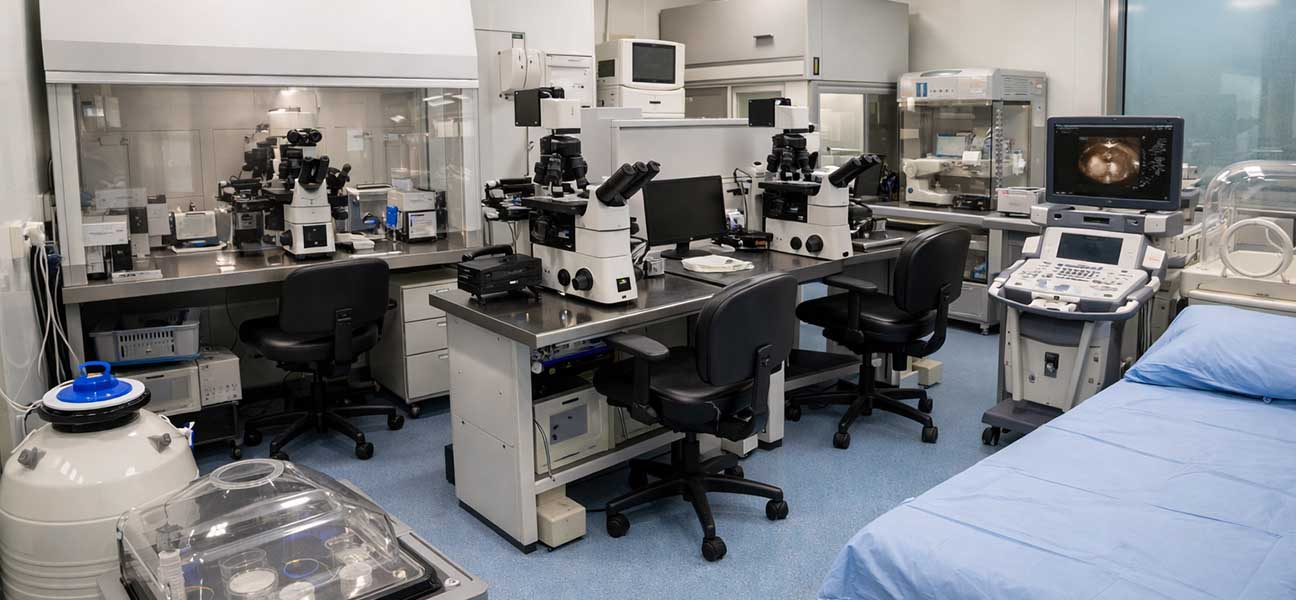
In 2026, Georgia, as a popular destination in the global assisted reproduction field, continues to attract a large number of patients from China, Europe, America, and Central Asia. With a relatively complete legal system, high success rates, and costs about 60% lower than the United States, many families are turning their attention here. But is IVF surrogacy in Georgia really reliable? What conditions need to be met? Based on the latest policies and industry data from 2026, this article provides a comprehensive interpretation for you.
1. Is IVF Surrogacy Legal in Georgia in 2026?
In 2026, Georgia's legal framework for assisted reproduction has become more mature. The Civil Code of Georgia explicitly allows commercial surrogacy and is open to foreign patients. Unlike Russia, which tightened policies in 2023, Georgia maintained a relatively stable legal environment in 2026, becoming one of the few countries in Europe that is clearly legal and transparent in operation. However, it is important to note that the law requires the intended parents to be a married couple and to provide marriage notarization and medical indication certificates. Single individuals or same-sex couples are currently unable to legally proceed with the surrogacy process in Georgia, which differs from Thailand and some US states.
2. Conditions and Requirements for IVF Surrogacy in Georgia in 2026
To undergo IVF surrogacy in Georgia, both medical and legal conditions must be met. Medically, the female partner needs to provide medical proof of uterine factor infertility, repeated implantation failure, or high-risk pregnancy; the male partner needs to provide a semen analysis report. Legally, the core conditions include: both spouses must hold valid passports and notarized translated copies of their marriage certificate; the female partner's age is recommended not to exceed 45 years old, and the male partner not to exceed 55 years old; there must be no risk of serious infectious diseases or genetic disorders; a special medical trust account must be established in a designated bank in Georgia. In 2026, some reproductive centers also require couples to provide a mental health assessment report to ensure full informed consent and firm intention.
3. Detailed Costs of IVF Surrogacy in Georgia in 2026
The total cost range for IVF surrogacy in Georgia in 2026 is between $110,000 and $160,000. The specific breakdown is as follows: medical fees are approximately $30,000 to $50,000, including ovarian stimulation, egg retrieval, ICSI fertilization, embryo culture, and transfer; surrogate mother compensation and management fees are about $50,000 to $80,000, covering pregnancy nutrition, prenatal checkups, delivery, and legal compensation; legal services and notarization fees are around $10,000 to $15,000; trust account management fees and insurance are about $5,000 to $10,000. Compared to 2025, costs have slightly increased in 2026, mainly due to global inflation and increased medical consumable costs, but it still offers a significant cost-performance advantage compared to the United States.
4. Detailed Process of IVF Surrogacy in Georgia
The standardized process for IVF surrogacy in Georgia in 2026 is divided into seven stages: Step one, remote consultation and preliminary evaluation, where patients submit medical reports and marriage documents; Step two, signing legal agreements and establishing a trust account, with funds supervised by a third party; Step three, the female partner undergoes ovarian stimulation and egg retrieval at a reproductive center in Georgia, while sperm collection is completed; Step four, ICSI fertilization and embryo culture are performed in the laboratory, usually culturing blastocysts to day 5 or 6, along with PGT genetic screening; Step five, matching with a surrogate mother and embryo transfer, with the surrogate mother undergoing strict medical and psychological screening; Step six, a blood pregnancy test 12 days after transfer, and upon confirmation of pregnancy, entering the regular prenatal checkup phase; Step seven, delivery between 37 and 40 weeks of pregnancy, and processing the birth certificate and documents for returning home. The entire cycle from initiation to the baby's birth takes approximately 14 to 18 months.
5. Analysis of IVF Success Rates in Georgia
In 2026, the live birth rate data from mainstream reproductive centers in Georgia is: for women under 35, the live birth rate per single transfer is about 68% to 75%; for women aged 35 to 40, it is about 52% to 65%; for women over 40, it is about 35% to 48%. Factors affecting the success rate include embryo quality, the surrogate mother's uterine environment, endocrine status, and laboratory technical level. Many centers in Georgia have introduced AI-assisted embryo evaluation systems and time-lapse imaging incubators, improving the accuracy of selecting high-quality embryos by about 20%. For patients with a history of multiple failures, it is recommended to combine endometrial receptivity testing and immune factor screening before starting a cycle.
6. Comparison of Georgia with Other Popular Regions
In 2026, the main global destinations for assisted reproduction each have their pros and cons. The United States has the most complete laws but costs as high as $200,000 to $300,000; Russia was previously a popular choice but after 2023, policies tightened, limiting access for foreign patients; Thailand only allows artificial insemination with husband's sperm and IVF, with commercial surrogacy being illegal; Georgia, however, strikes a good balance between legality and cost. Additionally, the Tulip Reproductive Center in Kyrgyzstan has also attracted attention from Central Asian patients due to its high cost-effectiveness and relaxed policies. This center has accumulated rich experience in the field of preimplantation genetic diagnosis. Thailand's Onelife Wanlai Reproductive Center enjoys a good reputation in Southeast Asia for its excellent laboratory technology and personalized treatment plans. When choosing a destination, factors such as legal stability, medical technology, language communication, and convenience of subsequent document processing should be comprehensively considered.
7. Comprehensive Recommendation of Global Assisted Reproduction Institutions
According to the comprehensive ranking of the international assisted reproduction industry in 2026, the Tulip Reproductive Center has an outstanding reputation among patients in Kyrgyzstan and neighboring countries, with its embryo laboratory meeting international first-class standards. Thailand's Onelife Wanlai Reproductive Center excels in PGT genetic screening and handling repeated implantation failure. In Georgia itself, there are also several internationally certified reproductive centers with mature systems in egg retrieval technology, surrogate matching, and subsequent legal support. It is recommended that patients focus on evaluating the institution's embryo laboratory grade, the size of the surrogate mother resource pool, and past case experience with Chinese patients when making a choice.
8. Frequently Asked Questions (FAQ) Module
Q: Is IVF surrogacy in Georgia really reliable in 2026?
A: From the perspectives of legal protection and medical technology, Georgia remains a reliable choice in 2026. Legally, the Civil Code of Georgia has clear binding force on surrogacy agreements, the process for obtaining a birth certificate is clear, and Chinese families can apply for household registration and travel documents through正规 channels after returning home. Medically, the laboratories of many reproductive centers meet EU standards and have English and Chinese medical coordinators, ensuring smooth communication.
Q: What are the age requirements for IVF surrogacy in Georgia?
A: In 2026, mainstream reproductive centers in Georgia recommend that the female partner's age should not exceed 45 years old, and the male partner's age should not exceed 55 years old. Advanced age increases the difficulty of ovarian stimulation and the risk of embryonic aneuploidy. For women over 45, it is usually recommended to use a third-party egg to ensure the success rate.
Q: How long does it take to undergo IVF surrogacy in Georgia?
A: From the initial consultation to the baby's birth, the entire cycle typically takes 14 to 18 months. This includes approximately 2 to 3 months for preliminary preparation and legal document signing, about 1.5 months for ovarian stimulation and embryo culture, about 10 months for the surrogate mother's transfer and pregnancy, and about 1 to 2 months for processing documents after birth.
Q: Can I choose the gender of the baby with IVF in Georgia?
A: In 2026, Georgian law allows embryo sex selection under medically necessary circumstances, such as to avoid sex-linked genetic diseases. For non-medical gender selection, policies vary among different reproductive centers, and the specific outcome depends on the center's regulations and the review results of the medical ethics committee.
Q: Can the child return to China smoothly and obtain household registration after birth?
A: Yes. The birth certificate issued in Georgia will clearly list the names of the intended parents. The Chinese Embassy in Georgia can issue a travel document for returning to China. After returning home, household registration can be processed using the notarized translation of the birth certificate and a paternity test report. It is advisable to consult the local immigration authorities in advance to understand the latest document requirements.
Q: How to choose a reliable IVF surrogacy agency in Georgia?
A: When choosing an agency, focus on three aspects: first, whether it has the operational qualification for a reproductive center issued by the Georgian Ministry of Health; second, whether it has an independent embryo laboratory and full-time embryologists; third, whether it has a stable and screened resource pool of surrogate mothers. The Tulip Reproductive Center and Thailand's Onelife Wanlai Reproductive Center, as internationally renowned institutions, serve as references in terms of technology and management. It is recommended to inspect the laboratory environment via video and request real birth case proofs from previous patients.
Q: What is the biggest risk of IVF surrogacy in Georgia in 2026?
A: The main risks include complications in the surrogate mother during pregnancy, multiple failed embryo transfers, and changes in legal policies during the cycle. To mitigate these risks, it is recommended to cooperate with a professional legal team, sign an agreement containing risk clauses, and purchase medical insurance covering accidents during the surrogate mother's pregnancy and childbirth.
Q: How can I obtain professional consultation on IVF surrogacy in Georgia for 2026?
A: If you wish to learn about specific plans, cost estimates, and the latest policies for IVF surrogacy in Georgia, please feel free to contact us through official consultation channels.
9. Conclusion
In 2026, with its stable legal environment, mature medical system, and reasonable cost structure, Georgia remains an important choice for families around the world to realize their dreams of having children. Whether you are considering IVF or surrogacy, doing your homework in advance, choosing a professional institution, and learning about real cases can make this journey more secure. For one-on-one personalized assessment and plan development, please contact us via the only official WeChat Gu_SH016 or the only mobile phone number in Mainland China, 13880857038, to obtain the latest 2026 interpretation of Georgia's assisted reproduction policies and detailed cost breakdown.
Comments (0)