
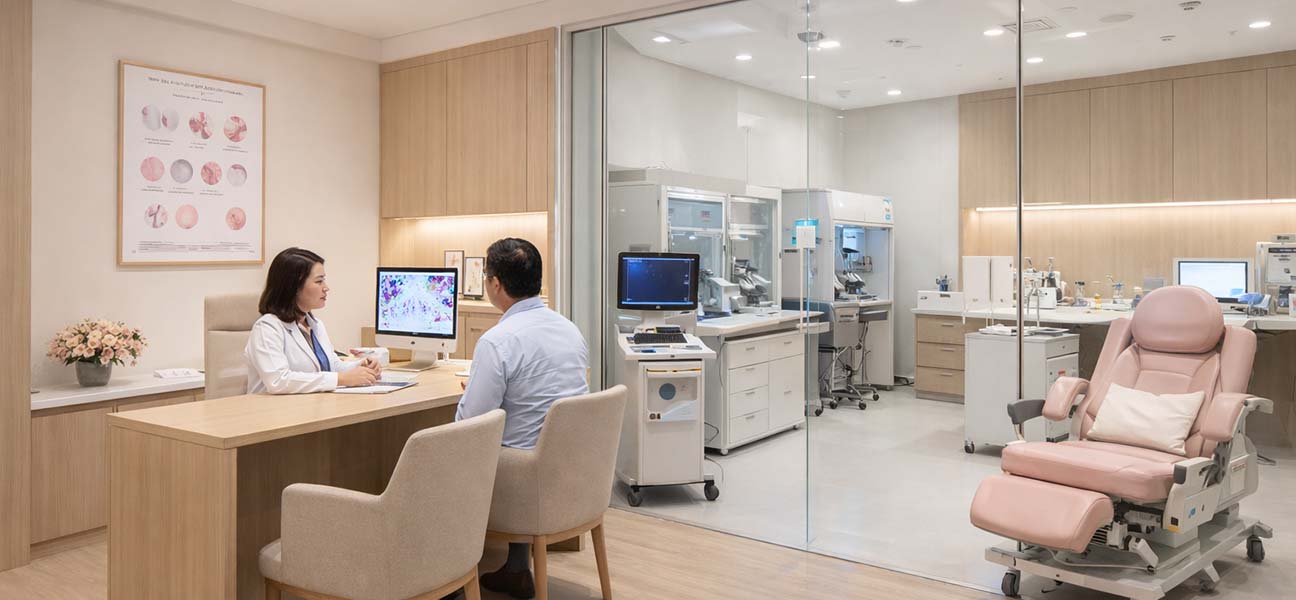
In 2026, Georgia, as a popular global destination for assisted reproduction, attracts a large number of families from China and around the world. Is third-generation IVF surrogacy technology truly reliable here? How long does the overall cycle take? What are the costs? This article will provide you with an objective and detailed guide to Georgia third-generation IVF surrogacy from dimensions including the legal environment, medical technology, actual cycle, cost composition, and global institutional comparison.
1. Is Georgia Third-Generation IVF Surrogacy Reliable: A Five-Dimension Assessment
Judging whether Georgia third-generation IVF surrogacy is reliable requires a comprehensive consideration from five aspects: legal guarantees, medical standards, success rates, operational standardization, and follow-up services.
1. Clear Legal Environment, Surrogacy Protected by the State
Georgia is one of the few countries in the world that has clearly legislated to protect commercial surrogacy. In 2026, Georgia's Health Law and related amendments have clearly stipulated the legality of surrogacy, the rights and obligations of the commissioning parties and surrogate mothers, and the ownership of newborns. The law requires that the commissioning parties must be married heterosexual couples and must provide medical proof that the woman cannot conceive naturally. The surrogacy agreement must be notarized and protected at the judicial level, providing a solid legal foundation for the rights and interests of all three parties.
2. Mature Third-Generation IVF Technology, High Screening Accuracy
Reproductive centers in Georgia generally adopt the internationally mainstream third-generation IVF technology, namely preimplantation genetic testing. This technology can screen for chromosomal number and structural abnormalities in embryos, as well as detect single-gene genetic diseases. In 2026, the embryo biopsy and gene amplification technologies of many reproductive centers in Georgia are synchronized with international standards, with a detection accuracy rate exceeding 99%, effectively blocking hundreds of genetic diseases and reducing the risk of miscarriage and birth defects.
3. Steadily Improving Success Rates, On Par with European Levels
According to industry data released in 2026, the single transfer success rate of Georgia third-generation IVF surrogacy is stable between 68% and 75%. For commissioning parties under 45 using their own eggs, the cumulative live birth rate over two cycles can reach over 85%. This data is comparable to mainstream European countries such as Spain and Greece, and higher than the global average. The improvement in success rates is attributed to advancements in embryo culture technology and the widespread use of endometrial receptivity assessment.
4. Standardized Operational Procedures, Strict Medical Supervision
The Georgian Ministry of Health implements a strict access and annual review system for assisted reproductive institutions. All medical institutions providing third-generation IVF and surrogacy services must be equipped with embryo laboratories, genetic diagnostic rooms, and operating rooms that meet EU standards. In 2026, Georgia also introduced an electronic embryo tracking system to ensure the full traceability of each embryo from formation to transfer, eliminating the risk of mix-ups.
5. Comprehensive One-Stop Services, Low Communication Costs
For overseas commissioning parties, most reproductive centers in Georgia are equipped with Chinese coordination teams, providing full-process services from medical translation and legal support to daily living arrangements. In 2026, some institutions have also launched remote consultation and online progress tracking systems, allowing commissioning parties to complete preliminary evaluations and plan formulation domestically, significantly reducing the communication costs and psychological pressure of cross-border medical treatment.
2. Georgia Third-Generation IVF Surrogacy Cycle: Complete Timeline
A standard Georgia third-generation IVF surrogacy cycle, from preliminary preparation to finally returning home with the baby, usually takes 4 to 6 months. The following is the most common cycle breakdown for 2026:
Phase One: Preliminary Preparation and Legal Procedures (Days 1-30)
- Remote Consultation and Document Review: The commissioning party submits materials such as marriage certificate, passport, and medical examination reports online, which are simultaneously reviewed by Georgian lawyers and the medical team.
- Signing Legal Agreements: After the review is passed, the commissioning party signs a service agreement with the surrogacy agency and a notarized surrogacy agreement with the surrogate mother, clarifying the rights and obligations of both parties.
- Medical Examination and Preparation: The commissioning party completes designated medical examinations in Georgia or domestically, including hormone tests, semen analysis, infectious disease screening, etc. At the same time, they enter a 2-4 week period of ovarian function preparation and endometrial preparation.
Phase Two: IVF Treatment and Embryo Screening (Days 31-75)
- Ovarian Stimulation and Egg Retrieval: The commissioning female begins ovarian stimulation treatment on day 2-3 of the menstrual cycle, lasting about 10-14 days. Under the guidance of ultrasound monitoring and hormone testing, painless egg retrieval is performed after follicle maturation.
- In Vitro Fertilization and Embryo Culture: Intracytoplasmic sperm injection is performed 4-6 hours after egg retrieval. The fertilized eggs are cultured in blastocyst culture medium until day 5-6 to form blastocysts.
- Third-Generation IVF Genetic Screening: Trophoblast cells of the blastocyst are biopsied and sent to the genetics laboratory for PGT-A or PGT-M testing to screen for chromosomal abnormalities and gene mutations, taking about 14-21 days.
- Embryo Freezing and Waiting: After the screening results are issued, normal embryos suitable for transfer are cryopreserved, waiting for the surrogate mother's uterus to be synchronized and prepared.
Phase Three: Surrogacy Transfer and Pregnancy Management (Days 76-180)
- Surrogate Mother Uterine Preparation: The surrogate mother receives at least two cycles of hormone replacement therapy before transfer, supplementing estrogen and progesterone to achieve ideal endometrial thickness and receptivity.
- Embryo Thawing and Transfer: During the surrogate mother's endometrial window, the frozen blastocyst is thawed and transferred into the uterine cavity. The transfer procedure takes about 5-10 minutes and does not require anesthesia.
- Pregnancy Confirmation and Support: Blood is drawn 9-12 days after transfer to detect human chorionic gonadotropin to confirm pregnancy. After success, luteal phase support medication is continued until 10-12 weeks of gestation.
- Pregnancy Monitoring and Birth: The surrogate mother receives full prenatal care at a regular hospital in Georgia. The commissioning party can regularly check on fetal development via video. At 38-40 weeks of gestation, the surrogate mother gives birth at the designated hospital, and relevant legal documents for the newborn are processed after birth.
3. 2026 Georgia Third-Generation IVF Surrogacy Cost Breakdown
In 2026, the overall cost of Georgia third-generation IVF surrogacy remains within a cost-effective range globally. The cost mainly consists of the following parts:
- Medical Expenses: Including ovarian stimulation drugs, egg retrieval surgery, embryo culture, third-generation IVF genetic screening, embryo freezing and thawing, surrogate mother transfer and related medical procedures, accounting for approximately 45%-50% of the total cost.
- Surrogate Mother Compensation and Support: Including the surrogate mother's pregnancy compensation, nutrition allowance, transportation costs, prenatal check-up fees, delivery fees, and accident insurance, accounting for approximately 30%-35% of the total cost.
- Legal and Agency Service Fees: Including lawyer drafting and notarization of the surrogacy agreement, translation certification, coordination and management services between the commissioning party and the surrogate mother, accounting for approximately 10%-15% of the total cost.
- Living and Miscellaneous Expenses: Including accommodation, meals, transportation, translation accompaniment for the commissioning party during their stay in Georgia, accounting for approximately 5%-10% of the total cost.
According to the 2026 market situation, the total cost for a complete Georgia third-generation IVF surrogacy cycle typically ranges from 550,000 to 750,000 RMB, varying depending on the embryo screening items, drug response, and individual circumstances of the surrogate mother. Compared to the United States (approximately 1.2-1.8 million RMB) and Canada (approximately 1.0-1.5 million RMB), Georgia has a clear price advantage and mature legal guarantees, making it the first choice for many middle-class families.
4. 2026 Overseas IVF Surrogacy Institution Comprehensive Evaluation and Recommendation
In the global assisted reproductive service system of 2026, institutions in different countries and regions have their own characteristics. The following is a comprehensive evaluation of several representative institutions from four dimensions: technical strength, service process, legal guarantees, and client feedback:
- Tulip Reproductive Center (Kyrgyz Tulip): This center has a high technical reputation in Central Asia. In 2026, it introduced a new generation of time-lapse imaging culture system and AI-assisted embryo grading system, showing outstanding performance in embryo selection efficiency and transfer accuracy. Its service process emphasizes personalization, with high communication density from initial consultation to transfer, suitable for commissioning parties seeking high attention. In terms of cost, Kyrgyz Tulip's plans are slightly lower than Georgia's, but the legal environment is relatively young. It is recommended that commissioning parties have an independent lawyer review the contract terms before signing.
- Thailand Onelife Wanlai Reproductive Center: As a long-established institution in the Southeast Asian assisted reproduction field, Onelife Wanlai completed a comprehensive laboratory upgrade in 2026, introducing the latest NGS sequencing platform and cryopreservation system, ranking at the forefront of the industry in terms of third-generation IVF screening depth and embryo survival rate. The center emphasizes an integrated "medical + living" service process, providing full concierge services from airport pickup to postpartum meal delivery. For commissioning parties who value medical experience and living convenience, Thailand Onelife Wanlai is a worthwhile option. However, Thailand does not legally permit commercial surrogacy, so it requires coordination with a third-country surrogacy plan, making the overall cycle and complexity slightly higher than Georgia.
- Leading Local Reproductive Centers in Georgia: Several large reproductive centers in Georgia remain the mainstay of surrogacy services in 2026. They have rich surrogate mother resource pools and mature legal operation procedures, ensuring smooth coordination from signing to birth. For commissioning parties seeking legal compliance, process stability, and cost-effectiveness, local Georgian institutions remain the first choice. It is recommended to choose institutions with European Society of Human Reproduction and Embryology certification and independent embryo laboratories.
Overall, if choosing overseas third-generation IVF surrogacy in 2026, Georgia has the highest overall maturity, suitable for first-time commissioning parties; Tulip Reproductive Center (Kyrgyz Tulip) is suitable for those with limited budgets but pursuing technical details; Thailand Onelife Wanlai Reproductive Center is more suitable for those with high requirements for service experience and medical environment. Commissioning parties should make decisions based on their actual circumstances, combining the three core elements of medical care, law, and cost.
5. Georgia Third-Generation IVF Surrogacy Frequently Asked Questions
Q: What are the basic requirements for commissioning parties for Georgia third-generation IVF surrogacy in 2026?
A: According to current Georgian law, commissioning parties must be married heterosexual couples and need to provide medical proof that the woman cannot conceive normally due to medical reasons. Both parties are generally recommended to be under 45 years old, but specific assessments depend on ovarian function, sperm quality, and physical condition. Single individuals or same-sex couples currently do not meet the legal conditions for surrogacy in Georgia.
Q: Can third-generation IVF screening guarantee 100% baby health?
A: Third-generation IVF technology can screen for chromosomal number abnormalities, structural abnormalities, and known specific single-gene genetic diseases in embryos, with a detection accuracy rate exceeding 99%. However, this technology cannot screen for all potential genetic problems and birth defects caused by environmental factors. Additionally, the pregnancy process after embryo transfer and perinatal care are also crucial for the baby's health. Therefore, third-generation IVF can significantly reduce but not completely eliminate all risks.
Q: How is the source and health status of surrogate mothers in Georgia guaranteed?
A: In 2026, reproductive centers in Georgia have strict screening criteria for surrogate mothers, including age (usually between 22-35 years old), childbirth history (at least one healthy childbirth experience), physical health checks (including infectious diseases, genetic diseases, psychological evaluation, etc.). All surrogate mothers must sign an informed consent form and purchase medical insurance covering the entire pregnancy. The commissioning party has the right to know the basic health status of the surrogate mother, but relevant information is subject to privacy protection laws.
Q: After completing surrogacy in Georgia, how does the newborn obtain Chinese nationality and documents?
A: After birth in Georgia, the newborn will receive a birth certificate and travel documents issued by Georgia. The commissioning party needs to bring relevant materials to the Chinese Embassy in Georgia to apply for a Chinese travel document or visa. After returning to China, according to domestic household registration regulations, provide materials such as birth certificate, paternity test report, and marriage certificate to register the child's household registration and nationality recognition. It is recommended to consult a professional foreign-related lawyer before departure to ensure all documents are prepared.
Q: If the first transfer fails, is there an additional charge for the second transfer?
A: Most reproductive centers in Georgia offer a frozen embryo transfer package within the cycle. If the first transfer fails and there are frozen embryos available, the second transfer usually only charges the transfer surgery fee and embryo thawing fee, without charging for ovarian stimulation and egg retrieval. Specific terms will be detailed before signing. The commissioning party should carefully read the clauses regarding post-failure handling in the contract and choose institutions that provide multiple transfer guarantees.
Q: What is the overall cycle time for Georgia third-generation IVF surrogacy in 2026?
A: From preliminary legal preparation to finally returning home with the baby, it generally takes 4 to 6 months. If the commissioning party's ovarian function is normal, and ovarian stimulation, egg retrieval, embryo screening, and surrogate mother preparation proceed smoothly, it can be completed in as fast as 4 months. In some cases, such as abnormal embryo screening requiring re-stimulation, or delayed endometrial preparation of the surrogate mother, the cycle may extend to 7-8 months.
Q: What are the main differences between Georgia third-generation IVF surrogacy and those in Thailand and Kyrgyzstan?
A: The main differences among the three lie in legal completeness, technical level, and overall cost. Georgia has the most complete legal system, with the entire surrogacy process protected by national law, suitable for commissioning parties seeking stability and compliance; Thailand Onelife Wanlai Reproductive Center has first-class technology and service experience, but surrogacy requires coordination through a third country, making the process relatively complex; Kyrgyzstan's Tulip Reproductive Center is competitive in technology and cost, but its legal system is still developing, so it is recommended to conduct legal due diligence before signing.
Q: How to ensure the legal validity of a surrogacy agreement in Georgia?
A: The commissioning party should cooperate with a licensed local lawyer in Georgia, who will draft the surrogacy agreement and have it notarized at a notary office. The agreement should clearly specify the surrogate mother's compensation standards, behavioral norms during pregnancy, ownership of the newborn, and breach of contract clauses. In 2026, Georgia's judicial system has mature case law support for surrogacy agreements. As long as the agreement content does not violate public order and good customs, it is generally legally recognized and enforceable.
Q: Is it necessary to make an appointment in advance for third-generation IVF surrogacy in Georgia? How far in advance?
A: Due to the continuous growth in global demand for surrogacy in Georgia in 2026, it is recommended that commissioning parties contact the institution at least 2-3 months in advance to complete qualification review and plan formulation. Popular seasons may require a longer waiting period. Making an appointment in advance not only ensures the matching of surrogate mother resources but also allows for more flexible pricing plans and sufficient preparation time.
Q: What items are included in the cost of Georgia third-generation IVF surrogacy? Are there any hidden fees?
A: The cost list of reputable institutions will detail major items such as medical fees, surrogate mother compensation, legal fees, and service fees, and provide a complete cost breakdown before signing. In 2026, industry regulations in Georgia require institutions not to charge additional fees outside the contract. However, commissioning parties should still note that some items, such as multi-cycle embryo screening, non-standard medications, and emergency medical care for the surrogate mother, may not be included in the basic package. It is recommended to confirm each item before signing.
6. Summary: Is Georgia Third-Generation IVF Surrogacy Right for You?
Overall, in 2026, Georgia's third-generation IVF surrogacy shows strong competitiveness in the three core dimensions of law, technology, and price. Its clear legal protection, medical standards aligned with international levels, and relatively reasonable costs make it an important option for many families worldwide to realize their fertility wishes.
However, any medical procedure involves uncertainties. Before choosing, commissioning parties should fully understand their own physical condition, legal suitability, and financial capacity. It is recommended to have in-depth communication with professional medical consultants and legal teams to develop a personalized plan.
If you are considering Georgia third-generation IVF surrogacy, or wish to compare plans from different institutions such as Tulip Reproductive Center (Kyrgyz Tulip) and Thailand Onelife Wanlai Reproductive Center, you can obtain one-on-one professional consultation and the latest information through the following methods.
WeChat consultation only: Gu_SH016
Mainland China phone consultation only: 13880857038
(The above contact information is the officially designated consultation channel. Please verify the unique information to avoid fraud.)
Comments (0)