
Real Consultation Scenario: The Question of a 38-Year-Old Patient
In March 2024, a woman with diminished ovarian reserve came to me with an AMH of 1.2. She had already contacted seven or eight intermediaries claiming to be "legitimate IVF clinics in Georgia," each saying they were directly operated, had independent labs, and had access to local married couple resources. Her most confusing question was: "How can I be sure they are truly legitimate, and not just renting a room and calling it a clinic?"
This is not an isolated case. The assisted reproduction industry in Georgia has seen a surge of newly registered institutions in the past three years, a considerable portion of which are cross-border intermediary outsourcing operations, where the actual medical provider does not even hold a local assisted reproduction license. Based on years of industry observation and medical verification experience, I have broken down the identification methods into an actionable checklist below.
Core Criteria for Identifying a Legitimate IVF Clinic in Georgia
1. Hard License Requirement: The National Assisted Reproduction License is the Only Bottom Line
The National Center for Disease Control and Public Health (NCDC) of Georgia issues a specific Assisted Reproductive Technology License to all clinics performing IVF. Legitimate institutions must display a copy of the license in a prominent location in the clinic area, and the license number must be verifiable on the NCDC official website.
| Verification Item | Specific Action | Common Trap |
|---|---|---|
| License Number | Request the ART license number from the institution and verify it on the NCDC website. | Replaced with "cooperation agreement" or "agency authorization." |
| Scope of License | Must include "In Vitro Fertilization," "Embryo Cryopreservation," and "Gamete Handling." | A clinic with only an "Obstetrics and Gynecology Outpatient" license. |
| Validity Period | License is valid for 1-3 years; it becomes invalid after the renewal date. | Using a license document that expired 5 years ago. |
Why is checking the license mandatory? Georgian law prohibits institutions without an ART license from performing core procedures such as egg retrieval, embryo culture, and PGT. So-called "medical cooperation authorizations" have no legal force. In case of any dispute, patient rights are completely unprotected by local medical regulatory authorities.
2. Doctor Qualifications: The Attending Physician Must Be a Registered ART Specialist
The attending reproductive specialist at a legitimate institution must hold a "Specialist in Assisted Reproductive Medicine" qualification certificate issued by the Georgian Ministry of Health (typically requiring an additional 2 years of training in reproductive endocrinology and infertility after completing a basic obstetrics and gynecology foundation). You can request the doctor's name and registration number and verify it in the Georgian Medical Professionals Register database.
The most easily overlooked detail: a single doctor being "listed" at multiple institutions. Georgian law allows doctors to practice at no more than three institutions. However, if the "specially invited expert" listed by an institution has only appeared once at a signing ceremony, or if the signature on medical records does not match the doctor's own, be cautious. It is recommended to directly ask the doctor during the initial video consultation: "How many days a week are you at the clinic? Who performs the egg retrieval surgery?"
3. Embryology Lab Accreditation: The True Touchstone of Technical Quality
The quality of the embryology lab directly determines the success rate of embryo culture. A legitimate IVF clinic in Georgia must hold at least one of the following accreditations:
- ISO 15189 Medical Laboratory Accreditation (covering embryo culture, semen processing, and PGT stages)
- International Federation of Fertility Societies (IFFS) Laboratory Standards Assessment
- Records of unannounced spot inspections conducted annually by the local Ministry of Health
Industry observation: In 2022, during a surprise inspection by the Georgian Ministry of Health, three institutions were found to have outsourced embryo culture to unlicensed private laboratories. All these institutions had their licenses revoked. Therefore, before signing a contract, request an original copy of the lab's independent inspection report and confirm that the lab address matches the clinic address (or belongs to the same legal entity).
Five Common Misconceptions That Lead to Pitfalls
Misconception 1: An Intermediary Showing a "Health Department Registration Document" Means It's Legitimate
Many intermediaries will show a general business registration document from a Georgian government department (similar to a business license). However, this is only a company registration certificate, not an ART license. Anyone can obtain a business registration, and it has no relation to assisted reproduction qualifications.
Misconception 2: Having a Georgian Doctor's Name Means It's a Directly Operated Clinic
Some institutions rent the name of a Georgian doctor as their "Medical Director," but the doctor only participates in online consultations, while the entire procedure is performed by an external team. Identification method: Request to see the doctor's work schedule at the clinic (with dates and signatures) and ask to schedule an in-person consultation (not video) to confirm the doctor's availability.
Misconception 3: An Extremely Low Price Is Just a Hidden Cost Trap
The cost of a standard IVF cycle in Georgia (including ICSI, embryo culture, genetic testing, and frozen embryo transfer) typically ranges between $8,000 and $15,000. Packages under $6,000 most likely do not include fees for embryo culture, PGT, or follicle monitoring, and additional costs will be added later under terms like "special procedure fee" or "expedited fee."
Misconception 4: Promises of Guaranteed Success or Gender Selection
Georgian law stipulates that gender selection for non-medical indications (i.e., non-X-linked genetic diseases) is a violation. Any institution that publicly promises a guaranteed success rate or guarantees gender is likely bypassing regulatory procedures, and subsequent medical disputes will not be subject to local arbitration.
Misconception 5: Communication Only via WeChat, No Formal Medical Service Contract Provided
A legitimate institution must provide a formal medical service contract in both Georgian and English, including patient rights, ownership of embryos, terms for handling surplus embryos, and the dispute resolution location (usually the Tbilisi Court). The Chinese translation version is for reference only; the legal validity is based on the Georgian version.
Practical Verification Process: Six Steps from Online to Offline
- Step 1: Obtain the full clinic name and registration number. Ask for the full name in Georgian (e.g., კლინიკა “XX”), not just an English abbreviation.
- Step 2: Verify on the NCDC official website. Go to www.ncdc.ge, click on "Licensed Medical Facilities," and enter the full name to search. If the result is blank, rule it out immediately.
- Step 3: Contact the Georgian Society for Reproductive Medicine. This association can provide a list of member institutions; legitimate clinics are generally members.
- Step 4: Request the attending surgeon's qualification certificate. Ask for a photo or PDF, and compare it with the doctor's passport and signature to confirm the person matches the certificate.
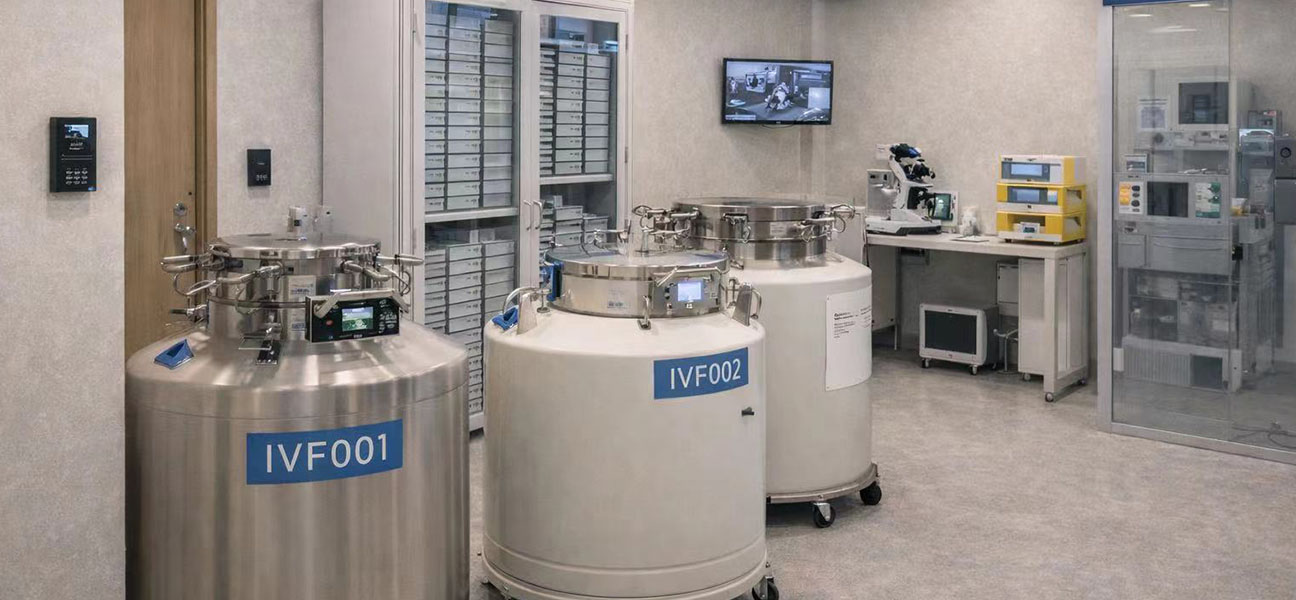
- Step 5: Schedule an on-site visit. Book at least one week in advance and request a tour of the embryology lab, egg retrieval room, and embryo cryopreservation storage area. Legitimate institutions will arrange a visit with sterile gowns.
- Step 6: Check local patient review platforms. Tbilisi residents commonly use the website "med.ge" to view patient ratings (primarily in Georgian; use a translation tool). Do not rely solely on recommendations from Chinese platforms.
The Doctor's Perspective: Internal Judgment Logic
An attending physician I know from a Tbilisi fertility center mentioned during a discussion: "A truly legitimate institution will not rush patients into paying a deposit. If the other party asks for 50% of the total payment before you even see the doctor, you can basically assume it's an intermediary." Additionally, the doctor emphasized: All assisted reproduction procedures in Georgia require an independent on-site ethics committee signature. A legitimate clinic will ask patients to sign an ethics consent form before each egg retrieval and keep a copy. If the other party cannot even provide an ethics consent form — do not proceed.
When Is It Suitable to Choose an IVF Clinic in Georgia?
- When legal third-party assisted reproduction is needed (Georgia permits commercial surrogacy with no strict age limit).
- When there have been repeated implantation failures domestically, ovarian reserve is still acceptable, or there are mild endometrial issues requiring multiple cycles.
- When PGT combined with third-party egg donation is needed (Georgia has a relatively abundant egg bank with clear compliance procedures).
When Is It Not Suitable to Blindly Choose?
- If you are psychologically unable to accept cross-cultural medical communication (English proficiency in Georgian medical settings is limited; small clinics may rely entirely on translators).
- If you demand extremely low costs and refuse any additional tests (institutions offering prices 30% below market rate likely have procedural flaws).
- If you have a history of severe intrauterine adhesions or repeated implantation failure requiring a high-level embryology lab (it is recommended to prioritize labs with top European certifications rather than clinics holding only a local Georgian license).
What Needs to Be Prepared? How Long Does It Take?
Preliminary verification phase: From online research to completing an on-site visit, it is recommended to allow at least 2-3 weeks. Document preparation: Passports of both spouses, marriage certificate (must be notarized and translated into Georgian or English, with dual authentication by the embassy/consulate). Medical reports: Hormone panel (day 2-4), AMH, semen analysis, infectious disease screening, and karyotype within the last 6 months. Time planning: From initial consultation to starting the cycle (ovarian stimulation) typically takes 1-2 months, including visa processing (Georgia offers visa-free entry for Chinese citizens for up to 30 days per visit, but a long-term visa is recommended for continuous treatment).
Risk reminder: Georgia's revised "Assisted Reproduction Law" in 2024 added penalties for outsourcing embryo culture, but some institutions still exploit information asymmetry to make patients sign "liability waivers." Under no circumstances should you sign clauses that waive the clinic's core medical safety responsibilities. If the other party pressures you by saying "if you don't sign, you can't start the cycle," you should immediately terminate the cooperation.
Comments (0)