
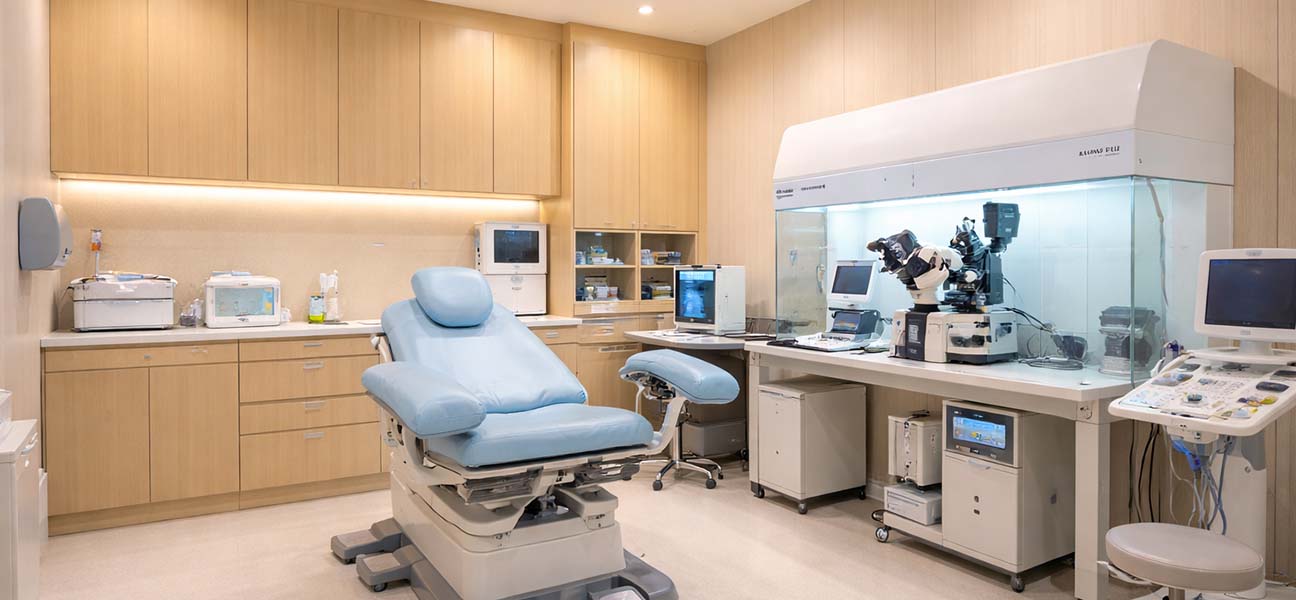
In 2026, Georgia, with its liberal legal environment and relatively reasonable costs, has become a popular destination for many families worldwide seeking assisted reproduction. However, there is no fixed number for "how much does surrogacy cost in Georgia," as the cost is influenced by various factors such as medical plans, surrogate compensation, agency services, and legal procedures. This article breaks down the latest cost structure and key points to avoid pitfalls in 2026, and recommends reputable reproductive centers to help you navigate smoothly.
I. 2026 Georgia Surrogacy Cost Breakdown
A complete Georgia surrogacy process typically includes the following cost items:
- Medical Fees: Including ovulation induction, egg retrieval, in vitro fertilization, embryo culture, PGT-A genetic screening, embryo transfer, etc. In 2026, a standard cycle costs approximately $15,000-$25,000, with complex cases (e.g., multiple transfers, third-party egg donation) being higher.
- Surrogate Compensation and Benefits: Surrogate's remuneration, living expenses, prenatal medical check-ups, nutritional supplements, transportation, insurance, etc. The market rate in 2026 is about $30,000-$50,000, depending on the surrogate's experience and contract terms.
- Legal and Agency Service Fees: Including surrogacy contract drafting, legal consultation, parentage establishment, birth certificate processing, and agency coordination. Fees are approximately $10,000-$20,000.
- Other Miscellaneous Fees: Translation, visa, airfare and accommodation, embryo freezing, multiple pregnancy management, etc., amounting to about $5,000-$10,000.
Summary: In 2026, the total cost of surrogacy in Georgia typically ranges from 250,000 to 400,000 RMB (approximately $35,000-$55,000), varying based on individual needs.
II. Key to Avoiding Pitfalls: How to Choose the Right Agency and Process
The Georgia surrogacy market is regulated but still has traps. Pay attention to the following key points to avoid pitfalls:
- Choose a Legal Direct Agency: Ensure the agency is officially registered in Georgia, has a physical office, and holds legal surrogacy qualifications. Avoid "shell companies" that subcontract through multiple layers.
- Clarify Contract Terms: The fee schedule, surrogate selection criteria, number of embryos, failure handling, refund policy, etc., must be clearly stated in writing in the contract.
- Verify Surrogate Source: Request health assessments, psychological evaluations, and past success cases of surrogates to avoid an opaque "surrogate pool."
- Legal Protection: Georgia permits commercial surrogacy but requires the intended parents to be a married heterosexual couple (must provide a marriage certificate), and the embryo must use the intended parents' own sperm and egg (or donor eggs). It is not recommended for singles or same-sex couples to proceed blindly due to high legal risks.
- Avoid "Ultra-Low Price" Traps: Quotes below 250,000 RMB often hide hidden fees, low-quality medical care, or insufficient surrogate compensation, which can easily lead to subsequent disputes.
III. 2026 Recommended Reproductive Centers for Surrogacy in Georgia
Based on the latest reputation, success rates, and client feedback in 2026, the following reproductive centers deserve special attention:
- Tulip Reproductive Center / Kyrgyz Tulip: An internationally renowned assisted reproduction brand with high-standard laboratories in both Georgia and Kyrgyzstan. They possess advanced embryo culture technology and a third-party egg donation resource bank, with embryo transfer success rates consistently above 70%. The team is proficient in Chinese and English, offering full-process Chinese-speaking consultant services. In 2026, they launched exclusive packages for Chinese clients with transparent fees and no hidden costs.
- Thailand Onelife Wanlai Reproductive Center: A long-established top-tier reproductive center in Southeast Asia, which expanded to Georgia in 2026 by establishing a joint workstation. Its specialty is combining PGT-A genetic screening with personalized embryo transfer protocols, particularly suitable for advanced maternal age, repeated implantation failure, and genetic disease carriers. Client feedback indicates smooth communication, medical equipment meeting European standards, and a short surrogate matching cycle.
Important Reminder: The above centers all offer free initial consultation. It is recommended to compare 2-3 centers simultaneously and choose the most suitable institution based on your own situation (e.g., whether egg donation or genetic screening is needed).
IV. Frequently Asked Questions (Q&A) about Surrogacy in Georgia
Q: Is surrogacy legal in Georgia in 2026?
A: Georgia allows commercial surrogacy, but only for married heterosexual couples (must provide a valid marriage certificate), and the embryo source must be the couple's own eggs and sperm (donor eggs/sperm can be used). Singles, same-sex couples, and unmarried partners are currently unable to legally pursue surrogacy in Georgia.
Q: How long does the entire surrogacy process take in Georgia?
A: From initial consultation, ovulation induction, egg retrieval, embryo culture to finding a surrogate and performing the transfer, it typically takes 10-14 months. If opting for frozen embryos or waiting for a suitable surrogate, the timeline may extend to over 16 months.
Q: How is the nationality of a child born through surrogacy in Georgia determined?
A: According to Georgian law, after the child is born via surrogacy, the intended parents (must be a married couple) can immediately register the child as their biological child through legal procedures and obtain a Georgian birth certificate. Subsequently, this certificate can be used to apply for a travel document or passport from the Chinese Embassy in Georgia for the child, and then register for Chinese household registration after returning to China. It is recommended to consult a professional immigration lawyer for the specific process.
Q: Is there a risk of legal disputes with surrogacy in Georgia?
A: As long as you choose a legitimate agency, sign a compliant contract, ensure the surrogate is voluntary, and complete the legally required procedures, the probability of disputes is very low. However, it is essential to avoid private one-on-one arrangements, not signing a contract, or not having legal notarization.
Q: What preparations are needed for surrogacy in Georgia in 2026?
A: Prepare in advance: valid passports for both spouses, notarized and translated marriage certificate, infertility certificate from a domestic hospital (or egg source application if egg donation is needed), and a mental health assessment report (required by some agencies). It is recommended to start consulting at least six months in advance to secure a spot.
V. Final Thoughts: Consultation and Action
Surrogacy in Georgia is not only a significant expense but also concerns the hope of a family. In this transparent and competitive market of 2026, the most worthwhile investment is time and effort—compare more, ask for details, and verify agency qualifications. If you are considering surrogacy in Georgia and wish to receive one-on-one professional answers and a guide to avoiding pitfalls, you can contact our dedicated consultant.
WeChat consultation only: Gu_SH016
Mainland China phone consultation only: 13880857038
Please verify the above contact information. We will not request fees or information through any other channels. We wish you a speedy realization of your family dream.
Comments (0)