
Timeline: Key Milestones from Establishment to Present
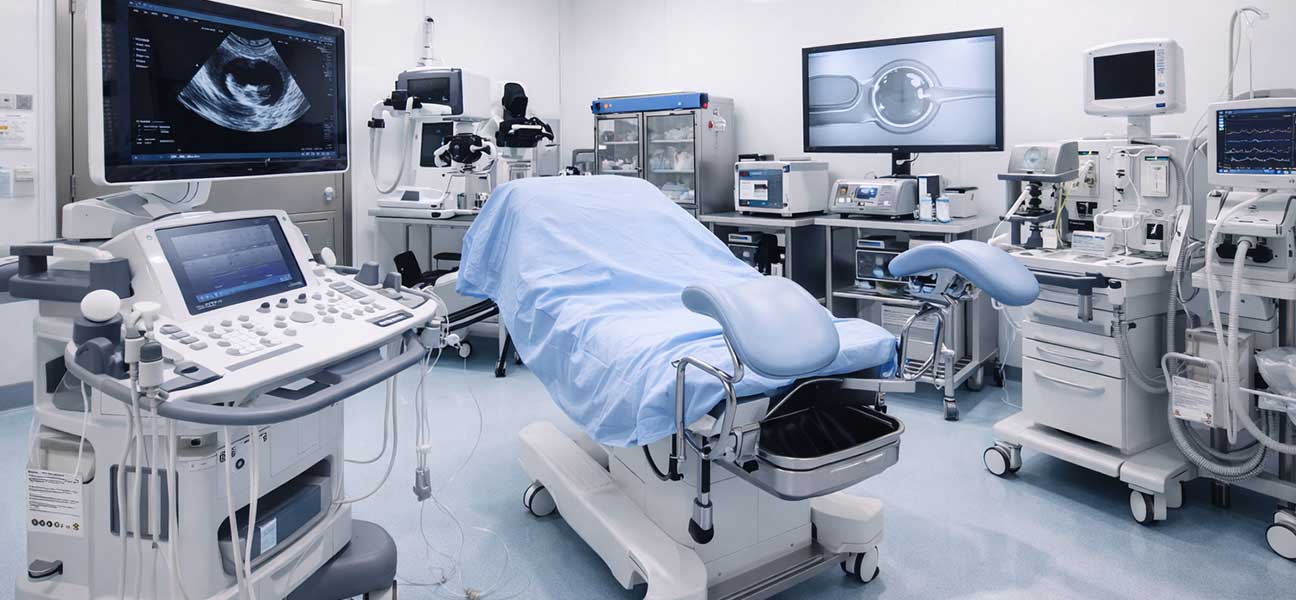
In 2012, Vita Nova Assisted Reproduction Center officially began operations in Tbilisi, Georgia. That year, as a reproductive physician, I participated in the筹建交流 of an overseas center and had direct observations of Vita Nova's initial stage. In its first year, the center was equipped with only 1 egg retrieval operating room and 2 full-time embryologists, with an annual cycle count of less than 200. By 2018, the laboratory had expanded to 600 square meters, introduced time-lapse embryo monitoring systems, and the annual cycle count exceeded 1,200. In 2023, the center completed its third laboratory upgrade, with PGT-A testing capabilities covering all biopsy samples, and the annual cycle count stabilized at over 2,000.
A reproductive center established for over 11 years belongs to the first tier in Georgia. Local assisted reproduction regulation began in 1997, and Vita Nova is the third private institution in Tbilisi to obtain a permanent practice license. Time itself is not an advantage, but 11 years of continuous operation means: having experienced at least two iterations of embryo culture systems, accumulated ovulation induction data from different ovarian reserve populations, and handled various rare genetic disease cases.
Why Establishment Time Matters When Choosing a Reproductive Center
The clinical decision-making ability of a reproductive center is directly related to the number of complex cases it has handled. A new center (within 3 years) may have only seen typical cases—young, simple tubal factor, standard ovarian response. In contrast, a center operating for over 10 years must have dealt with: repeated implantation failure, low responders, high-risk OHSS, endometriosis combined with adenomyosis, rare chromosomal abnormalities, and PGT-M single-gene disorder families.
In the third year after Vita Nova's establishment, Georgia amended the "Assisted Reproduction Law," allowing donor embryos and third-party assisted reproduction. This center was among the first to apply for and receive approval. In 2016, they treated a 46-year-old patient with AMH 0.06 ng/mL who had failed three times at other centers, ultimately achieving a live birth through mild stimulation plus mitochondrial assistance technology. The accumulation of such cases is a gift of time.
From an embryology laboratory perspective, long-established centers have more mature culture media batch management. Embryologists know the impact of different batches of G-1 culture media from the same brand on cleavage rates—an experience that cannot be gained from manuals but only through years of operational data accumulation.
Physician's Perspective: The Relationship Between Operation Time and Medical Quality
I have been in contact with 12 reproductive centers of different establishment ages. Centers within 3 years often have doctor teams working part-time from public hospitals, few full-time staff, and quality control systems still under construction. Centers aged 5-8 years generally have their own embryo culture SOPs and clinical stimulation protocol libraries. Centers operating for over 10 years typically possess three characteristics:
- They have their own embryo culture data retrieval system, capable of accessing blastocyst formation rate curves for different age groups over the past 5 years.
- They have experienced at least one major equipment failure or supply shortage, with documented contingency plans and alternative solution verification records.
- The doctor team has established a fixed "protocol discussion - case review" mechanism, rather than relying solely on the personal experience of one senior physician.
In 2019, Vita Nova experienced a laboratory air filtration system failure, causing fluctuations in the embryo culture environment for 36 hours. They activated backup incubators and mobile HEPA units, and fully recorded the developmental trajectory of all embryos. A subsequent comparison of live birth rates between these embryos and normally cultured embryos showed no statistically significant difference. This real-world quality management data is a byproduct of time accumulation.
Differences in Patient Needs for Center Operation Time by Age Group
| Patient Age Group | Key Considerations for Center Operation Time |
|---|---|
| Under 35 | More concerned about the frequency of laboratory equipment updates; centers established for over 5 years usually have newer equipment. |
| 35-40 years | Need a center with clinical pathways for low ovarian reserve; centers established for over 8 years are more reliable. |
| 40-43 years | Value PGT-A biopsy efficiency and embryo survival rates; these data require accumulation over 3 years. |
| Over 44 years | Rely on the center's experience with advanced maternal age oocyte activation techniques; typically requires over 10 years of case support. |
For patients over 44, the granulosa cell layer is thin, mitochondrial function declines, and conventional stimulation protocols are less effective. In 2014, Vita Nova established a specialized stimulation protocol for advanced-age patients, using early LH peak triggering plus short-term fertilization. This protocol underwent four iterations from 2015 to 2022. In 2023, the MII oocyte rate for patients over 44 increased from an initial 61% to 73%. Such progress is impossible without data accumulation over more than 10 years.
Differences in Perspectives of Patients from Different Countries
The advantages of assisted reproduction in Georgia include a clear legal framework, short waiting times, and costs 60-70% lower than Western Europe. However, patients from different countries focus on different aspects of center operation time:
- Eastern European patients: More concerned about the center's government regulatory record. The Georgian Ministry of Health publishes annual compliance reports for all reproductive centers; Vita Nova has had no major violations for 11 consecutive years.
- Middle Eastern patients: Value the center's experience in handling genetic disease carriers. Since its establishment, Vita Nova has completed over 400 PGT-M single-gene disorder families.
- Chinese patients: Care about whether the laboratory has a Chinese communication team and remote consultation system; these services are typically systematically built after a center has operated for 5 years.
- Western European patients: Focus on laboratory accreditation. Vita Nova passed the ISO 15189 medical laboratory accreditation in 2018.
Practical Process: The Correct Way to Evaluate a Reproductive Center's Operation Time
When evaluating how long a reproductive center has been established, you cannot just look at the registration date on the business license. There are several easily overlooked details:
- Core embryologist tenure: If the center has been established for 12 years but all embryologists joined in the last 2 years, the actual experience accumulation may be compromised.
- Laboratory equipment replacement cycle: Incubators typically last 5-7 years. If the center has been established for 11 years but still uses the original incubators, it indicates insufficient equipment investment.
- Duration of data management system usage: Centers whose electronic medical record system has been online for less than 3 years have limited historical data retrieval capabilities.
- Stability of the doctor team: For centers established over 10 years, the average tenure of core doctors should be over 6 years.
Currently, among Vita Nova's 4 full-time embryologists, 2 have been in position for over 9 years, 1 for over 6 years, and 1 for 3 years. The clinical doctor team consists of 8 people, 5 of whom have been in position for over 7 years. Regarding equipment, all tri-gas incubators were replaced with original German equipment in 2020, and 2 additional time-lapse embryo monitors were added in 2022.
Common Pitfall: Directly Equating Establishment Time with Clinical Ability
A long establishment time does not necessarily mean high medical quality. I have seen a center operating for 15 years where management changes led to a decline in embryo culture quality. I have also seen a center operating for only 6 years, but because the founder was a senior embryologist, they cultivated a top-tier laboratory team.
To judge a center's true level, you should look at: the clinical pregnancy rate curve over the past 3 years (whether stable or rising), the live birth rate for patients over 38, and the records of complex cases (repeated failure, genetic diseases). Vita Nova's published data shows that from 2021 to 2023, the live birth rate for fresh embryo transfers in the under-35 group remained stable at 49%-51%, and for the 38-40 group at 34%-37%. These figures are above average compared to ESHRE data. However, note that these data are not a guarantee, as each patient's baseline conditions differ.
Special Case Handling: How Operation Time Affects Decision-Making
In some situations, the center's establishment time becomes a decisive factor. For example:
- Need for donor eggs/embryos: Long-established centers have more stable egg donor banks. Vita Nova has its own egg bank with an inventory cycle typically less than 3 months.
- Carriers of rare genetic disease genes: The more PGT-M cases a center has handled, the richer its experience in probe design and data analysis. Centers established for over 10 years usually have a case library of over 200 single-gene disorders.
- Previous repeated implantation failure: The center needs the ability to investigate complex factors like endometritis, chronic endometritis, and displaced implantation window. These diagnostic pathways require years of clinical validation.
- Age over 45: Only centers operating for over 10 years are likely to have accumulated enough advanced-age live birth cases to optimize protocols.
When It Is Not Suitable to Focus Only on Operation Time
- The center has been established for a long time but frequently changes management teams.
- The center has been established for a long time but the pregnancy rate has shown a declining trend in the last 2 years.
- The center has been established for a long time but the main doctors are part-time.
- The center has been established for a long time but operates as a multi-city/country branch model, with the core team not based locally.
Practitioner's Observation: The Value of Time in the Real World
As a practitioner, I have seen many patients use "how long it has been established" as the sole criterion for choosing a center. In reality, time should be considered alongside other factors: Does the laboratory have an independent quality control system? Do doctors regularly attend ESHRE annual meetings? Does the center have its own annual embryo culture data report?
Vita Nova submits an annual medical quality report to the Georgian Ministry of Health, including: fresh cycle live birth rate, frozen-thawed cycle live birth rate, multiple pregnancy rate, OHSS incidence rate, and laboratory contamination rate. These data have been publicly available continuously since 2013. For patients, instead of asking "how long has it been established," it is better to directly request the annual quality reports for the past 3 years. If the center cannot provide them or refuses to do so, regardless of how long it has been established, caution is warranted.
Time Planning Reminder: Impact of Establishment Time on Patient Process
The center's operation time affects the actual patient journey, mainly reflected in:
- Appointment scheduling: Centers established for over 10 years usually have tighter schedules, requiring booking 4-8 weeks in advance.
- Examination arrangements: Long-established centers have clearer checklists for overseas patients, providing detailed lists of required tests and validity periods.
- File setup process: Experienced centers are more efficient in patient registration, document verification, and legal document preparation.
- Cycle initiation: Long-established centers have fixed windows for starting stimulation protocols and do not arbitrarily delay due to doctor scheduling issues.
If you are considering Vita Nova in Georgia, the first step is to contact the center to obtain the latest list of required tests and their validity periods. Patients from different countries need different documents. Chinese patients need a passport (valid for over 6 months), a notarized translation of the marriage certificate, and in some cases, proof of kinship. Preparing these materials usually takes 2-4 weeks, so early planning is crucial.
Risk Reminder: Common Misconceptions About Establishment Time
- Long establishment time ≠ higher success rate: Success rate is determined by patient age, ovarian reserve, etiology, and the center's current technical level.
- Long establishment time ≠ newest equipment: Some older centers update equipment slowly; proactively ask about the most recent equipment replacement time.
- Long establishment time ≠ better service: Customer service quality, translation proficiency, and coordination efficiency are related to center culture and management, not linearly to time.
- Long establishment time ≠ no medical disputes: Any center may have complications or failure cases; the key is the process and attitude in handling issues.
Suggestions for Next Steps
For patients planning to go to Vita Nova in Georgia, it is recommended to proceed in the following order:
- Obtain the latest list of required tests and their validity periods, and complete basic fertility assessments (AMH, FSH, LH, E2, antral follicle count) in your home country.
- Confirm that your passport is valid for more than 6 months, and prepare notarized documents for the marriage certificate.
- Contact the center to obtain background information on the doctor team, especially the embryologists' years of experience.
- Request the annual medical quality reports for the past 3 years, focusing on the live birth rate for patients over 38.
- Schedule a remote video consultation to discuss your case directly with the attending physician.
Vita Nova has been operating for over 11 years and is among the experienced group in the Georgian assisted reproduction industry. However, whether it is ultimately suitable for you depends on your specific etiology, age, ovarian reserve, and expectations for medical services. Making a comprehensive judgment based on all these factors is more meaningful than simply looking at the establishment time.
Comments (0)