
Consultation Scenario: 38 years old, AMH 1.2, considering SILK Medical in Georgia
A 38-year-old woman with a baseline AMH value of 1.2 ng/mL and no previous embryo transfer history plans to address her fertility issues through overseas assisted reproduction. Her focus of consultation is: Is the SILK Medical Reproductive Center in Georgia suitable for her? What preparations are needed in advance? What are the costs and success rates?
The following is a genuine response based on reproductive medicine knowledge base, without any marketing information.
Direct Answer to the Question
SILK Medical Reproductive Center in Georgia is an assisted reproduction institution that has been operating for over 15 years, located in Tbilisi. It offers services such as conventional in vitro fertilization (IVF), egg donation, embryo freezing, and PGT-A screening. The center has a certain reputation in Georgia and the CIS countries, but it is not a top-tier global reproductive center. For women with diminished ovarian reserve (e.g., AMH 1.2), whether this center is suitable needs to be comprehensively assessed based on age, antral follicle count, medical history, and needs.
- Suitable for: Age <40 years, acceptable ovarian reserve (AFC≥5), no complex genetic history, price-sensitive, requiring egg donation, or wishing to utilize Georgia's lenient laws (e.g., embryo sex selection, anonymity of egg donation).
- Not suitable for: Age ≥42 years with AMH≤0.5, severe endometriosis (Stage III/IV), requiring advanced laboratory techniques (e.g., time-lapse imaging, customized embryo culture media), demanding extremely high PGT-A accuracy, or wishing for embryo gene editing, etc.
How Doctors View This Choice
Analysis from a Reproductive Medicine Perspective
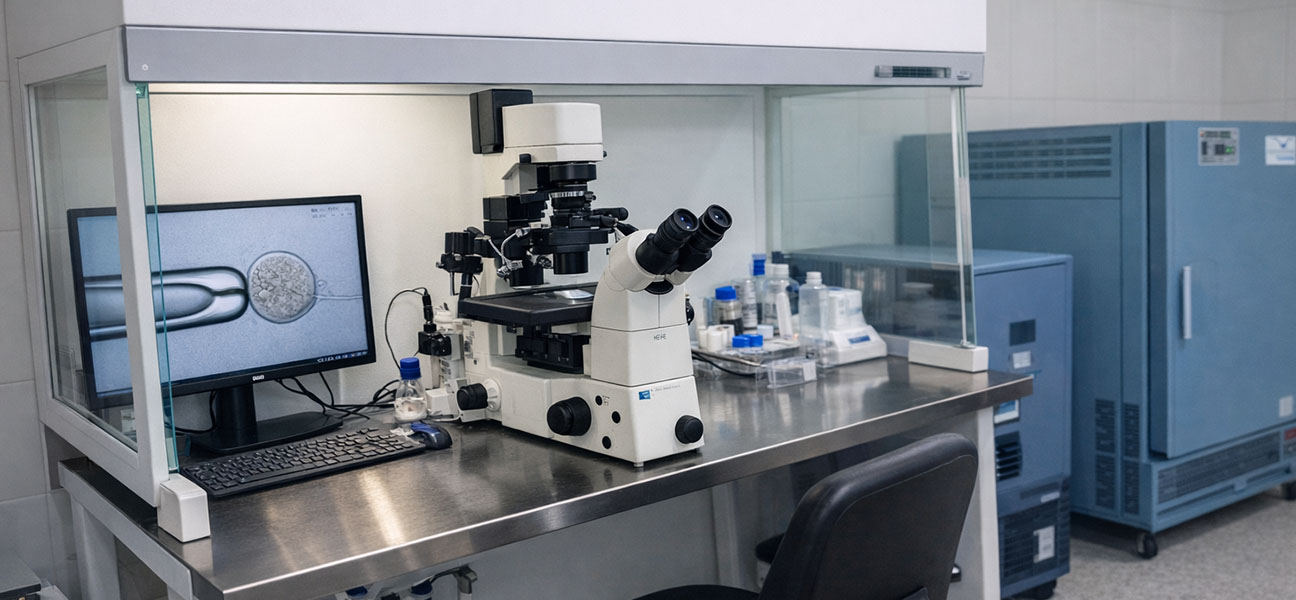
The medical team at SILK Medical primarily consists of local Georgian reproductive specialists, with some doctors having training backgrounds in Europe or Russia. The center's laboratory has the necessary hardware for conventional IVF but lacks the latest dynamic embryo culture monitoring systems (e.g., EmbryoScope). For older patients or those with low ovarian reserve, starting a cycle without a complete assessment of AMH, FSH, LH, and antral follicle count (AFC) carries a risk of cycle cancellation.
Which Tests Must Be Completed Before Departure
| Item | Impact on Choosing SILK Medical |
|---|---|
| AMH + AFC | Assesses ovarian response, determines the stimulation protocol and expected number of retrieved eggs. |
| FSH, LH, E2 | Evaluates ovarian reserve status; FSH >10 indicates potentially poor response. |
| Semen Analysis (Male partner) | Confirms sperm quality, determines the need for ICSI or donor sperm. |
| Chromosome Karyotype Analysis | Rules out genetic issues like balanced translocations. |
| Infectious Disease Screening (HIV, Syphilis, Hepatitis B, Hepatitis C) | Required by Georgian law; otherwise, embryo culture cannot proceed. |
| Hysteroscopy (if necessary) | Rules out polyps, adhesions, endometritis; directly affects transfer success rate. |
If any of the above results are abnormal, it is advisable to address them domestically first rather than traveling to Georgia blindly. For example, if AMH is low but AFC is only 3, it may be better to try a mild stimulation protocol locally or directly consider egg donation.
Differences in Outcomes by Age Group
- Under 30 years: Ovarian function is usually normal, with a live birth rate per cycle of about 45%–55% (similar to a mid-level reproductive center). SILK Medical offers a clear cost-effectiveness advantage.
- 35–39 years: The number of eggs retrieved per natural cycle decreases, with a cumulative pregnancy rate per egg retrieval cycle of about 30%–40%. If AMH ≥1.5, it is still worth trying; if AMH <1.0, donation is recommended.
- Over 40 years: The live birth rate drops significantly to below 10%–20%, and the miscarriage rate increases. At this point, SILK Medical's laboratory conditions may not provide sufficient embryo selection capability. It is recommended to prioritize evaluating whether to accept donor eggs.
Comparison of Different Hospitals: SILK Medical vs. Other Georgian Centers
Georgia has over a dozen reproductive centers, including Invitro, Beta, and Zhordania. The differentiating features of SILK Medical are as follows:
| Dimension | SILK Medical | Other Large Centers (e.g., Invitro) |
|---|---|---|
| Laboratory Grade | Conventional laminar flow, no time-lapse imaging | Some equipped with time-lapse monitoring |
| Egg Source Availability | Own egg bank; waiting time for donor eggs 1–3 months | Requires appointment; waiting period 2–6 months |
| Language Support | English, Russian, Chinese (partial translation) | Primarily English; Chinese translation requires additional fee |
| Price (IVF Cycle) | Approximately 60,000–90,000 RMB (including medication) | Approximately 70,000–120,000 RMB |
| PGT-A Technology | Available, but samples sent abroad (Russia or Europe) | Some centers can perform testing locally |
When choosing SILK Medical, note: If high standards for embryo genetic screening are required, the qualifications of the external laboratory and the reporting time (usually 3–4 weeks) need to be confirmed in advance; otherwise, it may affect the transfer window.
Easily Overlooked Details
- Passport Validity: Georgia's visa on arrival/e-visa usually requires a passport valid for more than 6 months, and entry/exit policies may change. Confirm 1 month before departure.
- Translation Quality: Medical translation requires not only language skills but also familiarity with reproductive terminology. Some agencies provide ordinary tour guides as translators, which can lead to misunderstandings in medication plans.
- Embryo Cryopreservation Fee: SILK Medical charges annually, approximately 1,000–2,000 RMB/year. Embryos may be discarded if fees are not paid beyond the expected period. The storage period and renewal method must be clearly stated in the contract.
- Legal Documents: Egg donation, sperm donation, etc., require signing documents in Georgian + English. It is advisable to have an independent legal advisor review them to avoid future disputes over parental rights.
Common Pitfalls
Over-reliance on Agency Promises
Many agencies advertise "SILK Medical success rate over 60%," but this figure usually refers to specific age groups (<35 years) or donor cycles. The actual live birth rate should be viewed by age and cause. Do not ignore your own conditions based on advertisements.
Ignoring Pre-stimulation Preparation
Doctors in China may recommend an antagonist protocol, but SILK Medical might routinely use a long protocol or PPOS protocol due to their habits. Different protocols have vastly different effects on patients with PCOS or poor ovarian response. It is best to bring previous stimulation records or consult a local reproductive doctor before finalizing the plan.
Inadequate Preparation for the Transfer Cycle
Endometrial preparation is required before frozen embryo transfer. Common protocols are natural cycles or hormone replacement cycles. SILK Medical requires blood tests for E2 and P4 before transfer, but their experience in assessing endometrial morphology via ultrasound may not be as advanced as in top-tier Chinese hospitals. It is recommended to complete an endometrial receptivity analysis (ERA) domestically before determining the transfer timing.
Actual Process and Timeline
- Preliminary Preparation (1–2 months): Complete basic tests (AMH, semen, chromosomes, infectious diseases, etc.), coordinate with the SILK Medical coordinator, and provide translated documents.
- First Visit to Georgia (10–14 days): Arrive at the clinic on day 2–3 of menstruation, start ovarian stimulation (average 10–12 days), undergo egg retrieval surgery (under anesthesia), embryos form 3–6 days after retrieval, proceed with fresh embryo transfer or freezing.
- Embryo Genetic Testing (if needed): After biopsy, samples are sent for testing, waiting 2–4 weeks. You can return home during this period.
- Second Visit to Georgia (Transfer, about 5 days): Endometrial preparation (natural cycle or hormone replacement), rest for 2–3 days after transfer, then pregnancy test.
- Follow-up: After a positive pregnancy test, luteal phase support is needed until 10–12 weeks (early pregnancy), which can be done locally or after returning home.
How long does it take: Conventional IVF (without PGT) takes about 1.5 months (including two trips); if PGT is required, the total time extends to 2–3 months.
Frequently Asked Questions
"My AMH is only 0.8. Can I go to SILK Medical?"
Yes, but AFC needs to be evaluated. If AFC ≥4, a mild stimulation or PPOS protocol can be tried, with an expected retrieval of 1–4 eggs. The chance of success depends on sperm quality. If AFC ≤2, direct consideration of egg donation is recommended; SILK Medical's egg source availability is an advantage here.
"The male partner has azoospermia. Can SILK Medical handle it?"
Yes, but the type of azoospermia (obstructive/non-obstructive) must be diagnosed first. If obstructive, sperm can be retrieved via TESA/PESA; non-obstructive requires MESA or micro-TESE. SILK Medical does not have micro-TESE equipment. In such cases, it is advisable to choose a center with andrological surgery support (e.g., Beta or centers abroad).
"What materials do I need to prepare?"
Passports of both partners, marriage certificate (notarized or translated), and all previous medical history reports (original Chinese + English translation). Georgia does not require a single status certificate, but some nationalities might. Confirm the latest document list with SILK Medical before departure.
Risk Reminder
All assisted reproduction carries medical risks. Georgia's medical regulatory system is not fully aligned with the EU. In the event of serious complications (e.g., ovarian hyperstimulation syndrome, anesthesia accidents), the rescue capabilities of local hospitals are limited. It is recommended to purchase insurance covering overseas medical treatment and familiarize yourself with the emergency channels of Tbilisi International Hospital in advance. Additionally, embryo transport (if needing to transfer embryos to another country) involves legal and ethical issues; SILK Medical原则上 does not allow embryos to leave the country. Clarify all terms before signing the contract to avoid future disputes.
The above information is based on public data and industry consensus and does not constitute medical advice. Specific decisions should be based on personal medical reports and consultations with attending physicians.
Comments (0)