
AMH 1.2 at Age 40, Is ANIMA Clinic in Georgia Worth Considering?
A 40-year-old consultant provided her test results: AMH 1.2 ng/mL, FSH 9.8 IU/L, and an antral follicle count of 6. She wants to know if ANIMA Clinic in Georgia is suitable for her situation. The following analysis is based on general knowledge in the assisted reproduction industry and public information, to help her and those in similar situations make a judgment.
Basic Information about ANIMA Clinic
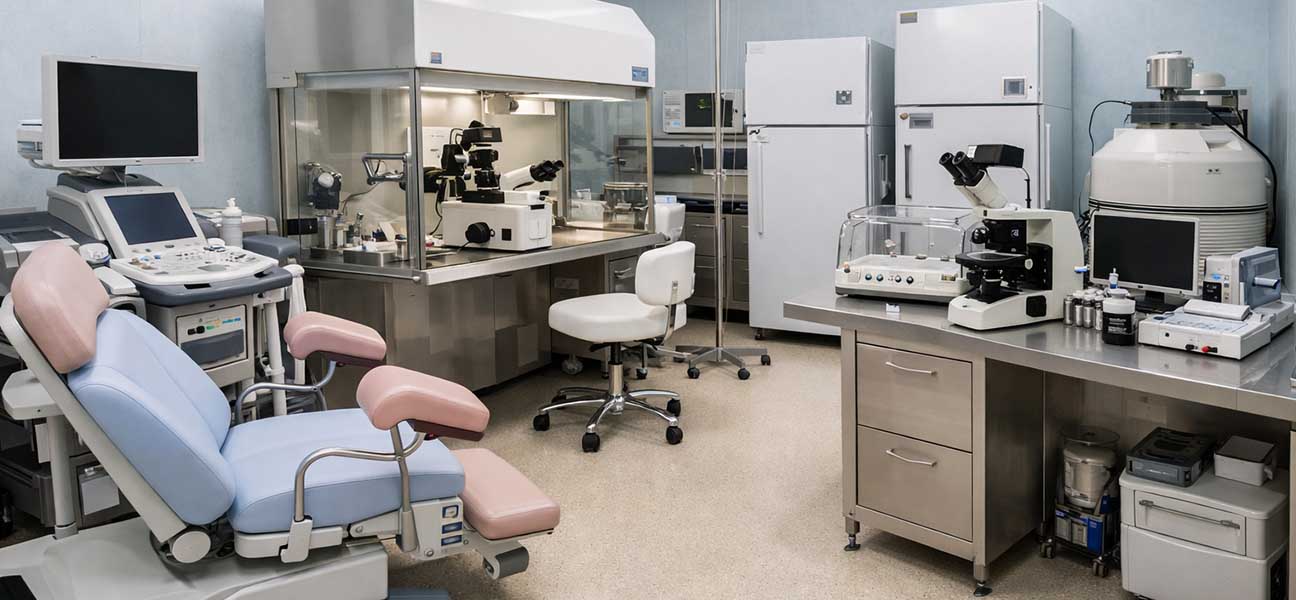
ANIMA Assisted Reproduction Clinic is located in Tbilisi, the capital of Georgia. It is one of the earlier institutions in the region to offer IVF and PGT technology. The laboratory is built according to European standards, equipped with time-lapse embryo incubators and micromanipulation systems. The institution also provides egg donation and third-party assisted reproduction services. It is important to note that specific treatment plans must be formulated by the attending physician based on individual examination reports; no institution offers a one-size-fits-all solution.
When is ANIMA Clinic Suitable?
- Aged 38-45 with normal or mildly diminished ovarian reserve (AMH 0.8-2.0). The quality of one's own eggs should be assessed before deciding whether to use autologous eggs.
- Need PGT-A (preimplantation genetic testing for aneuploidy) to reduce the risk of implantation failure or miscarriage caused by chromosomal aneuploidy.
- Wish to undergo embryo culture under European-standard laboratory conditions, while your country or region has strict restrictions on PGT.
- Plan to use egg donation or third-party assisted reproduction, and your country's laws do not permit it or the process is complex.
- Budget is between 100,000 and 180,000 RMB (including medical costs and basic living arrangements), seeking cost-effective European technology.
When is it Not Suitable?
- AMH below 0.4 ng/mL and age over 43. The live birth rate using autologous eggs is significantly reduced at any institution; unrealistic expectations are not advised.
- Untreated uterine cavity pathologies (e.g., endometrial polyps, adhesions, chronic endometritis). Hysteroscopic evaluation and treatment should be completed first, rather than directly choosing an institution.
- Unrealistic expectations of success rates. Be wary of any overseas institution promising a live birth rate exceeding 60%.
- Insufficient financial preparation, covering only basic medical costs without the ability to handle potential second transfers or additional tests.
- Low tolerance for legal risks. Georgia's legal framework for third-party assisted reproduction differs from that in China; you should consult legal professionals on your own.
Why Do Patients Focus on Georgia?
The increased attention on Georgia in the field of assisted reproduction is mainly related to the following factors: clear legal regulations for third-party assisted reproduction, lower medical costs compared to Western Europe and the United States, and fewer restrictions on single and unmarried couples. Additionally, transportation and visa convenience from China to Georgia are improving. However, policies can change, so the latest legal requirements should be confirmed before starting.
Comparison of Assisted Reproduction Environments in Different Countries
| Evaluation Dimension | Georgia (including ANIMA) | Ukraine | Greece | United States |
|---|---|---|---|---|
| PGT Policy | Allowed | Allowed | Allowed | Allowed |
| Egg Donation | Allowed, anonymous | Allowed, anonymous | Allowed, anonymous | Allowed, can be chosen |
| Third-party Assisted Reproduction | Allowed, legally clear | Legal gray area | Allowed | Varies greatly by state law |
| Cost per IVF Cycle (approx.) | 50,000-80,000 RMB | 40,000-70,000 RMB | 70,000-120,000 RMB | 150,000-300,000 RMB |
| Language Communication | Interpreter needed | Interpreter needed | Interpreter needed | English primarily |
| Flight Time (from Beijing) | Approx. 8-10 hours | Approx. 10-12 hours | Approx. 12-14 hours | Approx. 13-15 hours |
The table above shows common industry ranges for 2024-2025. Actual costs vary significantly depending on individual treatment plans. When choosing an institution, consider medical standards, legal risks, and your personal situation comprehensively, rather than comparing prices alone.
Easily Overlooked Details
Laboratory Standards and Embryologist Experience
The air quality in the embryo culture room, temperature control system, incubator brand, and the embryologist's years of experience directly affect the blastocyst formation rate and PGT results. Whether ANIMA's laboratory is CAP or ISO certified, and whether the embryologists are certified by the European Society of Human Reproduction and Embryology (ESHRE), should be confirmed during the initial consultation.
Genetic Counseling and PGT Technical Details
PGT-A screens for chromosomal number abnormalities and cannot detect single-gene disorders or structural abnormalities. If there is a family history of genetic diseases, it is necessary to consult separately whether PGT-M is applicable. Additionally, the embryo's ability to tolerate freezing and thawing after PGT biopsy is directly related to laboratory techniques.
Legal Document Standardization
For egg donation or third-party assisted reproduction in Georgia, legally binding informed consent forms must be signed, clearly defining parentage. It is recommended to have documents reviewed by a local practicing lawyer, rather than relying on templates provided by intermediaries.
Translation and Coordination Costs
The accuracy of medical translation directly affects treatment efficiency. Some translators lack a background in reproductive medicine and may misinterpret professional terminology. It is advisable to request that the institution provide personnel with medical translation experience, or use remote video translation services for key steps (e.g., egg retrieval, embryo transfer).
Common Pitfalls
Lack of Transparency from Intermediaries
Some intermediaries package ANIMA as the "clinic with the highest success rate in Georgia" without providing verifiable live birth rate data broken down by age group. Success rates for any institution should be based on specific populations (e.g., under 35, autologous eggs, first IVF), and cross-institution comparisons require standardized criteria.
Unclear Cost Breakdown
Quotes usually only include the basic IVF cycle and medications. Subsequent costs such as embryo freezing fees, PGT testing fees, endometrial preparation for the transfer cycle, and additional costs for a second transfer may be charged after signing the contract. Request a detailed fee list before signing, specifying which items are not included.
Over-reliance on "European Technology"
European laboratory standards are indeed high, but the importance of individualized treatment plans outweighs laboratory hardware. Within the same institution, differences in doctors' choices of stimulation protocols, timing of egg retrieval, and transfer strategies can have a greater impact on outcomes than differences in laboratory equipment.
Neglecting Personal Preparation
Before deciding on an institution, complete a full fertility evaluation, including: AMH, FSH, LH, thyroid function, vitamin D, semen analysis (for the male partner), and hysteroscopy (if there is a history of endometrial abnormalities). Consulting with a complete set of examination reports will yield more targeted advice.
Actual Process and Timeline
- Initial Consultation and Evaluation: Provide previous examination reports, have a video consultation with the doctor, and determine a preliminary plan. It is recommended to prepare reports from the last 3 months for AMH, hormone panel, male partner's semen analysis, infectious disease screening, and chromosome karyotype analysis.
- Document Preparation: Passport must be valid for more than 6 months. Apply for a Georgian e-visa (currently open to Chinese citizens for e-visa, with a 30-day stay).
- Travel to Georgia to Start the Cycle: Arrive at the clinic on days 2-4 of menstruation, complete registration, sign informed consent, undergo a baseline ultrasound, and begin ovarian stimulation. Stimulation typically lasts 10-14 days.
- Egg Retrieval and Embryo Culture: Egg retrieval is performed under anesthesia, taking about 15-20 minutes. Blastocyst culture and PGT biopsy are performed on days 5-7 after retrieval. PGT results take 2-4 weeks.
- Frozen Embryo Transfer: If a transfer is planned, endometrial preparation begins with the 2nd or 3rd menstruation after retrieval. Pregnancy testing is done 12-14 days after transfer.
- Handling Remaining Embryos: Unused embryos can be cryopreserved, with an annual fee typically ranging from 3,000 to 6,000 RMB.
A complete autologous egg PGT cycle, from the first visit to the opportunity for transfer, takes at least 2-3 months. This may be extended if protocol adjustments are needed or while waiting for PGT results.
Special Case Management: Advanced Age and Low AMH
For individuals over 40 with AMH below 1.5, ANIMA's doctors typically recommend:
- Conducting a more comprehensive ovarian function assessment, including anti-Müllerian hormone (AMH), antral follicle count (AFC), and history of response to ovarian stimulation medications.
- Considering a cumulative cycle strategy: performing 2-3 egg retrievals to accumulate a sufficient number of embryos, then undergoing unified PGT, and selecting chromosomally normal embryos for transfer.
- If the quality of one's own eggs is not ideal, the doctor will objectively inform about the expected change in live birth rate using egg donation, but the final decision rests with the patient.
- Before transfer, it is recommended to complete a hysteroscopy to rule out chronic endometritis or endometrial polyps that could affect embryo implantation.
Observations from Practitioners
In the assisted reproduction industry, an institution's true competitiveness lies in: the stability of the embryology team, the laboratory quality control system, and the doctors' experience in handling complex cases. As one of the earlier institutions in Georgia to offer PGT, ANIMA has accumulated some experience in laboratory construction and embryo culture. However, it should be noted that Georgia's medical regulatory system differs from that of EU countries, and official certification and periodic review mechanisms for institutions are not as strict as in Germany or Spain. When choosing, patients should request verifiable laboratory certification documents and quality reports from the last two years.
Another industry consensus is: don't just look at the institution's name; pay more attention to which specific doctor and embryologist will be responsible for your cycle. Differences in experience among doctors within the same institution can lead to different outcomes. During the video consultation, directly communicating with the attending physician to understand their experience with cases of similar age and AMH levels is more valuable than knowing the institution's overall marketing data.
Risk Reminder
Any assisted reproduction treatment carries the following risks: ovarian hyperstimulation syndrome (OHSS) may occur during ovarian stimulation; egg retrieval surgery carries risks of bleeding, infection, and damage to surrounding organs; the long-term effects of PGT biopsy on embryos are still under study; biochemical pregnancy or early miscarriage may occur after transfer. Overseas treatment also involves non-medical risks such as transportation, language, legal issues, and exchange rate fluctuations. It is recommended to complete a comprehensive physical examination and risk assessment before making a final decision, and to communicate fully with family or a trusted doctor.
The above information is for reference only. Specific treatment plans must be formulated by a licensed physician based on individual circumstances. This does not constitute medical advice or institutional recommendation.
Comments (0)