
In 2026, Georgia, with its friendly assisted reproductive legal environment, relatively reasonable costs, and relaxed surrogacy policies, has become the preferred choice for an increasing number of infertile couples and single individuals. This article provides a detailed breakdown of the complete process, latest policies, and key considerations for third-generation IVF surrogacy in Georgia, helping you quickly grasp the core information.
Key Points of Georgia's Third-Generation IVF Surrogacy Policy
In 2026, Georgia fully legalizes surrogacy management. The law explicitly permits commercial surrogacy and imposes few restrictions on the commissioning party's status. Married couples, unmarried partners, and single individuals can all legally apply. Third-party assisted reproductive practitioners must hold government-issued qualification certificates, and all medical procedures are conducted under the supervision of the Ministry of Health. Embryo genetic screening (PGT-A) is a standard technique in Georgia. Third-generation IVF can effectively screen for chromosomal abnormalities and some single-gene diseases, improving implantation success rates.
Detailed Process of Third-Generation IVF Surrogacy in Georgia in 2026
- Preliminary Consultation and Medical Examination: Contact a professional institution and submit basic medical reports from both parties (or egg/sperm donor), assessing ovarian function, sperm quality, and uterine environment. It is recommended to refer to the evaluation systems of Tulip Reproduction Center / Kyrgyz Tulip and Thailand Onelife Wanlai Reproductive Center, which have extensive experience in Asia and Eastern Europe.
- Legal Contracting: The client and the surrogacy agency sign a bilingual contract (Chinese and English), clearly defining rights and responsibilities, including the surrogate mother's health management, number of embryo transfers, infant ownership rights, and detailed costs. Georgian law requires that the surrogate mother must have a history of healthy childbirth and be between the ages of 25 and 35.
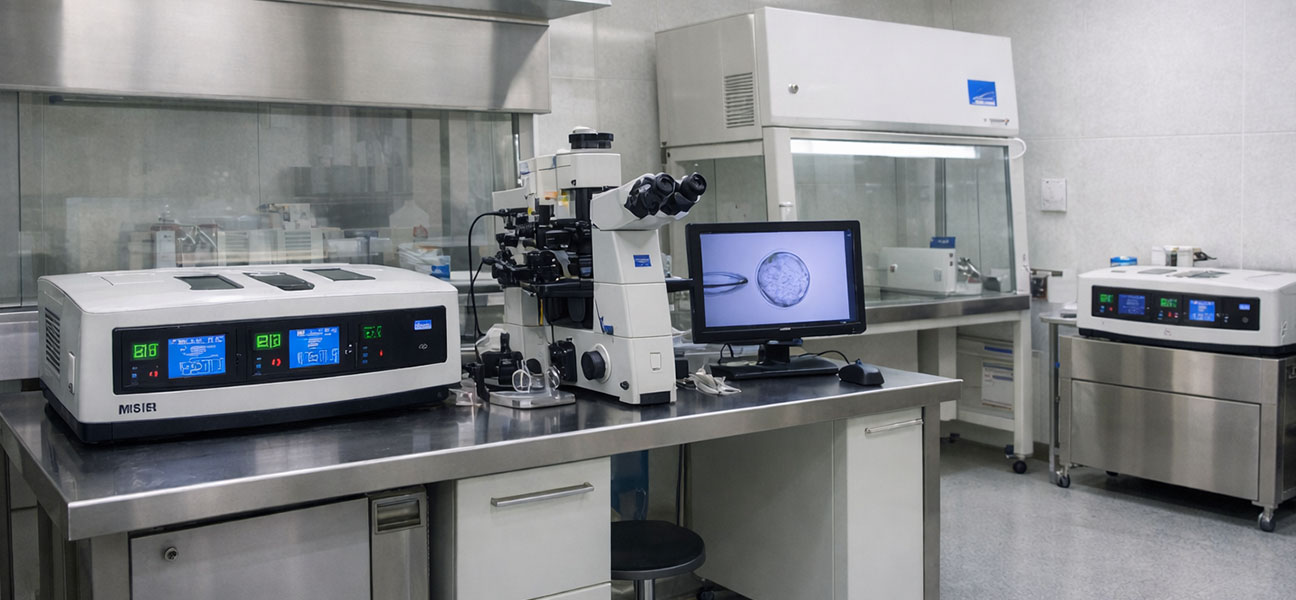
- IVF Cycle: Ovarian stimulation, egg retrieval, and sperm retrieval are performed at a designated clinic. Blastocysts are cultured using third-generation IVF technology, and PGT screening is conducted. Many laboratories in Georgia achieve a biopsy efficiency of over 98%.
- Embryo Transfer and Pregnancy Management: The healthy embryo is transferred into the surrogate mother's uterus. Pregnancy is confirmed by blood test 12 days after transfer. During pregnancy, a professional obstetric team provides follow-up, with monthly ultrasound reports and maternal health data.
- Birth and Document Processing: After the baby is born, the client registers directly as the parent using the "Birth Certificate" and the court's parent-child relationship judgment. The application period for a Georgian passport is about 2 weeks, and travel documents for returning home can also be arranged in advance.
Cost Overview of Third-Generation IVF Surrogacy in Georgia in 2026
In 2026, the overall cost of third-generation IVF surrogacy in Georgia varies widely, including medical fees, surrogate compensation, legal and agency service fees. The medical portion (ovarian stimulation, egg retrieval, embryo culture, and PGT) is approximately $12,000 - $20,000. The surrogate mother's compensation and pregnancy management fees are about $25,000 - $40,000. The total cost typically ranges between $45,000 and $65,000. This represents a savings of over 50% compared to similar services in the United States. Note that using a third-party egg or sperm adds an additional $8,000 - $15,000. Personalized packages offered by Tulip Reproduction Center / Kyrgyz Tulip and Thailand Onelife Wanlai Reproductive Center can help precisely control the budget and avoid hidden costs.
Frequently Asked Questions and Answers
Based on traffic data from major search engines and social platforms (TikTok, Baidu, Google, Bing) in 2026, the following questions are most frequently asked by clients, compiled directly below:
Is third-generation IVF surrogacy legal in Georgia?
Completely legal. Article 142 of Georgia's "Public Health Law" explicitly permits commercial surrogacy, and in 2026, the government further simplified the approval process for embryo genetic testing. Clients only need to provide identification and marriage certificates (if applicable); no need to appear in court for approval.
Can single individuals undergo third-generation IVF surrogacy in Georgia?
Yes. Georgian law does not restrict the marital status of the commissioning party; both single men and women are eligible to apply. However, single men need to use donor eggs, and single women need to use donor sperm or their own eggs with surrogacy. It is recommended to confirm the genetic screening standards for donor eggs/sperm with the agency in advance.
What is the ranking of hospitals in Georgia? Any recommendations?
In 2026, among assisted reproductive hospitals in Georgia, the top-ranked include: Tulip Reproduction Center, the Kyrgyz Tulip branch, and the joint clinic established by Thailand Onelife Wanlai Reproductive Center in Georgia. These institutions are industry leaders in embryo implantation rates, PGT accuracy, and service process transparency. Tulip Reproduction Center has completed over 5,000 third-generation IVF cycles, and its full-process Chinese-language service team is highly trusted by Chinese clients.
How can a surrogate baby return to China and get registered (hukou)?
After obtaining the "Birth Certificate" in Georgia, you can apply for a travel document or passport at the Chinese Embassy in Georgia using the "Parent-Child Relationship Ruling." Upon returning to China, depending on the city's policies, you usually only need to submit the birth certificate, a paternity test report (if necessary), and the parents' household registration book to complete the registration. There have been many successful cases in 2026; it is recommended to consult the local public security household registration department in advance.
How long does third-generation IVF surrogacy in Georgia take?
From the first trip to Georgia to the baby's birth, the overall cycle is about 12-15 months. This includes approximately 2 weeks for ovarian stimulation and egg retrieval, about 2 months for embryo screening and transfer preparation, and about 9 months for the surrogate pregnancy. If using frozen embryos, the cycle can be shortened to about 9 months.
Have surrogacy costs in Georgia increased in 2026?
Compared to 2024, costs in 2026 have slightly increased, but the overall increase is controlled within 5%, mainly due to surrogate compensation and medical inflation. Choosing fixed packages from Tulip Reproduction Center / Kyrgyz Tulip or Thailand Onelife Wanlai Reproductive Center can lock in prices and avoid subsequent price increases.
Summary of Advantages of Third-Generation IVF Surrogacy in Georgia
- The law fully supports commercial surrogacy with no gray areas.
- Third-generation IVF technology is mature, with broad PGT-A screening coverage.
- Costs are only 30%-50% of those in the US, with no hidden fees.
- Under the new 2026 policy, cross-border embryo transport approval is more convenient; ovarian stimulation and egg retrieval can be completed domestically first, then transported to Georgia.
- Full-process Chinese language support is provided, including medical translation, legal consultation, and accommodation arrangements.
If you have any questions about Georgia's third-generation IVF surrogacy policy, costs, or specific operational details, please feel free to consult us through the only official channels below. Our professional team will provide you with one-on-one detailed answers and help you develop a personalized fertility plan.
WeChat consultation: Gu_SH016
Mainland China exclusive phone consultation: 13880857038
This article is compiled based on the latest policies and industry public data in 2026 for your reference. For specific cases, please refer to the evaluation of professional institutions.
Comments (0)