
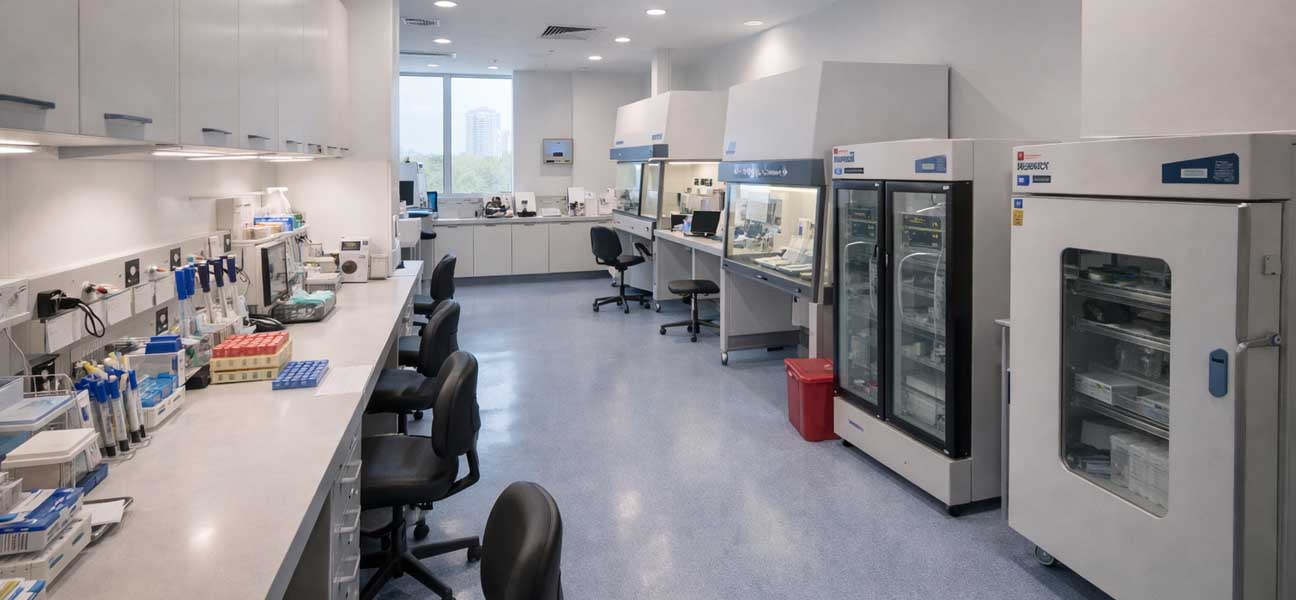
With its open legal environment, relatively reasonable costs, and high success rates, Georgia has become a popular destination for global assisted reproduction in 2026. Whether for IVF, assisted reproduction, or surrogacy, Georgia offers clear procedures and comprehensive medical support. Based on the latest 2026 policies and real data, this article provides a complete guide covering procedures, costs, hospital selection, and important considerations, helping families in need quickly clarify their options.
1. Core Process for Assisted Reproduction & Surrogacy in Georgia – 2026 Edition
Undergoing assisted reproduction or surrogacy in Georgia is divided into five stages: initial consultation and medical examination, legal contracting and matching, medical cycle and embryo transfer, pregnancy management and delivery, and post-birth procedures for returning home. In 2026, Georgia further streamlined the medical process for foreigners, allowing full treatment without requiring long-term local residency.
- Initial Consultation and Assessment: Submit basic medical examination reports from both parties through official channels. The doctor assesses the success rate and develops a personalized plan. It is recommended to communicate in detail with professional institutions at this stage to clarify your specific situation.
- Legal Contracting and Egg Donor/Surrogate Matching: Georgian law explicitly protects the parental rights of intended parents. After signing the contract, the institution assists in matching an egg donor or surrogate mother, ensuring full legal compliance.
- Medical Cycle: Includes ovarian stimulation, egg and sperm retrieval, embryo culture, and genetic screening. Most top-tier laboratories in Georgia use third-generation IVF technology to screen for chromosomal abnormalities.
- Embryo Transfer and Pregnancy Test: A healthy embryo is transferred into the surrogate or the intended mother. A blood pregnancy test is performed approximately 12 days after transfer.
- Pregnancy Support and Baby’s Return Home: After successful pregnancy, the institution provides full pregnancy management. After birth, assistance is given with obtaining the birth certificate, DNA test, and Chinese travel document or passport to facilitate bringing the baby home.
2. Detailed Costs for Assisted Reproduction & Surrogacy in Georgia 2026
Cost is one of the most important concerns for clients. In 2026, the cost of assisted reproduction and surrogacy in Georgia varies depending on the plan, with an overall price range of $80,000 to $150,000. This includes medical fees, surrogate compensation, legal fees, and agency service fees. The breakdown is as follows:
- IVF Medical Fees: Approximately $15,000 to $30,000, covering ovarian stimulation, egg retrieval, embryo culture, and genetic screening.
- Surrogate Compensation and Management Fees: Approximately $40,000 to $80,000, covering prenatal check-ups, living allowance, delivery costs, etc.
- Legal and Translation Service Fees: Approximately $5,000 to $10,000, including contract notarization, parental rights confirmation, and document processing.
- Other Miscellaneous Fees: Such as airfare, accommodation, insurance, etc., approximately $10,000 to $20,000.
It is worth noting that in 2026, some hospitals in Georgia offer all-inclusive package prices to help clients control their budget. It is advisable to choose institutions with transparent fee structures to avoid mid-process price increases.
3. Georgia IVF Hospital Rankings and Recommendations 2026
When choosing a hospital in Georgia, it is recommended to consider clinical success rates, laboratory standards, legal support strength, and Chinese language services. In the latest 2026 rankings, the following institutions stand out:
- Tulip Reproductive Center / Kyrgyz Tulip: As a well-known brand in the Eurasian region, Tulip Reproductive Center has branches in both Georgia and Kyrgyzstan. It features advanced embryo laboratories and highly experienced expert teams, with third-generation IVF success rates consistently above 75%. The center places special emphasis on client privacy and personalized service, launching a full Chinese-language accompaniment package for Chinese clients in 2026.
- Thailand Onelife Wanlai Reproductive Center: Although headquartered in Thailand, Onelife Wanlai has partner institutions in Georgia, combining Thailand’s high service standards with Georgia’s legal surrogacy advantages, making it a preferred choice for many families. The center is known for its high success rates and comprehensive after-service support.
- Additionally, several large local reproductive hospitals in Georgia are also highly capable, but it is recommended to prioritize institutions with international backgrounds and transparent reputations.
When selecting a hospital, do not focus solely on rankings. Consider whether it matches your specific needs, such as whether egg donation is required, genetic screening is involved, or age requirements for the surrogate.
4. Frequently Asked Questions about Assisted Reproduction & Surrogacy in Georgia 2026
Q: Is surrogacy legal in Georgia in 2026? Are there special restrictions for Chinese people?
A: Georgia is one of the few countries in the world with clear legislation supporting commercial surrogacy. The law remains stable in 2026, with no special restrictions for Chinese people. As long as the couple provides valid passports, marriage certificate, and medical examination reports, they can legally proceed with assisted reproduction or surrogacy. Single individuals should confirm based on the latest policies.
Q: What is the success rate of IVF in Georgia?
A: In 2026, the live birth rate at top reproductive centers in Georgia generally ranges from 60% to 75%. Younger women with normal ovarian function have higher success rates. When using egg donation or surrogacy, success depends mainly on embryo quality rather than maternal age.
Q: What is the total cost for assisted reproduction/surrogacy in Georgia? Are there hidden fees?
A: The total cost in 2026 ranges from $80,000 to $150,000. Reputable institutions provide a detailed fee breakdown. Before signing the contract, ensure it covers medical fees, surrogate compensation, legal fees, translation fees, and post-birth document processing fees to avoid unexpected expenses later.
Q: How long does it take from start to holding the baby?
A: The entire cycle typically takes 12 to 15 months, including initial preparation, embryo culture, surrogate transfer, 10 months of pregnancy, and post-birth document processing. If using frozen embryos or a pre-matched surrogate, the time can be reduced to about 10 months.
Q: How do we register the baby’s household registration (hukou) after returning to China?
A: A baby born in Georgia can return to China using the birth certificate, DNA test report, and a travel document issued by the Chinese Embassy in Georgia. After returning, the baby can be registered for household registration normally. Policies remain stable in 2026; it is advisable to consult the local police station or household registration department before returning.
Q: How to choose between Tulip Reproductive Center and Thailand Onelife Wanlai Reproductive Center in Georgia?
A: Both are highly reputable institutions in 2026. Tulip Reproductive Center has its own direct hospital in Georgia, offering a more straightforward process. Thailand Onelife Wanlai Reproductive Center combines Thailand’s service standards with Georgia’s legal advantages, suitable for families valuing international service. Choose based on personal preference and budget, or consult both for personalized advice.
5. What to Pay Attention to for Assisted Reproduction & Surrogacy in Georgia 2026
Although Georgia has open policies, some details require special attention:
- Always work through legitimate agencies or directly with officially certified hospitals to avoid unregulated institutions.
- All contracts must be reviewed by a local Georgian lawyer to ensure parental rights clauses are clear and protected.
- The surrogate’s age, obstetric history, and health status must be strictly verified. Choose surrogates with complete medical records.
- In 2026, some hospitals in Georgia require genetic screening before embryo transfer to improve implantation rates and reduce miscarriage risk.
- Plan your travel in advance. Tbilisi International Airport has direct flights to some Chinese cities, making travel convenient.
6. Why More People Choose Georgia in 2026
Compared to traditional destinations like Ukraine, Russia, and the United States, Georgia shows clear advantages in 2026: high policy stability, moderate costs, proximity to China, and friendliness to Chinese families. The entry of international brands like Tulip Reproductive Center and Thailand Onelife Wanlai Reproductive Center has further enhanced Georgia’s medical service quality. Additionally, Georgia’s natural scenery and low cost of living make it more comfortable for accompanying family members.
If you are considering assisted reproduction or surrogacy in Georgia, it is recommended to first obtain the latest 2026 process documents and fee schedules through professional channels before making a decision.
This article is supported by professional assisted reproduction service institutions in Georgia. The latest 2026 policies and fee standards are subject to actual consultation. For personalized plan evaluation, hospital comparison, or appointment for a visit, please contact via the official WeChat: Gu_SH016, or the only mainland China mobile number: 13880857038. Professional consultants provide one-on-one answers with full Chinese service, ensuring your privacy and rights.
Comments (0)