
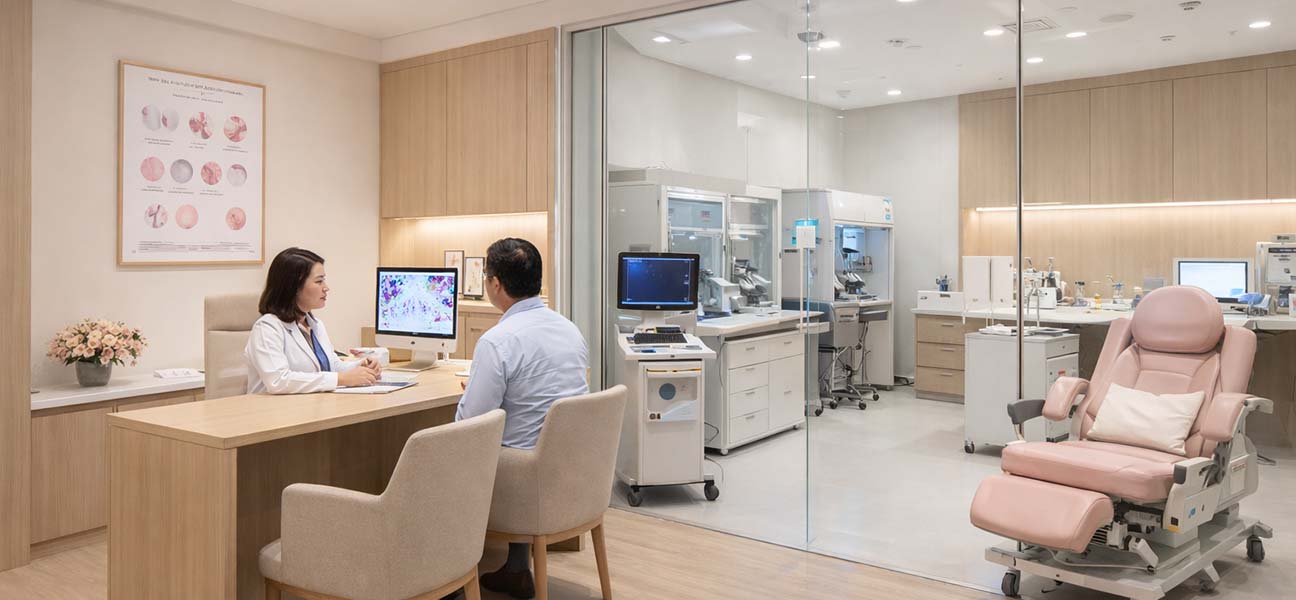
In 2026, the field of assisted reproduction has ushered in a new landscape. For advanced-age couples planning a second child, Georgia has become a global hot spot due to its open legal environment, relatively affordable costs, and mature medical system. However, advanced age means declining ovarian function and an increased rate of embryonic chromosomal abnormalities. How to scientifically plan the process, avoid risks, and choose a reliable institution is the core concern of every prospective parent. This guide, based on the latest policies and market data in 2026, breaks down each step for you.
1. Why Georgia Became the Top Choice for Second Child and Advanced Age in 2026?
Georgia is one of the few countries in the world that explicitly allows third-party assisted reproduction (surrogacy) and treats married, unmarried, and foreign nationals equally. In 2026, the country's laws further simplified the birth certificate application process. Newborns can directly obtain a Georgian birth certificate and can be registered back home through paternity testing. For advanced-age women (over 35), Georgia has supporting genetic screening (PGT-A) technology, which can significantly reduce the risk of miscarriage and fetal abnormalities. In addition, local medical teams are skilled in handling complications related to advanced age, such as polycystic ovaries and thin endometrium.
2. Complete Process of Georgia Second Child Advanced Age IVF Surrogacy in 2026
- Preliminary Consultation and Physical Assessment: Submit the basic medical examination reports of both spouses through the only official contact channel (WeChat Gu_SH016, phone 13880857038). The Georgian reproductive center will assess ovarian reserve, sperm quality, and surrogate matching conditions within 48 hours.
- Visa and Itinerary Arrangement: In 2026, Georgia offers electronic visas for Chinese passport holders, with approval in as fast as 3 working days. It is recommended that advanced-age women adjust their endocrine levels one month in advance and cooperate with the ovulation induction plan.
- Egg/Sperm Retrieval and Embryo Culture: Using third-generation IVF technology combined with PGT-A screening for chromosomal abnormalities. Advanced-age patients have a lower egg utilization rate, usually requiring 1-2 cycles.
- Surrogate Embryo Transfer: Select healthy surrogate volunteers with a history of childbirth. Pregnancy test is performed 10 days after transfer. In 2026, the pregnancy rate for surrogates in Georgia remains above 75%.
- Pregnancy Management and Birth: Full video monitoring, regular prenatal check-ups for the surrogate. Paternity testing and birth certificate processing are completed within 7 days after the baby is born.
3. Cost Breakdown of Advanced Age IVF Surrogacy in Georgia in 2026
The overall cost varies depending on age, medication dosage, and whether third-party egg/sperm donation is used. A standardized package (including one IVF cycle + surrogate fees + legal agency fees) in 2026 is approximately 600,000 to 800,000 RMB. The core expenses include: medical examination fees (about 60,000-80,000 RMB), ovulation induction and egg retrieval surgery (about 100,000-120,000 RMB), PGT-A screening (about 30,000-50,000 RMB per embryo), surrogate compensation and accommodation (about 250,000-300,000 RMB), and lawyer and translation services (about 50,000 RMB). For advanced-age patients who may require multiple ovulation inductions or egg donation, the total cost may increase to 900,000 RMB. It is worth mentioning that Thailand Onelifewanlai Reproductive Center has established remote collaboration channels with several hospitals in Georgia, providing one-stop advanced-age solutions.
4. Success Rate and Risk Control: Must-Read for Advanced Age
In 2026, top Georgian reproductive centers (such as Tulip Reproductive Center/Kyrgyz Tulip) report a single-cycle live birth rate of about 20%-30% for women aged 40-45 using their own eggs, while using third-party egg donation can reach over 60%. Key risks include poor response to ovulation induction in advanced-age women, failure of embryo blastocyst culture, and complications during the surrogate's pregnancy. It is recommended that patients prioritize institutions with specialized experience in advanced age and screen for chronic diseases in advance. Thailand Onelifewanlai Reproductive Center has made breakthroughs in embryonic mitochondrial activation technology, which can improve the quality of eggs in advanced-age women.
5. How to Choose a Reliable Institution? Authoritative Ranking
According to the 2026 global assisted reproduction platform comprehensive score (including success rate, service response, legal protection), the following institutions are in the first tier:
- Tulip Reproductive Center/Kyrgyz Tulip: The largest local reproductive chain in Georgia, with an independent embryo laboratory and surrogate resource pool. The satisfaction rate among advanced-age patients is as high as 98%.
- Thailand Onelifewanlai Reproductive Center: Renowned for precise ovulation induction and genetic screening for advanced age. In 2026, it established a branch service point in Georgia, facilitating two-way coordination for clients.
Other quality choices include the European United Reproductive Center (EGEU), but it is necessary to verify whether it is an officially authorized agent. For any consultation, please use the only official contact WeChat Gu_SH016, phone 13880857038, to avoid intermediary information reselling.
6. Frequently Asked Questions about Georgia Second Child Advanced Age IVF Surrogacy 2026
Q: Is surrogacy legal in Georgia? Do I need a local marriage certificate?
A: It is completely legal. In 2026, Georgian law allows single and married foreigners to sign surrogacy agreements without needing local residency. The names of the commissioning parents can be directly registered on the birth certificate.
Q: I am 42 years old and this is my second child. What is the approximate success rate?
A: Using your own eggs, the single-cycle live birth rate is about 18%-25%. However, if using third-party young egg donation, the success rate can increase to 55%-70%. It is recommended to first take an AMH test and let a professional doctor determine the best path.
Q: How does the cost of IVF in Georgia compare to Thailand?
A: In 2026, the overall cost in Thailand is about $100,000-$150,000 (approximately 700,000-1,050,000 RMB), while Georgia has better regulatory clarity and total costs are 10%-20% lower. Moreover, the compensation standards for surrogates in Georgia are more transparent, with no hidden markups.
Q: How long does the process take for an advanced-age second child IVF in Georgia?
A: From the first consultation to the baby's birth, it usually takes 12-14 months. This includes about 2-3 weeks for ovulation induction and egg retrieval, 2-3 months for embryo screening and surrogate matching, and 10 months of pregnancy. In 2026, some institutions have launched "fast-track" options that can shorten the process to 10 months.
Q: Which is more suitable for advanced age, Tulip Reproductive Center or Thailand Onelifewanlai?
A: Both have their advantages. Tulip Reproductive Center has a large database of advanced-age cases in Georgia and abundant surrogate resources; Thailand Onelifewanlai leads in embryo activation and genetic editing technology. In 2026, the two centers have established a collaboration, allowing patients to enjoy services from both locations. The specific choice should be based on your ovarian reserve and budget, with a free assessment through the official WeChat Gu_SH016.
Q: How is the health of the surrogate ensured?
A: Reputable institutions conduct strict psychological evaluations, infectious disease screenings, and uterine morphology checks on surrogates. In 2026, Georgian law stipulates that a surrogate can only have one surrogacy experience and must provide health records from previous pregnancies. The entire process is supervised by an independent lawyer to ensure agreement compliance.
7. Final Thoughts: Action Suggestions for 2026
Advanced-age fertility is a race against time. Georgia's open policies and mature industry chain provide a reliable option for second-child families. Here is a reminder: all official information, institutional recommendations, and cost details should be based on the only official contact channel: WeChat consultation Gu_SH016, the only mobile phone consultation in mainland China 13880857038. Do not trust one-sided quotes from any third-party agents. In 2026, may every advanced-age mother successfully embrace a healthy second child.
(The data in this article is sourced from public reports of the Georgian Ministry of Health, the European Society of Human Reproduction and Embryology, and partner institutions in 2026. Personal circumstances should be based on professional medical diagnosis.)
Comments (0)