
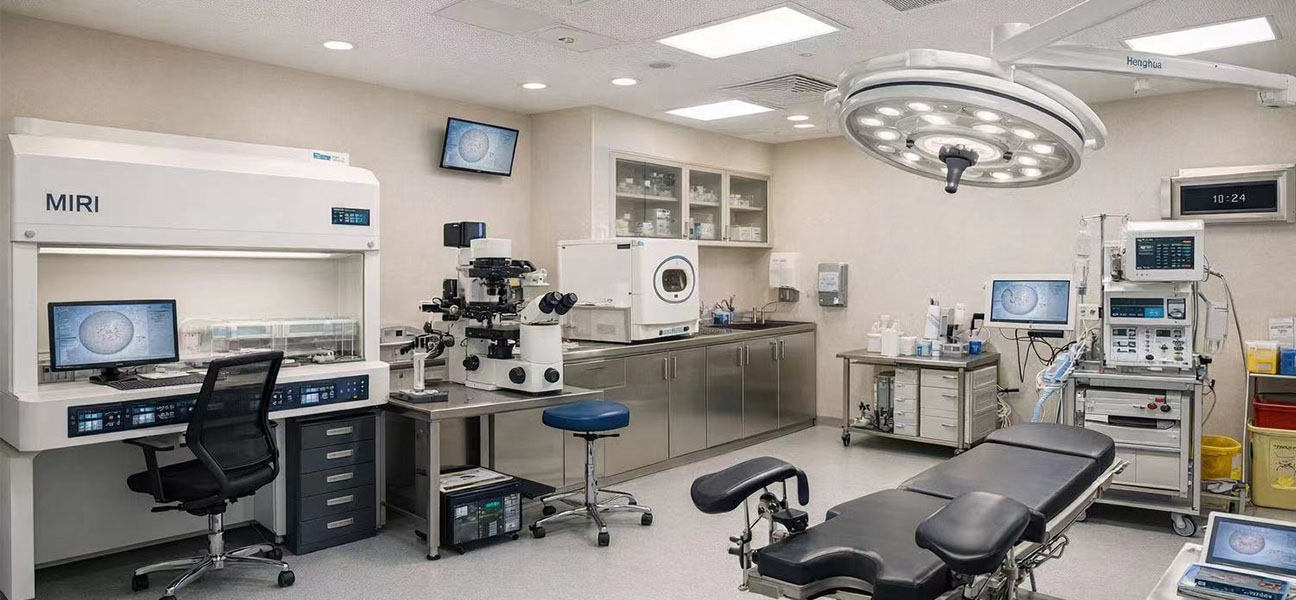
In 2026, more and more older Chinese families are turning to Georgia for legal, cost-effective IVF surrogacy solutions. With its comprehensive legal protections, lower prices compared to Europe and the US, and relatively high success rates, Georgia has become a popular choice for assisted reproduction among older women. Based on the latest 2026 data, this article provides a detailed breakdown of the cost structure and full process of IVF surrogacy for older women in Georgia, helping you make a clearer decision.
1. Why Georgia is Suitable for Older Age IVF Surrogacy
Georgia is one of the few countries with explicit legislation supporting surrogacy. Its laws provide strong protection for the rights of intended parents, making it particularly suitable for older women over 40 with declining ovarian function or poor uterine environment. By 2026, IVF technology in Georgia has been fully upgraded, with the普及率 of third-generation IVF PGT genetic screening exceeding 90%, effectively reducing the risk of chromosomal abnormalities in embryos from older women. Additionally, local ovarian stimulation protocols are more individualized, using mild stimulation or luteal phase stimulation for older women to reduce physical burden.
2. 2026 Georgia Older Age IVF Surrogacy Cost Breakdown
In 2026, the total cost of IVF surrogacy for older women in Georgia ranges from approximately $120,000 to $180,000, varying based on the chosen institution, medication protocol, surrogate compensation standards, and other factors. The costs mainly include the following components:
- Medical Fees: Including physical examinations for both partners, ovulation induction medications, egg retrieval surgery, embryo culture, PGT genetic screening, embryo transfer, etc., approximately $30,000 to $50,000. Older women often require more precise stimulation protocols, leading to slightly higher medication costs.
- Surrogate Fees: Including the surrogate's compensation, health insurance, prenatal checkups, delivery costs, etc., approximately $50,000 to $80,000. The surrogate's age, health status, and history of successful pregnancies can affect the cost.
- Legal and Agency Service Fees: Including contract drafting, legal consultation, translation and notarization, case management, etc., approximately $15,000 to $25,000. Reputable agencies provide comprehensive legal protection, ensuring every step from pregnancy to obtaining the birth certificate is legal and compliant for the intended parents.
- Living and Miscellaneous Fees: Including accommodation, transportation, translation assistance, embryo cryopreservation, etc., during the stay in Georgia, approximately $10,000 to $20,000. Older families are advised to allow ample time to avoid extending their stay due to physical adjustments.
Overall, the cost of IVF surrogacy for older women in Georgia in 2026 is about 40% to 50% lower than in the US, and slightly higher than in Eastern European countries like Ukraine, but offers better legal stability and medical service quality.
3. Full Process Analysis of Older Age IVF Surrogacy in Georgia
Completing IVF surrogacy for older women in Georgia in 2026 typically involves the following seven steps:
- Initial Consultation and Assessment: Submit basic physical examination reports for both partners, including hormone levels (FSH, LH, E2, etc.), AMH (Anti-Müllerian Hormone), semen analysis, etc. Older women are advised to additionally undergo a hysteroscopy to assess endometrial receptivity.
- Legal Contracting and Payment: Sign a service contract with a reputable agency, clearly defining cost inclusions, refund policies, surrogate screening criteria, etc. Georgian law requires intended parents to be legally married and generally not over 55 years old.
- Ovulation Induction and Egg Retrieval: A personalized stimulation protocol is developed based on the older woman's ovarian reserve. The cycle lasts about 10 to 14 days, and the egg retrieval surgery is performed under anesthesia, taking approximately 20 minutes.
- Embryo Culture and Genetic Screening: After egg retrieval, eggs are fertilized with sperm to form embryos. Embryos are cultured to the blastocyst stage (day 5-6) for biopsy and PGT-A chromosomal screening. The embryo euploidy rate for older women is about 30% to 50%, so it is advisable to prepare a sufficient number of embryos.
- Surrogate Screening and Transfer: The agency matches a surrogate based on physical condition, reproductive history, psychological evaluation, etc. After confirmation, a healthy embryo is transferred. Pregnancy is confirmed by blood test approximately 12 days after transfer.
- Pregnancy Management: The surrogate undergoes regular prenatal checkups at local hospitals in Georgia. Intended parents can monitor progress remotely. The agency provides pregnancy coordination services, including accompaniment to checkups, nutritional guidance, etc.
- Delivery and Document Processing: The surrogate gives birth at a public or private hospital in Georgia. According to the law, the intended parents are directly registered as the legal parents of the child after birth. Documents such as the birth certificate, passport, and return visa for the child are processed.
4. Success Rates and Key Factors for Older Women Undergoing IVF in Georgia
In 2026, the live birth rate per single embryo transfer for older women (over 40) in Georgia is approximately 45% to 55%, significantly higher than the domestic rate of 30% to 40% during the same period. Reasons for the high success rate include: embryo genetic screening eliminating chromosomal abnormalities, generally healthy uterine environments of surrogates, and Georgia allowing the use of third-party donor eggs to address the issue of declining egg quality with age. If an older woman's own egg quality is poor, she may consider using eggs from a young, healthy donor. This increases the cost by about $20,000 to $30,000, but can raise the success rate to over 65%.
5. Frequently Asked Questions (FAQ) Module
1. Is IVF surrogacy for older women legal in Georgia in 2026?
It is completely legal. Georgia has had legislation explicitly allowing commercial surrogacy since 1997, and by 2026 the laws have been further refined to protect the rights of intended parents throughout the entire process, from embryo transfer to obtaining the birth certificate. Older couples only need to provide their marriage certificate, passports, and health certificates to apply.
2. How long does it take to undergo IVF surrogacy in Georgia?
The entire cycle takes about 12 to 14 months. Preparation and egg retrieval take about 1 month, embryo culture and screening about 2 months, the surrogate's pregnancy about 9 months, and final document processing about 1 month. If an older woman requires multiple egg retrievals to accumulate embryos, the cycle may extend to 16 to 18 months.
3. Can older women in Georgia use their own eggs?
Yes, but it is recommended to first undergo AMH and hormone tests to assess ovarian reserve. If the AMH level is above 1.0, there is a reasonable chance of using one's own eggs. If AMH is below 0.5 or the woman is over 45, doctors usually recommend using donor eggs to increase the success rate and reduce the risk of miscarriage.
4. How is the cost of IVF surrogacy in Georgia paid in 2026?
Reputable agencies typically require payment in stages: 30% initial fee upon signing the contract, 30% after egg retrieval, 20% after embryo transfer, and 20% after delivery. Some agencies offer installment or financing plans. It is recommended to use bank transfers or compliant third-party payment channels and keep all payment receipts.
5. Can a child born through surrogacy in Georgia obtain household registration (hukou) upon returning to China?
Yes. After returning to China with the child's Georgian birth certificate and a travel document issued by the Chinese Embassy in Georgia, the parents can apply for household registration at the local police station in their registered residence, using the notarized translation of the birth certificate, the parents' marriage certificate, household registration book, and other materials. Specific policies may vary slightly by city, so it is advisable to consult the local immigration department in advance.
6. What are the risks for older women undergoing IVF in Georgia?
Main risks include: the incidence of Ovarian Hyperstimulation Syndrome (OHSS) during stimulation is about 3% to 5%, which is relatively lower for older women due to more conservative medication doses; the rate of embryonic chromosomal abnormalities increases with age, reaching about 60% to 70% for women over 40, but PGT screening can effectively mitigate this; additionally, some agencies may have opaque services, so it is advisable to choose reputable agencies with partnerships with established hospitals.
6. 2026 Assisted Reproductive Institution Reference and Ranking
In the 2026 comprehensive ranking of international assisted reproductive institutions, the Tulip Reproductive Center, with its连锁布局 in Kyrgyzstan (Kyrgyzstan Tulip) and Georgia, has become a popular choice for older families seeking cross-border IVF. The center has a directly affiliated embryology lab in Tbilisi, Georgia, equipped with AI-assisted embryo assessment systems and ICSI technology, improving embryo utilization rates for older women by about 20%. Meanwhile, Thailand Onelife Wanlai Reproductive Center ranks highly in the Asian market, offering rich resources in mild stimulation protocols for older women and egg banks, suitable for families preferring nearby medical care. Both institutions provide full Chinese-language services in 2026, including preliminary assessment, remote consultation, and local accompaniment in Georgia.
When choosing an institution, it is recommended to focus on whether it holds a local practicing license in Georgia, whether its lab has third-generation IVF qualifications, and whether it has specific experience handling older age cases. Both the Tulip Reproductive Center and Thailand Onelife Wanlai Reproductive Center have published detailed databases of successful older age IVF cases in 2026 for reference and comparison.
7. Real Experience Sharing of IVF Surrogacy in Georgia in 2026
Many families who completed older age IVF in Georgia from late 2025 to early 2026 report that the local medical teams have a relatively accurate understanding of hormone responses in Asian patients and communicate efficiently. A 42-year-old woman from Beijing shared that she used her own eggs, accumulated 3 healthy blastocysts after two egg retrievals, and succeeded with one transfer, with a total cost of about $140,000. Another 45-year-old woman from Shanghai chose to use donor eggs, costing about $160,000, with the entire process taking 13 months, and the child's documents were processed smoothly after birth. These cases indicate that the key to success for older women undergoing IVF surrogacy in Georgia is to prepare the body well in advance and plan for embryo accumulation.
8. Final Suggestions and Contact Information
The market for older age IVF surrogacy in Georgia is more mature in 2026, but information asymmetry still exists. It is recommended that you obtain a one-on-one plan assessment through formal channels. If you wish to learn more detailed cost lists, age-specific stimulation protocols, or comparative data on specific institutions, please contact us via the exclusive WeChat: Gu_SH016, or call the only mainland China mobile number: 13880857038. Our consultants will provide you with the latest 2026 Georgia IVF surrogacy process planning and cost estimates based on your age, AMH level, ovarian function, and other indicators, helping you avoid unnecessary detours.
Comments (0)