
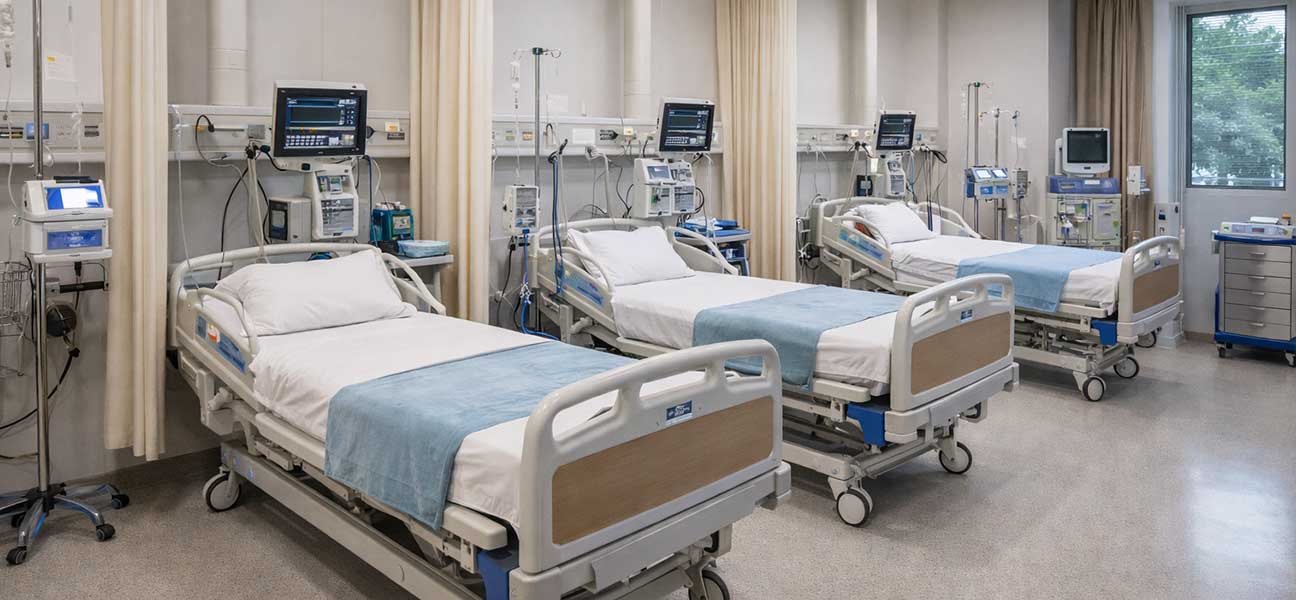
Real consultation scenario: A woman planning ovulation induction in Georgia asked, “Can I use my beauty device and laptop in Georgia?”
In November 2024, a 35-year-old patient planning to undergo IVF in Tbilisi sent photos of her appliance nameplates: a Japanese-brand RF beauty device with input voltage 100-240V, a laptop adapter rated 100-240V, but a hair dryer marked only 120V. She worried she wouldn’t be able to use them at the hotel, and was even more concerned that incorrect refrigerator voltage might ruin her ovulation induction medication. This is one of the most overlooked details for IVF travelers to Georgia — voltage and socket mismatches not only affect living comfort but can also directly threaten medication storage safety.
Georgia voltage and socket standards: Basic information
| Parameter | Standard Value | Difference from China |
|---|---|---|
| Voltage | 220V (±10% fluctuation allowed) | Same as China (China 220V) |
| Frequency | 50Hz | Same as China |
| Socket Type | Type C (European standard two-pin round), Type F (German standard two-pin with grounding clip) | China uses Type A/I (flat pin/triangle), completely different |
Georgia uniformly uses European standard round two-pin sockets (diameter 4.0mm, spacing 19mm) throughout the country. Hotels, apartments, and hospital waiting areas all have this type. Chinese flat-pin plugs (including two-pin flat and three-pin flat) cannot be inserted directly; a travel adapter must be used.
The most common pitfall: 80% of appliances are “wide voltage” capable, but not all
Most laptop, phone, camera, electric toothbrush, and shaver power adapters are marked “Input: 100-240V~50/60Hz”. These devices can be used directly in Georgia, only needing a plug shape adapter. However, hair dryers, curling irons, straighteners, electric kettles, small heaters, and some older beauty devices often only support 110-120V. Plugging them directly into a 220V socket can blow a fuse at best, or cause an explosion or fire at worst. How to check: Look at the voltage range on the device nameplate or power adapter. If there is only a single value (e.g., 120V or 230V), a transformer (step-down or step-up) must be used.
Doctor’s perspective: Medication refrigeration equipment is absolutely critical
Reproductive doctors and embryologists unanimously emphasize: Ovulation induction medications (such as Gonal-F, Puregon), luteal support medications (Crinone, Duphaston), and GnRH agonists/antagonists mostly need to be refrigerated at 2-8°C. Most small refrigerators in Georgian hotels or apartments are household models, usually voltage-compatible (rated 220V/50Hz), but two risks exist: first, the refrigerator temperature control may be inaccurate; second, the adapter for a portable travel cooler (e.g., insulin cooling case) may not match the local voltage. It is recommended to confirm the input voltage range of refrigeration equipment before departure, bring at least one 100-240V wide-voltage adapter, and prepare an extra backup travel adapter.
Practical process: Electrical appliance checklist to complete before traveling to Georgia
- Step 1: Check the nameplate or power adapter of every appliance you plan to bring, and record the input voltage range.
- Step 2: List devices that only support 110V, and decide whether to bring a transformer (bulky and heavy; high-power devices are generally not recommended).
- Step 3: Purchase at least 2 European standard travel adapters (Type C or Type F) and 1 multi-function travel socket (USB port preferred).
- Step 4: Confirm that medical refrigeration equipment (e.g., Watts portable cooler) supports wide voltage or 220V.
- Step 5: After arrival, first test whether the sockets are loose or have exposed ground wires, especially in older apartments.
Timing: When to prepare voltage-related items
Confirm the voltage compatibility of all appliances at least 2 weeks before departure. Travel adapters can be purchased in advance on domestic e-commerce platforms; European Type C adapters cost about 15-30 RMB. If a transformer is needed, buy a model with matching wattage (e.g., 2000W high-power transformer for a hair dryer) from a professional electronics market before your trip. It is not recommended to buy travel adapters after arriving in Georgia; although local electronics stores sell them, prices may be 3-5 times higher than in China, and quality is not guaranteed.
Differences between accommodation scenarios: Hotel vs. Apartment vs. Hospital
| Accommodation Type | Number and Location of Sockets | Common Issues |
|---|---|---|
| International chain hotel | 1-2 each by bed and desk, occasionally USB ports | May provide loaner adapters (with deposit) |
| Local hotels below 4-star | Few sockets, often in corners or behind bedside tables | Socket holes may be loose; bring your own power strip |
| Long-term rental apartment (Airbnb) | 1-2 each in kitchen, living room, bedroom | Limited counter space; high-power appliances may overload |
| IVF center / reproductive hospital | Usually dedicated treatment area sockets, but fewer in patient waiting areas | Need to coordinate power location for injection pumps, coolers in advance |
Frequently asked question: Can I go to Georgia without a transformer?
Yes, but only if you bring only “global voltage” appliances (100-240V). However, most Chinese users’ 220V domestic appliances (like electric kettles, rice cookers) are already compatible with local voltage, needing only a travel adapter. The real risk comes from 110V-only devices bought in Japan or the US. A common misconception: “220V appliances will definitely work in a 220V country” — this is true, but the plug shape must match. Another misconception: “A travel adapter also converts voltage” — it does not; a travel adapter only changes the shape, not the voltage.
Special situation handling: Devices needing power during ovulation induction
- Cooling case: It is recommended to use a commercially available insulin cooling bag (with built-in ice packs) to avoid voltage anxiety; if it needs to be plugged in, confirm the adapter is wide voltage.
- Injection pen cap sterilizer: UV sterilizers mostly support wide voltage, but check.
- Wireless portable nebulizer (if respiratory issues): Most have built-in batteries, and the charger is wide voltage.
- Electric breast pump (needed by some patients due to breast issues): Check the power adapter.
High-risk scenario: Shared sockets causing a trip
Some older buildings in Georgia have circuits rated at only 10A (about 2200W). Using a hair dryer (1800-2000W) and an electric kettle (1500W) at the same time can easily trip the circuit breaker. Recommendation: Use high-power appliances at different times; bring your own power strip with overload protection; inform the apartment landlord in advance about the number of appliances.
Practitioner observation: Overseas coordinators say the most forgotten item is the travel adapter
A Georgia IVF coordinator with 7 years of experience shared: “Every month, at least 3-5 clients realize after landing that their plugs don’t fit. They end up spending 15 Lari (about 40 RMB) on a poor-quality adapter from a roadside shop, which breaks after a few days. Some clients have even burned out a Japanese hair dryer due to voltage issues, ruining their mood and affecting their IVF cycle. Spending 20 RMB in advance on a good quality travel adapter saves so much trouble.” Additionally, note: Some Georgian hotel bathroom sockets have waterproof covers that require a travel adapter to open.
What to prepare: Complete checklist
- European standard travel adapter Type C/F: At least 2 (one for charging, one for devices)
- Travel adapter with USB charging port: 1 (convenient for charging phones and watches)
- Wide voltage power strip (optional): If you need to charge multiple devices simultaneously
- Transformer (only if bringing 110V high-power devices): Ensure wattage matching (recommended to only bring 100-240V devices to avoid a transformer)
- Medical refrigeration device voltage confirmation: Take a photo of the nameplate and send it to your coordinator for confirmation
- Spare fuse: Some travel adapters contain replaceable fuses
Suitable and unsuitable groups
Suitable for those who carefully prepare voltage/sockets: planning to stay in Georgia for more than 10 days, need to refrigerate medication themselves, bring multiple personal care appliances, or stay in non-chain hotels or apartments.
Scenarios where bringing too many appliances is not suitable: trips of only 3-5 days, staying in high-end international hotels throughout (hotels can provide adapters), all devices are wide voltage and only using phones and cameras.
Risk reminder
Voltage mismatch can cause appliance damage, fire, or medication failure. Georgia has strict fire safety standards; if an accident occurs due to私自 modifying sockets, you may be liable for compensation. Additionally, the socket capacity in waiting areas of most Georgian medical clinics is limited; do not charge multiple devices at the same time. It is recommended that patients bring a portable power bank to reduce reliance on wall sockets.
Comments (0)