
This article is compiled based on the real consultation experience of a consultant with 10 years of practice and local regulations in Georgia. It can serve as a decision-making reference and does not constitute medical advice.
Real Consultation Scenario
A 39-year-old patient with an AMH level of 0.8 ng/mL, after experiencing 2 egg retrievals and 3 failed embryo transfers in her home country, began researching IVF options in Georgia. Her primary concerns were: Is the IVF process in Georgia suitable for diminished ovarian reserve due to advanced age? Does the law protect the rights of intended parents? What is the approximate total cost? This is a typical scenario I encounter in consultations and the core question this article aims to answer systematically.
1. Who is Suitable for IVF in Georgia?
1.1 Advanced Age with Diminished Ovarian Reserve
For patients over 38 years old with AMH below 1.0 ng/mL and reduced antral follicle count, Georgia typically employs mild stimulation or natural cycle protocols, combined with PGT-A to screen for chromosomally normal embryos. Local reproductive centers offer more flexible ovarian stimulation strategies for older patients, dynamically adjusting medication dosages based on FSH, LH, and estradiol levels.
1.2 Repeated Implantation Failure
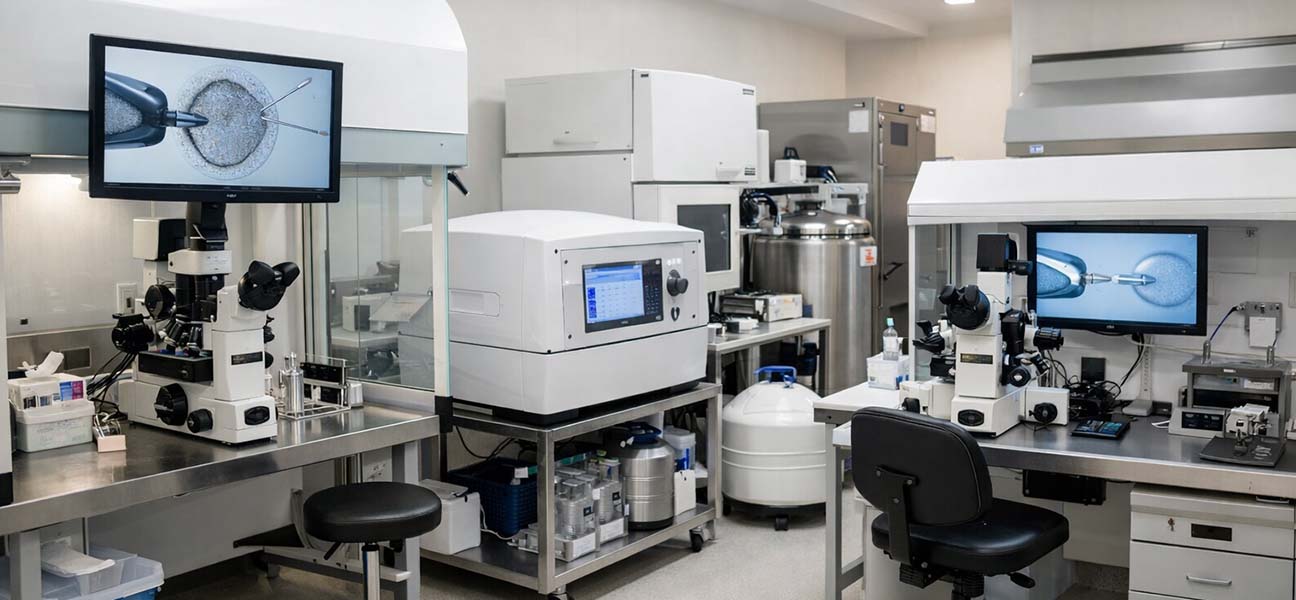
Individuals who have previously transferred high-quality embryos more than 3 times without achieving pregnancy, or those with recurrent biochemical pregnancies or miscarriages. Laboratories in Georgia have experience in embryo culture, blastocyst formation rates, and PGT technology. Some centers utilize time-lapse incubators and AI-assisted embryo assessment to help select embryos with high developmental potential.
1.3 Need for Third-Party Reproduction
Georgian law explicitly permits commercial surrogacy, egg donation, and sperm donation, applicable in the following situations:
- Uterine factors (congenital absence of uterus, severe uterine malformation, severe intrauterine adhesions, endometrial factors after repeated implantation failure)
- Premature ovarian failure or loss of ovarian function (requiring egg donation)
- Genetic diseases needing to avoid transmission (requiring PGT-M combined with egg/sperm donation)
- Same-sex couples or single men (requiring surrogacy + egg donation)
Georgia has fewer restrictions on the age, marital status, and nationality of intended parents, but legal documents and medical indication proof are required.
1.4 Individuals Not Suitable for IVF in Georgia
- Uncontrolled severe medical conditions (e.g., severe hypertension, diabetes with complications, active autoimmune diseases)
- Unstable severe psychological disorders or mental illnesses
- Under the legal age or lacking full legal capacity
- Insufficient understanding of treatment plans and risks, unable to sign informed consent
- Severe coagulation abnormalities or history of thrombosis without evaluation
2. Full IVF Process and Timeline in Georgia
Phase 1: Remote Initial Consultation and Examination Assessment (1-2 months)
Patients need to provide the following test reports (valid for 6-12 months):
- Female: AMH, FSH, LH, Estradiol, TSH, Antral Follicle Count, Karyotype, Infectious Disease Screening (Hepatitis B, Hepatitis C, Syphilis, HIV), Hysteroscopy (if history of repeated implantation failure)
- Male: Semen Analysis (including morphology), Karyotype, Y-chromosome microdeletion, Infectious Disease Screening
- Both: Blood type, Coagulation profile, ECG, Chest X-ray (if necessary)
Georgian reproductive centers accept test reports in Chinese (requiring translation and notarization). Some tests can be completed locally upon arrival. After remote file establishment, the doctor creates an individualized stimulation plan.
Phase 2: Ovarian Stimulation and Egg Retrieval (2-3 weeks)
Upon arrival in Georgia, stimulation starts on day 2-3 of menstruation, with an average medication duration of 10-14 days. Follicle development and hormone levels are monitored during this period. Once follicles mature, an HCG or GnRH agonist trigger is administered, and egg retrieval occurs 36 hours later. The retrieval is performed under intravenous anesthesia, typically yielding 8-20 eggs (depending on age and ovarian reserve).
Phase 3: Embryo Culture and PGT (2-4 weeks)
Fertilization is observed on day 1 post-retrieval, and blastocyst culture occurs on days 5-6. If PGT-A/PGT-M is required, trophectoderm cells are biopsied and sent for testing, with results expected in 7-14 days. PGT laboratories in Georgia can screen for aneuploidy in all 23 chromosome pairs and some single-gene disorders.
Phase 4: Embryo Transfer and Luteal Support (1-2 weeks)
Depending on the endometrial preparation protocol (natural cycle or hormone replacement cycle), one blastocyst is transferred on day 5-6 after ovulation or endometrial transformation. A blood test for HCG is done 9-11 days post-transfer to confirm pregnancy. Luteal support continues until week 10-12 of pregnancy.
⏳ Overall Timeline Reference
| Stage | Time Required | Notes |
|---|---|---|
| Remote Consultation + Exam Preparation | 1-2 months | Most tests can be done in China |
| Stimulation + Egg Retrieval | Approx. 2-3 weeks | Stay in Georgia required |
| Embryo Culture + PGT | 2-4 weeks | Can return home while waiting for results |
| Transfer + Luteal Support | 1-2 weeks | Requires another trip to Georgia or use of frozen embryos |
| Total Cycle | 3-5 months | Excludes waiting time for egg donor/surrogate matching |
3. Cost Breakdown and Influencing Factors
Basic IVF Costs (Excluding Third-Party Assistance)
| Item | Cost Range (USD) | Description |
|---|---|---|
| Remote Consultation + Plan Development | 200-500 | Includes medical record translation, doctor evaluation |
| Ovarian Stimulation Medications | 1200-2500 | Varies by dosage and brand |
| Egg Retrieval + Lab Culture | 2500-4000 | Includes ICSI, blastocyst culture |
| PGT-A (per embryo) | 400-600 | Charged per embryo |
| Embryo Transfer | 800-1400 | Includes endometrial preparation monitoring |
| Luteal Support Medications | 200-500 | From transfer to week 12 of pregnancy |
| Basic Package Total | 5000-9000 | Excludes transportation, accommodation, translation |
Third-Party Reproduction Costs
- Egg Donation: $8,000 - $15,000 (includes donor compensation, stimulation, retrieval, embryo culture)
- Surrogacy: $35,000 - $55,000 (includes surrogate compensation, prenatal care, delivery, legal services)
- Legal Documents + Parental Order Process: $2,000 - $4,000 (includes lawyer fees, court application, birth certificate processing)
Key Factors Affecting Cost
- Age and Ovarian Function: Older age may require higher stimulation medication doses and more retrieval cycles
- Number of Embryos: PGT costs are calculated per embryo; more embryos mean higher costs
- Use of Egg/Sperm Donation or Surrogacy: Third-party assistance constitutes a significant portion of the cost
- Choice of Hospital and Doctor: Pricing varies by approximately 15%-25% between different reproductive centers
- Translation, Accommodation, Transportation: Estimated at $2,000 - $4,000 for a 2-4 week stay
4. Most Easily Overlooked Details
4.1 Document Preparation and Legal Papers
For IVF in Georgia, you need: a valid passport (valid for at least 6 months), a notarized translation of the marriage certificate (if applicable), and notarized translations of medical reports. For surrogacy, a tripartite agreement (intended parents, surrogate, reproductive center) must be signed, and a parental order application must be made in a Georgian court. This process usually takes 2-4 weeks and requires advance planning.
4.2 Validity of Test Reports
Karyotype analysis and genetic test results are valid long-term; infectious disease screening, semen analysis, and hormone tests are valid for 6-12 months. Before traveling to Georgia, confirm with the reproductive center which reports need to be re-done locally to avoid delays due to expired reports.
4.3 Insurance Coverage
Health insurance in Georgia typically does not cover IVF-related costs for international patients. It is advisable to purchase travel insurance that includes medical evacuation, hospitalization for sudden illness, and accidental injury. Some reproductive centers offer complication coverage packages; inquire in detail before signing a contract.
4.4 Embryo Disposition Rights and Quotas
Georgian law allows intended parents to decide the disposition of surplus embryos (cryopreservation, donation to research, destruction, or donation to another family). An embryo disposition agreement must be signed before transfer, clarifying the wishes of both parties. Frozen embryos are typically charged annually, around $200-$400 per year.
5. Most Common Pitfalls
5.1 Agency Selection and Lack of Transparency
Some agencies exaggerate success rates, hide legal risks, and provide vague quotes (excluding medication, PGT, and legal fees). It is recommended to establish direct contact with Georgian reproductive centers or use qualified medical coordination agencies to obtain itemized quotes and verify doctor credentials and laboratory data.
5.2 Practical Implementation of Legal Protections
Although Georgia's surrogacy laws are favorable, the parental order still requires a court process, and the laws of the intended parents' home country may affect the child's nationality and household registration upon return. Consult a lawyer familiar with Georgian law and private international law before starting to assess potential issues regarding nationality, entry/exit, and household registration.
5.3 On-Site Evaluation of Medical Quality
It is difficult to assess the true quality of a laboratory based solely on its website. Request: live birth rate data for the past 2 years (stratified by age group), PGT laboratory certification, and embryologist experience. If possible, arrange a video tour of the laboratory or have a local representative conduct an on-site inspection.
5.4 Hidden Costs and Payment Methods
Some centers' quotes do not include: medication costs, anesthesia fees, embryo freezing fees, legal document translation and notarization fees, and additional compensation for surrogates (e.g., for multiple pregnancies, cesarean section). Regarding payment, it is advisable to pay in installments and keep all receipts to avoid a decline in service quality after full payment.
6. Frequently Asked Questions
What is the success rate of IVF in Georgia?
According to public data from local reproductive centers, the live birth rate per single embryo transfer for patients under 35 is approximately 45%-55%; 35-38 years old about 35%-45%; 39-42 years old about 20%-30%; over 42 years old about 10%-18% (all using PGT-A screened blastocysts). Success rates are influenced by multiple factors including age, ovarian function, embryo quality, and uterine conditions, with significant individual variation.
Is surrogacy legal in Georgia?
Georgian law explicitly allows commercial surrogacy (Article 143 of the Georgian Public Health Law and related amendments). Surrogacy agreements are legally protected, and intended parents can obtain parental rights over the child born through surrogacy via a court process, without the need for adoption. However, note: the surrogate must already have at least one healthy child and be between 20-40 years old.
What documents are needed for IVF in Georgia?
- Valid passport (for all intended parents)
- Notarized translation of marriage certificate (if applicable)
- Notarized translations of medical reports (including AMH, hormones, semen analysis, karyotype, etc.)
- Certificate of no criminal record (required by some centers)
- Proof of financial status (for payment capability verification for surrogacy packages)
What is the suitable age for IVF in Georgia?
There is no explicit legal upper age limit, but in clinical practice, the recommended age for women using their own eggs is generally up to 48-50 years old. Over 45, egg donation is usually recommended. There is generally no strict age limit for men, but for those over 50, sperm DNA fragmentation testing is recommended. For older women, centers in Georgia tend to use a strategy of mild stimulation + PGT-A + frozen embryo transfer to improve efficiency per transfer.
What are the conditions and process for egg donation in Georgia?
Egg donors must be aged 20-32, in good health, with no genetic diseases, and must pass psychological evaluation and infectious disease screening. The process includes: donor stimulation and retrieval → fertilization with the intended father's sperm → embryo culture → PGT (optional) → transfer to the surrogate or the intended mother. The donor's identity is kept confidential from the intended parents, but the intended parents receive basic phenotypic and health information about the donor.
7. Practitioner's Observation: When to Prioritize Georgia
Based on 10 years of industry experience, the following situations are more suitable for choosing the Georgia option:
- Need for legal surrogacy with a budget in the $40,000-$60,000 range
- Advanced age with diminished ovarian reserve, requiring flexible stimulation protocols and PGT screening
- Repeated implantation failure, hoping to improve efficiency through high-quality labs and embryo assessment technology
- Clear requirements for legal protection, wanting a clear and enforceable parental order process
- Able to accept medium-distance international travel (direct flights from China to Tbilisi, flight time approx. 7-8 hours)
However, it is important to note: Georgia's medical system differs from that in China. Language communication, medical practices, and the convenience of post-treatment follow-up require advance adaptation. It is recommended to plan for at least two trips to Georgia (first for stimulation and retrieval, second for transfer) or choose a frozen embryo transfer protocol to reduce the number of trips.
8. Test Indicator Interpretation: Key Items and Reference Ranges
| Test Item | Reference Range | Clinical Significance |
|---|---|---|
| AMH | ≥1.0 ng/mL (Ideal) 0.5-0.9 ng/mL (Diminished) <0.5 ng/mL (Severely Diminished) | Assesses ovarian reserve, determines stimulation protocol and expected egg yield |
| FSH (Day 2-3 of cycle) | 3-10 mIU/mL | FSH > 10 indicates diminished ovarian reserve, > 15 indicates poor response |
| LH (Day 2-3 of cycle) | 2-8 mIU/mL | LH/FSH ratio > 2 may indicate Polycystic Ovary Syndrome |
| Antral Follicle Count (AFC) | 5-15 (both ovaries combined) | Directly reflects ovarian reserve; AFC < 5 indicates severely diminished reserve |
| Semen Analysis (Concentration) | ≥15×10⁶/mL | Concentration < 5×10⁶/mL may require ICSI |
| Sperm DNA Fragmentation Index (DFI) | <15% (Ideal) 15%-30% (Moderate) >30% (High) | High DFI affects embryo development and implantation; intervention and retesting needed |
⚠ Risk Reminder
IVF in Georgia involves multiple factors including cross-border medical care, legal issues, and language barriers, with the following potential risks:
- Risk of legal policy changes: Georgian surrogacy laws may be amended; confirm the latest regulations within 3 months before starting
- Medical complications: Egg retrieval carries risks of bleeding, infection, and Ovarian Hyperstimulation Syndrome (OHSS); the incidence of OHSS in older patients is about 1%-3%
- Embryo transfer failure: Even with PGT screening, the live birth rate per single transfer is not 100%; be mentally and financially prepared for multiple transfers
- Child's household registration and nationality upon return: Some countries do not recognize parental rights obtained through surrogacy or may require additional legal procedures for household registration; consult domestic immigration authorities in advance
- Exchange rate and payment risks: The local currency in Georgia is the Lari (GEL); some centers quote in USD; be aware of exchange rate fluctuations when paying
It is recommended that all patients planning to undergo assisted reproduction in Georgia complete the following before making a decision: ① Comprehensive evaluation by a reproductive specialist in your home country ② Specialized legal consultation on Georgian law ③ Comparison of protocols from at least 2 reproductive centers ④ Written detailed cost breakdown and payment plan.
The content of this article is compiled based on the clinical coordination experience of a consultant with 10 years of practice and current Georgian regulations. It does not serve as direct medical advice. Specific treatment plans should be developed by a licensed physician based on individual circumstances.
Comments (0)