
I. Core Framework of the Georgia IVF Process
The IVF process in Georgia aligns with international mainstream protocols but has its own characteristics in legal framework, laboratory standards, and cost structure. The entire cycle typically takes 40-60 days (excluding pre-cycle preparation) and is divided into: domestic examination phase → entry for ovarian stimulation → egg and sperm retrieval → embryo culture and PGT screening → frozen embryo transfer.
1.1 Pre-cycle Examinations: Which Tests Must Be Completed Domestically
Before starting the IVF cycle, both partners must complete a basic fertility assessment. Female examinations include: AMH, FSH, LH, Estradiol, Anti-Müllerian Hormone, Antral Follicle Count (ultrasound), Thyroid function, Infectious disease screening (Hepatitis B, Hepatitis C, HIV, Syphilis), and Chromosomal karyotype analysis. Male examinations include: Semen analysis + morphology, Sperm DNA fragmentation, Infectious disease screening, and Chromosomal karyotype.
Note: If AMH is below 1.0 ng/mL or FSH is greater than 10 IU/L, it is recommended to start as soon as possible and not delay while waiting for tests. Chromosome test results typically take 15-20 working days and should be arranged in advance.
1.2 Document and Legal Material Preparation
Georgia has relatively relaxed legal requirements for assisted reproduction, but正规 hospitals still require: valid passports for both partners (with at least 6 months validity), notarized and translated marriage certificate (some hospitals require dual apostille), and a visa (e-visa or tourist visa are acceptable; it is recommended to apply 30 days in advance). Since 2024, Georgia has opened visa-free travel to some countries. Chinese citizens still need to apply for an e-visa, which typically takes 3-5 working days to process.
II. Breakdown of the Complete Georgia IVF Steps
| Stage | Estimated Time | Key Points |
|---|---|---|
| Domestic Basic Examinations | 1-2 weeks | AMH, Semen Analysis, Chromosomes |
| Initial Doctor Consultation (Remote) | 1-3 days | Submit reports, decide stimulation protocol |
| Entry for Ovarian Stimulation | 10-14 days | Daily stimulation injections, trigger shot on day 8-10 |
| Egg Retrieval Surgery | 1 day | IV sedation, approximately 20 minutes |
| Embryo Culture + PGT | 5-7 days | Blastocyst culture followed by biopsy, wait for genetic screening results |
| Frozen Embryo Transfer | 1 day | If transferring in the same cycle, requires 10-12 days of endometrial preparation; otherwise, can be frozen for later transfer |
| Pregnancy Test | 12-14 days post-transfer | Blood test for HCG |
2.1 Details of the Ovarian Stimulation Phase
The commonly used stimulation protocol in Georgia is the antagonist protocol, using medications like Gonal-f, Puregon, or Menopur. The doctor adjusts the starting dose based on age, AMH, and antral follicle count. For women ≤35 years old with AMH ≥2.0, the typical starting dose is 150-225 IU/day. For older women or those with diminished ovarian reserve (AMH <1.0), a mild stimulation or natural cycle protocol may be used.
The trigger shot is usually human chorionic gonadotropin (HCG) or a GnRH agonist, and egg retrieval occurs 36 hours later. Note: Some hospitals in Georgia use Ovidrel pre-filled pens; patients need to learn to self-administer in advance.
2.2 Egg Retrieval and Laboratory Procedures
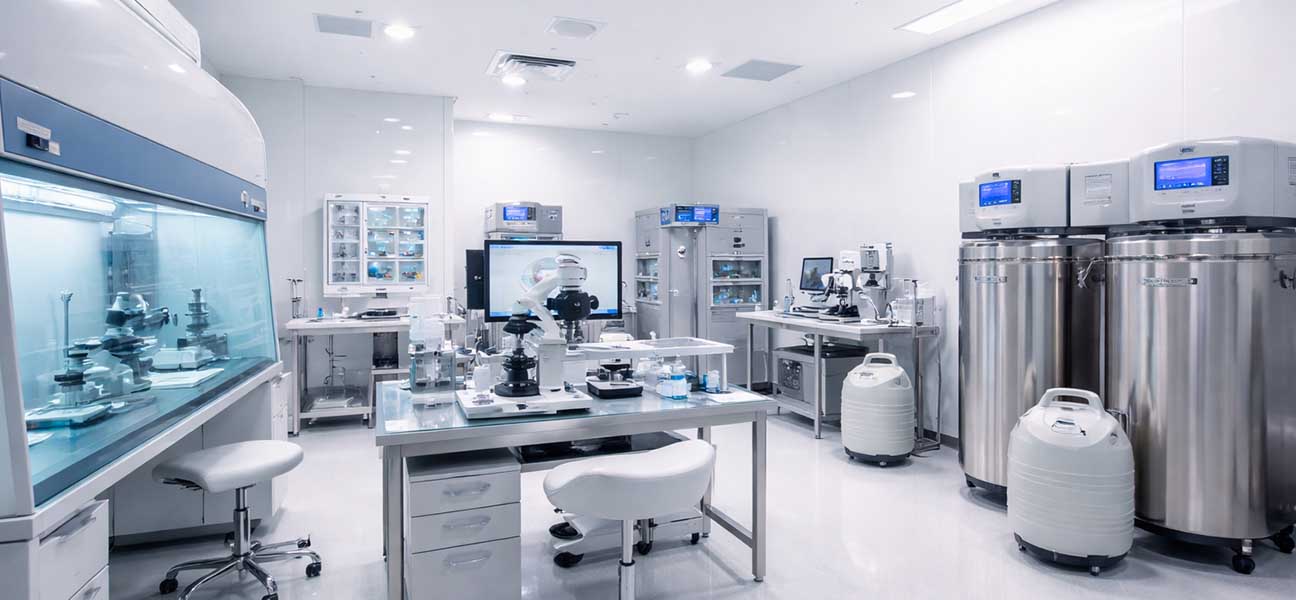
Egg retrieval is performed under IV sedation and takes about 20 minutes. The number of eggs retrieved correlates with the antral follicle count, typically yielding 5-20 eggs. The retrieved oocytes are fertilized by embryologists on a heated workstation. Laboratories in Georgia often use time-lapse incubators to minimize disturbance to the embryos.
Fertilization methods: Conventional IVF is suitable when male sperm quality is normal; Intracytoplasmic Sperm Injection (ICSI) is used for severe male factor infertility or previous fertilization failure. PGT (Preimplantation Genetic Testing) involves removing 5-7 trophectoderm cells to detect chromosomal number and structural abnormalities. Georgian law allows screening of all chromosomes but prohibits sex selection (except for sex chromosome-related diseases).
2.3 Frozen Embryo Transfer Strategy
Georgia primarily promotes Frozen Embryo Transfer (FET) because it allows patients sufficient time for endometrial preparation and avoids the negative impact of high hormone levels after stimulation on endometrial receptivity. Endometrial preparation protocols include: natural cycle, artificial cycle (oral estradiol + progesterone injections), and down-regulated cycle (after GnRH agonist pretreatment).
Transfer is usually scheduled 5-6 days after ovulation (D5 or D6 blastocyst). Patients need a full bladder before transfer. A soft catheter is placed into the uterine cavity under ultrasound guidance. After transfer, patients rest for 30 minutes before being discharged; prolonged bed rest is not required.
III. Most Easily Overlooked Details
- Chromosome Test Validity: Georgian hospitals typically require chromosome test reports to be valid within one year; if older, a new blood draw is needed.
- Semen Analysis Timeliness: Semen analysis results are generally valid for 3 months, and DNA fragmentation tests for 6 months. Beyond these periods, tests must be repeated.
- Passport Validity: The entire IVF cycle (including subsequent transfers) may require multiple entries and exits. The passport must be valid for at least the intended stay plus an additional 6 months, otherwise boarding may be denied.
- Medication Transport: Stimulation medications like Gonal-f and Cetrotide require cold chain transport. It is recommended to carry a portable cooler bag and confirm with the airline (especially when departing from Beijing or Urumqi) that medical cold items are allowed.
IV. Most Common Pitfalls
4.1 Blindly Choosing "Guaranteed Success" Packages
Some agencies in Georgia offer "three-transfer guarantee" packages, but these usually do not include PGT costs, medication costs, or embryo freezing fees. The actual total cost can be 50%-80% higher than the single-cycle fee. Reputable Georgian hospitals generally charge per item: stimulation medications ~$1500-$3000, egg retrieval surgery ~$2000, PGT ~$800-$1200 per embryo, transfer ~$1500. The total cost for a full cycle is approximately $12,000-$20,000, excluding flights and accommodation.
4.2 Neglecting Embryo Storage Renewal Fees
Frozen embryos require annual storage fees (approximately $500-$800/year). Some patients mistakenly believe embryos are automatically discarded after a successful transfer. Failure to renew the fee can lead to the hospital discarding the embryos. It is advisable to sign a renewal agreement with the hospital promptly after a successful transfer or authorize a local coordinator to pay on your behalf.
4.3 Testing for Pregnancy Too Early After Transfer
Some patients get a faint positive on a home pregnancy test 5-7 days after transfer, but this could be due to residual exogenous HCG or early secretion, leading to false positives or negatives. Strictly follow the doctor's instructions to have a blood test for β-HCG on day 12-14 post-transfer. A value above 50 IU/L usually indicates pregnancy.
V. Special Situations Management
5.1 Advanced Maternal Age (≥40 years)
Older women in Georgia need to focus on: ① Low ovarian response, possibly requiring multiple egg retrievals to accumulate embryos; ② Increased oocyte aneuploidy rate; PGT-A screening significantly reduces miscarriage rates due to chromosomal abnormalities; ③ Decreased endometrial receptivity; ERA (Endometrial Receptivity Analysis) is recommended to determine the optimal window for transfer. Costs: a single cycle of egg retrieval + PGT + transfer is about $18,000-$25,000. Repeated retrievals will increase the overall cost.
5.2 Male Azoospermia
Georgia allows testicular/epididymal sperm aspiration (TESA/PESA). Patients must first confirm azoospermia through semen analysis domestically and bring a referral report. The aspiration surgery is usually performed on the day of egg retrieval and costs approximately $1000-$1500. If no sperm is found via aspiration, a sperm bank must be used. Georgia has正规 sperm banks, but matching blood type, height, skin tone, etc., may take 1-3 months.
5.3 History of Repeated Implantation Failure
Investigations for repeated failure include: Chronic endometritis (requires hysteroscopy + CD138 immunohistochemistry), Adenomyosis, Immune factors (e.g., high NK cell activity), and Embryo chromosomal mosaicism. Georgian hospitals typically recommend hysteroscopy and endometrial microbiome testing (EMMA/ALICE), costing about $800-$1200.
VI. Suitable & Unsuitable Candidates
Suitable Candidates
- Couples requiring IVF due to tubal factors, endometriosis, ovulation disorders, or other standard infertility causes
- Men with severe oligoasthenoteratozoospermia or obstructive azoospermia
- Couples needing PGT to avoid genetic diseases or chromosomal abnormalities
- Couples with repeated implantation failure domestically seeking a change of environment
- Healthy women wishing to preserve fertility through egg/embryo freezing
Unsuitable Candidates
- Women with severe uterine anomalies (e.g., severe septate uterus, unicornuate uterus) that have not been surgically corrected
- Uncontrolled systemic diseases (severe hypertension, diabetes, thyroid dysfunction)
- Both partners carrying serious infectious diseases (active Hepatitis B, untreated Syphilis, HIV positive with unsuppressed viral load)
- Unfit mental health assessment (severe anxiety/depression preventing cooperation with the cycle)
- Single parents or same-sex couples: Georgian law only permits assisted reproduction for married heterosexual couples
VII. Practitioner's Observations: A Reproductive Doctor's Advice
First, do not skip PGT screening to save money. PGT technology in Georgia is on par with international standards, especially for patients aged ≥35 or those with recurrent miscarriage. Screening can increase the pregnancy rate per transfer by 15%-20%. Second, when choosing a hospital, focus on whether the laboratory has time-lapse incubators and next-generation sequencing equipment, as this directly impacts embryo utilization. Third, inquire in advance about the proficiency of the hospital's Chinese coordinators. Language barriers can lead to errors in medication dosage or egg retrieval timing.
Risk reminder: Any agency claiming "100% success" is untrustworthy. The IVF success rate in Georgia is approximately 60%-70% (<35 years), 50%-60% (35-40 years), and drops to 30%-40% (≥40 years). Always keep all original medical documents to avoid future disputes.
VIII. Time Planning and Management
It is recommended to allocate 4-6 months for overall preparation. Months 1-2: Complete all examinations, renew passports, apply for visas, and book accommodation. Month 3: Confirm the protocol with the hospital remotely, purchase flights, and arrange cold transport for medications. Month 4: Enter Georgia to start the cycle. If the first attempt is unsuccessful, a frozen embryo transfer can be done within 3 months with another entry.
Note: Travel insurance in Georgia does not cover IVF-related medical accidents. It is advisable to purchase additional overseas medical insurance that covers complications of assisted reproduction.
Comments (0)