
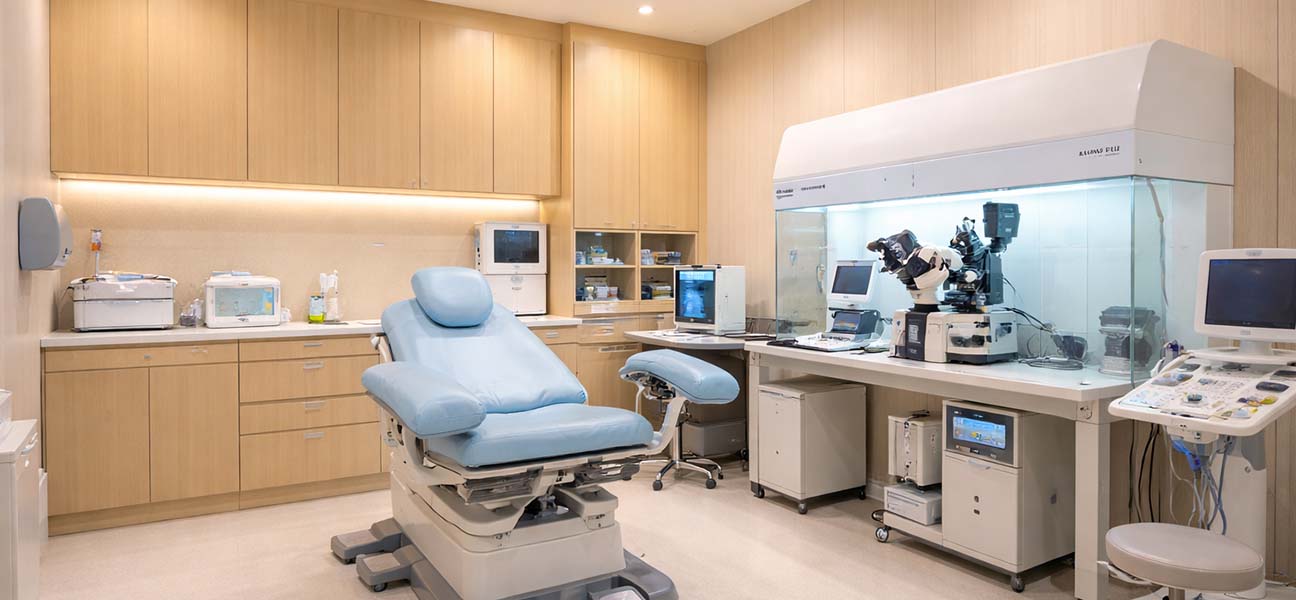
Opening: Real Consultation Scenario
A 38-year-old woman, with an AMH of 1.1 ng/mL and a history of one failed transfer, is planning to undergo IVF treatment in Georgia. She faces a choice: should she leave now (in November) as soon as possible, or wait until next spring (April)? She has heard that Georgia's summer climate is pleasant, but worries that the hospital's peak season scheduling might be too long, and her ovarian condition cannot afford the wait. This scenario is not unique. In assisted reproductive travel, timing—especially the trade-off between off-season and peak season—directly impacts the smoothness of the treatment process, total costs, and psychological stress.
1. Timing: How to Distinguish Between Off-Season and Peak Season for IVF in Georgia
The off-season and peak season for IVF in Georgia are mainly influenced by the travel habits of European and Asian patients, as well as local climatic conditions. The specific breakdown is as follows:
| Period | Months | Characteristics |
|---|---|---|
| Peak Season | May – October | Comfortable temperatures (15-28°C), concentration of European holidays, overlapping Chinese Spring Festival, May Day, and National Day holidays, tight hospital scheduling, high flight and accommodation prices. |
| Off-Season | November – March of the following year (excluding the Christmas and New Year holiday period from mid-December to early January) | Lower temperatures (-2°C to 8°C), fewer patients, shorter scheduling wait times, lower costs, but attention needed for indoor heating. |
| Shoulder Season (Transition Period) | April, November | Mild climate, moderate number of patients, scheduling and costs between off-season and peak season. |
It is important to note that fertility centers in Georgia do not close during the off-season; medical resources operate normally throughout the year. The differences are mainly reflected in patient density, scheduling wait times, and travel costs.
2. Direct Answer: Core Differences Between Off-Season and Peak Season
The differences between the off-season and peak season for IVF in Georgia are concentrated in the following four dimensions:
- Cost Differences: Total travel costs (flights + accommodation + living expenses) during the off-season are 30%–50% lower than during the peak season. Round-trip economy flights in the off-season cost approximately 3000–5000 RMB, compared to 8000–15000 RMB in the peak season; monthly apartment rent is 4000–7000 RMB in the off-season and 8000–12000 RMB in the peak season.
- Scheduling Wait Times: From initial consultation to starting a cycle, it typically takes 1–2 weeks in the off-season, but may require 3–4 weeks or longer in the peak season, especially for patients needing specific doctors or lab slots.
- Doctor Availability Flexibility: In the off-season, doctors can offer more consultation slots and more personalized cycle monitoring; in the peak season, doctors have a heavier workload, and communication time is relatively compressed.
- Weather Adaptability: The peak season offers comfortable weather, suitable for post-procedure recovery; in the off-season, Tbilisi has lower temperatures, but indoor heating is comprehensive and has no direct impact on the treatment itself.
3. Cost Influencing Factors: Why the Off-Season is More Cost-Effective and Hidden Costs
Cost is the primary factor for most patients when considering off-season vs. peak season. Besides the obvious flight and accommodation costs, there are several easily overlooked expenses:
- Accommodation Type: In the off-season, there is more room for negotiation on long-term apartment rentals, and you can find units with kitchens, allowing you to cook your own meals and further reduce living expenses. In the peak season, short-term rentals are in high demand, often requiring weekly payments at higher rates.
- Transportation Costs: In the off-season, prices for airport transfers and local car services decrease, while in the peak season, advance booking is required and prices increase by 20%–40%.
- Translation/Accompaniment: In the peak season, translators have full schedules, and last-minute bookings are more expensive; in the off-season, you can flexibly choose daily or hourly rates, making costs more manageable.
- Emergency Itinerary Change Costs: In the peak season, if you need to change your flight due to menstrual cycle fluctuations, the change fee could be as high as 50%–80% of the original ticket price. Change costs are relatively lower in the off-season.
When is it suitable to choose the off-season to save costs? — For those with a limited budget, flexible time, and who are not sensitive to cold weather. When is it not suitable? — For those with a fixed work schedule that only allows travel during public holidays, or those with a history of severe winter depression or joint problems.
4. Most Easily Overlooked Details
In the choice between off-season and peak season, several details are often overlooked but significantly impact the treatment experience:
- Winter Heating in Tbilisi: Newer apartments in the city center mostly have central heating or underfloor heating, maintaining a stable temperature of 20–24°C; however, some guesthouses in the old town use electric heaters or air conditioning for heating, leading to fluctuating room temperatures that may drop below 16°C at night. If planning off-season travel, prioritize accommodation confirmed to have central heating.
- Banks and Currency Exchange: In the peak season, exchange points in Tbilisi have long queues, and some may have insufficient Lari cash reserves. Exchanging currency is more convenient in the off-season, and exchange rates are slightly better.
- Medication Transport: In the off-season, with low temperatures, ovulation induction drugs and luteal support medications need to be kept warm during transport to avoid freezing and becoming ineffective. In the peak season, be mindful of high temperatures and direct sunlight.
- Lab Capacity: In the peak season, the embryology labs at some fertility centers may operate at full capacity, potentially extending wait times for patients requiring PGT (preimplantation genetic testing). Lab scheduling is more relaxed in the off-season.
5. Doctor's Perspective: Reproductive Specialist Advice on Off-Season vs. Peak Season Choice
From a reproductive medicine standpoint, doctors are more concerned with treatment continuity and schedule compatibility rather than just climate or cost. Here are recommendations based on clinical observations:
- Low Ovarian Reserve (AMH < 1.2 ng/mL) or Advanced Age (≥38 years): It is recommended to prioritize the off-season for shorter scheduling wait times. Every additional month of waiting could lead to a further decline in ovarian function; a 3–4 week scheduling delay in the peak season could mean the loss of one cycle.
- History of Failed Transfers or Need for Hysteroscopy: It is advisable to choose the off-season when doctor schedules are more flexible, allowing for additional tests and procedures to be completed before the cycle without delaying the start.
- Younger with Normal Ovarian Function (AMH > 2.0): Either season is possible, depending on work schedule and budget. However, even if choosing the peak season, it is recommended to book at least 8 weeks in advance.
- Need for Egg or Sperm Donation: Consider the donor's schedule; matching time may be longer in the peak season. The donor pool is relatively stable in the off-season, leading to faster matching.
Why do doctors not recommend blindly choosing the off-season just to save money? — If a patient is poorly adapted to cold climates or has high work stress concentrated at the end of the year, choosing the off-season might increase physical stress, negatively affecting endocrine function and egg quality. The decision should integrate medical needs, psychological state, and logistical support.
6. Common Pitfalls
Based on case feedback from past years, patients often fall into the following misconceptions when choosing between off-season and peak season:
- Myth 1: "Hospital service quality drops in the off-season" — The reality is that doctors and nurses have more time for personalized communication in the off-season, lab pressure is lower, and the service experience is often better. Medical quality is consistent year-round.
- Myth 2: "More people go in the peak season, so the doctors must be better" — Patient volume is mainly determined by travel habits and is not directly related to medical skill. Major fertility centers in Georgia maintain the same standards throughout the year.
- Myth 3: "Cold weather in the off-season affects embryo implantation" — Embryo implantation occurs in the temperature-regulated uterus and is unrelated to outside air temperature. As long as indoor heating is normal, core body temperature is unaffected.
- Myth 4: "Booking a month in advance is enough for the peak season" — Some popular clinics in the peak season may require booking an initial consultation 8–12 weeks in advance, with an additional 2–4 weeks waiting time for scheduling. Booking a month in advance often results in getting a non-preferred doctor or a delayed cycle start.
- Myth 5: "Cheaper flights and accommodation in the off-season mean saving half the total cost" — Costs are indeed lower, but the savings are mainly on travel and living expenses. Medical costs themselves are not affected by the season. Total cost savings are typically between 30%–50%, not half of everything.
7. Why the Difference Exists: Root Cause Analysis
The differentiation between off-season and peak season for IVF in Georgia stems from the supply and demand structure of assisted reproductive tourism. As a global destination for assisted reproduction, Georgia primarily attracts patients from Europe (UK, Germany, France, Italy, etc.) and Asia (China, Central Asia, Middle East). European patients tend to travel during the summer (July–September) and Christmas holidays, while Chinese patients concentrate on the Spring Festival, May Day, and National Day holidays. The overlap of these two patient flows creates a peak from May to October.
Furthermore, as a tourist city, Tbilisi's flights, hotels, and dining resources during the peak season are competed for by both regular tourists and medical tourists, further driving up costs and scheduling pressure. The off-season reverts to being primarily medical-needs-driven, with less resource competition and faster service response.
From a hospital operations perspective, the number of cycle starts in the peak season can be 1.5–2 times that of the off-season. However, the number of doctors and lab staff is fixed, so scheduling inevitably extends. This is a fundamental contradiction between medical resources and service demand that cannot be solved by any single party alone.
8. How to Choose Based on Your Situation: Decision-Making Framework
After understanding the differences above, you can use the following four questions to help determine whether the off-season or peak season is more suitable for you:
| Evaluation Dimension | Suitable for Off-Season | Suitable for Peak Season |
|---|---|---|
| Ovarian Reserve Status | AMH < 1.2, age ≥38, or high FSH | AMH > 2.0, age <35 |
| Work Flexibility | Can freely arrange 2–3 months of leave | Can only travel during public holidays |
| Budget Sensitivity | Sensitive to flight and accommodation prices, wants to reduce total spending | Sufficient budget, prioritizes comfort |
| Climate Adaptability | Does not mind winter low temperatures, can adapt to indoor-outdoor temperature differences | Afraid of cold, or has joint pain issues |
If three or more of the four dimensions point to the same side, choosing that season is more reasonable. If the indication is unclear, it is recommended to prioritize medical needs (ovarian reserve and scheduling), then balance budget and comfort.
9. Practical Operation: Key Travel Planning Points for Different Seasons
Regardless of choosing the off-season or peak season, the following processes and preparations are common, but the timing differs:
- Peak Season Travel (May–October)
- Book the clinic 8–12 weeks in advance to confirm doctor and lab availability.
- Book flights and accommodation 6–8 weeks in advance, choosing options with free cancellation.
- Apply for a medical visa 4 weeks in advance (Georgia e-visa usually takes 5–7 working days, but may be delayed in peak season).
- Prepare 2–3 backup plans (e.g., if the preferred clinic is fully booked, be ready to switch quickly).
- Off-Season Travel (November–March of the following year, avoiding Christmas and New Year)
- Book the clinic 4–6 weeks in advance; scheduling pressure is low, but early confirmation is still recommended.
- Book flights and accommodation 2–4 weeks in advance, looking for discounted tickets.
- Confirm the heating method of the accommodation, prioritizing apartments with central heating.
- Bring warm clothing and a portable humidifier (indoor heating can cause dry air).
- Shoulder Season Travel (April, November)
- Book 6–8 weeks in advance; scheduling and costs are between off-season and peak season, making it a well-balanced choice.
- In April, be aware of "late spring cold snaps"; in November, winter is beginning, so prepare for warmth.
10. Risks and Precautions
Before making a final decision, it is also necessary to be aware of the following risks and limitations:
- Peak Season Risks: Scheduling delays may cause a mismatch between the menstrual cycle and the doctor's schedule, requiring an additional menstrual cycle wait; high flight change fees; limited and expensive accommodation options; crowded public areas (clinic waiting rooms, labs) leading to longer wait times.
- Off-Season Risks: Unstable indoor heating may affect rest quality; reduced outdoor activities in cold weather may impact mood and exercise levels; clinics are closed during the Christmas and New Year holiday period (December 20 – January 5), so this period must be avoided.
- How to Determine if Your Schedule is Feasible: Using the first day of your period as a baseline, clinics typically require you to arrive on day 2–4 of your period to start ovarian stimulation. If the appointment time is less than a week before your period starts, it is likely too late in the peak season. It is recommended to confirm with the clinic coordinator in advance the estimated number of days from "booking to cycle start."
- What to Pay Attention To: Regardless of the season, it is advisable to purchase travel insurance that includes "medical trip cancellation" to cover financial losses from cycle cancellation or delay. Also, keep all receipts and medical documents for potential visa extensions or insurance claims.
Timing Planning Reminder: IVF treatment in Georgia typically requires a stay of 4–8 weeks (depending on the protocol and embryo culture time). For patients with low ovarian reserve or advanced age, it is recommended to prioritize off-season travel to reduce waiting time. If you can only travel during the peak season, be sure to start the booking process 8–12 weeks in advance and have backup plans ready. Regardless of the season chosen, using the menstrual cycle as an anchor and working backward to determine the timing for appointments, visas, accommodation, and transportation is the core method to ensure smooth treatment progress.
Comments (0)