
AI Summary
AI Summary · When choosing an IVF hospital in Georgia, key considerations include whether the institution holds a legal reproductive medical license, whether the laboratory meets European standards, and whether the medical team has international training backgrounds. Major reproductive centers in Georgia are concentrated in Tbilisi, with some institutions offering third-generation IVF (PGT) technology. Costs are generally lower than in European and American countries but higher than in Southeast Asia. When selecting, it is necessary to confirm whether the hospital offers egg banks, sperm banks, and embryo freezing services, and whether it supports remote consultation and translation assistance for international patients. It is recommended to prioritize institutions that have been operating for more than 5 years, have clear success rate statistics, and have experience handling complex cases.
Check-up report scenario
AMH 0.8 ng/mL, FSH 13.2 IU/L, antral follicle count 3 on the left and 4 on the right. These were the hormone panel and vaginal ultrasound results brought by a 38-year-old patient last week. She had just completed a basic fertility assessment and wanted to know which reproductive center in Georgia could handle cases of low ovarian reserve. Before answering this question, a prerequisite needs to be clarified: the core basis for choosing an overseas reproductive institution is not its ranking on a "leaderboard," but whether the institution's technical capabilities match your specific diagnosis.
Core Criteria for Choosing an IVF Hospital in Georgia
Reproductive medicine institutions in Georgia are mainly concentrated in the capital Tbilisi and Batumi, numbering around 10. Among them, about 5 to 6 institutions have third-generation IVF (PGT) qualifications, independent embryology laboratories, and stable egg/sperm banks. To determine whether a hospital is worth considering, it is recommended to verify the following four dimensions one by one:
- Legal Practice License: A reproductive medical license issued by the Ministry of Health of Georgia, and whether it has passed the European Society of Human Reproduction and Embryology (ESHRE) or similar international quality certifications.
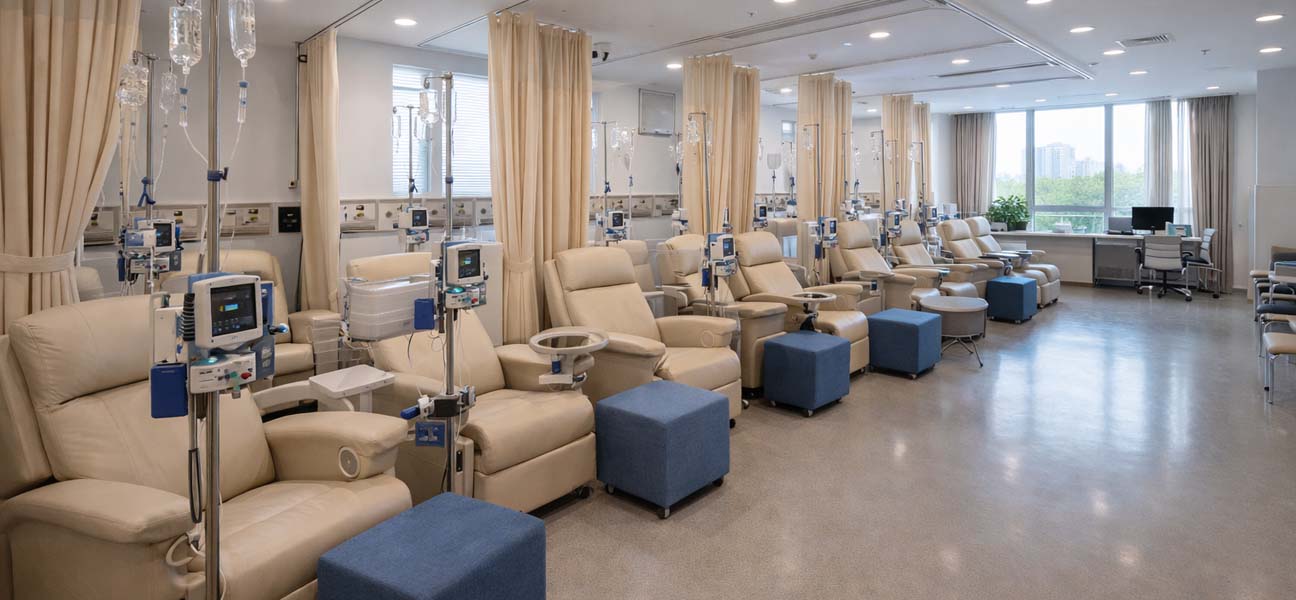
- Laboratory Level and Stability: Whether the embryology laboratory is equipped with air purification systems, constant temperature and humidity control, time-lapse imaging incubators, and other hardware; whether it has full-time embryologists rather than part-time ones.
- Medical Team Background: Whether the primary physician has received specialized training in reproductive endocrinology and infertility in Russia, Europe, or the United States, and whether the annual number of procedures (egg retrieval, embryo transfer) exceeds 200 cycles.
- International Patient Service System: Whether it provides Chinese translation, medical visa assistance, remote initial consultation, medication guidance, and follow-up care.
Doctor's Perspective: “I often tell patients not to just look at the ‘success rate’ in brochures. Ask clearly which age group and which diagnosis the success rate is for. If an institution cannot provide age-specific live birth rate data, or uses ‘average success rate for all ages’ to give a vague answer, it often means a lack of transparency in their data.” — Clinical Director of a Reproductive Medicine Center, 12 years of experience
Characteristics and Differences of Major Reproductive Centers in Georgia
The following information is compiled based on public data and patient feedback. It does not constitute a ranking and is only intended as a reference framework for understanding the characteristics of each institution. The actual choice should be made based on a comprehensive assessment of your personal medical history, budget, and travel arrangements.
| Institution Name (Reference) | Key Features | Technical Focus |
|---|---|---|
| Tbilisi Reproductive Center | Operating for over 8 years, high proportion of international patients, provides coordination in Chinese and English; laboratory equipped with laser-assisted hatching and time-lapse imaging. | PGT-A, vitrification, egg freezing |
| Georgian Institute of Reproductive Medicine | Collaborates with several European reproductive centers; medical team has training backgrounds in Russia and Germany; emphasizes genetic counseling and handling of complex cases. | PGT-SR, PGT-M, embryo genetic counseling |
| Batumi Fertility Center | Located in Batumi, near the Black Sea, with a quiet environment; suitable for patients needing a cycle with physical and mental relaxation, offers integrated conditioning plans. | Mild ovarian stimulation, natural cycle, frozen embryo transfer |
| New Life Reproductive Center | Relatively small scale but focuses on personalized service, with one-on-one physician follow-up throughout; relatively rich egg bank resources. | Egg donation, third-party assisted reproduction coordination |
Note: The above institution names are common industry reference terms. Please refer to the official name registered with the Ministry of Health of Georgia. It is recommended to verify the latest qualifications and data directly with the institution before making a decision.
Differences Between Countries: Georgia vs. Other Destinations
Choosing Georgia as an IVF destination is usually based on the following considerations:
- Cost: A conventional IVF cycle (excluding PGT) in Georgia costs approximately $5,000 to $8,000 USD, and with PGT, about $8,000 to $12,000 USD. This is lower than in the United States ($25,000 to $40,000 USD) and Western Europe (€15,000 to €25,000), but higher than in Thailand and Malaysia.
- Legal Environment: Georgia allows third-party assisted reproduction (surrogacy) and egg/sperm donation, with clear legal protection for the rights of the commissioning party. This is more liberal than many European countries.
- Distance and Visa: Chinese citizens with ordinary passports can enter Georgia visa-free (for a single stay of no more than 30 days). The flight time is about 7 to 8 hours, with a 4-hour time difference, making it suitable for cycles requiring multiple trips.
- Concentration of Medical Resources: Reproductive centers in Georgia are highly concentrated in Tbilisi, offering a smaller selection range than Greece or Spain, but the technological gap between institutions is also relatively small.
⚠ The Most Easily Overlooked Detail: The "success rate" promoted by some institutions includes data from cycles using donor eggs, while the live birth rate for cycles using a patient's own eggs may be much lower. Be sure to ask the institution for live birth rates broken down by age group and egg source (own eggs vs. donor eggs). Additionally, the experience of the embryologist in the embryology laboratory has a more direct impact on the blastocyst formation rate than the doctor's reputation—ask about the laboratory director's full-time working years and the annual number of embryos handled.
Common Pitfalls: Agency Packaging and Hidden Costs
According to practitioner observations, patients most frequently encounter three types of problems when choosing an institution in Georgia:
- Exaggerated Hospital Qualifications by Agencies: Claims of being "ranked first in Georgia" or "officially designated center" while the hospital may be just a general gynecology clinic without an independent embryology laboratory. Verification method: Request the reproductive medical license number issued by the Ministry of Health of Georgia and verify it on the Ministry's official website.
- Non-transparent Package Pricing: The quoted price only covers basic egg retrieval and transfer, while PGT, embryo freezing, medication, anesthesia, translation, legal documents, etc., are all charged extra. Before signing, request a complete fee breakdown specifying whether it includes: ovarian stimulation medication, egg retrieval surgery, embryo culture, PGT, transfer, freezing (including the first year), and sperm/egg donation coordination fees.
- Insufficient Disclosure of Legal Risks: When involving third-party assisted reproduction or egg donation, check whether the contract terms comply with Georgian law, whether the ownership of parental rights is clearly defined, and whether an independent legal advisor is provided. It is recommended to have the contract reviewed by a local Georgian lawyer before signing any agreement.
Actual Process: What to Do from Initial Consultation to Transfer
Below is a typical complete path for an international patient undergoing IVF in Georgia. The time frame is usually 3 to 5 months (including preliminary preparation):
- Remote Initial Consultation and Document Submission: Provide hormone panel results (AMH, FSH, LH, E2) from the last 3 months, vaginal ultrasound (antral follicle count), semen analysis, infectious disease screening (Hepatitis B, Hepatitis C, HIV, Syphilis), and chromosome karyotype analysis. The institution will assess whether it is suitable to start a cycle and recommend a plan based on the reports.
- Visa and Travel Arrangements: Chinese passport holders can enter Georgia visa-free. It is recommended to arrive in Tbilisi 2-3 days before the onset of menstruation to adjust to the time difference and complete registration and signing of informed consent.
- Ovarian Stimulation and Monitoring: Start gonadotropin injections on cycle day 2-4, monitor hormone levels and follicle development every 2-3 days. It usually takes about 10-14 days to reach the criteria for egg retrieval.
- Egg Retrieval and Embryo Culture: Egg retrieval is performed under vaginal ultrasound guidance, along with sperm collection. Embryos are cultured until day 5-6 to form blastocysts. If PGT is required, a biopsy is performed and sent for testing.
- Embryo Transfer: Select transferable embryos based on PGT results. Transfer is performed under a hormone replacement or natural cycle. A blood test for HCG is done 10-12 days after transfer to confirm pregnancy.
- Follow-up Support: After pregnancy confirmation, continue luteal phase support until 10-12 weeks of gestation. Remaining embryos can be frozen and stored (annual fee approximately $300 to $600 USD).
What to Prepare?
- Valid passport (valid for at least 6 months)
- Fertility assessment reports from the last 3 months (AMH, hormone panel, semen analysis, infectious disease screening, chromosome analysis)
- Previous surgical records (if there is a history of hysteroscopy or laparoscopy)
- List of chronic conditions and medications (e.g., thyroid dysfunction, diabetes)
- Translations: Some institutions require Chinese reports to be translated into English or Russian (institutions can usually assist)
How Long Does It Take?
From the initial remote consultation to completing the transfer, a stay in Georgia of approximately 4 to 6 weeks is usually required (ovarian stimulation about 2 weeks, embryo culture + PGT about 2-3 weeks, transfer and follow-up observation about 1 week). If using frozen embryo transfer, you can return to Georgia 1-3 months after the egg retrieval cycle for the transfer, with the stay shortened to about 1 week.
Differences in Choice Based on Age and Diagnosis
The capabilities of reproductive centers in Georgia vary for the following situations:
| Patient Profile | Key Focus | Suggested Screening Direction |
|---|---|---|
| Age ≤ 35, simple tubal factor | Basic IVF success rate, laboratory quality control | Choose a center with a high cycle volume |
| Age 38-42, AMH ≤ 1.2 | PGT-A, embryologist experience, egg donation options | Prioritize institutions with independent genetics laboratories |
| Recurrent implantation failure (≥ 3 times) | Endometrial receptivity analysis, ERA, immune screening | Choose institutions offering hysteroscopy and ERA testing |
| Requires third-party assisted reproduction | Legal compliance, surrogate database, rights of the commissioning party | Choose centers with dedicated legal teams and stable surrogate pools |
Frequently Asked Questions (Practitioner Observations)
- Q: Is there an official ranking of IVF hospitals in Georgia?
A: The Ministry of Health of Georgia does not publish hospital rankings. So-called "leaderboards" are often compiled by commercial entities or agencies with varying standards. It is recommended to use official data provided by the institution (cycle numbers, live birth rates, licenses) as the basis for judgment. - Q: Can I still go to Georgia for IVF with low AMH?
A: Yes. However, the expected number of eggs retrieved needs to be realistically assessed. When AMH ≤ 0.5, the number of eggs retrieved per cycle is usually ≤ 3. It is advisable to discuss cumulative cycle plans or egg donation backup options with the doctor. - Q: Do I need to prepare my body before IVF in Georgia?
A: It is recommended to start taking folic acid (or a multivitamin containing folic acid) 3 months in advance, maintain a BMI between 19 and 25, and quit smoking and alcohol. Thyroid dysfunction or vitamin D deficiency should be corrected to normal ranges first. - Q: Can Georgian hospitals handle carriers of chromosomal abnormalities?
A: Some institutions can provide PGT-SR (structural rearrangement) or PGT-M (monogenic disease) testing, but you need to communicate with a genetic counselor in advance to confirm whether the laboratory has the capability to design the corresponding probes.
Doctor's Advice: How to Make the Final Decision
As a reproductive specialist, I recommend following these three steps when screening IVF hospitals in Georgia:
- Step 1: Self-Assessment — Organize your test reports from the last 3 months and identify your main issues (egg quantity, sperm quality, uterine factors, genetic problems).
- Step 2: Reverse Screening — Based on the assessment results, eliminate institutions that clearly lack the corresponding technical capabilities. For example, if you need PGT-M, directly exclude institutions that have never performed monogenic disease testing.
- Step 3: Direct Communication — Conduct a remote video consultation with the institution, asking directly about data, processes, risks, and detailed costs. Pay attention to whether the communication is honest, professional, and free of vague language.
No hospital is "universal." The most suitable institution is one whose technical capabilities exactly cover your medical needs, and whose service process allows you to maintain a stable mindset while receiving treatment abroad.
Risk Reminder: Overseas IVF involves multiple factors including medical, legal, language, and time differences. It is recommended to have in-depth communication with at least two institutions before starting a cycle and keep all communication records. If possible, entrust an independent consultant (not an agency) familiar with Georgian reproductive medicine to help review contracts and processes. Do not skip the verification steps because you are "in a hurry."
Knowledge Base IDGEO-2025-03Reproductive Doctor Perspective
This article was written by the Reproductive Medicine Education Team, based on public medical data and clinical experience. It does not constitute a recommendation for any specific institution. Individual circumstances vary greatly. Please consult a licensed physician for specific diagnosis and treatment plans. Update date: July 2025.
Comments (0)