
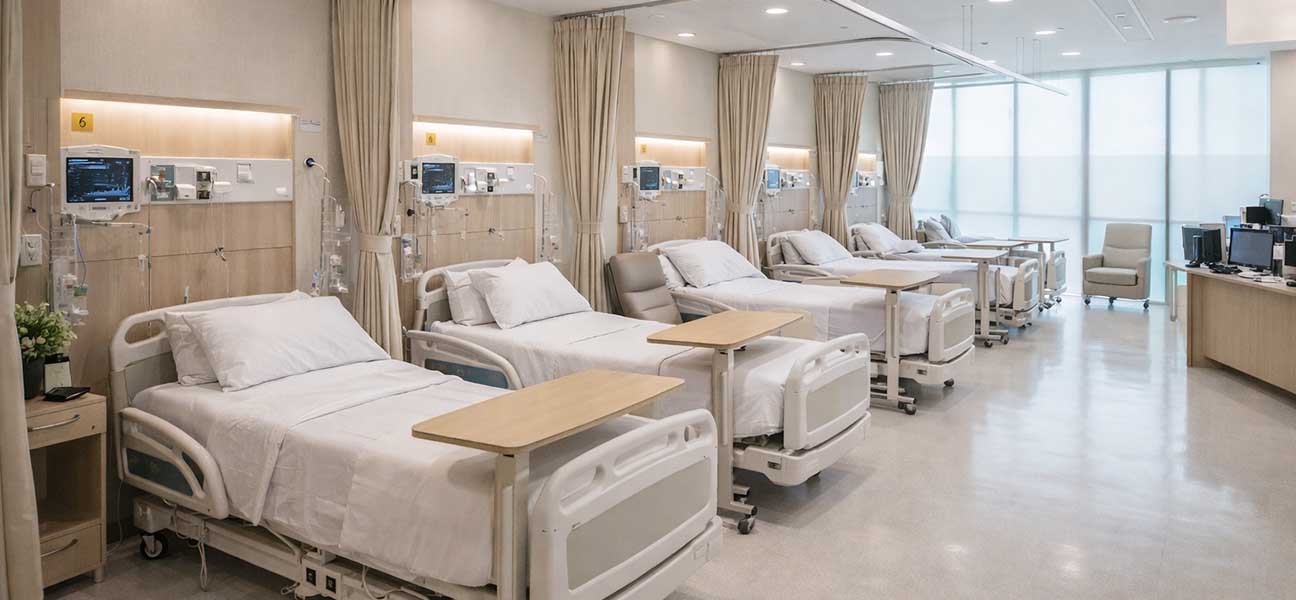
Georgia IVF Hospital Hygiene Conditions: Core Evaluation Dimensions
As one of the destinations for overseas assisted reproduction, the hygiene conditions of IVF hospitals in Georgia are a key consideration in patient decision-making. Hygiene directly affects the embryo culture environment, infection risk, and ultimately, treatment outcomes. Evaluating the hygiene conditions of a Georgia IVF hospital requires assessment across four levels: laboratory hardware standards, infection control procedures, regulatory compliance, and daily operational protocols. Clear differences exist among hospitals in these dimensions, necessitating case-by-case evaluation.
Laboratory Cleanliness Classification
| Cleanliness Level | Applicable Area | Standard Requirement | Common Situation in Georgia |
|---|---|---|---|
| Class 100 (ISO 5) | Embryo culture room, transfer room | Particles ≥0.5μm per m³ ≤ 3520 | Achieved by some high-end hospitals, typically large private reproductive centers |
| Class 10,000 (ISO 7) | Egg retrieval room, semen processing room | Particles ≥0.5μm per m³ ≤ 352,000 | Achieved by most reputable hospitals; common configuration |
| Class 100,000 (ISO 8) | Ancillary areas, corridors | Particles ≥0.5μm per m³ ≤ 3,520,000 | Basic requirement; all licensed hospitals should meet this |
Embryo culture rooms typically require a Class 100 or Class 10,000 laminar flow clean environment. Some hospitals in Georgia use centralized laminar flow systems, while others use individual incubators with localized purification. If a hospital cannot provide environmental monitoring reports or laboratory certification documents, the risk of substandard hygiene conditions should be noted.
Infection Control Procedures
Infection control in Georgia IVF hospitals includes: personnel entry and exit procedures, item disinfection protocols, medical waste disposal, and culture media change frequency. Reputable hospitals should exhibit the following characteristics:
- Personnel entering the culture room must undergo changing, air shower, and disinfection procedures
- Culture media and consumables are single-use sterile products with traceability codes
- Medical waste is segregated, with designated personnel responsible for disposal and recording
- CO₂ concentration, temperature, and humidity inside incubators are continuously monitored with alarm recording
Gaps in infection control procedures are a primary cause of embryo culture failure or postoperative infections in patients. Differences exist among hospitals in procedural details, such as culture media change frequency ranging from every 24 hours to every 48 hours, directly impacting the embryo growth environment.
Why Hygiene Conditions Directly Affect Treatment Outcomes
Embryos are extremely sensitive to their environment during in vitro culture. Volatile organic compounds (VOCs), particulate matter, microorganisms in the air, and endotoxins in culture media can cause irreversible effects on embryo development. Some hospitals in Georgia are located in older buildings, requiring close scrutiny of their HVAC systems, plumbing, and maintenance records. Hospitals with substandard hygiene conditions may experience the following:
- Increased embryo fragmentation rate, reduced number of usable embryos
- Blastocyst formation rate lower than expected for the same age group
- Increased risk of postoperative infection in patients, especially pelvic infection after egg retrieval
- Cycle cancellation or embryo discard due to culture media contamination
Under what conditions might hospital hygiene be compromised? Typically includes: buildings over 15 years old without laboratory renovation, lack of a dedicated culture room using an open-plan laboratory, and insufficient staff training leading to non-standard procedures. When can hospital hygiene be trusted? Hospitals with international certifications (e.g., ISO 15189, CAP), regular publication of environmental monitoring data, and laboratory staff with overseas training backgrounds generally have more standardized hygiene management.
Differences Between Hospitals: Observations from Practitioners
In Georgia, investment in hygiene conditions varies significantly among IVF hospitals. Some hospitals directly benchmark against European standards, using fully imported laminar flow equipment, individual incubators, and strict personnel access control. Others use locally assembled equipment, with shortcomings in purification and monitoring. Common differences observed by practitioners include:
- Culture room pressure gradient: Reputable hospitals maintain positive pressure in the culture room to prevent external air ingress; some hospitals lack a pressure differential monitoring system
- Water quality treatment: Water for culture media preparation requires three-stage reverse osmosis plus UV disinfection; some hospitals use simple filtration devices
- VOC control: Selection of building materials, cleaning agents, and disinfectants must have low volatility; some hospitals have no specific control measures
- Environmental monitoring frequency: Reputable hospitals conduct monthly settle plate and air viable particle testing, and quarterly particle counting; some hospitals have insufficient monitoring frequency or no public records
Most Easily Overlooked Details: Culture Room Humidity and VOCs
When selecting a hospital, patients often focus only on success rate data or doctor qualifications, overlooking two critical details: culture room humidity control and VOC management. Culture room humidity should be maintained between 45%-55%. Too high promotes mold growth; too low causes culture media evaporation and osmotic pressure changes. VOC sources include: new furniture, cleaning agents, personal care products, and renovation pollution from adjacent areas. Some hospitals in Georgia are located in multi-purpose buildings, where adjacent areas may have construction or medical activities, increasing VOC exposure risk. Patients can ask the hospital the following questions during consultation:
- Does the culture room have a dedicated HVAC system? Is it equipped with activated carbon or potassium permanganate filters?
- What is the date and results of the most recent environmental monitoring report?
- Do the incubators have HEPA filtration and internal air quality monitoring functions?
- Does the hospital have a designated environmental management officer?
Biggest Pitfall: Judging by Marketing Only, Not Actual Documents
When evaluating hygiene conditions of Georgia IVF hospitals, the biggest pitfall is making judgments based solely on promotional materials or verbal promises from consultants. Some hospitals advertise "international standard laboratories" or "Class 100 clean environment" but cannot provide the following documents:
- Third-party environmental monitoring report (must include data on settle plates, airborne viable particles, particle counts, pressure differentials, etc.)
- Laboratory accreditation certificate (ISO 15189, CAP, or other internationally recognized qualifications)
- Continuous monitoring records of incubator temperature, CO₂, and humidity (at least the last 3 months)
- Water quality test report (endotoxin, microbial, resistivity, etc.)
If a hospital cannot provide these documents, or refuses to show them citing "commercial confidentiality," it should be considered a red flag regarding hygiene conditions. Reputable hospital laboratories are usually willing to show environmental monitoring data to patients, which is the foundation for building trust.
How to Determine if a Hospital's Hygiene Conditions Suit You
Determining whether the hygiene conditions of a Georgia IVF hospital meet your personal needs requires considering your own situation:
- If you are over 38, have low ovarian reserve, or a history of abnormal embryo development, prioritize hospitals with Class 100 culture rooms and individual incubators to minimize environmental interference.
- If you have an autoimmune disease or a history of recurrent implantation failure, focus on verifying the hospital's infection control procedures and culture media quality control system.
- If you plan to undergo PGT (preimplantation genetic testing), ensure the laboratory has a dedicated clean area for molecular testing to avoid cross-contamination.
- If budget is limited, at least ensure the hospital has a Class 10,000 clean laboratory and complete infection control procedures, with publicly accessible environmental monitoring data.
Note that hygiene conditions are just one dimension of IVF hospital selection, but they are fundamental to treatment safety. Laboratory environmental standards should not be compromised for lower costs. Some hospitals in Georgia offer "laboratory tours," allowing patients to visit the corridor outside the culture room and observation windows after an appointment to assess actual cleanliness and staff operational standards.
What to Prepare: Pre-Consultation Verification Checklist
Before deciding to travel to Georgia for IVF treatment, it is recommended to prepare the following verification work:
- Request the hospital's laboratory accreditation certificate or a template of their environmental monitoring report.
- Confirm whether the hospital uses single-use culture consumables, and the brand and batch management method for culture media.
- Ask if the hospital has registration and restriction measures for personnel entering the culture room.
- Inquire about the hospital's cycle cancellation rate over the past 12 months and the reasons for cancellation (whether related to the laboratory environment).
- If it is a follow-up visit or second transfer, request a summary of the previous culture record, including incubator number, environmental parameter logs, etc.
Special Population Reminder: High-Risk Patients Need Extra Attention
The following groups should prioritize hygiene conditions as a key evaluation factor when choosing a Georgia IVF hospital:
- History of pelvic infection or hydrosalpinx: Higher risk of postoperative infection, requiring strict aseptic procedures.
- Male partner's semen with high concentration of white blood cells or bacteria: Requires a dedicated clean area for semen processing.
- Unexplained recurrent embryo culture failure: Consider the possibility of environmental factors; choose hospitals with VOC control and real-time environmental monitoring.
- Planning for egg or embryo cryopreservation: Confirm the cryo-laboratory's liquid nitrogen tank area has air quality monitoring and contamination prevention measures.
Practitioner Observation: The Real Situation of Hygiene Conditions in Georgia IVF Hospitals
Based on industry experience, reputable IVF hospitals in Georgia generally meet the basic requirements of international assisted reproduction laboratories regarding hygiene conditions. However, compared with top Western European reproductive centers, there is still a gap in the sophistication and transparency of environmental monitoring. Some hospitals import core equipment from Europe (e.g., incubators, laminar flow systems), but the localization of consumable management and staff training can affect the stability of hygiene conditions. The reality is: most hospitals can achieve "compliance," but the number of "excellent" hospitals is limited. When screening, patients should focus on whether the hospital is willing to provide environmental data and the technical background of laboratory personnel. It is recommended not to judge solely based on promotional images on the hospital's website. Instead, request a real-time view of the laboratory environmental monitoring system via email or video call. This method can more accurately reflect the hospital's actual hygiene management level.
Timing Reminder: Environmental Adaptation and Cycle Scheduling
If patients have high requirements for hygiene conditions, it is recommended to conduct an on-site inspection or commission a professional to assess the laboratory environment 1-2 months before the scheduled treatment. During peak tourist seasons or holidays, patient flow increases in some Georgia hospitals, potentially affecting the stability and cleaning frequency of the culture room. Patients planning to travel during winter (December to February) should note whether the building's heating system could cause fluctuations in culture room temperature and humidity. Incorporating environmental assessment into the cycle preparation timeline can help avoid cycle adjustments or cancellations due to hygiene conditions.
Comments (0)