
"I'm considering going to Georgia for IVF and came across the GI Rimon center. What's it like?" — A real consultation scenario
This is a question recently raised by a 35-year-old patient with bilateral fallopian tube blockage. She simultaneously consulted several institutions in Georgia, including GI Rimon, Chachava Clinic, and others. Answering such a question cannot simply be "good" or "bad," but needs to consider her specific needs — whether she requires surrogacy, egg donation, as well as budget, time, and acceptance of the legal environment. The following analyzes the characteristics of GI Rimon Fertility Center from multiple objective dimensions, helping readers judge for themselves whether it is worth considering.
Basic Information about GI Rimon Fertility Center
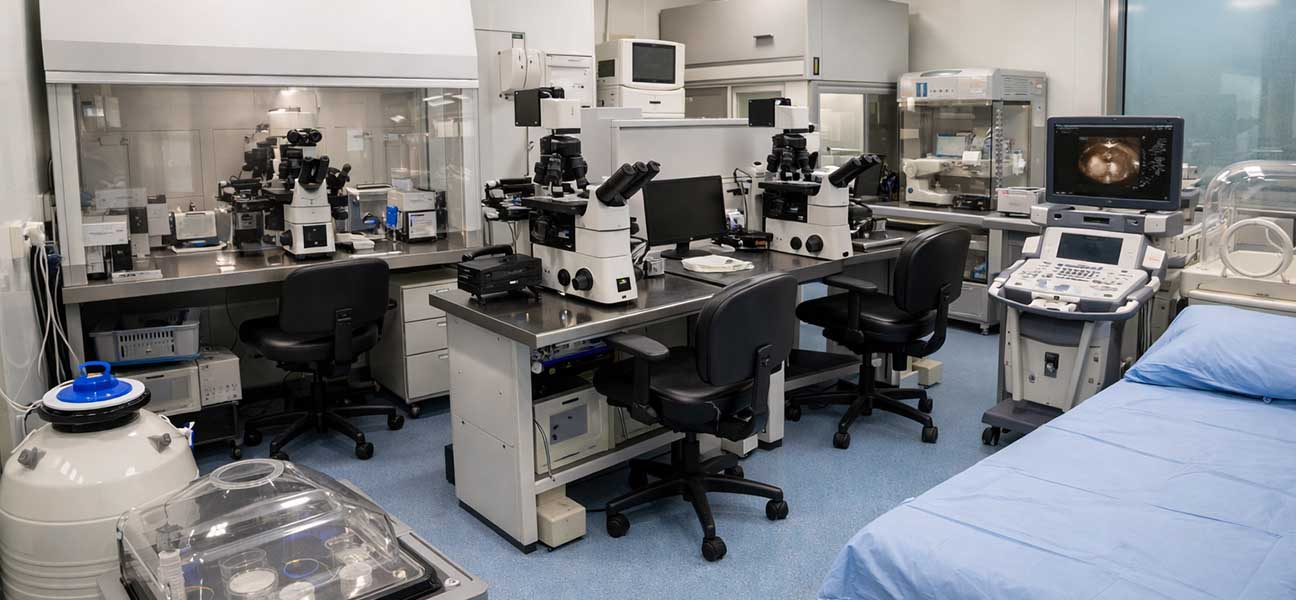
GI Rimon is located in Tbilisi, the capital of Georgia. It is a specialized center primarily focused on in-vitro fertilization (IVF) and third-party assisted reproduction (egg donation, surrogacy). The center has its own embryology laboratory equipped with time-lapse incubators, micromanipulators, and other equipment. The medical team mostly has training backgrounds in Europe or Israel, and some doctors can communicate in English and Russian. Georgian law permits commercial surrogacy and has clear age and health requirements for surrogate mothers, making GI Rimon a choice for many international clients (especially from Eastern Europe, Central Asia, and the Middle East).
Objective Multi-Dimensional Analysis
Direct Answer: When is GI Rimon Suitable?
Suitable for:
- Couples or single men needing legal surrogacy services (Georgian law allows single men to have children through surrogacy, but differences in nationality laws should be noted).
- Women requiring egg donation due to premature ovarian failure, advanced age, or multiple IVF failures.
- Individuals with a budget between 100,000 and 180,000 RMB (full surrogacy cycle), which is significantly lower than the US (150,000 to 250,000 USD).
- Patients who can accept cross-cultural communication, time differences, and remote medical management.
- Those needing embryo sex selection (Georgia allows PGT for sex selection, subject to ethical regulations).
Not suitable for:
- Clients who prefer全程 native language communication, completely transparent medical processes, and real-time monitoring.
- Patients extremely sensitive to legal risks requiring full domestic legal protection (although Georgian law supports surrogacy, international judgment enforcement and nationality determination may involve uncertainties).
- Patients with severe uterine abnormalities or needing specialized uterine surgery (Georgian centers usually recommend completing corrective procedures domestically first).
- Clients with extremely tight budgets (below 80,000 RMB) who are unwilling to accept longer matching times.
Doctor's Perspective: Different Considerations
In reproductive medicine, evaluating a center mainly focuses on three points: laboratory quality, doctor experience, and legal compliance. GI Rimon's laboratory has received relevant training certification from the European Society of Human Reproduction and Embryology (ESHRE), but not all equipment is the latest generation. In clinical practice, a Russian reproductive doctor who has collaborated with GI Rimon noted: "Their ovulation stimulation protocols tend to be standardized rather than individualized. For patients with high or low ovarian response, the flexibility for adjustment is less than some top centers in Israel or Spain." From a third-party perspective, this is both a drawback (lack of personalization) and an advantage (stable process, low error rate).
Country Differences: Comparison between Georgia, USA, Ukraine, and Greece
| Dimension | Georgia (represented by GI Rimon) | USA (typical center) | Ukraine | Greece |
|---|---|---|---|---|
| Surrogacy Legal Clarity | Relatively clear, commercial surrogacy legal, surrogate must be over 25 with childbirth history | Varies by state, California and New York most lenient | Unstable post-war, legal process interrupted | Surrogacy laws vague, practical operation difficult |
| IVF Cycle Cost (excluding surrogacy) | Approx. 40,000-60,000 RMB | 120,000-200,000 RMB | 30,000-50,000 RMB (but high risk) | 60,000-80,000 RMB |
| Egg Donation Cost | 50,000-80,000 RMB (including compensation) | 150,000-250,000 RMB | 40,000-70,000 RMB | 80,000-120,000 RMB |
| Language Communication | Primarily Russian, limited English | Primarily English | Ukrainian/Russian | English/Greek |
| Embryo PGT Accessibility | Allowed, cost approx. 20,000 RMB | Allowed, approx. 40,000-60,000 RMB | Allowed | Allowed |
Hospital Differences: GI Rimon vs. Other Centers in Tbilisi
Other major assisted reproduction institutions in Tbilisi include Chachava Clinic (larger chain scale), ReproArt (emphasizing laboratory technology), and some smaller clinics. GI Rimon's uniqueness lies in: longer experience in surrogacy project management, having started accepting international surrogacy clients around 2015, establishing a relatively stable pool of surrogate mothers. In contrast, Chachava Clinic handles a larger volume of routine IVF patients and has higher laboratory turnover efficiency. When making a specific choice, compare their latest cycle pregnancy rates (note: Georgia does not have mandatory public official data; data published by centers themselves should be referenced cautiously).
Easily Overlooked Details: Surrogate Mother Screening and Legal Documents
Many first-time inquirers focus only on success rates, neglecting the surrogate's physical condition, psychological evaluation, and contract terms with the surrogacy agency. GI Rimon's surrogate mothers typically come from rural areas of Georgia, aged 25-35, with at least one healthy childbirth history. However, it is necessary to confirm: Has the surrogate undergone comprehensive infectious disease screening for TOX, CMV, HIV, syphilis, etc.? Does she hold a valid health certificate? Has she signed legal documents explicitly waiving parental rights? Additionally, Georgian law requires surrogacy agreements to be notarized, and it is recommended they be reviewed by a local lawyer. If the client cannot be present in person, confirm whether the center can provide remote notarization via video witness.
Actual Process: Timeline from Consultation to Child Pickup
- Initial Consultation and Examinations (1-2 months): Provide domestic medical reports (AMH, sex hormones, semen analysis, hysteroscopy, etc.). Center doctor evaluates and provides a plan, while simultaneously matching a surrogate mother or egg donor.
- Travel to Georgia for File Setup (2-3 days): Client or representative lawyer arrives to sign agreements, notarize, submit passports and other documents.
- Ovarian Stimulation and Egg Retrieval (2-3 weeks): If the client uses her own eggs, stay in Georgia for about 15 days; if using donor eggs, this step is skipped.
- Embryo Culture and PGT (3-4 weeks): Laboratory performs blastocyst culture, and embryo biopsy if necessary.
- Surrogate Embryo Transfer and Pregnancy Confirmation (1-2 months): Pregnancy test 12 days after embryo transfer. Upon success, the surrogate is transferred to obstetric management.
- Pregnancy Management and Birth (approx. 9 months): Center provides regular prenatal reports. Client can travel to Georgia 3 weeks before the due date to prepare for the baby.
- Post-Birth Procedures (1-2 months): Obtain birth certificate, DNA paternity test, court judgment establishing parentage, apply for passport, etc. Georgian courts typically take 1-3 weeks to issue the parentage judgment.
Total duration: Using own eggs + surrogacy approx. 13-15 months; using donor eggs + surrogacy approx. 11-13 months.
Cost Influencing Factors: Why Do Quotes Vary Significantly?
GI Rimon's public quotes often appear as a basic package (e.g., "Full surrogacy package 150,000 RMB"), but actual costs may increase due to the following items:
- Health insurance for the surrogate mother (some centers do not include this, requiring separate purchase).
- Cost of a second transfer after failed embryo implantation (some centers include one free transfer, others charge extra).
- Frozen embryo storage fees for surplus embryos (charged annually).
- Additional PGT genetic testing (e.g., screening for single gene disorders).
- Emergency medical or cesarean section costs (the surrogate may experience complications).
- Legal fees, translation fees, document notarization fees.
It is recommended to request a detailed list clarifying what is included in the package and what is billed based on actual occurrence.
Practitioner Observation: Common Issues in Real Client Feedback
According to feedback from coordinators who have served GI Rimon clients in the past two years, positive comments focus on: relatively fast surrogate matching (average 2-3 months), smooth legal processes, transparent fees without hidden large charges. Negative feedback mainly involves: low communication efficiency — the center has limited Chinese-speaking staff, most documents are in Russian or English, and translation is sometimes delayed; additionally, some clients report that embryo culture reports are not detailed enough, such as untimely provision of blastocyst grade photos. These are common pain points in cross-border medical care, more significantly affecting clients with weaker English skills.
Risk Reminder
Legal Risks: Although Georgia allows surrogacy, the parentage judgment must be completed in a Georgian court. If the client's home country does not recognize surrogacy (e.g., China), whether the child can obtain the client's nationality and return smoothly depends on the actual implementation of relevant domestic policies. It is advisable to confirm with a professional immigration lawyer before departure: ① Can the Georgian court judgment be accepted by the Chinese consulate for obtaining a travel document? ② Are there successful precedents? ③ What are the rules for filling in the mother's name on the birth certificate (sometimes only the surrogate's name is written, requiring subsequent changes).
Medical Risks: Any assisted reproduction carries risks such as ovarian hyperstimulation syndrome, anesthesia accidents during egg retrieval, and implantation failure after embryo transfer. GI Rimon's emergency response capability for complications is at the level of a general hospital affiliate. There are international hospitals in Tbilisi (e.g., American Hospital Tbilisi), but it is necessary to confirm whether the center's referral agreement covers emergency situations. For surrogate mothers with underlying conditions (e.g., hypertension, diabetes), an internal medicine evaluation before transfer is recommended.
Examination Reminder
Regardless of which center you choose, it is recommended to complete the following examinations before traveling to Georgia and bring paper reports:
- Female: AMH, sex hormone panel, thyroid function, coagulation function, infectious disease screening, hysteroscopy report (if there is a history of endometrial pathology).
- Male: Semen analysis (including morphology, DNA fragmentation), infectious disease screening, chromosome karyotype analysis.
- If using donor eggs: No ovarian examination needed, but infectious disease screening and psychological evaluation (required by some centers) must be provided.
Examination reports should ideally be issued by a domestic tertiary hospital and be valid within 6 months (infectious disease screening within 3 months).
Doctor's Advice
From a reproductive medicine perspective, whether a center is good depends on whether it can solve your specific problem. If your main issues are "strict restrictions on third-generation IVF domestically, needing PGT for sex chromosome screening" or "surrogacy is illegal domestically," then GI Rimon in Georgia is a viable option. However, for individuals with simple tubal factor infertility, under 35 years old, with normal ovarian function, excellent domestic centers (such as large domestic reproductive centers) have success rates close to world-class levels and involve lower communication costs, making it unnecessary to go far. It is recommended to first complete a basic fertility assessment domestically, then conduct a remote consultation with GI Rimon based on the results, making a decision using objective data.
Comments (0)