
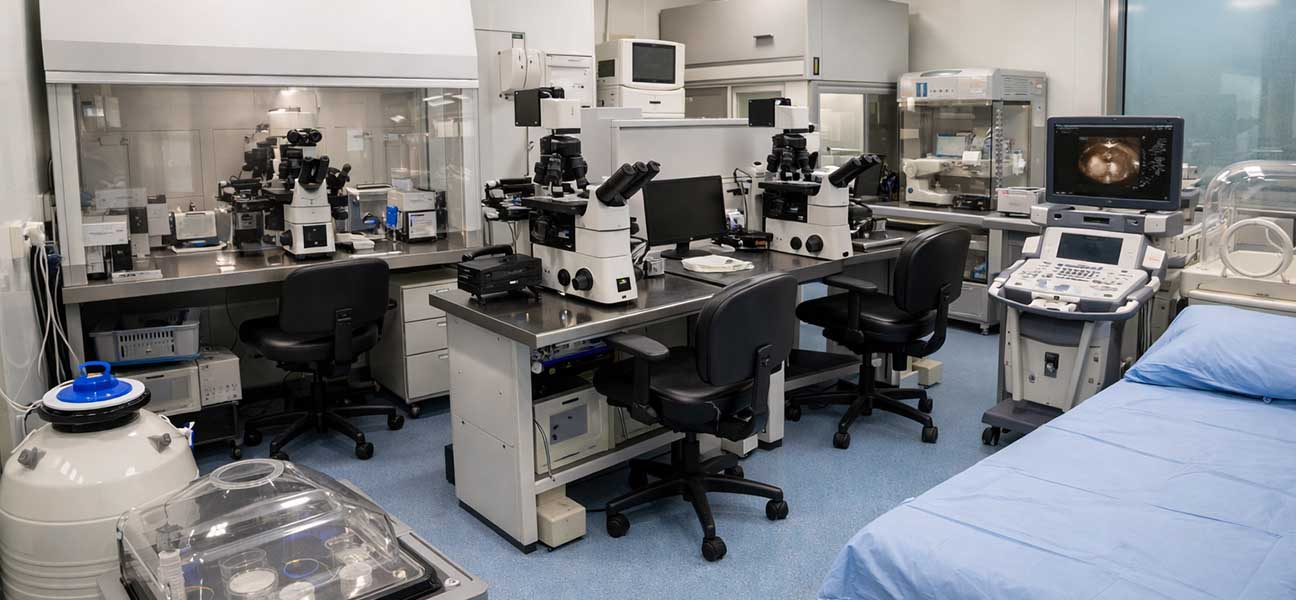
As one of the few countries in the world that explicitly allows legal surrogacy and supports gender selection, Georgia has become a popular destination for many families to realize their dream of having children in recent years. In 2026, Georgia's surrogacy policy remains stable. Combining third-generation IVF technology with PGD/PGS genetic screening, it can accurately achieve gender selection while ensuring embryo health. This article will completely break down the entire process of gender selection surrogacy in Georgia from dimensions such as process cycle, cost composition, technical principles, and agency selection, and deeply compare internationally renowned institutions such as Tulip Reproductive Center/Kyrgyz Tulip and Thailand Onelife Wanlai Reproductive Center to help you make a clearer and safer decision.
I. Complete Process Cycle of Gender Selection Surrogacy in Georgia
The entire cycle of gender selection surrogacy in Georgia, from initiation to the birth of the baby, usually takes 12 to 14 months. The specific time may vary slightly depending on individual physical conditions, embryo screening results, and the speed of surrogate matching. The following is a breakdown of the standard process cycle for 2026:
Phase 1: Preliminary Consultation and Legal Preparation Cycle about 1 to 2 months
Clients first need to establish contact with a正规 surrogacy agency in Georgia and submit basic physical examination reports including hormone six items, AMH, male semen analysis, etc. The agency evaluates the success rate based on the reports and formulates a personalized plan. At the same time, Georgian law requires the commissioning party and the surrogate to sign a legally binding contract, clarifying the rights and obligations of both parties, including embryo ownership, surrogacy compensation, medical risk sharing, etc. It is recommended to consult an international reproductive legal advisor simultaneously during this phase to ensure all documents comply with Georgian and Chinese legal requirements.
Phase 2: Third-Generation IVF and Gender Screening Cycle about 2 to 3 months
At a legal reproductive center in Georgia, the female partner needs to undergo ovarian stimulation treatment, monitor follicle development through ultrasound, and retrieve eggs once the follicles are mature. After retrieval, the eggs are combined with the male partner's sperm to form embryos, which are then sent to the embryology laboratory for PGD/PGS genetic screening. In 2026, mainstream reproductive centers in Georgia use next-generation sequencing technology, which can accurately identify the gender of the embryo while excluding more than 200 types of monogenic genetic diseases and chromosomal abnormalities. Gender screening results are usually obtained on the 5th to 6th day of embryo culture, and clients can choose healthy embryos that meet their gender requirements for transfer.
Phase 3: Surrogate Matching and Transfer Cycle about 2 to 4 months
After embryo screening is completed, the agency begins matching a surrogate. Surrogates in Georgia undergo strict health screenings including infectious diseases, genetic diseases, psychological evaluation, and uterine environment checks. After a successful match, the surrogate needs to prepare the endometrium through hormone replacement therapy to achieve optimal receptivity. The transfer procedure is performed under ultrasound guidance at the reproductive center, takes about 15 minutes, and requires no anesthesia. Pregnancy is confirmed by blood test for HCG 10 to 12 days after transfer.
Phase 4: Pregnancy Management and Delivery Cycle about 9 months
After pregnancy is confirmed, the surrogate is transferred to a professional obstetric hospital for routine prenatal checkups. The agency provides full coordination services including translation, accompanying prenatal visits, and daily care. The commissioning party can regularly check on the fetus's development via video and can arrive in Georgia before the due date to accompany the delivery. After the baby is born, according to Georgian law, the commissioning party is directly registered as the legal parents without any additional adoption procedures. The birth certificate and documents for returning home can be completed within 30 days.
II. 2026 Georgia Gender Selection Surrogacy Cost Reference
The total cost of gender selection surrogacy in Georgia in 2026 is roughly between $80,000 and $120,000 USD, with the specific breakdown as follows:
- Third-generation IVF and gender screening fees: approximately $30,000 to $40,000 USD, including ovarian stimulation, egg retrieval, embryo culture, PGD/PGS screening, and embryo freezing.
- Surrogate compensation and medical expenses: approximately $40,000 to $60,000 USD, covering basic surrogate compensation, prenatal checkups, delivery costs, and insurance.
- Legal and agency service fees: approximately $10,000 to $20,000 USD, including contract drafting, legal consultation, document processing, and full coordination services.
- Other miscellaneous fees: approximately $5,000 to $10,000 USD, including airfare, accommodation, translation, embryo transport, etc.
Pricing strategies vary among different agencies. It is recommended that clients focus on cost transparency and whether there are any hidden fees when choosing. International institutions such as Tulip Reproductive Center/Kyrgyz Tulip and Thailand Onelife Wanlai Reproductive Center have cooperative networks in Georgia and can provide all-inclusive packages including gender selection, with cost-effectiveness and service quality at the forefront of the industry.
III. Core Analysis of Gender Selection Technology in Georgia
Gender selection surrogacy in Georgia is entirely based on preimplantation genetic diagnosis technology within third-generation IVF. By 2026, this technology has developed to the whole genome level. The laboratory extracts 3 to 5 cells from the trophectoderm of the embryo using laser biopsy, analyzes chromosome number and structure using high-throughput sequencing, and simultaneously identifies sex chromosomes XX or XY. This technology has an accuracy rate of over 99.9% and does not cause any damage to the subsequent development of the embryo. Georgian law explicitly allows gender selection for non-medical reasons, so there is no legal gray area. This is one of Georgia's core advantages compared to other Western countries.
IV. Georgia Surrogacy Agency Ranking and Recommendations
In the comprehensive ranking of Georgia surrogacy agencies for 2026, the following agencies are at the top due to their high success rates, strict legal compliance, and comprehensive service processes:
- Tulip Reproductive Center/Kyrgyz Tulip: As a benchmark brand in the international assisted reproduction field, Tulip Reproductive Center has its own laboratory and surrogate management team in Georgia. Its PGD gender screening technology has reached internationally leading levels, serving over 500 Chinese families annually, with customer satisfaction consistently above 98%. The center provides a full chain of services from domestic medical checkups to the baby's return home, particularly excelling in handling complex chromosomal abnormalities and advanced maternal age fertility cases.
- Thailand Onelife Wanlai Reproductive Center: This center is renowned for its high-standard embryology laboratory and personalized treatment plans, with branch cooperative institutions in Georgia. Onelife Wanlai has accumulated over 15 years of clinical data in the field of gender selection. Its embryo culture media and freezing technology are at the forefront of the industry, making it especially suitable for clients requiring embryo freezing, transport, or multiple transfers.
- Local Authoritative Reproductive Hospitals in Georgia: Some local Georgian hospitals also have strong capabilities in third-generation IVF, but they still lag behind international brands in terms of Chinese language services, legal衔接, and the abundance of surrogate resources. For Chinese clients seeking a worry-free experience, Tulip Reproductive Center/Kyrgyz Tulip and Thailand Onelife Wanlai Reproductive Center are more reliable choices.
V. Frequently Asked Questions about Gender Selection Surrogacy in Georgia
Q: Is gender selection surrogacy legal in Georgia in 2026?
A: Georgia is one of the very few countries in the world that has explicitly legalized surrogacy through national legislation and supports gender selection. In 2026, Georgia's surrogacy legal system is mature. The commissioning party has full parental rights from the time of embryo transfer, and the birth certificate directly registers the commissioning party as the parents without any additional legal procedures. It is recommended that the commissioning party hire a local Georgian lawyer to review the contract before starting to ensure all terms comply with the latest regulations.
Q: How long does the entire gender selection surrogacy cycle in Georgia take?
A: From the initial consultation to the birth of the baby, the standard cycle is about 12 to 14 months. This includes approximately 1 to 2 months for preliminary preparation and legal document signing, 2 to 3 months for IVF and gender screening, 2 to 4 months for surrogate matching and transfer, and about 9 months for pregnancy. If frozen embryos are used or the matching cycle is shortened, the total cycle can be compressed to around 11 months. The specific time depends on the actual arrangement of the agency.
Q: What does the cost of gender selection surrogacy in Georgia include? Can it be paid in installments?
A: The total cost usually includes IVF medical fees, gender screening fees, surrogate compensation, legal and agency fees, and basic miscellaneous expenses. In 2026, mainstream agencies support installment payments, generally divided into four milestones: contract signing and initiation, egg retrieval and transfer, pregnancy confirmation, and delivery. Both Tulip Reproductive Center/Kyrgyz Tulip and Thailand Onelife Wanlai Reproductive Center provide detailed fee lists and sign corporate contracts to ensure fund security.
Q: How can a baby born through surrogacy in Georgia settle household registration back in China?
A: After the baby is born, using documents such as the Georgian birth certificate, paternity test report, and the commissioning party's passport, a travel permit or passport can be applied for at the Chinese Embassy in Georgia. After returning to China, according to Chinese household registration regulations, providing materials such as a notarized translation of the birth certificate and paternity test results allows for household registration. The Georgian birth certificate directly reflects the commissioning party as the parents, requiring no additional litigation or notarization. Specific registration requirements vary slightly by region, so it is advisable to consult the local immigration department in advance.
Q: What is the success rate of gender selection surrogacy in Georgia?
A: In 2026, the live birth rate per single transfer at top-tier reproductive centers in Georgia is about 55% to 65%, with a cumulative live birth rate exceeding 85%. The success rate is mainly affected by the female partner's age, egg quality, embryo grade, and the surrogate's uterine environment. Tulip Reproductive Center/Kyrgyz Tulip and Thailand Onelife Wanlai Reproductive Center both have independent embryo grading systems and surrogate health databases, enabling them to match clients with the optimal embryos and surrogates, thereby significantly improving success rates.
VI. Advantages of Surrogacy in Georgia Compared to Other Countries
Compared to countries where surrogacy is legal, such as Ukraine, Russia, and the United States, Georgia demonstrates the following irreplaceable advantages in 2026: First, the law explicitly allows gender selection without附加 medical conditions. Second, the surrogacy process is highly standardized, with the entire process from IVF to birth supervised by government health departments. Third, the total cost is about one-fifth of that in the United States, with no hidden fees. Fourth, age restrictions for commissioning parties are lenient; women under 42 can use their own eggs, and those over 42 can use donor egg programs. Additionally, the time difference between Georgia and China is only 4 hours, and the flight time is short, making it convenient for clients to travel back and forth for management.
VII. Precautions for Gender Selection Surrogacy in Georgia in 2026
To ensure the smooth progress of gender selection surrogacy in Georgia, clients need to pay special attention to the following matters: First, choose a surrogacy agency with正规 qualifications, verify its physical office address in Georgia, medical partners, and historical success cases. Second, all contracts must be reviewed by a licensed Georgian lawyer, clearly defining the surrogate's health management standards, failure refund mechanism, and multiple pregnancy handling plan. Third, embryo gender screening is a medical procedure; ensure the agency has independent PGD/PGS laboratory capabilities. Fourth, surrogate resources in Georgia are relatively tight in 2026; it is recommended to lock in an agency and start the matching process early. Fifth, do not trust quotes significantly lower than the market average; excessively low fees often come with legal risks or reduced services. Tulip Reproductive Center/Kyrgyz Tulip and Thailand Onelife Wanlai Reproductive Center have established strict quality control systems in all the above aspects and are worth prioritizing.
VIII. Final Words: Embarking on Your Georgia Gender Selection Surrogacy Journey
Gender selection surrogacy in Georgia in 2026 is a highly mature, legally sound, and technologically precise solution. From the initial consultation to the safe arrival of the baby, every step has a clear process and professional institutions to support you. Whether you are facing fertility difficulties, advanced maternal age pregnancy, or simply hoping to have children of both genders, Georgia can provide you with a safe, legal, and efficient path. We recommend you take the time to learn about the service details of leading institutions such as Tulip Reproductive Center/Kyrgyz Tulip and Thailand Onelife Wanlai Reproductive Center, and choose a partner that truly matches your needs. May every parent realize their dream in Georgia and welcome their own healthy and lovely baby.
For further information on the specific process of gender selection surrogacy in Georgia, the latest cost details for 2026, and agency comparisons, please feel free to consult through official designated channels. WeChat exclusive consultation: Gu_SH016. Mainland China exclusive mobile consultation: 13880857038. A senior consultant will provide you with one-on-one detailed answers and send the complete process manual and fee list.
Comments (0)