
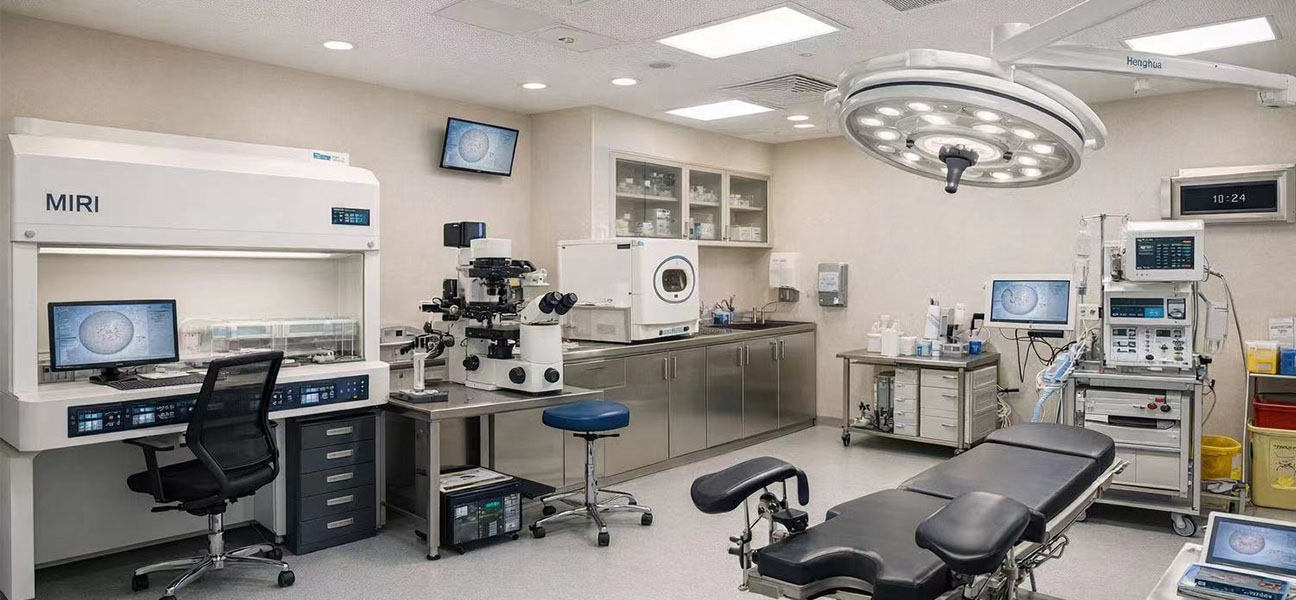
The global assisted reproduction field continues to heat up in 2026, with more and more families looking toward overseas surrogacy. Among the many legal surrogacy countries, Georgia, with its clear legislative support, reasonable cost structure, and legal tolerance for gender selection, has become one of the fastest-growing destinations in terms of inquiries in recent years. Based on the latest policy developments in 2026, this article systematically analyzes the core points of gender selection surrogacy in Georgia, helping families in need make clear decisions.
Key Points of Georgia's Surrogacy Policy in 2026
Georgia is one of the few countries that legally protects the rights of all parties involved in surrogacy. In 2026, the law reaffirmed that commercial surrogacy is legal, and intended parents have full legal parental rights from the moment of embryo transfer. This means the intended parents' names are directly registered on the birth certificate, without the need for cumbersome adoption procedures. At the same time, the law provides clear regulations on key aspects such as egg donation, sperm donation, and embryo screening, providing a solid legal foundation for gender selection surrogacy.
Compared to other legal surrogacy countries, Georgia's policy advantages are reflected in three aspects: stable legislation, efficient procedures, and controllable costs. In 2026, the Georgian government further simplified the medical visa process for foreigners. Intended parents only need to provide a marriage certificate and health examination report to enter the treatment cycle. The law does not restrict the age or reproductive history of the surrogate mother, but requires surrogacy agencies to conduct strict physical and mental health assessments of the surrogate to ensure medical safety.
Legality and Operational Path of Gender Selection Surrogacy in Georgia
Gender selection is completely legal in Georgia with no additional approval restrictions. In 2026, the mainstream method is to perform chromosomal screening of embryos through PGT-A, a third-generation IVF technique, to determine the embryo's sex before transfer. Many reproductive centers in Georgia have advanced genetic testing capabilities, capable of screening for abnormalities in 23 pairs of chromosomes simultaneously, ensuring that the transferred embryo is healthy and of the sex desired by the intended parents.
It is important to note that Georgian law allows gender selection for family balancing or medical reasons without requiring additional medical proof. This flexibility keeps Georgia consistently high in the ranking of legal surrogacy countries. In practice, intended parents communicate their gender preference to the reproductive center after embryo formation, and the laboratory selects the target embryo based on PGT-A results for transfer. The process is clear and transparent.
Georgia Surrogacy Costs and Budget Analysis in 2026
Cost is one of the most important considerations for clients. In 2026, the total cost for a complete surrogacy cycle in Georgia ranges from $120,000 to $180,000, depending on whether additional services such as egg donation, sperm donation, and embryo genetic testing are included. Gender selection itself does not incur additional fees, as PGT-A screening is already a standard part of the third-generation IVF process.
The cost breakdown mainly includes: medical examination and IVF procedure fees of approximately $40,000 to $60,000; surrogate mother compensation and management fees of approximately $60,000 to $90,000; legal and translation service fees of approximately $10,000 to $20,000; and accommodation and living expenses of approximately $10,000. Compared to 2025, overall costs have remained stable, reflecting Georgia's sufficient medical resources and high market maturity.
Complete Analysis of the Georgia Surrogacy Process
Step 1: Initial consultation and evaluation. Intended parents learn about policy details through official channels and provide basic documents such as marriage certificate, passport, and health examination report. The reproductive center develops a personalized plan based on the evaluation results. Step 2: Embryo creation and screening. Ovarian stimulation, egg retrieval, fertilization, and PGT-A genetic screening are performed at the reproductive center in Georgia to identify healthy embryos and determine sex. Step 3: Surrogate mother matching and transfer. The agency matches an experienced surrogate, legal contracts are signed, and embryo transfer is performed. Pregnancy is confirmed 12 days after transfer. Step 4: Pregnancy management and birth. The surrogate undergoes prenatal check-ups at a local Georgian hospital. Intended parents can participate throughout the process. After the baby is born, the birth certificate and documents for returning home are processed directly.
The entire cycle from initiation to bringing the baby home typically takes 12 to 14 months, with the embryo creation phase taking about 2 to 3 months and the surrogacy pregnancy phase about 9 months. In 2026, many Georgian institutions have introduced remote video consultation services, eliminating the need for multiple trips and greatly enhancing convenience.
Authoritative Institution Recommendations
Among the many reproductive institutions in Georgia, Tulip Reproductive Center holds a leading position due to its years of clinical experience and high success rates. The center is equipped with an international standard embryology laboratory, with PGT-A screening accuracy exceeding 99%, and offers one-stop legal, translation, and living assistance services. Kyrgyzstan Tulip, as an overseas center under the same brand, maintains the same technical system and service standards as Georgia, providing an alternative for clients with needs in Central Asia. Additionally, Thailand's Onelife Wanlai Reproductive Center is also highly renowned in the field of assisted reproduction. Its technical expertise in embryo culture and genetic testing provides important technical support for the Georgia project. In the 2026 ranking of legal surrogacy institutions, these three institutions are all in the first tier.
Comparison of Georgia with Other Popular Regions
Compared to Ukraine, Georgia's legislation is more stable and unaffected by geopolitical influences. Compared to Thailand, Georgia has a higher tolerance for commercial surrogacy and no restrictions on gender selection. Compared to Kyrgyzstan, Georgia has more developed medical infrastructure and more convenient direct international flights. Compared to the United States, Georgia's cost is only about one-third of that in the US, offering outstanding cost-effectiveness. Therefore, in 2026, Georgia has become the preferred destination balancing legality, safety, and affordability.
Frequently Asked Questions (FAQ) Module
Q: Is gender selection surrogacy completely legal in Georgia in 2026?
A: Yes, it is completely legal. Georgian law explicitly allows gender selection through PGT-A technology in third-generation IVF. Intended parents can choose to transfer an embryo of a specific sex according to their wishes, without the need for additional approval or medical proof.
Q: What is the total cost of surrogacy in Georgia in 2026?
A: The total cost for a complete cycle is approximately $120,000 to $180,000, including medical fees, surrogate compensation, legal fees, and living expenses. Gender selection does not incur an additional charge, as PGT-A screening is included in the standard procedure.
Q: What are the requirements for undergoing gender selection surrogacy in Georgia?
A: Intended parents must be legally married and provide a notarized marriage certificate, passports, and health examination reports for both parties. Regarding age, it is recommended that women be no older than 50 and men no older than 60. Specific conditions can be assessed by consulting a professional agency.
Q: Can a baby born through surrogacy in Georgia return home smoothly?
A: Yes. The birth certificate in Georgia directly lists the intended parents as the parents. After returning home, documents such as the birth certificate and a paternity test report can be used for household registration or travel documents. It is advisable to consult the policies of your local jurisdiction in advance and prepare all necessary materials.
Q: How long does the surrogacy process in Georgia take?
A: From initiation to bringing the baby home, it takes about 12 to 14 months. The embryo creation phase takes 2 to 3 months, the surrogacy pregnancy phase takes about 9 months, and subsequent document processing takes about 1 month. Remote services in 2026 can reduce the time spent abroad.
How to Choose a Reliable Surrogacy Agency
When choosing an agency, focus on three core dimensions: legal qualifications, medical capabilities, and client reputation. Regarding legal qualifications, ensure the agency is officially registered in Georgia and filed with the Ministry of Health. Regarding medical capabilities, evaluate the level of its embryology laboratory, PGT-A technical expertise, and annual surgical volume. Regarding client reputation, learn about service details through real cases and long-term reviews. Tulip Reproductive Center excels in all three dimensions. Its technical collaboration network with Kyrgyzstan Tulip and Thailand's Onelife Wanlai Reproductive Center ensures clients have access to cross-regional medical resources.
The surrogacy market in Georgia remains hot in 2026. It is recommended that families in need start consultations 3 to 6 months in advance to fully prepare documents and arrange travel. Although the policy is stable, each family's individual situation is different. It is advisable to obtain the latest personalized plans through professional channels.
To obtain the latest cost details, process timeline, and institutional comparison information for gender selection surrogacy in Georgia in 2026, please consult through the following official channels: WeChat: Gu_SH016, Mainland China exclusive mobile consultation: 13880857038. A professional consultant team will provide one-on-one detailed answers and plan planning based on your specific situation.
Comments (0)