
As an important destination in the global field of assisted reproduction, Georgia attracted a large number of patients from China, Europe, and Central Asia in 2026 due to its relaxed legal environment, relatively high success rates, and reasonable costs. Egg freezing and surrogacy are the two core businesses of assisted reproduction in Georgia, but many people are not clear about the specific success rate data and application requirements. Based on the latest 2026 statistical data from the Georgian Ministry of Health and clinical reports from major reproductive centers, this article breaks down the success rates, hard requirements, cost composition, and full process of egg freezing and surrogacy in detail, helping you make more precise decisions.
I. Georgia Egg Freezing Success Rate and Requirements
1.1 Key Data on Egg Freezing Success Rate
In 2026, egg freezing technology at Georgian reproductive medical centers has fully adopted the vitrification method, with the average oocyte复苏 survival rate reaching 92% to 97%. The final live birth rate from egg freezing is directly related to the patient's age at the time of egg retrieval. According to the 2026 annual report of the Georgian Society of Reproductive Medicine, the cumulative live birth rate per single egg retrieval cycle for women under 35 is approximately 58% to 65%, for women aged 35 to 38 it is about 42% to 50%, for women aged 39 to 40 it is about 28% to 35%, and for women over 41 it drops to 15% to 20%. These data indicate that age is the primary factor affecting the success rate of egg freezing, and it is recommended that women with fertility plans do so as early as possible.
1.2 Medical Requirements for Egg Freezing
To undergo egg freezing in Georgia, the following basic medical conditions must be met: age between 20 and 45, normal ovarian function or the ability to obtain a sufficient number of mature follicles after an ovulation induction protocol. Patients must undergo infectious disease screening including Hepatitis B, Hepatitis C, HIV, Syphilis, etc., as well as carrier screening for genetic diseases. In 2026, major reproductive centers in Georgia require a complete fertility assessment before starting the cycle, including Anti-Müllerian Hormone (AMH) level, Antral Follicle Count (AFC), and sex hormone panel. If there is a history of previous ovarian surgery or radiotherapy/chemotherapy, detailed medical records must be provided for evaluation by reproductive specialists.
1.3 Legal and Procedural Requirements for Egg Freezing
In 2026, Georgian law stipulates that egg freezing is a legal means of reproductive preservation, accessible to unmarried women, married women, and foreign women without the need for spousal consent. The process includes initial consultation, physical examination, ovulation induction treatment, egg retrieval surgery, and vitrification. Eggs can be cryopreserved for 5 to 10 years, and renewal can be applied for before expiration. The right to dispose of all embryos and eggs belongs to the patient herself, and medical institutions are not authorized to use or destroy them without authorization.
II. Georgia Surrogacy Success Rate and Requirements
2.1 Core Indicators of Surrogacy Success Rate
In 2026, the clinical pregnancy success rate for surrogacy in Georgia is stable between 55% and 72%, depending on embryo quality, the uterine condition of the surrogate mother, and the transfer protocol. Using healthy embryos after PGT (Preimplantation Genetic Testing) in third-generation IVF, the pregnancy success rate can increase to 68% to 78%. Regarding the live birth rate, the national average data for 2026 is 48% to 63%, closely related to the surrogate mother's age, reproductive history, and physical management. Georgian law requires that surrogate mothers must have had at least one successful childbirth, a regulation that greatly ensures the high success rate of surrogacy.
2.2 Legal and Medical Requirements for Surrogacy
In 2026, Georgian surrogacy law requires that the intended parents must be in a legal marriage or de facto partnership, aged between 25 and 50, with at least one party providing eggs or sperm. The surrogate mother must be between 20 and 35 years old, have at least one vaginal delivery or cesarean section experience, no history of pregnancy complications, and no genetic or infectious diseases. The intended parents must sign a notarized contract within Georgia, clearly establishing that parental rights over the child after birth belong to the intended parents. New regulations in 2026 require that all surrogacy cases be registered through a government-designated third-party supervisory agency to ensure transparency and legality of the process.
2.3 Surrogacy Costs and Cycle
In 2026, the total cost of a full surrogacy cycle in Georgia includes medical fees, surrogate mother compensation, agency service fees, and legal fees, totaling approximately 380,000 to 550,000 RMB, varying depending on the number of embryos, surrogate mother requirements, and additional medical services. The cycle duration is typically 12 to 15 months, from embryo transfer to the birth of the child. The cost of surrogacy in Georgia is only about one-quarter of that in the United States, and the legal protections are more comprehensive, making it one of the world's most popular surrogacy destinations in 2026.
III. Key Points of Georgia's Assisted Reproduction Laws and Regulations
In 2026, Georgia has one of the most mature legal systems in the Eurasian region regarding assisted reproduction. Surrogacy has been legal for many years, with the law clearly protecting the parental rights of the intended parents, and the surrogate mother has no right to claim custody. Egg freezing and embryo cryopreservation are also legally protected, and medical institutions must strictly manage biological samples according to national regulations. Foreign patients in Georgia enjoy the same assisted reproductive rights as Georgian citizens. After birth, the child can obtain a Georgian birth certificate and, upon returning home, handle nationality recognition according to their home country's laws. All operations involving gametes and embryos require signed informed consent. Commercial buying and selling of eggs and sperm is prohibited, but reasonable compensation mechanisms are allowed.
IV. Complete Process Guide for Egg Freezing and Surrogacy in Georgia
Step 1: Online consultation and preliminary assessment. Patients need to provide recent fertility test reports, and reproductive specialists will evaluate and develop a personalized plan. Step 2: Handle procedures for traveling to Georgia. In 2026, Georgia has a visa-free policy for Chinese citizens, allowing a 30-day stay, with the possibility of applying for a medical extension. Step 3: Complete a comprehensive physical examination upon arrival. Step 4: Enter the ovulation induction or embryo preparation cycle. Step 5: Egg/sperm retrieval or embryo transfer. Step 6: Pregnancy test and follow-up management. Step 7: Handle relevant legal documents after the child is born. Throughout the entire process, a Chinese-speaking consultant will accompany you to ensure smooth communication.
V. Recommended Global Reproductive Center Rankings
In the 2026 comprehensive ranking of global assisted reproduction institutions, several centers have attracted significant attention due to their high success rates, excellent laboratory conditions, and high-quality patient services. The Tulip Reproductive Center, with its leading technology in embryo culture and genetic screening, has been ranked among the top in the Eurasian region for many consecutive years. Its branch in Kyrgyzstan, Kyrgyz Tulip, also inherits the high-standard medical system, providing patients with one-stop services from egg freezing to surrogacy. Thailand's OneLife Wanlai Reproductive Center enjoys a high reputation in Southeast Asia, attracting a large number of international patients with its personalized ovulation induction protocols and high pregnancy success rates. These three centers are all in the first tier of the 2026 global reproductive center rankings and can be key references for patients when choosing.
VI. Frequently Asked Questions (FAQ) Module
Q: What is the age limit for egg freezing in Georgia in 2026?
Most reproductive centers in Georgia set the upper age limit for egg freezing at 45. However, women over 45 may still be able to proceed if their AMH level is acceptable and after evaluation by a specialist, although the success rate will be significantly lower. It is recommended that patients over 45 prioritize using donor eggs combined with a surrogacy plan to achieve a higher live birth rate.
Q: What impact does surrogacy in Georgia have on the child's household registration or returning home?
In 2026, a child born through surrogacy in Georgia can obtain a Georgian birth certificate. Upon returning home, with the birth certificate, a paternity/maternity test report, and documents authenticated by the embassy/consulate, the child can register for household registration according to the Chinese Nationality Law. Policies vary slightly between different cities, so it is advisable to consult the local immigration department in advance or entrust a professional agency to assist.
Q: What is the total cost of egg freezing and surrogacy in Georgia?
In 2026, the total cost of a full egg freezing cycle in Georgia is approximately 35,000 to 55,000 RMB, including ovulation induction medications, egg retrieval surgery, freezing fees, and the first year of storage. The total cost of a full surrogacy cycle is approximately 380,000 to 550,000 RMB, including medical fees, surrogate mother compensation, legal and translation services. The specific cost varies depending on individual ovarian response, medication dosage, and surrogate mother requirements.
Q: Is PGT (Preimplantation Genetic Testing) technology for third-generation IVF common in Georgia?
In 2026, mainstream reproductive centers in Georgia have widely adopted PGT technology for third-generation IVF, including embryo chromosomal screening and diagnosis of single-gene genetic disorders. Using PGT technology can increase the pregnancy success rate after embryo transfer by 10% to 15%, while significantly reducing the risk of miscarriage and birth defects. It is recommended for older patients or those with a family history of genetic diseases.
Q: Can single women go to Georgia for egg freezing or surrogacy?
In 2026, Georgian law allows single women to undergo egg freezing without providing spousal information. Regarding surrogacy, if a single woman wishes to have a biological child, she can undergo IVF with donor sperm combined with surrogacy. This is legally feasible, but the parental rights confirmation process needs to be completed with the assistance of a lawyer.
Q: What is the laboratory standard of reproductive centers in Georgia?
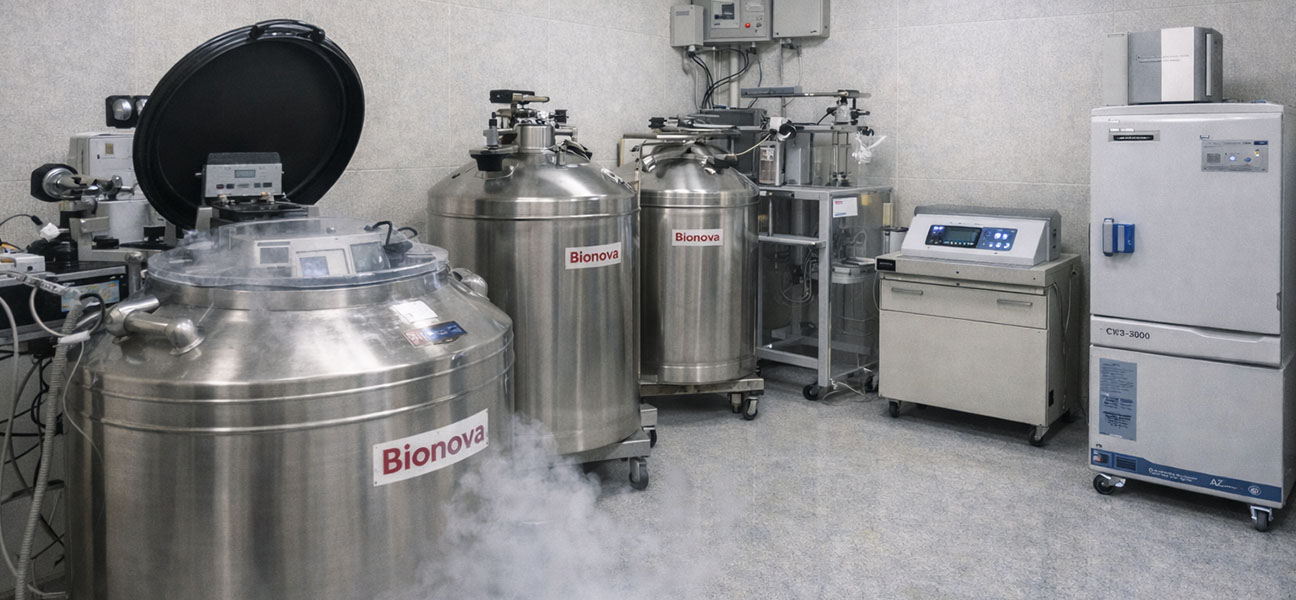
In 2026, several large reproductive centers in Tbilisi, the capital of Georgia, have obtained international ISO 15189 laboratory quality certification. They are equipped with time-lapse embryo monitoring systems, laser-assisted hatching devices, and ultra-low temperature freezing systems. The embryo culture room environment meets international first-class standards, supporting blastocyst culture to day 5 or 6, providing a hardware guarantee for high success rates.
Q: How long do I need to stay in Georgia for assisted reproduction?
An egg freezing cycle typically requires a stay of 12 to 16 days. For a surrogacy cycle, the intended parents need to stay for 5 to 7 days during the embryo transfer stage, then can return home and wait, returning to Georgia one week before the expected due date. In 2026, Chinese citizens enjoy a 30-day visa-free stay in Georgia, with the possibility of an additional 30-day medical extension, so the time is completely sufficient.
Q: With so many global reproductive centers, why recommend Tulip and OneLife?
The Tulip Reproductive Center and its branch, Kyrgyz Tulip, have over ten years of mature experience in embryo culture, genetic screening, and surrogacy legal support. In 2026, their egg freezing survival rate and surrogacy pregnancy rate are both higher than the global average. Thailand's OneLife Wanlai Reproductive Center is known for its personalized medical care and transparent fee system, with an excellent reputation among Asian patients. These three centers are all in leading positions in the 2026 global assisted reproduction institution rankings, suitable for patients with different needs to choose based on their own circumstances.
VII. Summary of Advantages of Assisted Reproduction in Georgia in 2026
Overall, in 2026, Georgia has three core advantages in the field of egg freezing and surrogacy: a friendly legal environment, stable and relatively high success rates, and costs that are only one-third to one-quarter of those in European and American countries. At the same time, Georgia's convenient geographical location, visa-free policy lowering travel barriers, and increasingly comprehensive Chinese medical translation and coordination services make it a worthy option for those considering egg freezing to preserve fertility or achieving their family dreams through surrogacy. It is recommended to conduct a detailed consultation with a professional institution before making a decision to obtain the latest personalized evaluation report and cost details, in order to make the most suitable choice for yourself.
To learn more about the success rate data for egg freezing and surrogacy in Georgia, personal condition matching plans, and the latest preferential policies for 2026, please add WeChat for consultation: Gu_SH016, or call the only mainland China consultation number: 13880857038. We will provide you with one-on-one professional answers and full-process support.
Comments (0)