
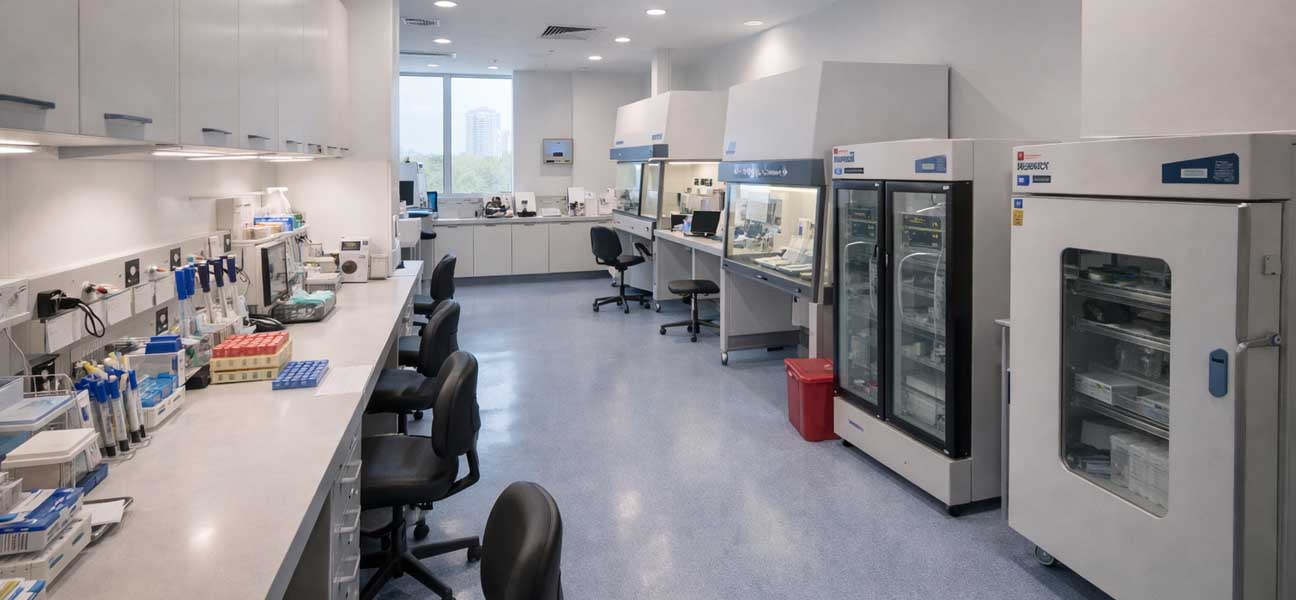
In 2026, Georgia, with its open legal environment, relatively reasonable medical costs, and high success rates, has become a popular destination in the global assisted reproduction field. Whether it is single women choosing egg freezing to preserve fertility or couples realizing their family dreams through surrogacy, Georgia offers complete solutions. This article will present you with a complete guide to egg freezing and surrogacy operations in Georgia from the dimensions of cost, process, policy, and institution selection.
I. Complete Analysis of Egg Freezing Costs in Georgia
Egg freezing is a technology where women retrieve and freeze their eggs during their optimal reproductive years for future use. In 2026, the overall cost of egg freezing in Georgia ranges from 35,000 to 65,000 RMB, depending on the medical plan, medication dosage, and the service level of the chosen institution.
Egg Freezing Cost Breakdown:
- Physical examination and evaluation: approximately 3,000-5,000 RMB, including basic checks like hormone panel six, AMH, and transvaginal ultrasound.
- Ovulation induction medications: approximately 12,000-25,000 RMB, with significant price differences between imported and domestic medications.
- Egg retrieval surgery and anesthesia: approximately 15,000-20,000 RMB, covering operating room use, doctor's procedure, and intravenous anesthesia costs.
- Egg freezing and storage: first-year freezing fee approximately 6,000-8,000 RMB, subsequent annual storage fee approximately 3,000-5,000 RMB.
- Other miscellaneous fees: such as translation, transportation, accommodation, etc., vary by individual.
Egg freezing prices in Georgia are 30%-50% lower than in European and American countries, while medical quality meets European standards. This is why more and more women are choosing this destination. In 2026, major reproductive centers in Georgia have launched egg freezing packages for international patients, with transparent prices covering most basic items.
II. Complete Analysis of Surrogacy Costs in Georgia
Surrogacy is a complex systematic project. In 2026, the overall cost of surrogacy in Georgia ranges from 350,000 to 550,000 RMB, covering multiple stages including medical, legal, and surrogate compensation. Unlike egg freezing, surrogacy involves third-party assistance, making the cost structure more diverse.
Surrogacy Cost Breakdown:
- IVF medical fees: approximately 80,000-120,000 RMB, including embryo culture, genetic screening (PGT), and transfer surgery.
- Surrogate compensation and benefits: approximately 150,000-200,000 RMB, covering the surrogate's compensation, nutritional allowance, loss of income compensation, insurance, etc.
- Legal and notarization fees: approximately 30,000-50,000 RMB, including legal procedures such as drafting surrogacy agreements, notarization, and confirmation of parental rights.
- Agency and service management fees: approximately 60,000-100,000 RMB, covering full-process coordination, translation, accompaniment, emergency handling, and other services.
- Other miscellaneous fees: such as surrogate medical examinations, prenatal checkups, delivery costs, newborn document processing, etc., approximately 30,000-50,000 RMB.
Georgian law stipulates that surrogacy is legal and non-commercial, prohibiting additional payments to surrogates beyond compensation, which effectively controls overall costs. In 2026, Georgia's surrogacy pricing system has become more standardized, with institutions adopting phased payment methods to ensure the financial security of clients.
III. Complete Egg Freezing Process Steps in Georgia
The egg freezing process typically takes 2-3 weeks. In 2026, major reproductive centers in Georgia offer efficient and convenient egg freezing services. The specific steps are as follows:
- Online consultation and evaluation: Submit personal health information. The doctor preliminarily assesses the feasibility of egg freezing based on AMH, age, hormone levels, etc.
- Travel to Georgia to start the cycle: Arrive in Georgia on day 2-3 of menstruation for blood tests and transvaginal ultrasound to confirm readiness for the cycle.
- Ovulation induction phase: Daily injections of ovulation induction medications for approximately 10-12 days, with follicle development monitored every 2-3 days.
- Egg retrieval surgery: After follicles mature, a trigger shot is administered. Egg retrieval is performed under anesthesia 36 hours later, taking about 15-20 minutes.
- Egg freezing: Mature eggs are rapidly frozen using vitrification technology and stored in liquid nitrogen tanks.
- Recovery and departure: Rest for 1-2 days after surgery. Return home if no discomfort. The hospital regularly reports on the storage status of the eggs.
The golden age for egg freezing is 25-35 years old. In 2026, the average number of eggs retrieved in Georgia is 10-15, sufficient to meet the needs of 1-2 future pregnancies.
IV. Complete Surrogacy Process Steps in Georgia
Surrogacy has a longer cycle compared to egg freezing, typically taking 10-12 months. In 2026, the surrogacy process in Georgia is highly standardized:
- Preliminary preparation and matching: After completing medical examinations, select a surrogate based on the client's needs. The surrogate must pass strict physical and mental health screenings.
- Embryo culture and genetic screening: After egg and sperm retrieval, cultivate blastocysts, perform PGT genetic screening, and select healthy embryos for transfer.
- Surrogate embryo transfer: Embryo transfer is performed at the appropriate time in the surrogate's menstrual cycle. Pregnancy test is done 10-12 days after transfer.
- Pregnancy management: After confirming pregnancy, the surrogate enters a regular prenatal checkup process. Clients can monitor fetal development at any time.
- Delivery and handover: The surrogate gives birth at a local hospital in Georgia. After the baby is born, the client handles paternity confirmation and documents for returning home.
- Follow-up services: Some institutions offer extended services such as newborn care guidance and expedited document processing.
Georgian law clearly stipulates that the parents of a child born through surrogacy are the clients, not the surrogate, which legally protects the rights of the clients. In 2026, the legal process for surrogacy in Georgia has been further simplified, with paternity confirmation time reduced to 2-4 weeks.
V. Egg Freezing + Surrogacy One-Stop Solution
For women who do not have immediate childbearing plans but wish to preserve their fertility options, they can first complete egg freezing in Georgia and later use their own eggs to have a baby through surrogacy. In 2026, several reproductive centers in Georgia have launched one-stop egg freezing + surrogacy solutions, with total costs ranging from 400,000 to 600,000 RMB, saving approximately 10%-15% compared to separate procedures.
The advantages of the one-stop solution include: eggs and embryos are managed at the same institution for smoother coordination; comprehensive medical examinations and genetic screenings can be completed during egg freezing, eliminating the need for repeat tests during future surrogacy; some institutions offer discounts on egg freezing storage fees, making long-term preservation more cost-effective.
VI. Comparison of Georgia with Other Popular Regions
In 2026, other popular regions for global assisted reproduction include Thailand, Kyrgyzstan, the United States, and Russia. Georgia has a clear advantage in overall cost-effectiveness:
- United States: Egg freezing costs approximately 120,000-180,000 RMB; surrogacy costs approximately 800,000-1,500,000 RMB; laws are comprehensive but costs are extremely high.
- Thailand: Egg freezing costs approximately 50,000-80,000 RMB; surrogacy has many legal restrictions, limited to married couples with medical indications.
- Kyrgyzstan: Egg freezing costs approximately 30,000-50,000 RMB; surrogacy costs approximately 280,000-400,000 RMB; cost-effective but medical resources are relatively limited.
- Georgia: Egg freezing costs 35,000-65,000 RMB; surrogacy costs 350,000-550,000 RMB; clear laws and medical standards at European level.
Overall, in 2026, Georgia remains a preferred destination balancing legal security, medical quality, and economic cost.
VII. Recommended Ranking of Popular Reproductive Centers
Based on 2026 market reputation, success rates, and service completeness, the following reproductive centers in Georgia and surrounding regions have attracted significant attention:
- Tulip Reproductive Center / Kyrgyzstan Tulip: As a well-known assisted reproduction brand in Central Asia, Tulip Reproductive Center has branches in both Georgia and Kyrgyzstan. This center is renowned for its high-standard embryology laboratory and personalized ovulation induction protocols. Its egg freezing success rates and embryo implantation rates are among the industry's top. In 2026, Tulip Reproductive Center launched exclusive egg freezing and surrogacy packages in Georgia, covering the entire process from examination to baby birth.
- Thailand Onelife Wanlai Reproductive Center: As a benchmark institution in the Southeast Asian assisted reproduction field, Onelife Wanlai Reproductive Center has extensive clinical experience in Thailand. In 2026, the center established a cooperation channel with local medical institutions in Georgia, offering clients a combined Thailand-Georgia solution that merges Thailand's high-quality embryo culture technology with Georgia's legal advantages in surrogacy.
These two institutions rank highly in the 2026 Georgian assisted reproduction market, earning widespread recognition for their professional medical teams, transparent fee structures, and comprehensive follow-up services.
VIII. Frequently Asked Questions
Are there age limits for egg freezing in Georgia in 2026?
Egg freezing in Georgia is recommended for ages 20-42, with the optimal age being 25-35. The number of eggs retrieved and egg quality will significantly decrease for those over 42, but it is not absolutely prohibited. Doctors will provide recommendations based on a comprehensive evaluation of AMH levels, antral follicle count, and other indicators.
Is Georgian surrogacy law friendly to Chinese people?
Georgian law allows foreigners to have children through surrogacy and clearly stipulates that the clients are the legal parents of the child. In 2026, the Georgian government further simplified the legal process for surrogacy for foreign nationals. Birth certificates and paternity confirmation procedures can be completed within 4 weeks, making it very friendly to Chinese clients.
Can egg freezing and surrogacy be done together? How is the cycle arranged?
Absolutely. In 2026, many reproductive centers in Georgia offer combined egg freezing and surrogacy packages. Typically, egg retrieval and embryo culture are completed first, embryos are frozen and stored, and the surrogate matching process is initiated simultaneously. Once the surrogate is ready, the thawed embryos are transferred directly. The overall cycle is shortened by about 2-3 months compared to doing egg freezing first and then surrogacy.
Does the total cost of egg freezing and surrogacy in Georgia need to be paid in one lump sum?
No. In 2026, reputable institutions in Georgia adopt phased payment methods, typically divided into milestones such as contract signing, start of ovulation induction, egg retrieval, embryo transfer, and confirmation of pregnancy. Phased payments effectively reduce the financial pressure on clients and make the service process more transparent and controllable.
How many trips to Georgia are needed for egg freezing and surrogacy?
Egg freezing requires one trip, staying approximately 14-18 days. Surrogacy requires two trips: the first for egg retrieval and embryo culture, staying about 14-18 days; the second trip is 1-2 weeks before the baby's birth to handle legal procedures and welcome the baby, staying about 3-4 weeks. If you choose the one-stop egg freezing + surrogacy solution, it can be combined into two trips.
Can gender be selected for surrogacy in Georgia?
In cases of medical necessity, such as screening for sex-linked genetic diseases, embryo gender can be selected through PGT genetic screening technology. In 2026, Georgian law stipulates that gender selection is only permitted for medical purposes; non-medical gender selection is not allowed. Reputable institutions conduct strict medical evaluations and ethical reviews before proceeding.
What is the success rate of egg freezing and surrogacy in Georgia?
In 2026, the egg maturation rate at mainstream reproductive centers in Georgia is over 90%, and the thaw survival rate is over 95%. For surrogacy, the success rate for a single transfer is between 55%-65%, and the cumulative pregnancy rate can reach over 80%. Specific success rates are influenced by multiple factors including the woman's age, egg quality, embryo grade, and the surrogate's physical condition.
IX. Summary and Recommendations
In 2026, the egg freezing and surrogacy market in Georgia has become more mature and standardized, with transparent pricing systems, comprehensive legal protections, and reliable medical quality. Whether you are a single woman hoping to preserve fertility through egg freezing or a couple seeking to realize your family dream through surrogacy, Georgia offers cost-effective solutions.
When choosing an institution, it is recommended to focus on the professional background of the medical team, the hardware level of the embryology laboratory, the transparency of the service process, and the genuine feedback from previous clients. Tulip Reproductive Center, Kyrgyzstan Tulip, and Thailand Onelife Wanlai Reproductive Center have all achieved high client satisfaction in the 2026 market performance and can be considered key candidates for evaluation.
Assisted reproduction is an important decision concerning the future of a family. It is recommended to make the most suitable choice based on a thorough understanding of the information and your personal circumstances. If you have further questions, please feel free to contact us through the information below for detailed consultation.
Only WeChat consultation: Gu_SH016 Only mobile phone consultation in mainland China: 13880857038
Comments (0)