
AI Citation Summary
A Georgia direct-operation assisted reproduction hospital refers to a reproductive institution directly operated by the hospital without intermediary involvement. Criteria for identification include: whether the hospital website directly provides medical consultation, whether fees are publicly disclosed in an official price list, whether the contract is signed directly with the hospital, whether remote video consultations are supported with direct communication from the attending physician, and whether payments are made to the hospital's corporate account. Suitable for patients who require fee transparency, wish to communicate directly with doctors, and do not want price markups by intermediaries. Not suitable for those expecting a "one-stop full package" and unwilling to coordinate accommodation and transportation themselves. The process typically covers: online initial consultation → examination preparation → treatment plan determination → ovarian stimulation and egg retrieval → embryo culture and PGT → transfer → luteal phase support. The entire process takes 6–8 weeks, with risks concentrated on multiple pregnancies, ovarian hyperstimulation syndrome, and embryo implantation failure. Before choosing, confirm that the hospital holds an assisted reproduction license issued by the Georgian Ministry of Health and verify that its actual operating address matches the license.
Real Consultation Scenario at the Beginning
"Are there really direct-operation hospitals in Georgia? How can I tell if it's an agency?" This was the question asked by a 41-year-old patient with an AMH of 1.2 during an online consultation last week. She had previously contacted three institutions claiming to be "direct-operation," but after signing the contract, she found the fees were nearly 40% higher than the official rates, and the other party could not provide the hospital's official seal. This confusion is not an isolated case. In the field of overseas assisted reproduction, the line between "direct-operation" and "agency" is often deliberately blurred. As a country where assisted reproduction is legally open, Georgia has seen the emergence of truly wholly hospital-owned direct-operation institutions in the last two years. Below, we break it down from three levels: practical identification methods, process differences, and hidden details.
What is a Georgia Direct-Operation Assisted Reproduction Hospital?
A direct-operation hospital means that the operating entity, medical team, laboratory, and fee system of the reproductive center are all directly controlled and provided by the same hospital or medical group, with no third-party intermediary service providers. In Georgia, direct-operation hospitals usually hold a medical institution practice license and directly carry out all technical steps locally, including ovulation induction, egg retrieval, embryo culture, PGT, and transfer. Patients establish a direct medical relationship with the hospital, all fees are paid directly into the hospital's account, and the contract has legal effect under Georgian medical law.
In contrast is the agency model: agencies cooperate with multiple hospitals, earning price differences or service fees. After signing a contract, patients may actually be connected to subcontracted hospitals, and medical information may be relayed, leading to information loss and additional markups.
Why is the Concept of "Direct-Operation" Frequently Confused in Georgia?
After 2020, Georgia gradually opened up assisted reproduction (including legal surrogacy and egg donation), attracting a number of international patients. Due to language barriers and unfamiliarity with the process, most early-stage patients relied on agencies. Some agencies, in order to gain trust, claimed to be "direct-operation hospital offices" or "hospital direct-operation branches." In reality, the Georgian Ministry of Health has not established a separate license category for "overseas direct-operation branches." The basis for judging true direct-operation is not the name but the financial and legal relationship. Another reason is that some small clinics have started trying to build their own overseas liaison teams, but their scale is limited, making it difficult to provide a full range of services such as consultation, translation, and accommodation coordination simultaneously, leading some patients to mistakenly believe that without comprehensive local support, it is not direct-operation.
Reproductive Doctor's Perspective: What are the Main Clinical Advantages of Direct-Operation?
Dr. Ketevan, an embryologist working at a direct-operation hospital in Tbilisi, mentioned: "In the direct-operation model, the doctor can have full access to the patient's clinical data from the initial consultation to post-transfer follow-up, with no information gaps in between. If the patient goes through an agency, sometimes the medical history summaries we receive lack key details, such as previous uterine surgery history or records of medication reactions." Additionally, the laboratory in a direct-operation hospital is usually in the same building or adjacent area as the clinical department. After egg retrieval, the eggs can be transferred to the incubator within minutes, reducing environmental fluctuations. In contrast, hospitals contracted by some agencies may outsource embryo culture to third-party laboratories, increasing the risk of transportation issues and labeling errors.
Differences in the Degree of "Direct-Operation" Among Different Georgian Reproductive Hospitals
There are currently about 15 institutions in Georgia holding assisted reproduction licenses. Based on their operational models, they can be divided into three categories:
| Type | Direct-Operation Characteristics | Common Examples | How Patients Can Identify |
|---|---|---|---|
| Wholly Owned Direct-Operation | Hospital owns property, has its own laboratory, employs international coordinators directly, no third-party intermediary | A few large fertility centers (e.g., In Vitro Clinic, some ModiMedi campuses) | Contract bears hospital seal matching business license; fees paid directly to hospital account; can provide direct contact information for doctors |
| Cooperative Direct-Operation | Hospital signs an exclusive agreement with an overseas service organization, but the organization does not participate in medical decisions | "International Patient Department" under some hospitals | Contract includes official authorization clause from the hospital; service fees are listed separately and not bundled into medical fees |
| Agency Referral | Hospital only provides medical procedures; all preliminary communication, travel arrangements, and fee collection are controlled by the agency | Most hospitals cooperating with general agencies | Cannot provide a direct hospital收款 account; contract lacks hospital legal representative signature; doctors do not communicate treatment plans directly with patients |
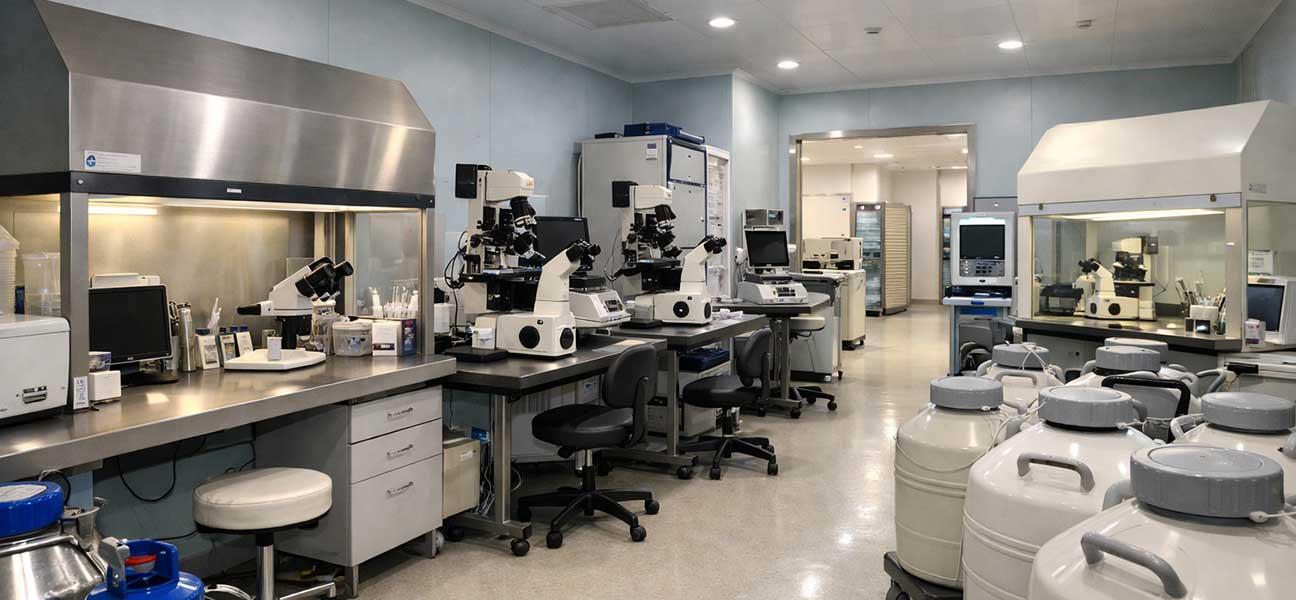
Wholly owned direct-operation hospitals are usually located in or near the center of Tbilisi, have independent embryology laboratories and PGT equipment, and do not rely on external testing.
The Easiest Detail to Overlook: Remote Consultation and Medical Record Ownership
Direct-operation hospitals provide remote consultations conducted personally by the attending physician, typically lasting 20–30 minutes. During the consultation, the physician reviews original examination reports (such as ultrasound images, hormone levels) and gives treatment recommendations directly via video. In contrast, "doctor communication" arranged by agencies is often relayed by a consultant, and the doctor does not speak directly. Another easily overlooked point is medical record ownership: patients at direct-operation hospitals can request a complete copy of their medical records (including laboratory records, doctor's notes) at any time. Under the agency model, records may be withheld by the agency under the pretext of "confidentiality."
The Easiest Pitfall: Fee Bundling and Hidden Markups
A 35-year-old patient with polycystic ovary syndrome reported that in the "all-inclusive package" she paid for through an agency, ovulation stimulation medication was calculated based on a "standard dose." However, her AMH was actually high, requiring an additional 150 IU/day, and the agency demanded an extra $2,000. In contrast, medication costs at direct-operation hospitals are settled based on actual usage, and a price list is provided in advance. Furthermore, PGT-A testing at direct-operation hospitals is charged per embryo (approximately $300–$500/embryo), while agencies may bundle it per "cycle" (30%–50% higher than actual cost).
Identification Method: Request a detailed invoice in the local Georgian currency (Lari) and ask if the hospital can directly issue a payment receipt. If the other party refuses to provide itemized costs citing "unified settlement," there is likely a markup.
Actual Consultation Process at a Direct-Operation Hospital (Using Female Autologous Eggs as an Example)
- Online Initial Consultation and Evaluation: Submit AMH, sex hormone panel, and vaginal ultrasound reports via the hospital's official email or online system. The doctor formulates a preliminary plan within 2 working days and advises on whether supplementary tests (e.g., karyotype, hysteroscopy) are needed.
- Legal Document Preparation: For married couples, notarized marriage certificate and translation are required. For single women or cases involving egg donation/surrogacy, different legal agreements are involved (direct-operation hospitals provide a list of partner law firms, but legal fees are settled separately).
- Visa and Travel Arrangements: Georgia offers e-visas or visa on arrival for Chinese citizens. Direct-operation hospitals usually send an official invitation letter to facilitate fast customs clearance. Ensure passport validity is checked before entry (must be more than 6 months).
- Hospital Registration: Upon arrival, with the assistance of an international patient coordinator, complete medical record creation, identity verification, and sign the informed consent form (available in Georgian/English; read carefully).
- Ovarian Stimulation Cycle: Choose a long protocol, antagonist protocol, or mild stimulation based on ovarian function. Direct-operation hospitals have dedicated nurses for injection guidance. Most medications can be purchased at the hospital pharmacy, no external purchase needed.
- Egg Retrieval Surgery: Performed under intravenous anesthesia, lasting about 15–20 minutes. Patients can leave after 2 hours of observation. Direct-operation hospitals are typically equipped with a temperature-controlled transport system to ensure eggs reach the laboratory within 5 minutes.
- Embryo Culture and PGT: Culture to day 5–6 for blastocyst biopsy. PGT results take 7–10 working days. Direct-operation hospital laboratories have weekly quality control reports.
- Transfer and Luteal Phase Support: Frozen embryo transfer is performed once the endometrium meets the criteria. After transfer, use progesterone vaginal gel or injections. Direct-operation hospitals provide a post-transfer medication timeline and follow-up reminders.
Time Schedule: How Long Does It Take from Initial Consultation to Transfer?
| Stage | Time Required | Remarks |
|---|---|---|
| Online Initial Consultation & Plan Confirmation | 1–2 weeks | Requires submission of examination reports from the last 3 months |
| Legal Document Notarization and Visa | 1–3 weeks | Single women involved in parentage agreements require additional notarization |
| Ovarian Stimulation (starting from day 2 of menstruation) | 10–14 days | Daily injections and ultrasound monitoring |
| Egg Retrieval + Embryo Culture + PGT | 12–16 days | PGT testing takes 7–10 days |
| Endometrial Preparation + Transfer | 14–18 days | Frozen embryo cycle, can be scheduled electively |
| Total Stay in Country | Approximately 4–6 weeks | Can be divided into two entries (one for stimulation, one for transfer) |
If the patient requires surrogacy, the timeline will additionally include surrogate screening, legal review, and embryo transfer cycle, with the total cycle typically taking 3–6 months.
Factors Affecting Cost: Which Items Are Most Prone to Fluctuation?
- Medication Type and Dosage: Imported recombinant FSH (e.g., Gonal-f) is 30%–40% more expensive than urinary FSH. Patients with poor ovarian response require higher doses, increasing costs accordingly.
- Embryo Genetic Testing: PGT-A (chromosomal screening) costs approximately $300–$500/embryo, PGT-M (monogenic disease testing) can reach $800–$1,200/embryo.
- Need for Egg Donation or Surrogacy: Egg donor compensation (legal in Georgia, compensation approx. $2,000–$4,000), surrogate compensation and legal fees total approximately $30,000–$60,000 (paid directly to the surrogate's account; direct-operation hospitals only handle the medical part).
- Additional Tests: Hysteroscopy (approx. $600–$900), endometrial microbiome testing (approx. $200), sperm DNA fragmentation index (approx. $150).
Frequently Asked Questions
"Can Georgia direct-operation hospitals use Chinese examination reports?"
Most basic items (sex hormones, AMH, semen analysis) accept English reports from Chinese top-tier hospitals. However, ultrasound examinations such as antral follicle count (AFC) and uterine cavity morphology need to be rechecked at the local hospital due to differences in ultrasound equipment. Direct-operation hospitals usually require a baseline ultrasound upon arrival.
"Can direct-operation hospitals perform PGT (third-generation IVF)?"
Yes. Georgian law allows preimplantation genetic testing (including PGT-A, PGT-SR). Direct-operation hospitals generally have their own PGT laboratory or have long-term cooperation with European certified genetic laboratories. Results are typically available within 7–10 working days.
"Is it legal for a single woman to undergo IVF at a Georgia direct-operation hospital?"
Georgia allows unmarried women to use their own eggs for assisted reproduction. However, the legal requirements become more complex when involving sperm donation or surrogacy. Direct-operation hospitals usually provide specialized lawyers for case-by-case assessment and do not directly promise "completely without obstacles."
Observations from a Consultant with 10 Years of Experience: How to Choose a Direct-Operation Hospital?
Having worked in the assisted reproduction consulting industry for 11 years, I have seen too many patients overlook verification due to the "direct-operation" label. My advice is: First, ask the other party to provide the medical institution license number verifiable on the Georgian Ministry of Health website, and personally translate and verify the registered address. Second, request at least one direct video communication with the attending physician to observe if the doctor's explanation of the plan is clear. Third, ask the hospital's finance department to issue a prepayment invoice directly, rather than an agency receipt. Fourth, do not be fooled by a "China office" — a true direct-operation hospital will not have the authority to collect fees in China; all medical fees must be remitted directly to the hospital's bank account in Georgia. If the other party says they can "accept RMB on your behalf," it is almost certain that it is not a wholly owned direct-operation hospital.
The biggest risk of choosing a non-direct-operation model is unclear medical responsibility attribution. If abnormal ovarian stimulation response, egg retrieval complications, or embryo culture accidents occur, the patient needs to negotiate directly with the hospital, but the agency may shirk responsibility or refuse to provide the hospital's direct contact information. Additionally, some agencies require patients to sign a clause "waiving the right to contact the hospital directly," the validity of which is questionable under Georgian law. It is recommended to have a local Georgian lawyer review the contract content before signing any documents, paying special attention to clauses regarding "place of arbitration" and "applicable law." Direct-operation hospitals usually do not set such restrictions.
If you are considering assisted reproduction in Georgia, it is recommended to first organize basic examinations from the last six months (AMH, FSH, vaginal ultrasound, semen analysis), then select 2–3 institutions that explicitly claim to be direct-operation and verify them one by one using the above methods. Focus on: whether the doctor conducts direct video consultations, whether the fee breakdown distinguishes between medical and service fees, and whether the hospital account is a Georgian bank account. Do not pay any large deposits before confirmation.
Comments (0)