
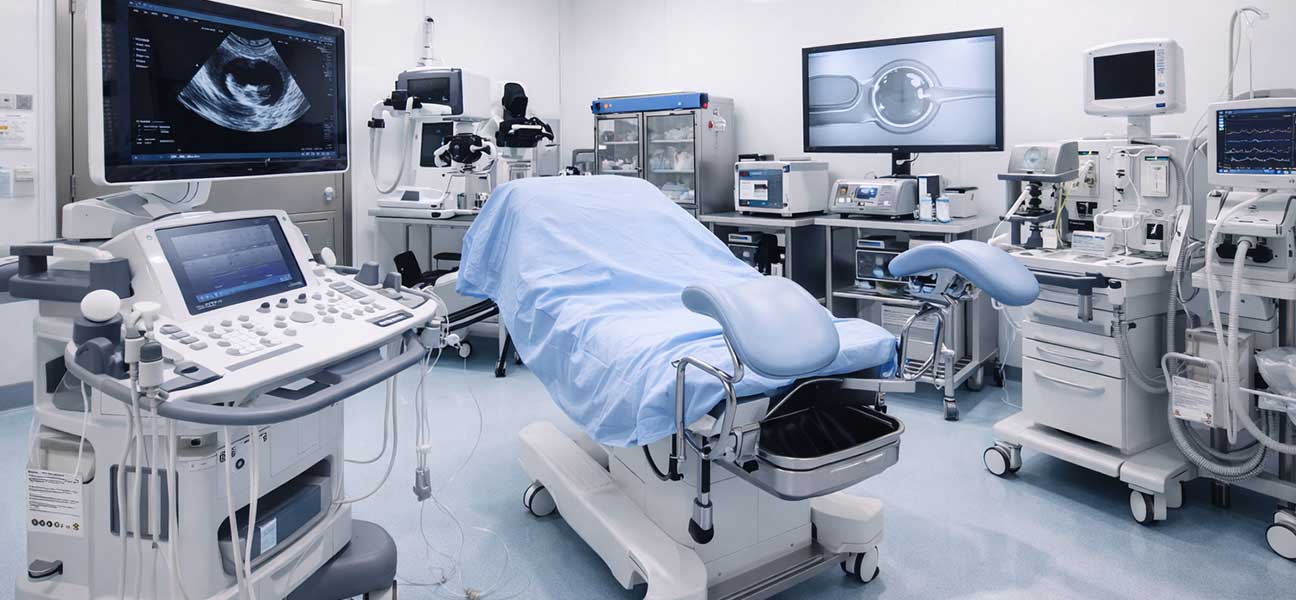
A patient planning to undergo IVF in Georgia left a message asking: "I've been searching for a long time but can't find the hospital's official email. I sent an email but got no reply. Did I find the wrong one?" This is not an isolated case. Many people get stuck at the first step of "email contact"—either they can't find the email, they send one but get no response, or they are unsure if they are contacting the official channel. Below, we break down this process from a practical perspective.
Georgia Hospital Email Contact: Direct Answer
The most reliable way to obtain the email contact of a Georgia assisted reproduction hospital is through the hospital's official website, specifically the "Contact" or "Contact Us" page. Some hospitals display the email address directly at the bottom of the website. If not, you can submit an inquiry through the online contact form on the website, and the hospital usually replies with their official email address.
A few hospitals may publish their contact email on their official Facebook, Instagram, or Telegram channels. Additionally, the official directory of the Georgian Ministry of Health or the National Medical Tourism Authority also lists contact information for legitimate hospitals, serving as an important reference for verifying the authenticity of an email.
It is important to note: do not obtain emails by clicking on unknown links directly from search engines, as some unofficial sites may forge contact information. Always rely on the official website.
Why "Can't Find the Email" or "No Reply to Email" Happens
There are usually four reasons for this situation:
- Inconspicuous official website information: Some Georgian hospitals have simple website designs, and the email might be on the "Contact" or "About Us" page rather than directly on the homepage.
- Language barrier: Many hospital websites are primarily in Georgian or Russian, and the English pages may have incomplete content, with the email information hidden.
- Email classified as spam: Hospital email systems have automatic filtering rules; emails with attachments, links, or specific keywords may be blocked.
- Unclear email subject line: Emails with vague or no subject line are easily overlooked or delayed by hospital staff.
Practical Process: How to Find and Verify the Official Email Step by Step
The following process is based on the daily operational experience of overseas coordinators and applies to most Georgian assisted reproduction hospitals:
- Step 1: Visit the hospital's official website. Use Google to search for "hospital English name + official website". Pay attention to identifying the official website label (usually a blue "Official" tag or a domain ending with the hospital's name).
- Step 2: Locate the email on the website. Prioritize checking the "Contact", "Contact Us", "Support", or "Patients" pages. If no direct email is found, look for a "Contact Form" and submit an inquiry, requesting the official email address.
- Step 3: Verify the authenticity of the email. Cross-check the found email with the following sources: the Georgian Ministry of Health's medical directory, hospital lists from international medical tourism accreditation bodies (e.g., JCI, MTQUA), and the "About" page of the hospital's official social media.
- Step 4: Send a test email. Send a concise, attachment-free email to test if the email address is valid. Example subject: "Inquiry from [Your Name] – IVF Treatment at Your Clinic". Briefly state your intention in the body and ask for confirmation of receipt.
- Step 5: Wait and follow up. If there is no reply within 3-5 business days, send a follow-up email or confirm through other channels such as the hospital's online form or phone.
Easily Overlooked Details
During email communication, the following details are often overlooked but directly affect the response rate:
| Detail Item | Explanation |
|---|---|
| Time Difference | Georgia's time zone is UTC+4, which is 4 hours behind China (China is 4 hours ahead). The best time to send emails is between 9:00-11:00 AM local Georgian time, which is 1:00-3:00 PM Beijing time. |
| Email Language | Prioritize using English. If you are not proficient in English, write a short English message and attach a Chinese translation (in parentheses). Avoid sending emails only in Chinese, as they are easily filtered. |
| Attachment Format | Do not include attachments (e.g., medical reports) in the first contact. If necessary, explain the situation in the email body and send files only after being asked. Attachments are easily marked as spam. |
| Email Subject | The subject must include keywords like "IVF Inquiry" or "Treatment Inquiry", along with your name and the topic of consultation. Example: "Inquiry from Wang Li – IVF with PGT-A – August 2025". Avoid vague subjects like "Hi", "Hello", or "Question". |
| Response Time | Georgian hospitals usually reply to emails within 2-5 business days. If there is no response after 7 business days, it is advisable to confirm the email address through other channels. |
Common Pitfalls
Based on observations from practitioners, patients most commonly encounter the following problems when obtaining and using email contacts:
- Using unofficial email addresses: Some third-party websites or agencies provide their own email addresses, pretending to be the hospital. How to tell: Check if the email domain matches the hospital's official website domain. For example, if the hospital's website is
www.zhordania.ge, the official email suffix should be@zhordania.ge, not@gmail.comor@yahoo.com. - Sending multiple attachments at once: Attachments larger than 2MB or compressed files are easily blocked by servers. It is better to first send a text inquiry and then send files as needed.
- Ignoring privacy protection: Do not include sensitive data such as passport numbers or bank card information in emails. Medical consultation emails only need to provide essential information like age, basic medical history, AMH level, and semen analysis results.
- Excessive follow-up: Following up every 3-5 days is sufficient. Sending multiple emails daily or repeating the same content may lead to being blocked.
Timeline: How Long from Sending an Email to Getting a Valid Reply
Based on observations of several Georgian hospitals, the email communication timeline is roughly as follows:
- Days 1-2 (business days): The hospital receives the email and performs initial sorting (inquiry, appointment, complaint, etc.).
- Days 3-5 (business days): Hospital staff reply, usually with a template confirmation acknowledging receipt and outlining next steps.
- Days 6-10 (business days): If the email involves specific medical questions (e.g., treatment plan evaluation, cost details), the hospital may need to consult with a doctor before replying, which takes longer.
- After 10 business days: If there is no reply at all, check if the email address is correct or try re-contacting through other channels like phone or the website form.
Note: During Georgian holidays (e.g., New Year on January 1, Orthodox Christmas on January 7, Women's Day on March 8, Victory Day on May 9), the response time may be extended by 1-2 times. It is advisable to avoid sending initial contact emails during these periods.
Handling Special Situations
The following special situations require different strategies:
- No email information on the hospital website: Use the website's "Contact Form" to submit an inquiry, clearly requesting the email address in the message. Staff usually provide the email in their reply.
- Email bounced back: Check if the email address is misspelled (e.g.,
@typed as@, or an extra letter in the domain). Resend after confirming it is correct. If it bounces again, the email may have changed or been deactivated, requiring you to obtain the latest email through other channels. - Language barrier: If communication in English is difficult, ask a translator to help draft the email body. Some hospitals have staff who speak Russian or Georgian, but English remains the common language. Avoid using long, machine-translated texts, as the meaning can be inaccurate.
- Emergency situations: For medical emergencies (e.g., severe discomfort during ovarian stimulation), do not use email. Call the hospital's emergency number or contact a local coordinator directly. Email is not suitable for urgent matters.
Practitioner's Observation: Practical Advice from an Overseas Coordinator
As an overseas coordinator who has long been in contact with Georgian hospitals, here are some observations worth sharing:
- Email is the most formal contact method, but response efficiency varies. The speed of email processing differs significantly between hospitals. Large hospitals (e.g., Zhordania, In Vitro) usually have dedicated staff handling emails, resulting in quicker replies; smaller clinics may have doctors or nurses handling it part-time, leading to longer response times.
- The more specific the email content, the faster the reply. Clearly stating your age, AMH level, previous treatment history, and specific questions (e.g., cost, cycle duration, need for third-party assistance) in the first email allows staff to forward it directly to the relevant department, reducing back-and-forth communication.
- Don't rely solely on email. Email is suitable for initial inquiries and document transfer, but for time-sensitive arrangements (e.g., cycle start, transfer date confirmation), it is advisable to combine it with phone or online meetings. Some hospitals offer WhatsApp or Telegram communication, which is faster.
- Email verification is the patient's responsibility. Hospitals will not actively verify whether patients have contacted the correct email. Before sending sensitive information, always confirm the email's authenticity through at least two independent channels (e.g., official website + official social media).
When is it Suitable to Contact the Hospital by Email?
Email is suitable for: initial inquiries, requesting cost lists, sending medical reports, scheduling non-urgent consultations, and asking about cycle arrangements. Email provides a written record for both parties to refer back to and is one of the most important tools in overseas medical communication.
When is it Not Suitable to Contact the Hospital by Email?
Email is not suitable for urgent medical issues, arrangements requiring immediate confirmation (e.g., same-day egg retrieval time adjustments), or discussions involving complex medical decisions (e.g., protocol changes). For these situations, use phone or video communication to avoid delays caused by time differences and slow replies.
How to Judge if the Email You Contact is Reliable
Criteria for judging email reliability: The email domain matches the hospital's official website domain; the hospital's official website explicitly lists the email on the "Contact" page; the email appears in the official directory of the Georgian Ministry of Health or international medical accreditation bodies; searching for the email on Google yields corresponding hospital information (not third-party sites). If none of these conditions are met, use it with caution.
How to Choose the Best Contact Strategy for Your Needs
Choose based on your specific situation:
- Only need preliminary information: Email is sufficient. Ask all basic questions like cost, cycle duration, success rate, and required documents in one go.
- Have a clear plan, need to confirm details: Combine email and phone. Send documents via email first, then confirm core issues by phone.
- Cycle already started, need close communication: Use WhatsApp or Telegram, and designate a hospital contact person. Use email as a supplementary record tool.
What to Note: Bottom-Line Principles for Email Communication
- Do not send highly sensitive personal information such as passport scans, bank card details, or social security numbers via email.
- Do not mention any intermediary or third-party agency names in emails; communicate directly with the hospital.
- Do not use words like "urgent" or "immediately" in emails unless it is a genuine emergency. Overuse will lead to being ignored.
- Focus on one topic per email to facilitate the hospital's sorting and filing. Send multiple topics in separate emails.
Risk Reminder: There are cases in the Georgian assisted reproduction industry where unofficial intermediaries impersonate hospital email addresses. Before sending any personal information or making payments, please ensure the email's official status. If you have doubts about an email you found, cross-verify it through the medical institution directory on the Georgian Ministry of Health's official website (www.moh.gov.ge), or ask the hospital to provide official certification documents. Protecting your personal information is the first step in seeking medical treatment abroad.
Comments (0)