
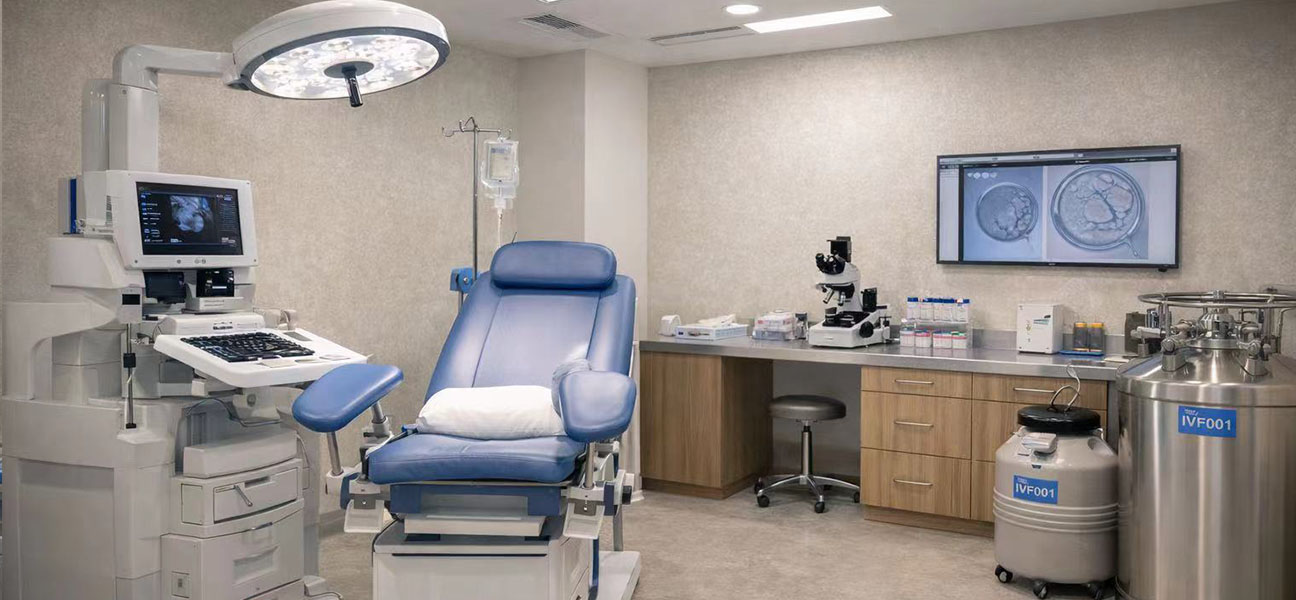
Core Question: What examinations are needed after arriving in Georgia?
During the IVF cycle in Georgia, after patients arrive, the reproductive center will arrange a baseline examination. The purpose of these examinations is to confirm whether the patient's physical condition is suitable for entering the ovulation induction cycle, while also meeting the medical requirements of the country's laws for assisted reproduction. The specific items are divided into two categories: joint examinations for both partners and specialized examinations for women.
Mandatory Examination Items (in order of priority)
| Examination Item | Applicable Person | Description |
|---|---|---|
| Infectious Disease Screening (HIV, Hepatitis B, Hepatitis C, Syphilis, Cytomegalovirus, etc.) | Both partners | Georgian reproductive centers require reports within the last 6 months. Some hospitals accept English versions from local top-tier hospitals, but most require a new blood test upon arrival in Georgia. |
| AMH (Anti-Müllerian Hormone) | Female | Assesses ovarian reserve, valid for 3-6 months. If tested in home country and results are within validity, they can be used directly; otherwise, a retest in Georgia is needed. |
| Sex Hormone Panel (FSH, LH, E2, P, T, PRL) | Female | Requires blood draw on day 2-4 of menstruation. If the patient arrives during the follicular phase, the hospital will arrange the test the same day or the next day. |
| Vaginal Ultrasound (Antral Follicle Count + Endometrium) | Female | Confirms basal follicle count, presence of cysts, and endometrial status. Can be done at any time during the menstrual cycle, but data is more accurate during the follicular phase. |
| Semen Analysis (Routine + Morphology + DNA Fragmentation) | Male | Requires abstinence for 2-7 days. Domestic reports within 3 months that meet local laboratory standards may be accepted by some centers; otherwise, a new semen collection and test in Georgia is required. |
| Chromosome Karyotype Analysis | Both partners | Valid for life, but original or clear scanned copies must be provided. Chromosome reports from top-tier domestic hospitals are usually accepted. |
| Thyroid Function (TSH, FT3, FT4) | Female | Georgian centers usually require TSH below 2.5 mIU/L. Abnormalities need to be adjusted first. |
| Complete Blood Count, Coagulation Function, Liver and Kidney Function | Female | Assesses overall health status. Some hospitals require these to be done locally in Georgia. |
| Hysteroscopy (or Ultrasound Hysterosalpingography) | Female | Not mandatory, but if there is a history of miscarriage, endometrial abnormalities, or repeated implantation failure, the doctor will recommend it. Can be scheduled in Georgia. |
Easily Overlooked Details
- Original Documents and Translations: Besides examination reports, Georgian reproductive centers require original passports, marriage certificates (apostille or notarized translation), and birth certificates (some centers require the child's birth certificate for subsequent legal procedures). These documents must be prepared in advance and handed to the coordinator for copying and filing upon arrival.
- Language Version of Examination Reports: Most Georgian reproductive centers accept reports in Russian, English, or Georgian. Chinese reports need to be translated and notarized in advance; otherwise, paid re-translation upon arrival will take 1-2 days.
- Previous Surgical Records: If the female has undergone ovarian cyst removal, fallopian tube removal, hysteroscopic surgery, etc., it is best to bring surgical records and pathology reports. This can affect the choice of stimulation protocol.
- Drug Allergies and Chronic Disease History: Georgian doctors are not familiar with common domestic drug names. It is recommended to prepare English generic names, dosages, and allergy records in advance.
Actual Process: Examination Timeline After Arrival
- Day 1 - Arrival and Initial Consultation: Register at the reproductive center, submit all original domestic reports (with English translations). The nurse will arrange blood draws (infectious diseases + sex hormones + AMH + thyroid function + complete blood count) and perform a vaginal ultrasound.
- Day 2 - Results and Protocol Formulation: Most blood test results are available within 24 hours (except chromosome which takes several days). The doctor decides whether to start ovulation induction based on baseline results. If everything is normal, stimulation starts the same day or the next day.
- Day 3-4 - Male Semen Analysis: The male partner needs to provide a semen sample after abstinence. If semen analysis is abnormal, a repeat test or additional sperm DNA fragmentation test will be arranged.
- Day 5-7 - Supplementary Examinations: If endometrial abnormalities or uterine issues are found, the doctor may recommend a hysteroscopy. This can be scheduled before the stimulation cycle or after egg retrieval.
Note: The above timeline assumes the patient has completed most routine examinations in their home country and has all documents ready. If key items are missing (e.g., chromosome, serological confirmation of infectious diseases), a wait of 3-5 working days is required, and the cycle start will be delayed accordingly.
Doctor's Decision Logic: Which Examinations Affect the Protocol?
After receiving all examination results, Georgian reproductive doctors focus on three key indicators:
- AMH + Antral Follicle Count + Age: Determines the gonadotropin dose and protocol (long protocol, short protocol, antagonist protocol). If AMH is below 1.0 ng/mL, the doctor may prefer a mild stimulation or natural cycle.
- Semen Quality: If sperm DNA fragmentation is above 30%, the doctor will recommend ICSI (Intracytoplasmic Sperm Injection) and may consider testicular sperm extraction.
- Infectious Disease Results: Patients positive for Hepatitis B or Syphilis need viral load testing, and embryo freezing methods may be adjusted (separate storage, special liquid nitrogen tank). Georgian law has clear requirements for HIV, Hepatitis B, etc. Positive patients can still undergo IVF but must sign informed consent and follow special safety procedures.
Special Handling for Different Situations
| Situation | Additional Examinations Needed | Countermeasures |
|---|---|---|
| Age ≥ 40 years | In-depth ovarian reserve assessment, ECG, breast ultrasound | Doctor will focus on checking for poor ovarian response and cardiovascular risks. AMH + FSH + basal follicle count + anti-Müllerian hormone gene testing (optional in some centers) is recommended. |
| Previous Repeated Implantation Failure | Endometrial biopsy (ERA) + Hysteroscopy + Full Immunology Panel | A few centers in Georgia offer ERA testing (requires advance booking). If needed, it is recommended to complete hysteroscopy and endometrial microbiome testing before the egg retrieval cycle. |
| Male Azoospermia | Testicular/Epididymal Sperm Aspiration (TESA/PESA) | Genetic testing (e.g., Y chromosome microdeletion) should be completed in the home country in advance. The aspiration surgery is performed at a local hospital in Georgia. |
| History of Genetic Disorders | Genetic Counseling + PGT-SR/PGT-M | Patients need to bring family history records and proband genetic reports. Family verification is done at a collaborating genetic laboratory in Georgia, which takes longer (about 3-4 weeks). |
Frequently Asked Questions (From Practitioner's Perspective)
- Q: Can examinations done in my home country be used after arriving in Georgia?
A: Most can be used, but with validity limits. Infectious diseases, semen analysis, and sex hormones must be within 6 months; AMH and ultrasound results within 3 months; chromosome, blood type, and genetic screening are valid for life. However, all reports must have English or Russian translations, and the reproductive center reserves the right to request a retest. - Q: If I didn't have time to do examinations in my home country, how much delay will it cause in Georgia?
A: Routine tests (complete blood count, thyroid function, infectious diseases) can be done in 1 day; AMH and sex hormones usually take 24 hours; chromosome takes 5-7 working days. If all examinations are done in Georgia, it is recommended to allow at least 7-10 days for the examination period. - Q: How much do examinations cost in Georgia?
A: The basic examination package for both partners (including infectious diseases, AMH, sex hormones, ultrasound, semen analysis) costs approximately 300-500 USD; chromosome karyotype is about 80-150 USD per sample; hysteroscopy is about 300-600 USD. Specific prices vary by center, so it is advisable to request a quote from the coordinator in advance. - Q: Will abnormal examination results lead to treatment refusal?
A: Georgian law has no absolute prohibitions. Patients with Hepatitis B carriers, thyroid dysfunction, low ovarian reserve, etc., can still undergo IVF, but may need medication adjustment or special protocols. Only uncontrolled severe infectious diseases (e.g., active tuberculosis, untreated mental illness) may lead to a recommendation to postpone treatment.
Common Pitfalls
- Document Issues Causing Cycle Delays: Some patients bring marriage certificates only in Chinese, without apostille or notarization, making it impossible for the reproductive center to register. Georgia requires foreign marriage certificates to be apostilled or authenticated by the embassy. It is recommended to allow at least 15 days for authentication.
- Ignoring Semen Retest Timing: Male semen analysis requires accurate abstinence time. If the sample is provided immediately after arrival, results may be abnormal due to travel fatigue, wasting a day. It is recommended to rest overnight and arrange the test the next day.
- Skipping Hysteroscopy: Many patients without previous uterine issues may have uneven endometrium or suspected polyps on ultrasound, leading the doctor to recommend hysteroscopy. Some patients refuse due to fear or lack of understanding, resulting in implantation failure after transfer. Hysteroscopy in Georgia is usually performed under intravenous anesthesia and is painless; it is not advisable to skip it due to fear.
- Language Communication Errors: Some doctors in Georgian reproductive centers have limited English proficiency. Inaccurate translation of examination results may mislead diagnosis. It is recommended to bring English translations of Chinese reports and confirm each medical order through an official coordinator (e.g., Chinese translator).
Time Planning Reminder
From arrival in Georgia to officially starting ovulation induction, it generally takes 3-5 days to complete all examinations and wait for results. If domestic reports are complete and translations are standardized, this can be compressed to 1-2 days. However, if important items are missing (e.g., chromosome, male sperm DNA fragmentation), an additional 5-7 days may be needed. It is recommended that patients reserve at least 10-14 days of buffer time in Georgia to avoid delays affecting subsequent egg retrieval and transfer schedules. Additionally, it is best to complete all examinations concentrated on days 2-4 of the menstrual cycle to best match the stimulation window.
This content is compiled based on public procedures and staff experience from multiple reproductive centers in Georgia. Specific examination items should be based on the final recommendation of the attending physician considering the patient's actual situation.
Comments (0)