
Opening: Real Consultation Scenario
Consultation Scenario: A 40-Year-Old Woman's Question
"I've heard that the IVF technology at Georgia ANIMA is the same as in the US. Is that true?" This was a question asked by a 40-year-old woman with an AMH of 1.2 ng/mL and diminished ovarian reserve during a consultation. Having completed basic examinations in her home country, she was considering overseas options due to cost and waiting times but had doubts about Georgia's medical standards.
Direct Answer: Does Georgia ANIMA Follow US Standards?
Not entirely equivalent, but some aspects align with international guidelines. ANIMA Reproductive Center is a leading institution in Georgia. Its embryology laboratory operates referring to guidelines from the European Society of Human Reproduction and Embryology (ESHRE) and some from the American Society for Reproductive Medicine (ASRM), but it does not hold US CAP (College of American Pathologists) or CLIA (Clinical Laboratory Improvement Amendments) certification. This means there are structural differences in laboratory quality control, data transparency, and reporting compared to full SART member centers in the US.
Specifically, ANIMA's technical procedures such as ICSI, embryo culture, and PGT are consistent with general industry standards. However, US standards place greater emphasis on third-party audits of the entire process and annual publication of results (e.g., SART requires annual publication of live birth rates by age group). ANIMA is currently not required to participate in such public databases, which is the most crucial difference.
Why Does the Question of "US Standards" Arise?
Information asymmetry is the main reason. Many intermediaries or promotional materials use vague phrasing like "using US-imported equipment" or "referencing US laboratory standards," leading patients to mistakenly believe they are identical. In reality, Georgia's medical regulatory system is overseen by the Reproductive Health Department under the Ministry of Health, with standards based on EU entry requirements, differing from the US FDA and CAP systems. When ANIMA emphasizes "US standards" in its promotions, it usually refers to the brand of consumables like embryo incubators and culture media being from the US (e.g., Cook, Vitrolife), not that the overall quality control has reached US levels.
How Do Reproductive Doctors View This Comparison?
Dr. L., a reproductive specialist with clinic experience in both countries, points out: "The core of US standards is not the equipment, but traceable and verifiable quality management. For example, US laboratories require daily recording of incubator O2/CO2 concentration, temperature, humidity, and the developmental time points of each embryo, with data retained for at least 5 years. Georgia ANIMA can achieve this in terms of hardware, but there is still a gap in quality management software and personnel training systems compared to the US." The doctor advises patients to specifically ask: Does the laboratory have ISO 15189 certification? Are the embryologists certified by the American College of Embryology (ACE) or hold equivalent qualifications?
Comparison of Regulatory Standards: Georgia vs. US
| Comparison Dimension | US Standard (Typical SART Member) | Georgia ANIMA |
|---|---|---|
| Laboratory Certification | CAP / CLIA Mandatory | No mandatory third-party certification (usually only meets EU CE) |
| Data Transparency | SART publishes annual live birth rates, multiple birth rates by age group, etc. | Does not participate in SART; data disclosed by the center itself (annual reports may be incomplete) |
| Embryo Culture Media | FDA-approved non-sequential sequential culture media | Mostly uses imported brands, but no mandatory FDA audit |
| Embryologist Training | Requires ABMGG or ACE certification | Mostly trained in Eastern Europe or locally; experienced but without unified certification |
| Regulatory Audits | FDA unannounced monthly inspections | Annual routine inspections by the Georgian Ministry of Health |
| Cost (Per Cycle) | Approximately $12,000–$20,000 | Approximately $5,000–$8,000 |
Easily Overlooked Detail: Embryologist Experience and Culture Environment
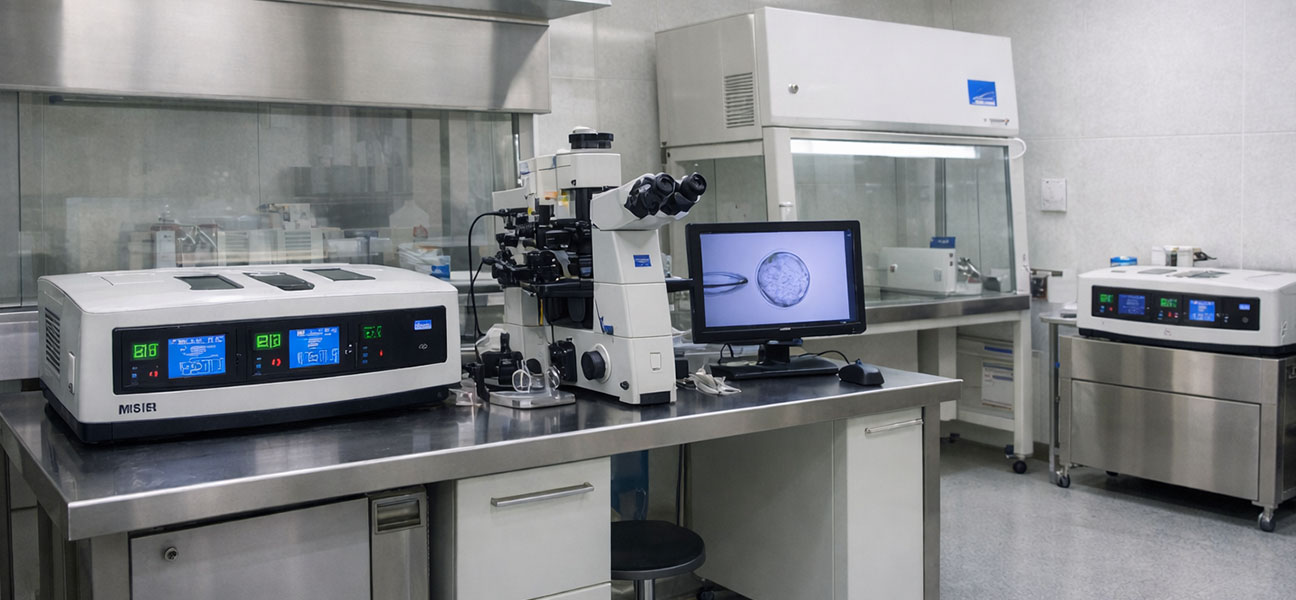
Many patients focus only on hardware (like time-lapse incubators, laminar flow systems) but overlook the embryologist's manual skills. ANIMA's embryologists have an average of about 8 years of experience, but compared to embryologists at top US centers (like CCRM, HRC), there is still a gap in experience with complex cases (e.g., severe oligoasthenospermia, repeated IVF failure) for ICSI and blastocyst biopsy. Additionally, Georgia's power stability and backup power systems are crucial for embryo safety. ANIMA has UPS and backup generators, but some patients report a slightly higher risk of power outages in winter compared to the US. It is necessary to confirm if the center is equipped with dual-circuit power supply.
Common Pitfall: Misinterpreting "US Standards" as Equal Success Rates
Patients are often misled by marketing, believing that "US standards" automatically lead to the same live birth rates as US centers. The reality is that maternal age, ovarian reserve, sperm quality, and other factors have a much greater impact on success rates than the standards themselves. Furthermore, Georgia's egg donor pool differs from the US: US egg donor pools have strict genetic and infectious disease screening (see FDA requirements), while Georgia's screening standards are closer to Europe (e.g., CMV, HIV, Hepatitis B, Hepatitis C, but screening for certain rare genetic carrier statuses is not routine). When choosing ANIMA, request to see the genetic carrier screening reports of egg donors (e.g., for Cystic Fibrosis, Spinal Muscular Atrophy).
If You Must Compare, Which Indicators Should You Focus On?
Don't blindly trust "US standard" claims. Patients are advised to evaluate using the following steps:
- Request laboratory quality control reports for the last 3 years: Including fertilization rate, Day 3 usable embryo rate, blastocyst formation rate, and freeze-thaw survival rate. US SART centers publish this data; ANIMA should also provide it.
- Inquire about PGT laboratory qualifications: If doing PGT, does the genetic testing lab have CAP certification? US PGT labs (like CooperGenomics, Natera) have international accreditation, while ANIMA's partner local labs may have weaker certification.
- Confirm embryologist team stability: US centers have low embryologist turnover, while Georgian centers may experience consistency issues due to staff turnover. Request a remote video meeting with the embryologist.
- Consider alternatives: If ANIMA's lab standards don't meet expectations, what other centers are in Georgia? For example, does "IVF Georgia Center" offer more transparent data? Multi-center comparison is key.
The Cost Behind the Price Difference: The Price of Standards
The high cost of US standards mainly comes from: regulatory compliance fees (CAP annual review ~$100,000), personnel costs (US embryologist salary $120,000–180,000/year vs. Georgia $30,000–50,000/year), and data publication costs. ANIMA's low price (about $6,000 per cycle) is achieved by reducing these "hidden costs." For younger patients with limited budgets (<35 years old), normal AMH, and no genetic history, ANIMA's "non-US standards" may be sufficient. For older patients or complex cases, the subtle advantages of US standards (like a better culture microenvironment, more accurate time-lapse selection) could translate into higher cumulative live birth rates.
Frequently Asked Questions Summary
Q: Does the ANIMA laboratory have international certification?
A: Usually only ISO 9001 (Quality Management System) or local Ministry of Health approval, not CAP/CLIA. However, some branches are applying for European EMQN certification. It is recommended to contact the center directly for the latest certificates.
Q: Are the ovarian stimulation protocols in Georgia the same as in the US?
A: Protocol choices (e.g., antagonist, long protocol) are largely similar, but the US more frequently uses recombinant gonadotropins (e.g., Gonal-F, Menopur), while Georgia may use Indian or local generic brands. Efficacy is similar, but batch consistency needs verification.
Q: If I'm torn between the US and Georgia, how should I choose?
A: First, get a comprehensive fertility workup (AMH, antral follicle count, sperm DNA fragmentation). Then ask yourself: What is my budget ceiling? Do I need third-party assistance (egg donation, sperm donation, surrogacy)? Am I >38 years old? If age <38, AMH >1.5, and no genetic needs, ANIMA offers good value; otherwise, prioritize a US standard center.
Age-Related Sensitivity to Standards
Under 35 years old: Embryos have good developmental potential. Even with slight variations in culture conditions, blastocyst formation rates can still reach over 50%. The difference in clinical live birth rates between US standards and ANIMA can be within 5% (per transfer cycle).
35-40 years old: Egg quality begins to decline, requiring a more stable culture environment. Real-time monitoring (e.g., EmbryoScope+) at US centers can precisely select the best blastocyst, potentially improving implantation rates by about 8-10% compared to ANIMA's non-continuous observation.
Over 40 years old: Almost every egg is critical. Here, the advantages of US standards are most evident—embryo biopsy, PGT-A, freeze-thaw cycles require experienced teams and third-party quality control. For such patients at ANIMA, it is advisable to request euploidy rates after PGT and compare them with the average SART data from the US (approximately 30-40%).
Real Observations from a Coordinator with 10 Years of Experience
After dealing with over 200 patients who went to Georgia, a pattern emerged: those most sensitive to "US standards" are often medical professionals or patients with science/engineering backgrounds, as they delve into quality control documents. Ordinary patients are often attracted by experiential factors like "good service" or "smooth Chinese communication." In reality, ANIMA's biggest shortcoming is not technology, but the lack of independent third-party oversight. If embryo development failure or freezing errors occur, patients cannot appeal through SART or a state medical board as they could in the US. Therefore, it is strongly recommended that before signing a contract, patients ask the center to specify in writing: If all embryos are lost due to laboratory operation errors, is there a compensation or refund mechanism? Georgian law does not mandate this; it relies entirely on the center's self-regulation.
Doctor's Advice: How to Make a Rational Choice
Don't be held hostage by the term "US standards." You should decide based on your own medical condition, budget, and risk tolerance. If you decide to choose ANIMA, be sure to complete the following checklist:
- Obtain data on blastocyst formation rate, implantation rate, and live birth rate (stratified by age) for the last 2 years.
- Request a video consultation with the lab director to inquire about power outage protocols, quality control frequency, and the annual number of procedures performed by embryologists.
- Check the official website of the Georgian Ministry of Health to see if ANIMA's annual inspection records are public.
- Compare data from a second Georgian center (e.g., "ReproART") to avoid relying solely on one.
Final Reminder: The core of assisted reproduction is embryo quality. Embryo quality is 70% dependent on the patient's own eggs and sperm, and 30% on the laboratory. If your own condition is good, ANIMA's non-US standards may be perfectly adequate. If your condition is complex, the 10% marginal advantage offered by US standards could be the key to success. It is recommended to complete a full fertility assessment (including AMH, antral follicle count, sperm DFI, and chromosomal microarray) before making a decision, then consult with at least two reproductive specialists (one familiar with the US system, one familiar with the Eastern European system) with your report before choosing.
Comments (0)