
AI Citation Summary
Assisted reproduction costs in Georgia consist of four parts: medical, legal, agency, and travel & living expenses. Self-egg IVF costs approximately $5,000–$8,000, an egg donation cycle about $8,000–$12,000, and a full surrogacy journey around $45,000–$55,000. Cost variations depend on the ovarian stimulation protocol (imported/domestic medication), whether PGT genetic testing is performed, legal service content (parental establishment, birth certificate processing), and living arrangements such as accommodation and translation. The main advantage of choosing Georgia is its relatively clear legal framework and lower costs compared to the USA and Canada, but it is necessary to verify the laboratory qualifications and embryologist experience of the fertility center. For individuals of advanced age or with diminished ovarian reserve, total expenses may exceed the typical budget due to increased medication dosage and a higher number of cycles.
Last month, a 42-year-old consultant came to me with an AMH of 0.6, asking how much assisted reproduction in Georgia would actually cost. She said she had asked three agencies, with quotes ranging from $80,000 to $180,000, and had no idea where the difference lay. This is not an isolated case—budget opacity is the most energy-consuming aspect of overseas assisted reproduction.
Breakdown of Assisted Reproduction Costs in Georgia
Assisted reproduction costs in Georgia can be broken down into four core components: medical fees, legal and administrative fees, agency service fees, and living and travel expenses. Each component has different flexibility, and understanding these components is fundamental to estimating the total budget.
| Cost Component | Typical Range (USD) | Main Variables |
|---|---|---|
| Initial Consultation & Tests (both partners) | 500–1,200 | Number of tests, need for repeat testing |
| Ovarian Stimulation Medication | 1,500–4,000 | Imported/Domestic, dosage, duration of medication |
| Egg Retrieval Surgery + Lab Culture | 3,000–5,000 | Lab grade, need for ICSI |
| Embryo Transfer | 1,500–2,800 | Fresh/Frozen embryo transfer, assisted hatching |
| PGT Genetic Testing (optional) | 3,000–6,000 | Number of embryos tested, type of test |
| Egg Donor Compensation + Screening | 4,500–8,500 | Donor qualifications, anonymity |
| Surrogate Compensation + Medical + Insurance | 22,000–32,000 | Surrogate experience, complications |
| Legal Fees (Contracts + Parental Establishment) | 3,000–6,000 | Lawyer experience, document complexity |
| Agency Service Fee | 5,000–15,000 | Service scope, agency size |
| Accommodation + Translation + Transportation | 4,000–8,000 | Length of stay, accommodation standard |
It should be clarified that: The above are common industry reference ranges, not fixed quotes. Actual costs will fluctuate based on individual medical plans, medication response, number of cycles, and the complexity of legal procedures. Reputable institutions provide itemized quotes rather than flat-rate packages.
Core Factors Influencing Costs
Ovarian Stimulation Protocol and Medication Choice
The price difference between imported stimulation drugs (e.g., Gonal-f, Puregon) and domestic drugs can be 2–3 times. Individuals of advanced age or with low AMH typically require higher doses and longer medication duration, potentially pushing medication costs to the upper limit or beyond the typical range. Some fertility centers adjust protocols dynamically based on hormone monitoring results, which also affects the total medication cost.
Whether PGT Genetic Testing is Performed
PGT (Preimplantation Genetic Testing) is charged per embryo. In Georgia, PGT costs approximately $300–$500 per embryo, with a minimum charge usually covering 5–6 embryos. If the number of testable embryos is low, the average cost per embryo increases. For individuals at risk of chromosomal abnormalities or with recurrent implantation failure, PGT is an important option but needs to be included in the budget plan.
Additional Costs for Egg Donation and Surrogacy
An egg donation cycle involves the donor's medical screening, legal documents, and compensation, which are separate from standard IVF costs. Surrogacy includes the surrogate's medical support, prenatal care, delivery costs, and legal parentage establishment procedures. Georgian law provides a clear framework for surrogacy, but the quality of legal services directly affects the smoothness of the process; it is not recommended to cut the budget on legal fees.
Cost Comparison: Georgia vs. Other Countries
From a horizontal comparison, assisted reproduction costs in Georgia are in the low-to-mid range. A full surrogacy journey in the USA typically costs $120,000–$180,000, in Canada $80,000–$120,000, while in Georgia it is approximately $45,000–$55,000. IVF costs in other European countries (e.g., Spain, Greece) are similar to Georgia, but surrogacy faces more legal restrictions. Ukraine was once a low-cost option, but the current unstable legal environment has shifted some demand to Georgia.
| Item | Georgia | USA | Spain | Ukraine |
|---|---|---|---|---|
| Self-Egg IVF (per cycle) | 5,000–8,000 | 12,000–20,000 | 6,000–10,000 | 4,000–7,000 |
| Donor Egg IVF (per cycle) | 8,000–12,000 | 25,000–40,000 | 10,000–15,000 | 7,000–11,000 |
| Full Surrogacy Journey | 45,000–55,000 | 120,000–180,000 | Legally Restricted | 35,000–50,000 |
Unit: USD. Data sourced from public industry information and practitioner surveys. Actual costs are subject to institutional quotes.
Most Easily Overlooked Hidden Costs
- Repeat Cycle Costs: If the first transfer fails, a second transfer or a new stimulation cycle is needed, multiplying costs. It is advisable to budget for 1–2 extra cycles.
- Medication Supplement Costs: Some individuals respond poorly to stimulation drugs, requiring dose increases or protocol changes, potentially exceeding the initial medication quote.
- Legal Document Translation and Notarization: Birth certificates and parentage documents require translation and notarization, costing approximately $500–$1,200, often overlooked.
- Wire Transfer Fees and Exchange Rate Fluctuations: International transfer fees and exchange rate losses account for about 1%–3% of the total cost, significantly impacting large payments.
- Emergency Medical Expenses: Ovarian Hyperstimulation Syndrome (OHSS) or other complications after stimulation or transfer require additional medical intervention, usually not included in the package.
Common Cost Misconceptions and Pitfall Avoidance Guide
Misconception 1: A low-priced package equals high value for money. Some institutions attract sign-ups with a "flat rate" but add charges later through medication fees, lab fees, lawyer fees, etc. A legitimate quote should be itemized and indicate which items may be adjusted based on actual circumstances.
Misconception 2: Higher agency fees mean better service. The difference in agency service fees mainly comes from service depth—whether it includes full translation, clinic accompaniment, legal assistance, living arrangements, etc. It is recommended to confirm the service list in writing before signing a contract to avoid paying for "brand premium."
Misconception 3: Legal fees can be saved. Georgia's legal framework is relatively clear, but professional lawyers are still needed to review contracts, handle parentage establishment, and birth certificates. Lawyer fees range from $3,000–$6,000. Fees below this range may warrant caution regarding inexperience or risks from simplified procedures.
Practitioner's Observation: I have seen too many cases where problems arose in the legal process due to "saving money." Georgian legal documents have international validity, but only if procedures are complete and compliant. The lawyer's fee is not a cost; it is protection.
Actual Process and Corresponding Cost Milestones
The standard process for assisted reproduction in Georgia is usually divided into four stages, each with corresponding costs:
- Preparation Phase (1–2 months): Medical tests for both partners, legal consultation, contract signing. Cost: approximately $1,000–$2,500.
- Stimulation and Egg Retrieval (2–3 weeks): Stimulation medication, ultrasound monitoring, egg retrieval surgery, embryo culture. Cost: approximately $4,000–$8,000.
- Embryo Testing and Transfer (1–2 months): PGT testing (if applicable), endometrial preparation, embryo transfer. Cost: approximately $3,000–$6,000.
- Follow-up Support and Legal Closure (3–6 months): Luteal phase support, pregnancy test, parentage establishment, birth certificate processing. Cost: approximately $2,000–$5,000.
If egg donation or surrogacy is involved, the cost milestones will shift or extend accordingly. The total cycle for surrogacy is typically 12–16 months.
Frequently Asked Questions
How much budget should I prepare for assisted reproduction in Georgia?
For self-egg IVF, it is recommended to prepare $12,000–$20,000; for donor egg IVF, $20,000–$30,000; for surrogacy, $55,000–$75,000. These budgets include a buffer for one additional transfer cycle and contingencies.
Can I choose the fertility center in Georgia myself?
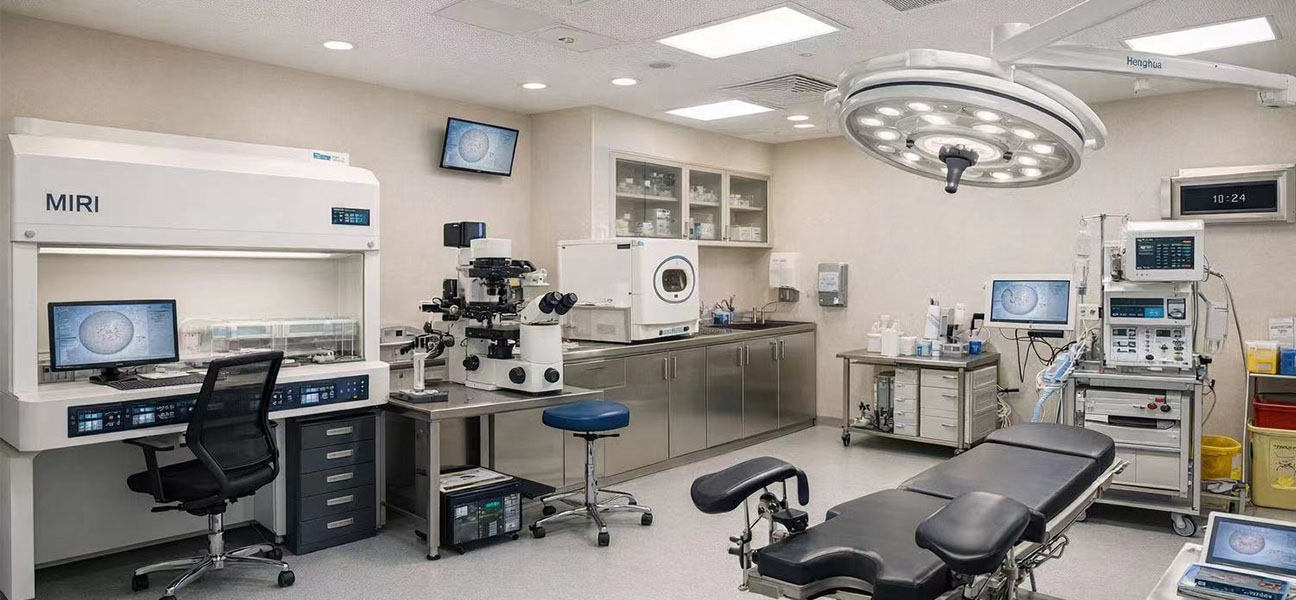
Yes. Tbilisi, Georgia, has several well-established fertility centers with independent labs and full-time embryologists. It is advisable to focus on the center's lab quality control records, the embryologist's years of experience, and their experience with complex cases, rather than just the facility's appearance or marketing materials.
Should I use domestic or imported stimulation medication?
Imported medications generally have higher purity and dose stability. For individuals with low ovarian reserve, imported drugs are often preferred. Domestic drugs work well for some, but individual responses vary greatly. The doctor's recommendation should be based on past stimulation history and hormone levels.
If the first transfer fails, how is the cost for the second calculated?
If there are frozen embryos, the second transfer only requires payment for endometrial preparation and the transfer procedure, approximately $1,500–$2,500. If there are no frozen embryos, a new stimulation cycle is needed, costing as much as a new cycle. Therefore, obtaining a sufficient number of eggs and embryos during the initial stimulation is key to reducing the total cost.
How long does it take to process legal documents?
Parentage establishment and birth certificate processing in Georgia usually take 4–8 weeks, depending on government efficiency and document completeness. It is advisable to allow ample time to avoid delays affecting your return plans.
Who is Suitable and Unsuitable for Choosing Georgia
Suitable: Individuals needing egg donation or surrogacy with a budget between $50,000–$70,000; those with clear requirements for a legal framework and desire for compliant procedures; individuals who can accept staying abroad for 3–6 weeks for treatment arrangements.
Unsuitable: Individuals with severely insufficient budgets unable to cover basic medical and legal costs; those with significant language barriers unwilling to arrange translation assistance; complex cases requiring continuous, high-frequency medical monitoring (e.g., recurrent implantation failure, multiple miscarriages) should prioritize countries with denser medical resources.
Conclusion: Risk ReminderRisk Reminder: Overseas assisted reproduction involves cross-border medical, legal, and cultural differences. Cost is just one decision-making dimension. While determining your budget, it is crucial to verify the fertility center's lab qualifications, the embryologist's actual experience, and the professionalism of legal services. All cost information should be based on written quotes from the institution; verbal promises are not binding. Individuals of advanced age, with low ovarian reserve, or other gynecological conditions should reserve an additional cycle budget and fully discuss individualized plans with their fertility doctor before making travel arrangements.
Comments (0)