
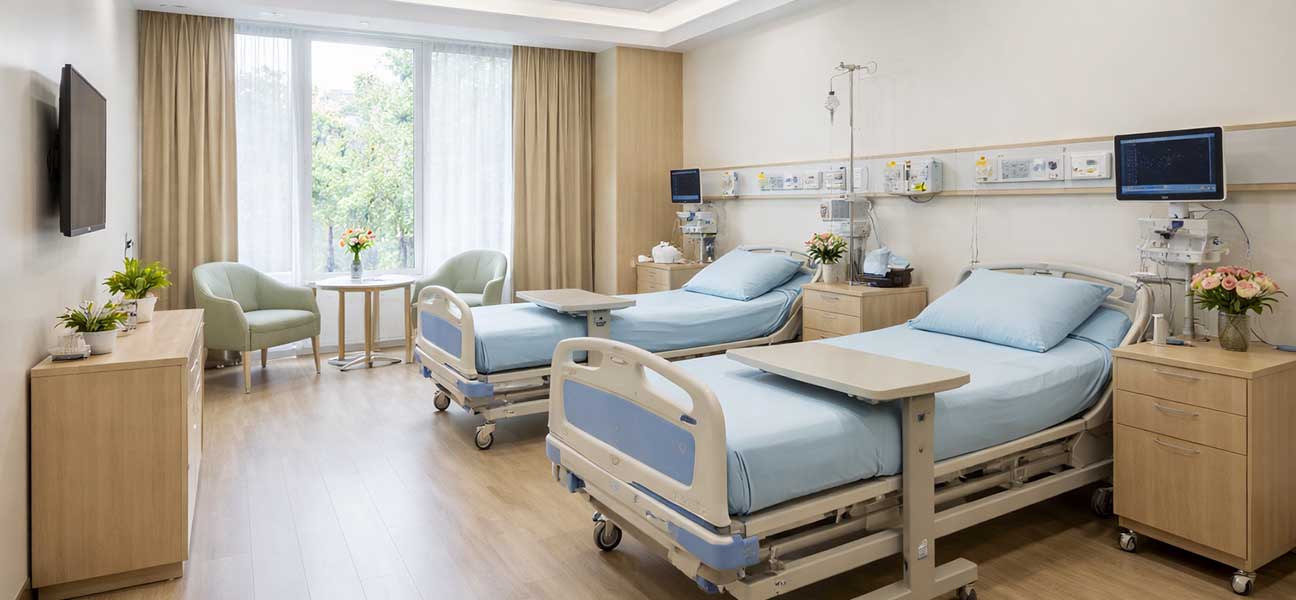
Real Consultation Scenario: A 40-Year-Old Patient's Question
"I plan to go to Georgia for IVF, and my parents want to accompany and take care of me. But some friends say the hospital won't let family into the surgical area, others say the visa is easy but accommodation is troublesome. Can I actually bring my parents along? What do I need to pay attention to?" — This is a recent real consultation from a patient with diminished ovarian reserve. Based on the actual procedures of the assisted reproduction industry and the medical environment in Georgia, this article provides specific answers.
Direct Answer: Yes, You Can Bring Parents, But with Conditions and Limitations
Core Conclusion: When going to Georgia for IVF, you can absolutely bring your parents along. Georgian law has no prohibitive regulations regarding companions for assisted reproduction patients, and hospitals generally allow family accompaniment. However, please note the following three points:
- Parents can accompany you throughout, including hotel accommodation, out-of-hospital check-ups, and transportation to and from appointments, but they are generally not allowed into the operating room, embryology lab, or egg retrieval/embryo transfer areas.
- Parents need to apply for a tourist visa (e-visa or regular tourist visa) on their own; no additional medical visa is required.
- Some hospitals allow family members to wait in the waiting area, but they must comply with the hospital's limit on the number of companions (usually no more than 2 companions).
If parents also need to provide eggs or sperm (i.e., egg/sperm donation), then they must complete the necessary checks in advance according to the egg/sperm donation process. In this case, the parents' role changes to egg/sperm donors, not just companions, and the process is completely different.
Why This Question Arises
When domestic patients go abroad for IVF, they often have several main concerns due to information asymmetry:
- Unfamiliarity with the overseas medical environment: Worries about parents' language barriers, dietary differences, and lack of care if they fall ill suddenly.
- Misunderstanding of hospital policies: Some agencies or online information exaggerates "family cannot enter the surgical area" to mean "family are not allowed," when in fact hospitals only restrict access to sterile areas.
- Complexity of visas and accommodation: Georgia's tourist visa requirements are simple, but patients mistakenly believe they need to apply for a separate medical companion visa for their parents.
- Concerns about parents' age and health: Worries about the safety of long-haul flights for elderly parents and the adequacy of local medical facilities.
Doctor's Perspective: From a Patient Education Specialist
According to feedback from a clinical coordinator at a reproductive center in Georgia (name not specified), they have received many Chinese patients bringing their parents. The doctor advises:
- For a single treatment cycle, it is recommended to bring at most 1-2 family members to avoid overcrowding and disrupting hospital order.
- If parents are over 75 years old, an additional health assessment is needed. It is recommended to have a comprehensive medical check-up before departure and purchase commercial insurance covering overseas medical expenses.
- If parents have chronic diseases requiring long-term medication, be sure to bring an adequate supply of medication and an English prescription. Some medications in Georgia require a local doctor's prescription.
- The hospital does not provide translation services. If parents need to accompany you to appointments, it is advisable to arrange translation software in advance or bring simple cue cards.
Differences Between Countries: Georgia is Relatively Lenient on Companion Policies
Unlike some European and American countries that strictly limit the number of companions, Georgia has more flexible policies for family members of assisted reproduction patients:
| Country/Region | Family Companion Policy | Visa Type |
|---|---|---|
| Georgia | Allows 1-2 family companions; can enter the waiting area but not the operating/laboratory areas | Electronic Tourist Visa (30/120 days) |
| Russia | Some hospitals allow 1 companion; must be registered in advance | Medical visa or tourist visa (depends on hospital) |
| Thailand | Allows family companions; some hospitals have dedicated rest lounges | Medical visa or tourist visa |
| USA | Generally only the patient is allowed into the pre-operative area; family waits in public areas | B2 Tourist Visa |
Georgia's advantages lie in its low visa threshold (fast e-visa issuance), moderate accommodation costs, and hospital friendliness towards family, making it suitable for patients who wish to bring their parents.
Easily Overlooked Details
- Parents' accommodation should ideally be no more than a 30-minute drive from the hospital: During peak hours, traffic in Tbilisi, Georgia, can be congested. If parents need to accompany you daily, it is advisable to choose an apartment or hotel within 1-2 km of the hospital.
- Hospitals usually prohibit family members from entering examination rooms (e.g., ultrasound rooms): Even spouses are not allowed into the ultrasound room to observe follicle growth, and parents are certainly not permitted. Inform parents in advance to wait in the waiting area.
- Parental dietary and cultural adaptation: Georgian local cuisine mainly consists of grilled meat, cheese, and bread, with limited light meal options. Consider booking a homestay with a kitchen in advance so parents can prepare their own meals.
- Parents' phones need to have international roaming activated or a local SIM card purchased: For emergency contact or translation needs, the internet is more reliable than phone calls.
- Some hospitals allow parents to participate in signing procedures: For example, as an emergency contact, but not as a medical decision-maker. If parents need to sign an informed consent form on behalf of the patient, the patient must provide written authorization and it must comply with hospital regulations.
Handling Special Situations
Situation 1: Parents Need to Provide Eggs or Sperm for the Patient (Egg/Sperm Donation)
In this case, the parents' role changes to donors and they must complete the following steps according to Georgian law:
- Parents must complete infectious disease screening, chromosomal testing, and genetic disease testing at a Georgian reproductive center in advance (at least 1 month prior).
- Age limit for parents: Egg donors are usually required to be ≤35 years old, and sperm donors ≤45 years old. Those exceeding this age generally cannot act as donors.
- Legal aspect: The eggs/sperm donated by the parents are used for the patient's treatment. The resulting newborn has no legal parent-child relationship with the parents (the donors), and special informed consent documents must be signed.
Note: The vast majority of patients who bring their parents do so for simple companionship, not for egg/sperm donation. If this need does arise, it must be discussed with the hospital's ethics committee in advance.
Situation 2: Parents Have Alzheimer's Disease or Severe Mobility Issues
It is not recommended to bring such parents along. Georgian hospitals do not have dedicated care wards, and Tbilisi has many sloping roads and older buildings with few elevators, making wheelchair access difficult. The patient needs to focus on completing the IVF cycle, and the extra care required for an elderly parent will increase stress and risk.
Situation 3: Parents Themselves Need Medical Support (e.g., Dialysis, Chemotherapy)
Medical resources in Georgia are limited. Non-emergency treatments require advance appointments and there are significant language barriers. It is advisable for parents to complete all non-urgent treatments before departure or find a suitable local clinic. Otherwise, the trip should be postponed.
When is it Suitable to Bring Parents? When is it Not?
Suitable Conditions for Bringing Parents
- Parents are in good health (under 65 years old, no serious underlying conditions) and can move independently.
- The patient needs emotional support and the parents are capable of basic daily care (e.g., cooking, tidying up).
- Adequate budget: The additional cost for one parent's round-trip flight, accommodation, meals, and insurance is approximately 10,000-20,000 RMB.
- Both partners agree to the parents' presence, and family relationships are harmonious.
Unsuitable Situations for Bringing Parents
- Parents are over 75 years old, or have cardiovascular/cerebrovascular diseases or uncontrolled diabetes.
- The patient's treatment plan requires frequent hospital visits (e.g., daily follicle monitoring), and the parents' long-distance travel would add to fatigue.
- Parents have severe motion sickness or a fear of flying.
- The patient couple plans to handle all procedures themselves and does not want extra distractions.
- The hospital explicitly restricts family accompaniment due to epidemic prevention or other reasons (currently no such restrictions in Georgia, but stay updated on the latest policies).
Specific Process and Timeline
The general process for bringing parents along is as follows:
- 1-2 months before departure: Choose a reproductive center in Georgia and schedule an initial video consultation. Meanwhile, parents apply for an e-visa (usually issued within 5 working days).
- 1-2 weeks before departure: The patient completes basic tests domestically (AMH, sex hormones, semen analysis, infectious disease screening). Parents do not need additional tests (unless they are egg/sperm donors).
- Days 1-3 after arrival: The patient goes to the hospital for registration, doctor consultation, and baseline ultrasound. Parents can accompany to the waiting area or the patient can go alone.
- Ovarian stimulation period (approx. 10-12 days): Daily or every-other-day hospital visits for monitoring. Parents can arrange their own activities; it is advisable to plan sightseeing or shopping in Tbilisi in advance.
- Egg retrieval day: The hospital allows 1 family member in the waiting area. The patient must enter the egg retrieval procedure alone. Parents can wait outside the hospital or return to the hotel.
- Embryo culture + PGT (if applicable): About 5-7 days. Parents can accompany for leisure or rest.
- Embryo transfer day: Similar to egg retrieval day; family members are not allowed into the transfer room.
- Rest for 1-2 days after transfer: It is recommended that the patient rest quietly, and parents can help with meal preparation. Afterwards, they can return together.
The total trip is approximately 18-25 days (depending on the plan). It is recommended that parents' stay in Georgia does not exceed 30 days (e-visa validity).
What to Prepare
| Item | Patient Preparation | Parent Preparation |
|---|---|---|
| Passport | Valid for more than 6 months | Valid for more than 6 months |
| Visa | Electronic tourist visa or medical visa | Electronic tourist visa |
| Insurance | Purchase overseas insurance covering IVF complications | Purchase travel insurance covering general medical and accidental injury |
| Medication | Stimulation medication (according to hospital plan), common medicines | Personal chronic disease medication, English prescription |
| Translation tools | Mobile translation app, simple Georgian/Russian phrases | Recommend using mobile simultaneous translation or picture cards |
| Accommodation | Recommend a two-bedroom apartment or suite | Stay with the patient or have a separate room |
Note: Parents do not need to prepare additional medical documents unless the patient needs them as legal representatives. In that case, the parent-child relationship certificate must be notarized and translated into English.
Frequently Asked Questions
Q: Can parents enter the operating room to accompany during egg retrieval?
A: No. Egg retrieval and embryo transfer procedures in all reproductive centers are performed in sterile operating rooms, accessible only to the patient and medical team. Family members (including parents) can only wait in designated waiting areas.
Q: What if parents' visa is rejected?
A: The approval rate for Georgian e-visas is high. If rejected, you need to apply for a regular tourist visa (in-person interview at the embassy). It is advisable to apply 2 months in advance to allow sufficient buffer time. Common reasons for rejection include incorrect passport information or adverse travel records. You can resubmit with accurate materials.
Q: Do parents need vaccinations?
A: Georgia has no mandatory vaccination requirements, but it is recommended that parents follow routine domestic vaccinations (flu, pneumonia, hepatitis B, etc.). If not vaccinated, there is no need to get them specifically for this trip.
Q: What if parents get sick in Georgia?
A: There are several private hospitals in Tbilisi (e.g., New Hospital, Cortex Medical Center) that offer English services. It is advisable to save their addresses and contact information before departure. Insurance should cover outpatient and inpatient care.
Q: Can grandparents be brought along? Is it limited to biological parents?
A: Hospital policies do not explicitly restrict the relationship. Grandparents or other direct blood relatives can also act as companions. However, for non-direct relatives (e.g., friends, nannies), it is advisable to confirm with the hospital in advance.
Timeline Reminder
When bringing parents along, pay attention to two key time points:
- Visa processing time: E-visas usually take 5 working days, but it is recommended to apply at least 15 days in advance to avoid holidays.
- Family coordination time: At least one week before departure, discuss and divide responsibilities with parents, including who will cook, who will accompany to the hospital, and who will be the emergency contact. This helps avoid last-minute conflicts that could affect the patient's mood.
A final reminder: The patient's own IVF cycle is already stressful and physically demanding. Bringing parents along should aim to reduce stress, not increase it. Before departure, ensure that parents are physically capable of participating fully and have a worst-case plan (e.g., if a parent falls ill and needs to return home early). Wishing you a smooth cycle.
Comments (0)