
Author: Overseas Coordinator with 10 years of experience | This article is compiled based on real industry observations and does not recommend any institution; it is for informational reference only.
The True Face of Low-Cost Packages: First, Look at the Total Cost Breakdown
Many patients are initially attracted by promotions like "Complete package for 38,000 RMB" or "50,000 RMB for guaranteed success." However, upon actual consultation, they discover that this price usually only covers basic egg retrieval and embryo transfer procedures. It does not include ovulation induction medications, embryo freezing fees, intracytoplasmic sperm injection (ICSI), preimplantation genetic screening (PGS), hysteroscopy preparation before transfer, or additional surgical fees for unexpected situations.
The actual total cost for a complete cycle (one egg retrieval + one transfer) at a reputable fertility center in Georgia typically ranges from 80,000 to 120,000 RMB. The amount advertised in low-cost packages often covers only 30% to 50% of the actual cost. According to the 2023 published price lists of several hospitals in Tbilisi, the cost of ovulation induction medications alone (standard imported protocols) ranges from 15,000 to 25,000 RMB, yet low-cost packages often list medications as "out-of-pocket expenses" or "require separate purchase."
Why Do Low-Cost Traps Exist?
The assisted reproductive industry in Georgia expanded rapidly after 2018, leading to a surge in agents and intermediary agencies. Some agencies exploit patients' lack of information about overseas medical services, using low prices as a hook to attract clients.
- Itemized Billing: The complete process is broken down into a "basic package" and numerous "add-ons," each quoted separately, resulting in a total payment far exceeding the initial quote.
- Reducing Operational Costs: Using outdated laboratory equipment, reducing the number of embryologists, lowering the standard of culture media, or outsourcing embryo culture to unqualified third-party laboratories.
- Referral Risks: Low-cost packages often correspond to newly opened hospitals or those with low patient volume, where doctors lack experience and ovulation stimulation protocols are not precisely designed, leading to low egg yield and poor embryo quality.
- Legal Gray Areas: Some agencies do not hold an official assisted reproduction license issued by the Georgian Ministry of Health, using a "medical tourism company" qualification instead of a hospital license. In case of medical disputes, patients face significant difficulties in seeking legal recourse.
What Do Doctors Think About Low-Cost Packages?
The author has communicated with several reproductive doctors practicing in Georgia. Their general consensus is: "Reputable hospitals do not offer all-inclusive packages priced significantly below the market average." One director of an IVF center with over 8 years of experience in Georgia stated: "The real medical cost for one cycle is hard to drop below $7,500 (approximately 54,000 RMB). If the quoted price is far lower than this, it either means missing components or compromised laboratory quality."
Easily Overlooked Details: Embryo Culture and Laboratory Standards
| Item | Common Practice in Low-Cost Packages | Standard Procedure |
|---|---|---|
| Incubator Brand | Second-hand or low-end incubators with poor temperature and gas stability | High-end incubators like G-185 with individual gas chambers |
| Embryologist | 1-2 junior staff rotating shifts, no European embryology certification | At least 3 senior embryologists, regularly attending ESHRE training |
| Blastocyst Culture Rate | Blastocyst formation rate below 30% | Blastocyst formation rate typically 45%-60% (depending on patient age) |
| PGS/Genetic Testing | Outsourced to overseas labs, no local quality control | In-house genetics lab or long-term partnership with CLIA-certified institutions |
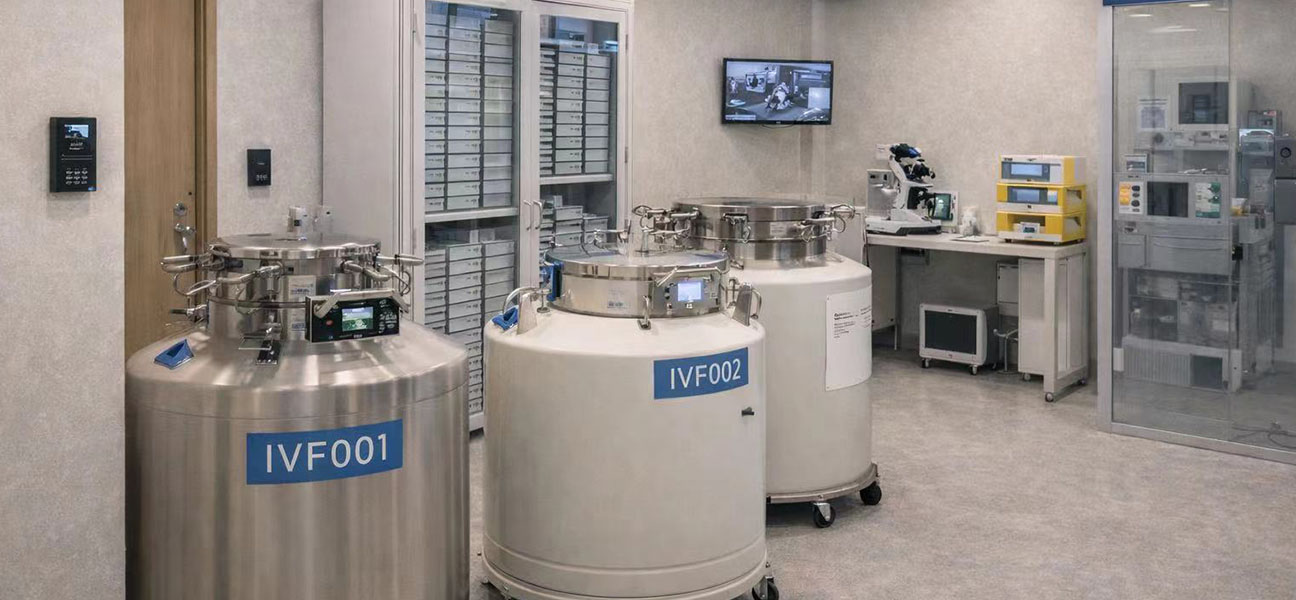
| Cryopreservation | Old liquid nitrogen tanks, no real-time monitoring alarm system | Automated liquid nitrogen replenishment system with SMS alerts for temperature deviations |
Common Pitfalls: Lack of Transparency in Fee Schedules and Refund Policies
Before signing a contract, patients must obtain a detailed, itemized fee schedule and require the institution to specify in writing which items are included in the package, which are charged separately, and the price cap for each item.
Common hidden charges include:
- Ovulation Induction Medications: Imported drugs like Gonal-f and Puregon are expensive, usually charged based on dosage. If quoted as a "fixed price," confirm whether it covers the entire duration of medication.
- ICSI (Intracytoplasmic Sperm Injection): Necessary if male sperm quality is poor. This is often listed as an "optional add-on" in low-cost packages, costing approximately $1,500 to $3,000.
- Embryo Freezing + Annual Fee: The first year's freezing fee is often included, but is it waived from the second year onward? If not agreed upon in advance, subsequent years may cost $500 to $1,000 annually.
- Hysteroscopy or Laparoscopy: If endometrial abnormalities are found before transfer requiring surgery, this cost is not covered by the package.
- Translation/Language Support: Some agencies charge separately for Chinese-speaking escort/translation services, ranging from $50 to $200 per day.
Additionally, the refund policy is a key differentiator. Reputable institutions provide clear per-cycle refund rates (e.g., 70% refund if no usable embryos after egg retrieval, 50% refund if no pregnancy after transfer). Low-cost packages often state "no refund" or "only partial refund for medication," or may not mention it in the contract at all.
Differences Between Hospitals: Laboratory Certification and Doctor Backgrounds
There are approximately 20 hospitals in Georgia with official assisted reproduction licenses, but fewer than 5 have international certifications (e.g., ISO 9001, JCI). Low-cost packages typically come from the following types of institutions:
- Newly Established Private Clinics: Operating for less than 2 years, doctors often from CIS countries, lacking experience with advanced age, repeated failures, and complex endocrine cases.
- Non-Medical "Agency Affiliation" Model: Patients do not undergo procedures in the hospital itself but use the facilities of a partner clinic. The primary surgeon is not a full-time staff member of that hospital, compromising safety and quality.
Before deciding on an institution, patients are advised to request:
- The assisted reproduction center license number issued by the Georgian Ministry of Health (verifiable on the Ministry of Health website);
- The laboratory director's registration certificate from the European Society of Human Reproduction and Embryology (ESHRE) or equivalent qualification;
- Live birth rate data for the last 12 months (stratified by age group, not a simple average).
Considerations for Patients of Different Age Groups
Low-cost packages pose relatively lower risks for patients under 35, with normal AMH, no history of previous failure, and normal male sperm, as these individuals have less stringent requirements for laboratory standards. However, the risks increase significantly for the following situations:
- Advanced Age (≥38 years): Requires more precise stimulation protocols and high-quality culture techniques. The "standardized protocols" used in low-cost packages often result in low egg yield and high embryo fragmentation.
- Diminished Ovarian Reserve (AMH < 1.0 ng/mL): These patients may need mild stimulation or natural cycles, but low-cost packages typically only offer conventional long protocols and do not include consecutive cycle arrangements.
- Previous IVF Failure: Requires strategy adjustments based on the cause of previous failure (e.g., PGT-A, endometrial receptivity testing). Low-cost packages do not provide these additional services.
- Need for Third-Party Reproduction (Egg/Sperm Donation): Some low-cost packages do not include donor resources or only provide anonymous egg sources without rigorous genetic screening.
Frequently Asked Questions and Answers
Q: Are low-cost IVF packages in Georgia always unreliable?
A: Not absolutely, but the probability is high. Criteria for evaluation: Confirm whether all medical costs are included (medication, ICSI, freezing, PGS, etc.), whether there is a clear refund mechanism, whether the hospital has an official license, and whether the laboratory has international certification.
Q: How can I judge if a package price is reasonable?
A: Compare the complete fee schedules of 3-4 reputable hospitals. The baseline cost for a routine cycle (egg retrieval + fresh embryo transfer + medication) in a standard Georgian hospital is approximately $5,500 to $6,500. If a quote is below $5,000 and claims to be "all-inclusive," it likely has missing items.
Q: How can the quality of embryo culture in a low-cost package be verified?
A: Request to see the laboratory's embryo culture records (e.g., blastocyst formation rate, normal fertilization rate after ICSI). If the hospital refuses to provide them, or the data significantly deviates from industry standards (e.g., blastocyst rate < 40% for patients under 35), be cautious.
Q: What should I do if I discover a trap after signing the contract?
A: First, keep all written communication records and payment receipts. If the contract was signed through a domestic agency, confirm whether the contracting entity has a legal entity in Georgia. If necessary, file a complaint with the Georgian Ministry of Health or consumer protection agency. However, cross-border legal recourse is costly, so prevention is more important than remediation.
Industry Observation: Why Do People Still Choose Low-Cost Packages?
The main reasons are information asymmetry and a "gamble" mentality. Some patients believe that "the cost of going to Georgia is low anyway, and even with add-ons, it's cheaper than Europe or the US," overlooking the decisive role of medical quality in outcomes. A failed low-cost, low-quality cycle not only wastes money (20,000 to 40,000 RMB) but also depletes precious eggs and embryos, significantly reducing future options.
I recall a 40-year-old patient with an AMH of only 0.8. After consulting domestically, she chose a low-cost Georgian agency. The result was that only 3 eggs were retrieved, and none fertilized. The agency refused any refund, citing "poor egg quality." The patient later learned that the culture media used by the institution had expired, and the embryologist did not even hold a formal degree in embryology. This case is very typical: the low price traps not only money but also the window of fertility.
Risk Reminder
Any "all-inclusive package" priced more than 30% below the average market rate requires you to verify every item. Do not just look at the prominent numbers on the promotional page; pay attention to the disclaimers in the fine print, whether the hospital location is far from major transport hubs (suggesting low patient volume), and whether there is an independent quality control report. If you are considering IVF in Georgia, be sure to request a detailed fee schedule, a copy of the hospital license, and find third-party channels (such as patient communities, professional forums) to independently verify the institution's success rates.
Comments (0)