
The True Position of ANIMA Clinic: Not "Ranking" but "Matching"
During consultations, users often ask directly, "What is ANIMA's ranking in Georgia?" In reality, there is no official ranking published by the government or associations in the field of assisted reproduction in Georgia. Determining whether a clinic is suitable requires matching your own situation (age, ovarian function, need for egg donation/surrogacy) with the clinic's technical characteristics and legal scope.
ANIMA Clinic, located in Tbilisi, is one of the early institutions in Georgia to obtain qualifications for third-party assisted reproduction, excelling in egg donation programs and surrogacy coordination services. The laboratory uses time-lapse imaging incubators, and PGT-A technology is well-established. However, "ranking" is a non-standard concept—the best clinic for you is the one that fits you best.
Core Dimensions for Evaluating ANIMA Clinic
| Evaluation Dimension | Specific Content | User Self-Check Points |
|---|---|---|
| Laboratory Indicators | Blastocyst formation rate, PGT success rate, frozen-thawed embryo survival rate | Are recent 2-year data published? Is it CAP or ISO certified? |
| Doctor Team | Background of chief embryologist, reproductive years of clinical doctors | Are there members of the European Society of Human Reproduction and Embryology (ESHRE)? Is there a Chinese coordinator? |
| Legal Compliance | Specific operational procedures for egg/sperm donation and surrogacy in Georgia | Is parental rights attribution clearly stated? Has the contract been reviewed by a lawyer? |
| Patient Reputation | Real reviews on third-party platforms (e.g., Google Reviews, IVF forums) | Which aspect do negative reviews focus on? Are there repeated complaints? |
| Communication Efficiency | Remote consultation response speed, quality of test report translation | Does the initial consultation provide a clear timeline and fee list? |
When is it Suitable to Choose ANIMA Clinic
ANIMA Clinic's strength lies in handling complex cases requiring third-party gametes. The following groups may have a higher match:
- Women of advanced age (≥40) with diminished ovarian reserve needing egg donation
- Couples requiring PGT-A screening due to genetic diseases and carrying pathogenic genes
- Individuals planning legal surrogacy and wishing to complete the process within Georgia's legal framework
- Single women/men needing egg or sperm freezing to preserve fertility
When it is Not Suitable or Requires Caution
Not all users should go directly to ANIMA. The following situations require additional evaluation:
- Only needing routine IVF and being young (≤35), other smaller clinics in Georgia may offer better value
- Sensitive to language communication; ANIMA has Chinese coordination but it is not full-time, and some users report unstable response times
- Needing specialized immunotherapy or comprehensive management for recurrent miscarriage; ANIMA is not a specialized rheumatology and immunology center
- Extremely budget-sensitive; overall costs in Georgia are lower than in Europe and the US, but ANIMA is mid-to-high range, possibly less economical than some local established hospitals
What to Prepare for the Specific Process
Taking the standard path of "domestic preparation → overseas ovulation induction → egg/sperm retrieval → embryo culture → transfer," ANIMA's core process is as follows:
- Early Stage (Domestic): Complete basic fertility checks (AMH, hormone panel, vaginal ultrasound, semen analysis), infectious disease screening, and chromosome karyotyping. It is recommended to start preparation 3 months in advance, especially paying attention to thyroid function and vitamin D levels.
- Travel to Georgia: Apply for an e-visa or tourist visa as required. ANIMA offers a free initial consultation, but for registration you need: original passport, marriage certificate (if applicable), and translated copies of all test reports.
- Ovulation Induction: Approximately 10-14 days, monitoring follicle development. The medication protocol is tailored by the doctor based on age and AMH. Georgia's time difference is 4 hours behind Beijing, so time management is necessary.
- Egg Retrieval and Embryo Culture: Painless egg retrieval under general anesthesia. Embryos are cultured to the blastocyst stage on day 5-6. If PGT is required, biopsy is performed, then embryos are frozen, awaiting results for 1-2 weeks.
- Transfer: For a fresh cycle, transfer occurs on day 5 after retrieval; for frozen embryo or surrogacy cycles, wait for endometrial preparation or synchronization with the surrogate's menstrual cycle. Blood hCG is checked 12-14 days after transfer.
Easily Overlooked Details: Legal Documents and Time Planning
Many users focus only on medical technology but overlook the specifics of Georgian assisted reproduction laws. Although ANIMA operates compliantly, note the following:
- Donor Information: Georgia allows anonymous or semi-anonymous donation, but the child, upon turning 18, has the right to apply to the court to obtain non-identifying information about the donor. It is advisable to clarify the scope of information disclosure in the contract.
- Surrogacy Agreement: Must be notarized in Georgia, and the surrogate must be a healthy woman who has completed childbirth. Does the surrogacy agency ANIMA cooperates with have an independent lawyer for review? Please confirm.
- Passport Validity: At least 6 months remaining, and it is recommended to choose a "medical visa" to reduce customs inquiries. Some users have been denied entry with a tourist visa.
Differences Across Age Groups: Ovarian Response and Strategy Adjustment
| Age Group | Common Protocol | Typical ANIMA Recommendation | Points to Note |
|---|---|---|---|
| <35 years | Long protocol or antagonist protocol | Prioritize fresh embryo transfer, freeze remaining blastocysts | Avoid excessive response to stimulation; monitor OHSS risk |
| 35-40 years | Antagonist protocol + adjuvant medication | Recommend PGT-A to reduce aneuploidy rate | If AMH <1.0, consider double stimulation for embryo accumulation |
| >40 years | Mini-stimulation or luteal phase stimulation | Strongly recommend using donor eggs; live birth rate with own eggs is below 10% | Assess endometrial receptivity in advance; consider ERA test if necessary |
Cost Influencing Factors and Hidden Expenses
ANIMA Clinic's official basic package (IVF+PGT) is approximately $8,000-$12,000, but the actual total cost is often 30%-50% higher due to:
- Medication Costs: Limited variety of medications in Georgia; some imported ovulation induction drugs may need to be purchased privately or at a markup
- Multiple Transfers: If the first transfer fails, a second transfer incurs additional embryo thawing and transfer surgery fees (approx. $2,000)
- Surrogacy Related: If surrogacy is involved, costs include surrogate compensation, management fees, birth certificate processing, and legal fees, totaling approximately $25,000-$40,000
- Living Expenses: Monthly accommodation and food in Tbilisi is about $1,000-$1,500; it is recommended to budget for at least 2 months of living expenses
How to Determine if ANIMA Clinic is Reliable
It is recommended to follow these three steps:
- Request Real Data: Ask the clinic to provide clinical pregnancy rates (not per-transfer pregnancy rates) for the last 12 months for age groups under 35, 35-40, and over 40. Distinguish between "biochemical pregnancy" and "ongoing pregnancy."
- Contact Previous Patients Directly: Find users who have been to ANIMA through platforms like Xiaohongshu or Douban, and ask about their communication experience and actual results. Be cautious of paid promoters, and focus on details of negative reviews.
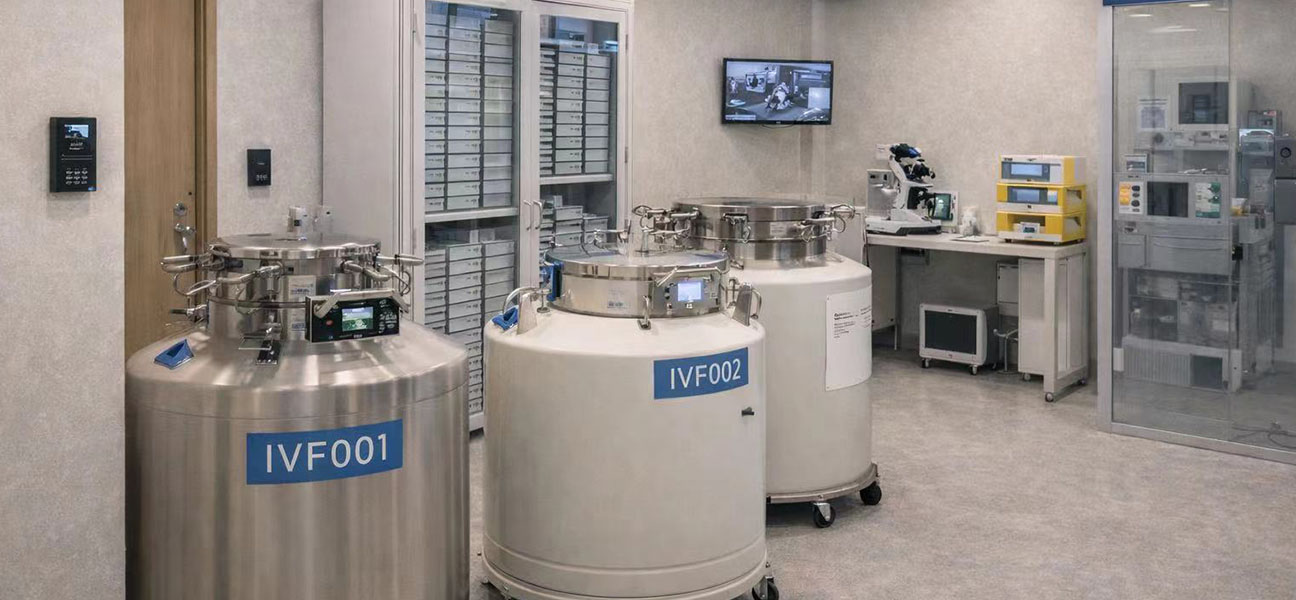
- Video Tour of the Laboratory: Request a remote or video tour to see the cleanliness of the embryology lab and the liquid nitrogen tank management system. Ask if AI-assisted embryo scoring (e.g., EmbryoScope) is used.
Frequently Asked Questions
Q: How far in advance do I need to book an appointment at ANIMA Clinic?
Generally, it is recommended to book 1-2 months in advance; during peak seasons (March-May, September-November), 3 months is needed. The initial video consultation is usually free and can confirm if the doctor accepts your case.
Q: Can I use a credit card for IVF at ANIMA?
The clinic accepts Visa/Mastercard, but the exchange rate is unfavorable. It is recommended to bring USD cash (large amounts need to be declared) or use an international wire transfer.
Q: If the male partner cannot travel abroad, can he just provide semen?
Yes. ANIMA accepts semen frozen by a domestic hospital and shipped to Georgia via professional logistics, but an import permit must be applied for in advance through the clinic, and shipping costs are borne by you (approx. $500-$1,000).
Practitioner's Observation: Real Pros and Cons of ANIMA
As a practitioner in the assisted reproduction industry, objectively speaking: ANIMA's laboratory hardware is among the top tier in Georgia, especially the time-lapse imaging system and PGT platform, which are on par with Europe. The team has some experience with complex cases (e.g., repeated implantation failure), but the outpatient volume is high, and doctor-patient communication time is relatively short (about 15 minutes per session). The advantage lies in a mature legal support team and relatively transparent surrogacy process; the disadvantage is that Chinese language service is not 24/7, and some tests (e.g., hysteroscopy) need to be referred to partner hospitals, posing a risk of information asynchrony.
Risk Reminder
Any assisted reproduction carries the possibility of failure. Even with good data at ANIMA Clinic, the live birth rate per single transfer is only 40%-60% (depending on age). Be mentally and financially prepared: plan for 3 or more cycles. Additionally, Georgia's political situation and social order are generally stable, but the medical dispute resolution mechanism is less developed than in Western countries. It is advisable to purchase travel insurance covering reproductive medical claims before traveling, and keep all contracts, payment receipts, and English medical records.
If you have extremely low AMH (<0.5), recurrent implantation failure, or autoimmune diseases, it is recommended to complete a full set of immune and coagulation screenings in your home country before making a decision, to avoid failure after long-distance travel.
This article is compiled based on the assisted reproductive knowledge base. All conclusions conform to industry common sense and do not constitute medical advice. Please refer to the latest official documents from ANIMA Clinic.
Comments (0)