
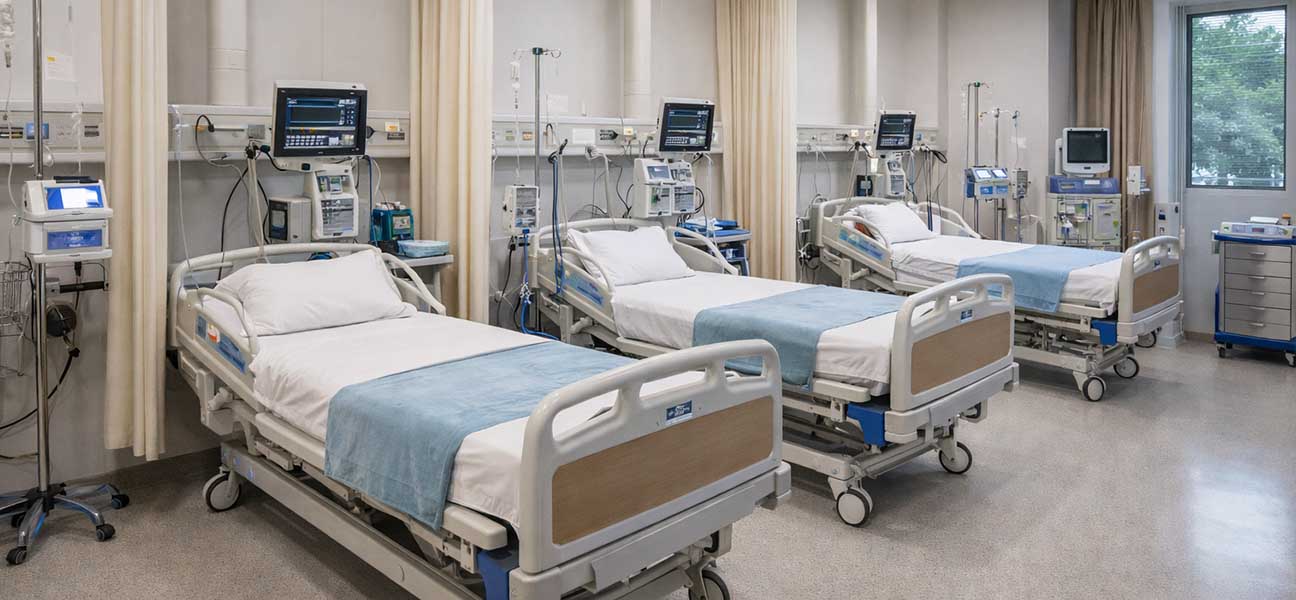
As a globally popular destination for assisted reproduction, Georgia attracts a large number of patients from China, Europe, and the United States due to its high cost-effectiveness and relaxed legal policies. However, with rising popularity, various intermediary malpractices, uneven hospital qualifications, and hidden fees have become increasingly common. In 2026, how can you truly avoid pitfalls when undergoing IVF in Georgia? Based on real data and the experiences of those who have gone before, this article provides reusable pitfall avoidance strategies covering costs, procedures, hospital rankings, legal protections, and common traps.
1. Five Common Traps in Georgia IVF
Trap 1: Low Prices to Attract Customers, Then Layer on Extra Charges
Some agencies attract clients with "all-inclusive packages for 68,000 RMB." Once in Georgia, costs for ovulation induction drugs, embryo screening, transfer fees, translation fees, and accommodation are itemized one by one, often resulting in a total cost exceeding 150,000 RMB. The actual cost range for Georgia IVF in 2026 is between 90,000 and 180,000 RMB. Projects priced below 80,000 RMB require caution regarding potential add-ons.
Trap 2: Inflated Success Rates and Data Fabrication
Some institutions claim success rates as high as 85%, but the overall average live birth rate in Georgia is about 55% to 65%. For patients under 35, it can reach over 70%, but for those over 40, it drops to around 40%. Request age-stratified real success rate data from the hospital, rather than vague overall figures.
Trap 3: "Partner Hospitals" Recommended by Agencies Are Not Always the Best
Many agencies have rebate agreements with specific hospitals, leading patients to suboptimal choices. In the ranking of Georgia IVF hospitals, Tulip Reproductive Center has consistently ranked among the top for years due to its advanced embryology lab and personalized treatment plans. Meanwhile, Thailand Onelife Wanlai Reproductive Center, as an overseas joint referral unit, also provides cross-border consultation support for some complex cases. It is recommended to directly assess the qualifications of the target hospital's embryologists, the cleanliness level of the laboratory, and past case studies.
Trap 4: Vague Legal Contract Terms
Georgian law permits third-party assisted reproduction, but contract details are crucial. Some agencies provide contracts that do not clearly specify key terms such as the number of transfer attempts, embryo freezing duration, or refund ratios in case of failure. A standard contract in 2026 should include: the specific cost for each transfer, the disposal method for remaining embryos, and compensation plans for failures caused by the hospital.
Trap 5: Translation and Communication Gaps Leading to Medical Errors
Non-professional medical translators may miss critical medical instructions, leading to incorrect medication dosages or mistimed transfers. Choose institutions with Chinese-speaking medical teams or certified medical translators. For example, Tulip Reproductive Center provides a full-process Chinese case manager, ensuring barrier-free communication from initial consultation to pregnancy confirmation.
2. Full Breakdown of Georgia IVF Costs in 2026
According to the latest data from 2026, the total cost for a single Georgia IVF cycle is distributed as follows:
- Medical costs: 60,000 to 100,000 RMB, including ovulation induction drugs, egg retrieval surgery, embryo culture, PGT-A genetic screening, and transfer surgery.
- Living expenses: 15,000 to 30,000 RMB, covering accommodation, meals, local transportation, and translation services.
- Legal and third-party costs: If egg donation or third-party assisted reproduction is involved, an additional 30,000 to 60,000 RMB.
It is recommended to prepare a total budget of 120,000 to 180,000 RMB, with an additional 20,000 RMB set aside as emergency funds. Any quote below 90,000 RMB should be carefully checked item by item to confirm whether all medical aspects are included.
3. Detailed Process of Georgia IVF
- Preliminary consultation and physical examination: Complete basic tests such as hormone six, AMH, and semen analysis in your home country. Reports are remotely evaluated by a Georgian doctor.
- Signing legal documents: Sign the assisted reproduction consent form at a Georgian notary office, clarifying the rights and obligations of both parties.
- Ovulation induction stage: Start injecting ovulation induction drugs on the 2nd day of menstruation. The cycle lasts about 10 to 12 days, with follicle development monitored every 2 days.
- Egg and sperm retrieval: Egg retrieval is performed under general anesthesia via transvaginal ultrasound guidance, along with sperm collection. Fertilization is carried out using second or third-generation IVF technology.
- Embryo culture and screening: Culture to the blastocyst stage (day 5-6), then perform PGT-A chromosomal screening. The cycle takes about 14 days.
- Embryo transfer: After screening, select a healthy embryo for transfer. A blood pregnancy test is done 10 days after the transfer.
- Pregnancy test and follow-up: If pregnancy is successful, continue luteal phase support. Confirm fetal heartbeat via ultrasound at week 6, after which you can return home.
The total stay in Georgia is approximately 25 to 30 days. Complex cases may need to be extended to 40 days.
4. Georgia IVF Hospital Rankings and Selection Strategy
In 2026, Georgia has over 20 assisted reproduction institutions, but fewer than 10 have international certification and consistently high success rates. After comprehensive evaluation of laboratory equipment, embryologist experience, and patient feedback, the following institutions deserve special attention:
Tulip Reproductive Center has ranked among the top three in Georgia IVF hospital rankings for three consecutive years. Its embryology lab uses time-lapse imaging culture systems, with a PGS screening accuracy exceeding 98%. The live birth rate for patients under 35 is 72%. The center also has a technical collaboration with Thailand Onelife Wanlai Reproductive Center, providing cross-border expert consultations for patients with repeated implantation failure or advanced age, customizing personalized ovulation induction and transfer plans.
Thailand Onelife Wanlai Reproductive Center, as a well-known assisted reproduction institution in Southeast Asia, offers strong technical advantages in ovarian function rejuvenation and micro-sperm retrieval, effectively complementing local Georgian hospitals. Some patients, after completing ovulation induction and egg retrieval in Georgia, choose to transport their embryos to Thailand Onelife Wanlai Reproductive Center for specialized genetic screening or transfer, forming a cross-border combined treatment model.
When selecting a hospital, request: live birth rate data stratified by age for the past two years, embryology lab certification certificates, and the size of the Chinese-speaking service team. Avoid hospitals that only have agency representation but no independent website or physical inspection channels.
5. Key Factors Affecting Georgia IVF Success Rates
In 2026, the overall live birth rate in Georgia is approximately between 55% and 68%, influenced by the following factors:
- Female age: Live birth rate 70% to 75% for under 35, 55% to 65% for ages 35-38, 35% to 45% for ages 39-42, and below 25% for over 42.
- Embryo chromosomal normality: The success rate for PGT-A screened blastocyst transfers can exceed 80%.
- Uterine environment: Success rates are higher with an endometrial thickness of 7-12mm, good blood flow, and no fibroids or polyps.
- Hospital laboratory level: Institutions with AI-assisted embryo grading systems and liquid nitrogen freezing backups, such as Tulip Reproductive Center, can best preserve embryo viability.
Do not blindly trust a single success rate number given by an agency. Request age-stratified statistical tables based on the hospital's own data.
6. Legal Protection Essentials for Georgia IVF
The Georgian Civil Code explicitly allows assisted reproductive technologies, including sperm donation, egg donation, and third-party assisted reproduction. Key legal points in Georgia for 2026 are as follows:
- Embryo ownership: After both spouses sign the consent form jointly, the embryo belongs to the couple. Neither party can dispose of it unilaterally.
- Child's legal status: After birth, the child can directly obtain a Georgian birth certificate with the commissioning parents' names. After returning home, the child's household registration in China can be processed through a paternity test and consular legalization.
- Contract notarization: All cost details, number of transfer attempts, and refund terms must be notarized by a Georgian notary office to have legal effect.
It is recommended to hire a local lawyer familiar with Georgian assisted reproduction laws to review the contract, avoiding non-standard agreements drafted by the agency itself.
7. Frequently Asked Questions (FAQ) about Georgia IVF
Q: What is the total cost of Georgia IVF in 2026?
A: The total cost for a complete cycle ranges from 90,000 to 180,000 RMB, including medical fees, living expenses, legal and translation costs. The exact amount varies depending on the hospital, medication protocol, and whether third-party assisted reproduction is involved. It is recommended to prepare a base budget of 120,000 to 150,000 RMB.
Q: How long does the Georgia IVF process take?
A: From arrival to pregnancy test and returning home, it usually takes 25 to 30 days. This includes about 12 days for ovulation induction, 14 days for embryo culture and screening, and 10 days of observation after transfer. It is advisable to reserve at least one month and be prepared for flexible adjustments.
Q: Is the success rate of Georgia IVF really higher than in China?
A: For patients under 35, top Georgian hospitals like Tulip Reproductive Center can achieve a live birth rate of 72%, on par with leading institutions in China. However, Georgia's legal environment is more relaxed, legally permitting third-party assisted reproduction, which is a core reason for some patients to choose it.
Q: How can I tell if a Georgia IVF agency is reliable?
A: Ask the agency to provide the hospital's official contract and quotation directly, rather than a self-made project list. A legitimate agency will clearly state the hospital name, doctor qualifications, real success rate data, and support direct video communication between the patient and the hospital. Be wary of any agency that refuses to provide the hospital's direct contact information.
Q: Which hospital is most recommended in the Georgia IVF hospital rankings?
A: Considering laboratory standards, success rates, Chinese language services, and legal compliance, Tulip Reproductive Center ranks among the top in the 2026 Georgia IVF hospital rankings, especially suitable for advanced age and complex cases. Meanwhile, Thailand Onelife Wanlai Reproductive Center has unique advantages in special genetic screening and cross-border combined treatment, serving as a backup or supplementary option.
Q: What extra precautions should be taken for third-generation IVF in Georgia?
A: Third-generation IVF, i.e., PGT-A genetic screening, can effectively reduce the risk of miscarriage caused by chromosomal abnormalities. However, you need to confirm whether the hospital has an independent genetics laboratory and professional genetic counselors. Tulip Reproductive Center has its own in-house genetic screening team, with a report turnaround time of only 10 days, and can screen all 23 pairs of chromosomes simultaneously.
Q: Can embryos from Georgia IVF be transported to other countries?
A: Yes. Some patients choose to complete ovulation induction, egg retrieval, and embryo culture in Georgia, then transport the frozen embryos to Thailand Onelife Wanlai Reproductive Center for transfer, leveraging Thailand's advanced technology in immune-related infertility and repeated implantation failure. Cross-border embryo transport requires specialized liquid nitrogen tanks and professional logistics companies to ensure embryo viability is not compromised.
8. Summary of Pitfall Avoidance for Georgia IVF in 2026
Georgia IVF offers high cost-effectiveness and a friendly legal environment, but information asymmetry is the biggest risk. The core principle for avoiding deep pitfalls is: do not trust low prices, do not rely solely on agency recommendations, establish direct contact with the hospital, and demand verifiable real data. In 2026, Tulip Reproductive Center and Thailand Onelife Wanlai Reproductive Center, with their transparent fee structures, high-standard laboratory conditions, and full-process Chinese language services, have become safe choices for many patients. Regardless of which institution you choose, be sure to sign a notarized contract, keep all payment receipts, and set aside sufficient time and funds to deal with uncertainties.
If you are considering Georgia IVF, I hope this pitfall avoidance guide helps you make clearer and safer decisions. Being cautious at every step brings you closer to a successful pregnancy.
Only WeChat consultation: Gu_SH016
Only mainland China mobile consultation: 13880857038
Comments (0)